
How to Play the C Add 9 (Cadd9) Guitar Chord
The standard Cadd9 shape, the fuller four-finger version, why it buzzes, and how to move between Cadd9, G, D, Em, and Am without breaking the beat.

To play a C add 9 (Cadd9) chord on guitar, mute the low E string, put your index finger on the 2nd fret of the D string, your middle finger on the 3rd fret of the A string, your ring finger on the 3rd fret of the B string, and leave the G string and high E string open. Strum from the A string down through the high E string. That is the whole shape, and it only asks for three fingers. Everything below covers what makes it ring cleanly, the fuller four-finger version you will meet constantly in tabs, and how it actually differs from a plain C chord.
The Cadd9 chord, string by string
Here is the full open shape as a table. "Finger" uses standard numbering: 1 is your index finger, 2 is your middle finger, 3 is your ring finger, 4 is your pinky.
| String | Fret | Finger |
|---|---|---|
| 6 (low E) | Muted, do not play | - |
| 5 (A) | 3 | 2 (middle) |
| 4 (D) | 2 | 1 (index) |
| 3 (G) | Open | - |
| 2 (B) | 3 | 3 (ring) |
| 1 (high E) | Open | - |
If you already know a standard open C chord, this shape is one finger lighter and one finger different. Form a C chord, then slide your index finger from the B string over to the D string, and let the B string move to your ring finger at the 3rd fret instead of your index finger at the 1st fret. The G string stays open on both chords.
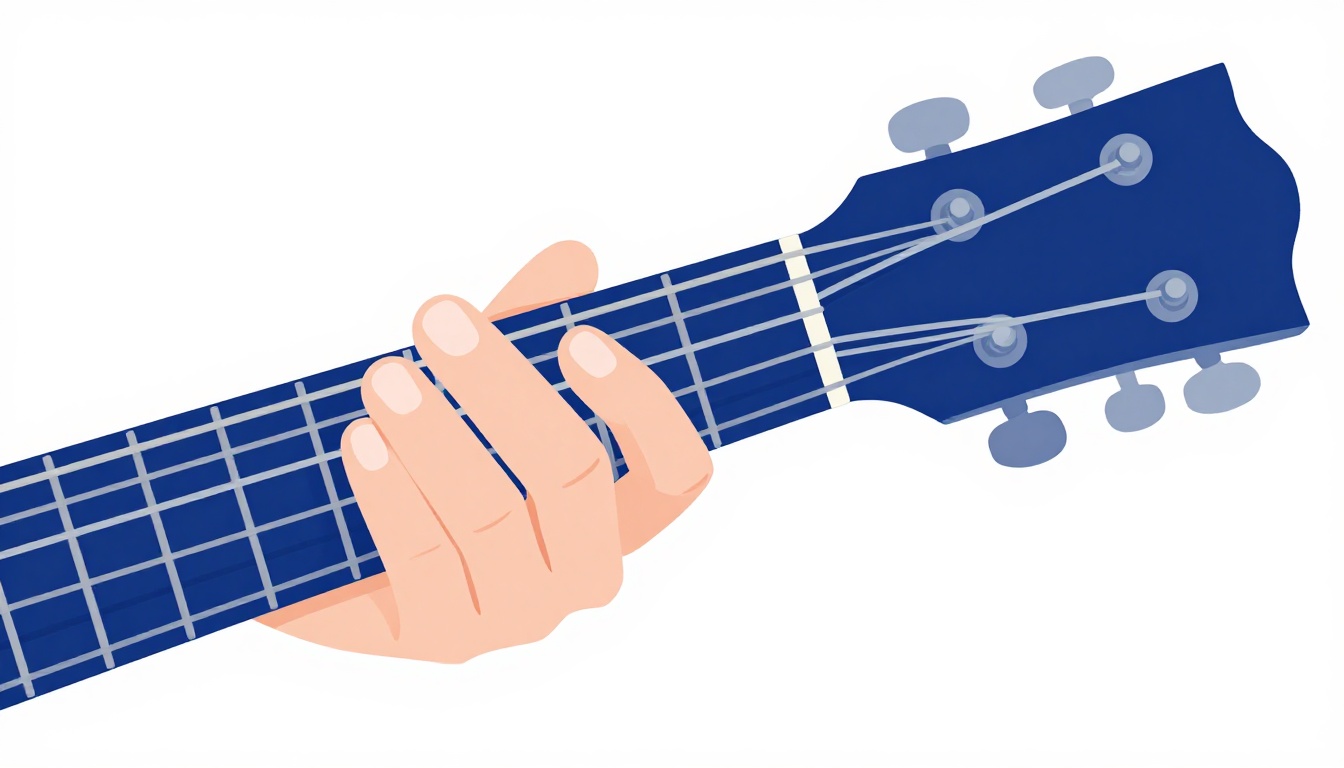
Because it drops the awkward index-to-ring stretch that plain C needs on the B string, and replaces it with a shape where each finger sits in its own lane, Cadd9 is genuinely one of the more comfortable open chords a new player meets, not a harder cousin of C. If C's stretch has been giving you trouble, this shape is worth learning on its own terms rather than only as a substitute.
The fuller, four-finger version
Tabs and chord charts for songs like "Wonderwall" usually show a slightly fuller Cadd9, adding a fourth finger on the high E string instead of leaving it open.
| String | Fret | Finger |
|---|---|---|
| 6 (low E) | Muted, do not play | - |
| 5 (A) | 3 | 2 (middle) |
| 4 (D) | 2 | 1 (index) |
| 3 (G) | Open | - |
| 2 (B) | 3 | 3 (ring) |
| 1 (high E) | 3 | 4 (pinky) |
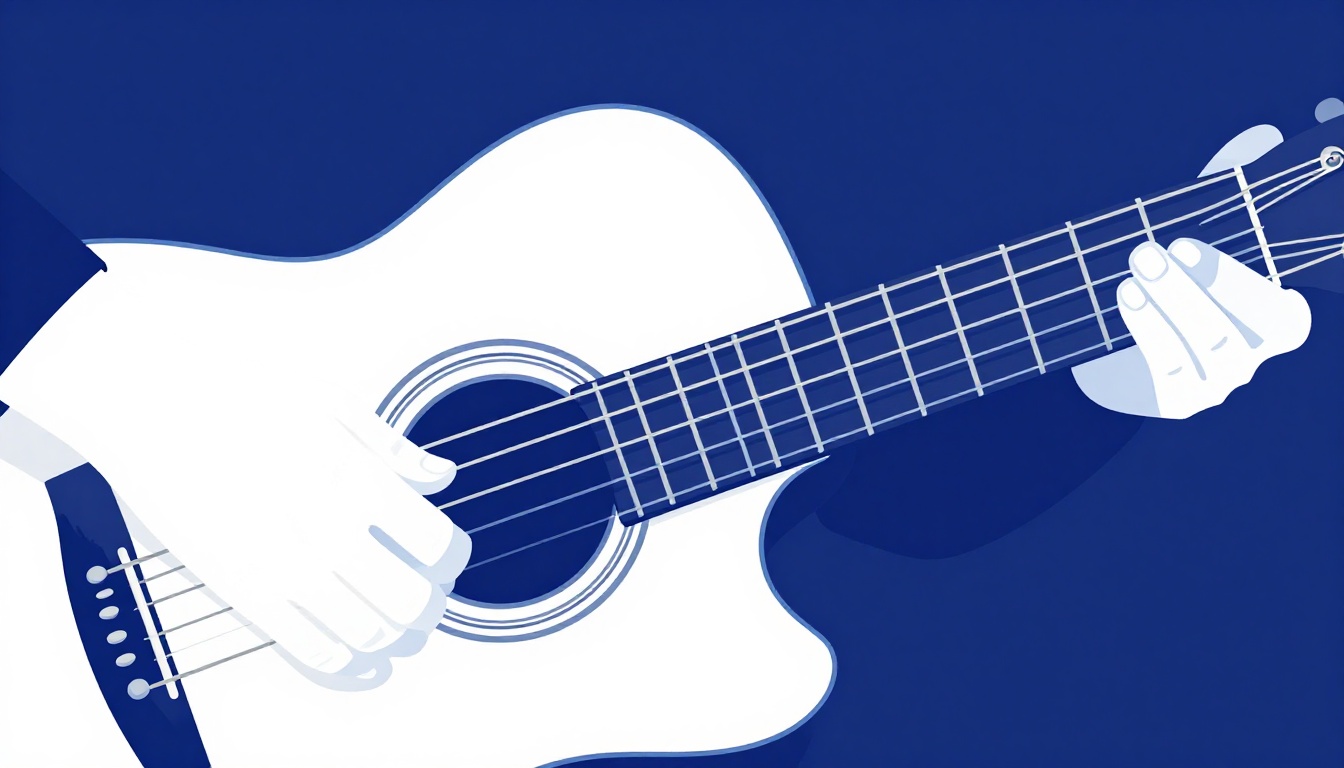
Some players describe this as keeping the ring and pinky fingers "stuck together" at the 3rd fret, since both land on the same fret one string apart and can be pressed down as a single unit rather than two separate movements. Fretting the high E string at the 3rd fret raises it from an open E up to a G, the same note already ringing on the open G string elsewhere in the chord, just an octave higher, so the four-finger version simply doubles a note the chord already had rather than introducing a new one, giving it a fuller, slightly brighter top end. Start with the three-finger version above and add the pinky once that feels solid, since the two versions are interchangeable and neither is more correct than the other.
Which strings to strum
Strum the top five strings only, from the 5th string (A) down through the 1st string (high E). Leave the 6th string (low E) out of the strum entirely.
The reason is straightforward: Cadd9 is built from the notes C, E, G, and D, and the open low E string is not one of them. Letting it ring adds a low, out-of-key thud underneath the chord that has nothing to do with the shape your fingers are holding.
Two ways to keep it out:
- Aim your downstroke to start on the A string. This takes deliberate practice at first, but it becomes automatic within a few days of paying attention to where your pick or thumb makes first contact.
- Let your middle finger's underside brush the low E. Because your middle finger is already reaching to the A string, the outer edge of that same finger often rests close enough to the low E string to mute it lightly on its own, without any extra effort.
Test it deliberately. Strum slowly and listen to the very first sound. If you hear a low, dull thump before the rest of the chord rings, the low E string is sneaking into the strum, and it is worth figuring out which of the two habits above needs adjusting before building speed on top of it.
What actually makes it "add9"
A Cadd9 chord is built from four notes: C (the root), E (the major 3rd), G (the perfect 5th), and D (the 9th). Plain C major uses only the first three of those, C, E, and G. Add the D, one octave up from the 2nd note of the C scale, and you get the shimmery, slightly open sound that gives Cadd9 its name.
The "add" in the name is doing real work. A plain 9th chord, C9, includes a flattened 7th note as well as the 9th, which pulls it toward a bluesy, dominant sound. An add9 chord skips the 7th entirely and simply adds the 9th on top of the plain major triad, so it keeps C major's bright, resolved character while layering a bit of extra color on top.
| Chord | Notes | Extra note added to C | Character |
|---|---|---|---|
| C (major) | C, E, G | none | Bright, resolved |
| Cadd9 | C, E, G, D | D (9th) | Shimmery, still resolved |
| C9 | C, E, G, Bb, D | Bb (flat 7th) and D (9th) | Bluesy, wants to resolve |
| Cmaj9 | C, E, G, B, D | B (major 7th) and D (9th) | Soft, jazzy, still resolved |
Seeing "add9" written out is the guitar world's way of being explicit that only the 9th is added, with no 7th anywhere in the chord, precisely because a bare "C9" already means something with a 7th baked in. If a chart just says "C9", that is not shorthand for Cadd9, it is a different, bluesier chord with an extra note in it.
What the "9" actually counts
Chord names sometimes number notes past the top of a single octave, and the "9" in Cadd9 is exactly that. The C major scale, counted straight up, runs C (1), D (2), E (3), F (4), G (5), A (6), B (7), and then starts over at C (8). Keep counting into the next octave and D becomes 9, E becomes 10, F becomes 11, and so on. The 9th and the 2nd are the same note, D, just an octave apart.
So why call it a 9 instead of a 2? Convention: once a chord already has a 3rd, a 5th, and sometimes a 7th stacked on top of the root, an extra note is usually thought of as continuing that stack upward rather than sitting underneath it, so it gets the higher number, 9, even when guitarists often voice it below the octave in practice, as the Cadd9 shape above does with the D landing on the B string, well within a single octave of the root. The name describes the note's role in the stack, not necessarily where your fingers physically put it on the fretboard.
Cadd9 vs Csus2: the mix-up that trips people up
Cadd9 and Csus2 are easy to confuse because on guitar they often get played with very similar-looking shapes, but they are built from different notes and mean different things.
| Chord | Notes | What happens to the 3rd |
|---|---|---|
| C | C, E, G | Present (E) |
| Cadd9 | C, E, G, D | Present (E), plus a D added on top |
| Csus2 | C, D, G | Replaced by D |
A sus2 chord ("suspended 2nd") removes the major 3rd entirely and puts the 2nd note of the scale in its place, which is why sus chords have that open, unresolved, almost hollow quality; there is no major or minor quality left in the chord at all, since the note that decides major versus minor is gone. Cadd9 does the opposite: it keeps the 3rd exactly where it was and simply adds the 9th (the same note as the 2nd, just an octave higher) on top, so the chord is still clearly major, just fuller. If a chord sounds "unfinished" rather than "fuller," it is more likely a sus2 than an add9, even if the two get mixed up in casual conversation.
Cadd9 vs Cadd2: same notes, different label
Cadd9 and Cadd2 are built from the same four notes, C, E, G, and D. The difference is really about which octave the extra note is written in, and in practice on guitar the two names are frequently used interchangeably for the identical voicing, since a D is a D no matter which octave it rings in once you are talking about the sound of an open chord rather than a strict notation convention. If a chart calls for Cadd2, the same shape covered above will work.
Why your Cadd9 is buzzing or sounds dead
With only three or four fingers doing the work, there are fewer places for something to go wrong than with a full four-finger barre chord, but the same handful of causes account for nearly every buzz or muted note. Work through them one at a time.
Your finger is lying flat
If your index, middle, or ring finger lies flat across the fretboard instead of coming down close to vertical, the pad of that finger can brush a neighboring string and deaden it. On this shape specifically, a flattened index finger often mutes the open G string sitting right next to it, since the fingers are working in a tight cluster on adjacent strings.
Curl your fingers so each one contacts its string near the fingertip rather than the pad. Check your thumb too. A thumb that creeps up over the top of the neck pulls your fingers down flatter to compensate, so keep it roughly behind your middle finger on the back of the neck instead.
You are pressing in the middle of the fret space instead of near the wire
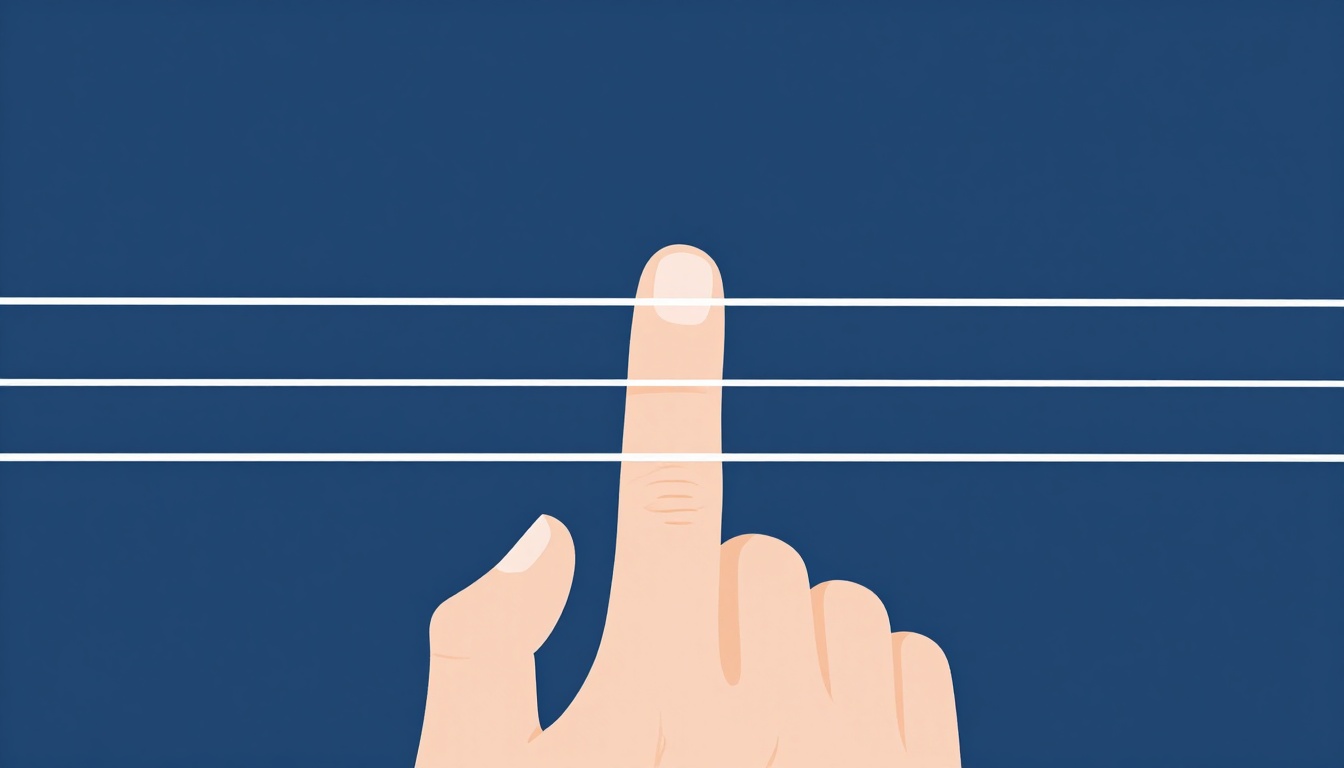
A fret number refers to the space between two metal fret wires, not the wire itself. Pressing right up against the fret wire, on the side closer to the guitar's body, takes noticeably less pressure to produce a clean note than pressing in the middle of that space. If your ring finger sits in the middle of the "3rd fret" space rather than hugging the wire, you will need more force to avoid a buzz and your hand will tire faster over a session.
Not enough downward pressure, especially from the ring finger
Even with good finger arch and good fret placement, a string still needs a minimum amount of downward force before it stops buzzing against the fret ahead of it. The ring finger is usually the weakest and least independent finger for a new player, so it is the one most likely to be under-pressing on the B string here. Fret the B string's 3rd fret alone, pick that string by itself, and listen. Add pressure gradually until the buzz disappears, then commit that amount of force to memory rather than only holding the shape.
A finger is muting an open string it should be clear of
The open G string is what gives Cadd9 a chunk of its brighter character, so an accidentally muted one changes the sound more than it would on a chord with fewer open strings. Pick the G string on its own while your fingers are in the Cadd9 shape. It should ring exactly as it does with your fretting hand off the guitar entirely. If it sounds shorter or duller, your index finger is likely leaning back into it, and adjusting the angle of that finger usually clears it immediately.
The low E string is sneaking into the strum
This one is not a fretting problem at all, it is a strumming habit, and it is covered in full in the strumming section above. If the chord sounds fine when you pick each string individually but muddy when you strum, the low E getting struck is the most likely explanation, not a fretting fault anywhere in your left hand.
The ring and pinky fingers are colliding on the four-finger version
If you are using the fuller four-finger voicing, the ring finger on the B string and the pinky on the high E string are working right next to each other on the same fret, and it is common for one to lean into the other and mute it. Press both down together as a single unit, angling each fingertip slightly away from its neighbor, rather than placing one and then the other.
An easier version for a stiff first week
Both versions above still ask three or four fingers to land in the same instant, which can feel like a lot in your first week or two. A genuinely useful simplification exists: play only the index finger on the D string's 2nd fret, then strum just the D, G, B, and high E strings, letting all three of the others ring open.
| String | Fret | Finger |
|---|---|---|
| 6 (low E) | Do not play | - |
| 5 (A) | Do not play | - |
| 4 (D) | 2 | 1 (index) |
| 3 (G) | Open | - |
| 2 (B) | Open | - |
| 1 (high E) | Open | - |
This drops the C note entirely, so it is not a complete Cadd9 on its own, more a bridge exercise: it lets you feel where the one fretted note sits and get the top strings ringing cleanly before adding the A string's C note back in with your middle finger. Once this four-string version rings clean, add the middle finger on the A string, then the ring finger on the B string, one at a time, until the full shape from the first section feels natural.
Cadd9 with a capo: the same open ring in other keys
The open shape covered above is popular in large part because of how it sounds, all four strings ringing with a mix of fretted and open notes. A capo lets you keep that exact ring while shifting the whole chord to a different pitch, rather than trading it away for a barre shape further up the neck.
| Capo position | Shape you play | What it sounds like |
|---|---|---|
| 2nd fret | Open Cadd9 shape (x32030) | Dadd9 |
| 3rd fret | Open Cadd9 shape (x32030) | D#add9 / Ebadd9 |
| 5th fret | Open Cadd9 shape (x32030) | Fadd9 |
Clamp a capo across the 2nd fret and play the identical x32030 shape, and the chord that rings out is Dadd9, not Cadd9, because the capo has raised every open and fretted note by two half steps. This is the reason singer-songwriters who want an add9 chord's open, airy character in a key like D or F often reach for a capo instead of hunting for a barre-based movable shape: the capo preserves the exact open-string ring that makes the sound work, where a fully fretted shape cannot.
None of this changes what Cadd9 itself is, since you are simply moving the same open shape to a different pitch rather than altering the chord's internal fingering.
Cadd9 further up the neck: a movable, closed voicing
Once the open version is comfortable, it is worth knowing a movable, six-string version, built the same way an open E chord becomes a movable barre chord elsewhere on the neck.
| String | Fret | Finger |
|---|---|---|
| 6 (low E) | 8 | 1 (index, barre, root) |
| 5 (A) | 10 | 3 (ring, mini-barre) |
| 4 (D) | 10 | 3 (ring, mini-barre) |
| 3 (G) | 9 | 2 (middle) |
| 2 (B) | 8 | 1 (index, barre) |
| 1 (high E) | 10 | 4 (pinky) |
Your index finger lays flat across all six strings at the 8th fret, putting the root, C, on the low E string, with the barre also supplying the B string's note without any extra finger needed there. Your ring finger flattens slightly to cover both the A and D strings at the 10th fret, your middle finger reaches to the G string's 9th fret, and your pinky stretches to the high E string's 10th fret.
Because every note in this shape comes from a finger rather than an open string, the whole pattern is movable. Slide it down three frets and you get Aadd9. Slide it up two frets and you get Dadd9. The fret your index finger's barre lands on is always the root of whatever add9 chord you are playing, which makes this shape useful once you start reading charts that call for add9 chords outside the key of C, where the open version's ringing strings are no longer available.
Where Cadd9 sits in a key
In the key of C major, Cadd9 functions as the tonic chord with an extra color note on top, meaning it still feels like "home" the way plain C does, just with a bit more shimmer. Because the added note, D, is itself the 2nd (and 9th) note of the C major scale, it does not clash with the key at all; it is already one of the seven notes the key is built from.
This is also why Cadd9 substitutes so freely for a plain C chord in a progression. Swapping one for the other does not change the underlying harmony of a song, since both chords share the same root and the same basic major quality, it only changes the color and texture of that one chord within the progression.
Cadd9 as the IV chord in the key of G
Cadd9 shows up just as often in songs written in the key of G major, where C is the IV chord rather than the tonic. The chord loop drilled earlier in this article, Cadd9, G, Em7, D, actually reads as IV, I, vi, V when analyzed in the key of G rather than as anything centered on C, which is worth knowing if you are working from a chart that labels chords by roman numeral or if you are trying to figure out why a progression built around Cadd9 still resolves to G rather than to C.
| Chord | Roman numeral (in G major) |
|---|---|
| G | I |
| Am | ii |
| Bm | iii |
| C / Cadd9 | IV |
| D | V |
| Em | vi |
Recognizing that Cadd9 is filling the IV role rather than the I role matters mainly for prediction: a IV chord in a major key tends to feel like it wants to move toward the V or back to the I, not sit as a final resting point the way a tonic chord does. That is part of why Cadd9 so often appears mid-progression, coloring a passing chord, rather than as the last chord a verse or chorus lands on.
Changing from Cadd9 to G
G is one of the most common chords paired with Cadd9 in real songs, and the two share enough territory that the change is faster than it looks once you have drilled it slowly.
| Chord | 6 (low E) | 5 (A) | 4 (D) | 3 (G) | 2 (B) | 1 (high E) |
|---|---|---|---|---|---|---|
| Cadd9 | Muted | 3 (middle) | 2 (index) | Open | 3 (ring) | Open |
| G | 3 (ring) | 2 (middle) | Open | Open | Open | 3 (pinky) |
Every finger has somewhere new to go here, so this is not a pivot-finger change, it is a full reset. What makes it manageable is that all three fingers are landing on frets you already know from the Cadd9 shape itself, just moved to different strings: the same 3rd-fret and 2nd-fret shapes reappear, only on the low E and A strings this time instead of the A, D, and B strings. Practice lifting the whole Cadd9 shape as one motion and dropping the G shape as one motion, rather than moving finger by finger, since that one-at-a-time habit is what makes chord changes feel slow long after the shapes themselves are memorized.
Changing from Cadd9 to Em7
Em7 is about as gentle a change as exists on the guitar, since the easy, one-finger version of Em7 shares a finger position directly with Cadd9.
| Chord | 6 (low E) | 5 (A) | 4 (D) | 3 (G) | 2 (B) | 1 (high E) |
|---|---|---|---|---|---|---|
| Cadd9 | Muted | 3 (middle) | 2 (index) | Open | 3 (ring) | Open |
| Em7 | Open | 2 (middle) | Open | Open | Open | Open |
Your middle finger barely moves at all, sliding from the A string's 3rd fret down to the A string's 2nd fret while staying on the exact same string. Every other finger simply lifts off. Because one finger stays almost anchored and everything else just releases, this is a good change to drill first if a Cadd9-to-something-else transition is giving you trouble elsewhere in a song.
Changing from Cadd9 to D
D and Cadd9 share the same rough hand position, a tight cluster of fingers on the top three or four strings, which makes the change feel closer than the string numbers alone suggest.
| Chord | 4 (D) | 3 (G) | 2 (B) | 1 (high E) |
|---|---|---|---|---|
| Cadd9 | 2 (index) | Open | 3 (ring) | Open |
| D | Open | 2 (middle) | 3 (ring) | 2 (index) |
Notice the ring finger stays on the B string for both chords, though it stays at the same fret, the 3rd, on Cadd9 and drops one fret to the 2nd... actually on D the ring finger sits at the 3rd fret of the B string in this shape, the same fret it already occupied on Cadd9, so it is the one finger that genuinely does not have to move. Your index finger lifts off the D string entirely and reappears, doing different work, on the high E string, while your middle finger fills the now-open D string's neighbor, the G string. Practice lifting all of Cadd9's fingers together and dropping the D shape as one motion, keeping an eye on that ring finger staying put as your anchor.
Changing from Cadd9 to Am
Am and Cadd9 sit close together on the neck, and the change mostly asks your fingers to shuffle within a small zone around the middle strings rather than travel far.
| Chord | 5 (A) | 4 (D) | 3 (G) | 2 (B) | 1 (high E) |
|---|---|---|---|---|---|
| Cadd9 | 3 (middle) | 2 (index) | Open | 3 (ring) | Open |
| Am | Open | 2 (middle) | 2 (ring) | 1 (index) | Open |
Your middle finger stays on the D string in the exact same fret it already had, just changing which finger role it plays in the new chord's numbering. Your index finger moves from the D string over to the B string, and your ring finger moves from the B string over to the G string. Because one finger stays completely anchored on the same fret and string, this is a good chord change to practice first if Cadd9-to-something-else is giving you trouble elsewhere.
Changing from Cadd9 to F
F sits a short step away from Cadd9, and the easiest common version of F asks for a small barre rather than the full six-string version many beginners assume it requires.
| Chord | 4 (D) | 3 (G) | 2 (B) | 1 (high E) | |---|---|---|---| | Cadd9 | 2 (index) | Open | 3 (ring) | Open | | F (mini, small barre) | 3 (ring) | 2 (middle) | 1 (barre) | 1 (barre) |
The mini F bars your index finger across just the top two strings, the B and high E strings, at the 1st fret. From Cadd9, your index finger goes from a single fretted note on the D string to barring two strings higher up, your middle finger takes over the G string, and your ring finger moves out to the D string. This asks more of your hand than the changes to Em7 or Am, so it deserves its own slow, dedicated practice rather than being rushed inside a song at full speed on day one.
Changing from Cadd9 to Dsus4
Dsus4 shows up right alongside Cadd9 in songs like "Wonderwall," and the two shapes sit in a similar cluster on the top strings.
| Chord | 4 (D) | 3 (G) | 2 (B) | 1 (high E) | |---|---|---|---| | Cadd9 | 2 (index) | Open | 3 (ring) | Open | | Dsus4 | Open | 2 (index) | 3 (middle) | 3 (ring) |
Your index finger lifts off the D string and reappears one string over, on the G string, at the same 2nd fret it just left. Your ring finger moves from the B string over to the high E string, staying on the same 3rd fret, and your middle finger fills the newly open B string. Because the fret numbers repeat even as the fingers and strings shuffle, this change tends to click faster than it looks once you have drilled it a few times slowly.
Practicing the Cadd9, G, Em7, D loop
This four-chord loop is common enough in real songs that it is worth drilling on its own, separate from any specific song, using the shapes already covered above.
| Chord | 6 (low E) | 5 (A) | 4 (D) | 3 (G) | 2 (B) | 1 (high E) |
|---|---|---|---|---|---|---|
| Cadd9 | Muted | 3 (middle) | 2 (index) | Open | 3 (ring) | Open |
| G | 3 (ring) | 2 (middle) | Open | Open | Open | 3 (pinky) |
| Em7 | Open | 2 (middle) | Open | Open | Open | Open |
| D | Open | Open | Open | 2 (middle) | 3 (ring) | 2 (index) |
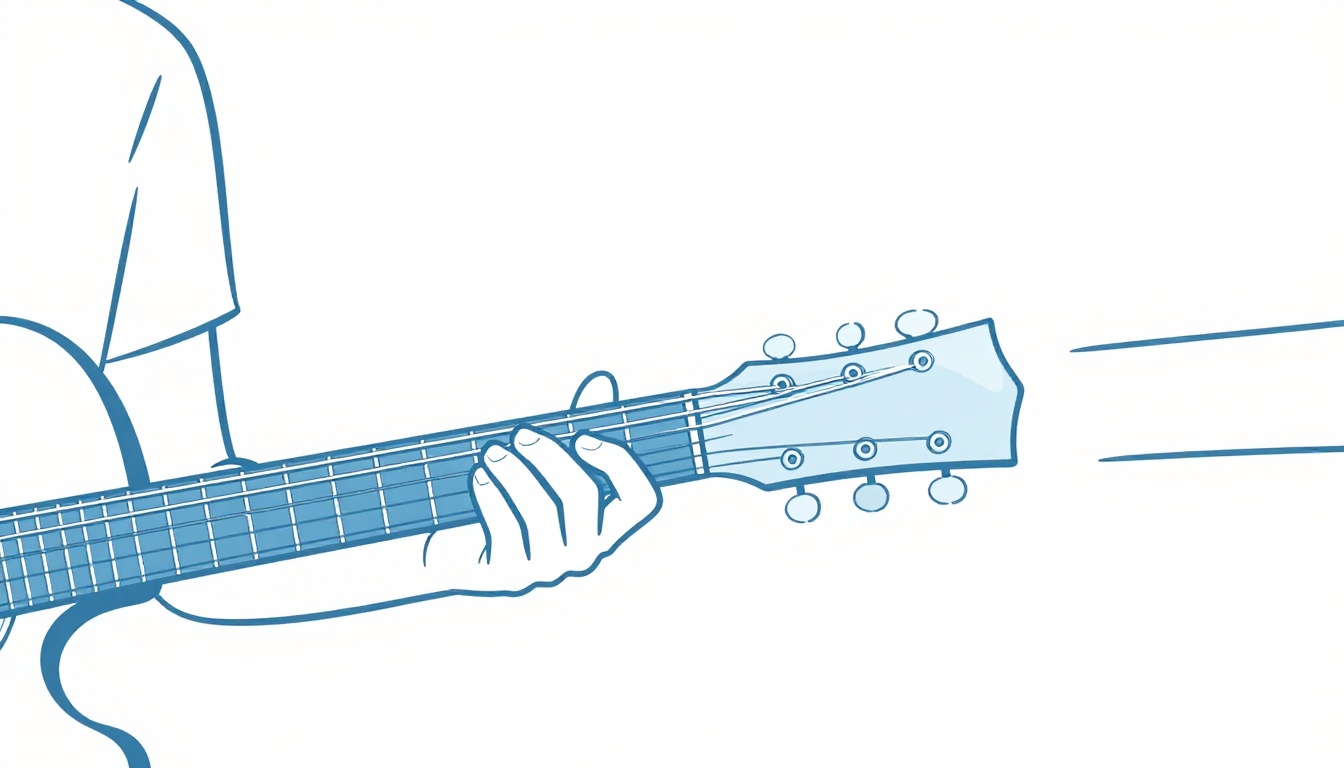
Play each chord for a full four count, in that order, then loop back to Cadd9 and repeat. Go slowly enough that every chord actually rings clean before moving to the next one; a fast, sloppy loop teaches your hand the wrong habit. Once this loop feels automatic at a slow tempo, it covers one of the most common chord movements in acoustic and pop guitar, and it transfers directly into the songs covered below.
Songs built around Cadd9
Oasis's "Wonderwall" puts Cadd9 on full display in its chorus, moving through Cadd9, Em7, and G, and it remains one of the most recognizable uses of the chord in popular music. The verses of that same song, played with a capo at the 2nd fret, use a related set of shapes, Em7, G, Dsus4, and A7sus4, which is worth knowing if you are learning the song in full rather than just its chorus.
U2's "Where the Streets Have No Name" brings Cadd9 into The Edge's signature delay-heavy sound, and Train's "Hey Soul Sister" leans on it for some of its bright, upbeat color. Any of these is a reasonable practice target once the shape itself feels comfortable, since all three reward holding the chord steady and letting its open strings ring rather than rushing through it.

Playing Cadd9 fingerstyle instead of strumming
The open Cadd9 shape works just as well plucked one note at a time as strummed, and its open strings make it a natural chord to fingerpick, since two of its four notes require no attention from your right hand beyond plucking the correct string.
| Finger | String | Note (fretted or open) |
|---|---|---|
| Thumb | 5 (A) | C |
| Index | 4 (D) | E |
| Middle | 3 (G) | G |
| Ring | 2 (B) | D |
A simple pattern: thumb plays the A string, then index, middle, and ring pluck the D, G, and B strings in order, then let the high E ring as part of the chord's overall color rather than a note in the pattern itself. Practicing this pattern slowly is a good way to hear all four of Cadd9's notes individually before combining them into a full strum.
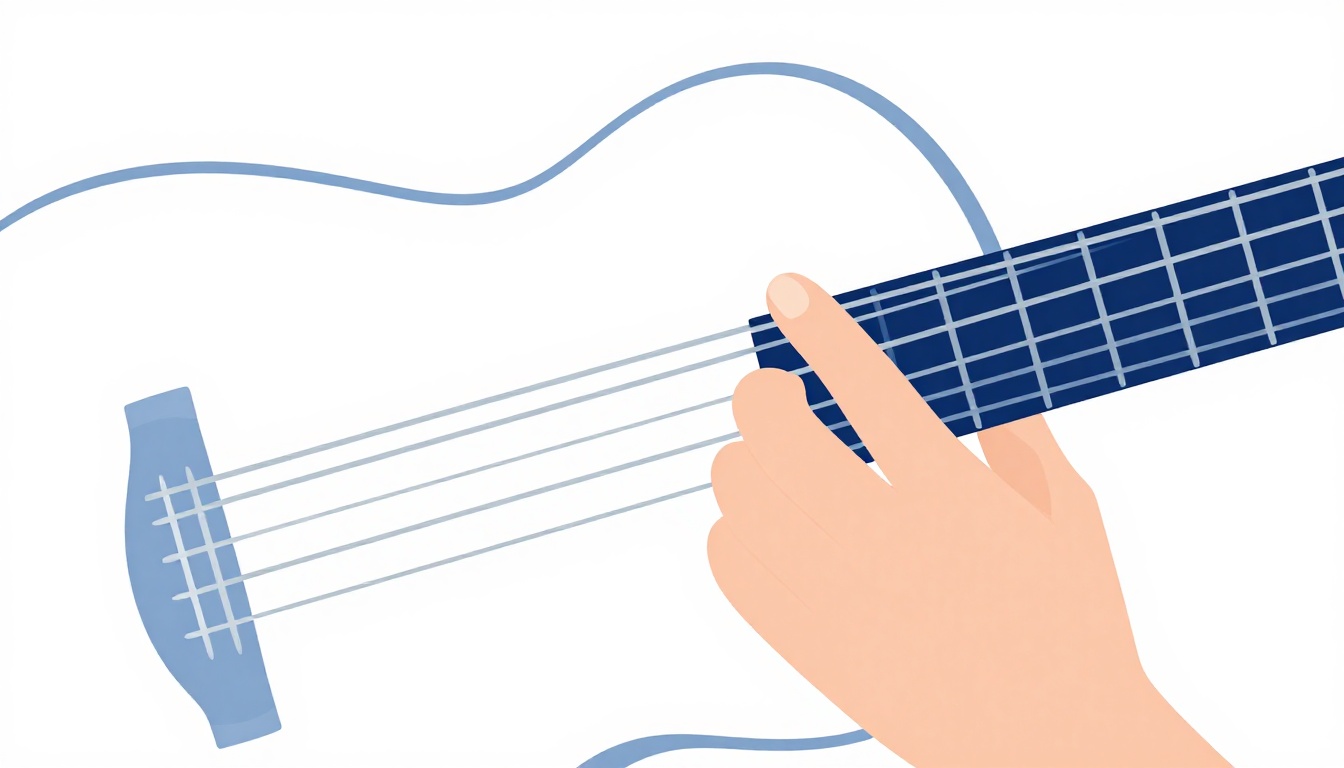
Practice the pattern well under tempo, and say each finger's name out loud as it plays until the sequence stops needing conscious thought. Once it does, try letting the notes ring into each other slightly rather than cutting each one off cleanly, which is where Cadd9's open, shimmering character really comes through.
Using the pinky as a hammer-on flourish
Because the three-finger and four-finger versions of Cadd9 covered earlier differ by only the pinky on the high E string, that pinky makes a natural hammer-on flourish rather than a note you commit to holding for the whole chord.
Form the three-finger Cadd9, index on the D string, middle on the A string, ring on the B string, high E string left open. Strum the chord once, then, a beat or two later, hammer your pinky onto the high E string's 3rd fret without picking that string again separately. The string is already ringing from the strum, so the hammer-on simply raises its pitch mid-ring, adding a small upward flourish on top of the chord you already struck.
This works because the note the pinky lands on, G, is already the note played on the open G string elsewhere in the chord, just an octave higher, so it thickens the top of the chord rather than introducing anything foreign to it. It is a small, purely decorative move, useful for adding motion inside a single held chord in a slow strumming pattern or a fingerpicked part, rather than a substitute for learning either full shape on its own.
Common mistakes beyond buzzing
A handful of habits show up again and again with this chord specifically, separate from the fretting issues covered earlier.
Accidentally playing plain C instead
If you already know a plain C chord well, your fingers may fall back into that shape out of pure muscle memory, especially the index finger landing on the B string's 1st fret instead of moving to the D string. Check the B string specifically. It should ring at the 3rd fret under your ring finger, not the 1st fret under your index finger.
Treating the four-finger version as mandatory
The three-finger version, with the high E string left open, is a complete, correct Cadd9 on its own. The pinky on the high E string only doubles a note the chord already has. If your hand is tired or the pinky keeps causing a buzz, dropping it entirely is not cutting a corner, it is a legitimate way to play the chord.
Strumming too hard and burying the open strings
Because two of Cadd9's strings are open, an aggressive strum can drown their subtler ring under the fretted notes. This chord tends to sit better with a slightly lighter touch than a full barre chord would need, letting the open strings actually contribute their sound instead of being overpowered.
Confusing add9 with a plain 9 chord on a chart
As covered earlier, C9 and Cadd9 are different chords, one with a 7th baked in and one without. If a chart calls for one and you play the other, the chord will sound noticeably different even though the fingering felt confident. When in doubt, check whether the chart explicitly says "add9" rather than a bare "9."
Does Cadd9 feel different on a nylon-string guitar?
Yes, in two ways that pull in opposite directions. Nylon strings sit under much lower tension than steel strings, so once your fingers are correctly placed, less force is needed to stop any note from buzzing, which is a real advantage while your fingertips are still building calluses. Classical and nylon-string guitars also tend to have noticeably wider necks than steel-string acoustics, which gives the open G and high E strings more room to ring clearly without a neighboring finger brushing them by accident, the exact muting problem covered earlier in this article.
The trade-off is that same wider neck asks for a slightly bigger stretch between your fingers to reach the same frets, which can work against players with smaller hands even as it helps everyone avoid accidental muting. The shape, the fingers, and the frets are identical either way. Only the physical spacing changes, and it is worth expecting that difference rather than assuming something is wrong with your technique if a nylon-string neck feels wider under your hand than a steel-string one did.
Warm-ups that make the stretch easier
The Cadd9 shape does not ask for a huge stretch, but building the finger independence to land all three or four fingers together, cleanly, in one motion benefits from a short warm-up before a focused session.
- Finger walk. Rest all four fingertips on the D string, one fret apart starting at the 1st fret, and press each one down in order, index through pinky, then release them in the same order. Repeat this on each string. It wakes up finger independence, which the four-finger version of this chord depends on directly.
- Ring and middle isolation. The full Cadd9 shape asks your index, middle, and ring fingers to land together yet each on a different string, which does not come naturally to most new players. Press your middle finger down alone, release it, then press your ring finger down alone, release it, and repeat five times without letting the other fingers join in.
- Open and close. Make a loose fist with your fretting hand, then spread your fingers as wide as comfortable, five times. This general hand warm-up loosens the tendons that any multi-finger chord shape relies on.
None of this needs more than a minute or two, and it is worth doing before any session focused on landing the full chord cleanly on the first attempt rather than the third or fourth.
Changing between chords is still the real skill
Every voicing and every chord change covered above eventually comes back to the same point: the Cadd9 shape itself is not the hard part. What takes practice is landing it cleanly at tempo, in the middle of a song, without your hand hesitating or your strum dropping out while your fingers find their spot. Treat each chord change above as its own small drill, done slowly and away from a full strum, before asking it to survive inside a real song at speed.
A practice routine for today
Fifteen focused minutes is enough to make real progress on this chord, in keeping with the idea behind practicing guitar in short daily sessions rather than occasional long ones.
- Two minutes: form the Cadd9 shape from nothing, five separate times, resetting your hand fully between each one. Check the shape first, the sound second.
- Three minutes: strum the chord slowly, five strings only, and pick the G string on its own if anything sounds muted, using the troubleshooting section above to diagnose it.
- Five minutes: practice one chord change, Cadd9 to Em7 first since it is the smoothest, or Cadd9 to Am once Em7 feels solid. Change on a slow, steady four-count, no strumming in between, just the new shape landing cleanly on the beat.
- Five minutes: if you already know a plain C chord, alternate between C and Cadd9 on every other beat, moving only your index and ring fingers each time. This single-pair drill builds the exact habit that keeps the two chords from blurring into each other later.
Repeat this most days rather than saving it for one long weekly session. A shape this size is built through frequent, short repetition, since your hand is learning a physical position, not memorizing a fact.
FAQ
What notes are in a Cadd9 chord? C, E, G, and D. C is the root, E is the major 3rd, G is the perfect 5th, and D is the 9th, the note that gives the chord its shimmery, fuller character compared to plain C major.
Is Cadd9 harder or easier than a plain C chord? Easier, for most players. The Cadd9 shape spreads its three fingers across three different strings without the tight stretch plain C asks of the ring finger, and the open G string does more of the work than in a plain C chord.
What is the difference between Cadd9 and C9? C9 includes a flattened 7th note in addition to the 9th, giving it a bluesy, unresolved quality. Cadd9 skips the 7th entirely, so it keeps the bright, resolved character of plain C major while adding only the 9th on top.
Can I use Cadd9 instead of a plain C chord in a song? Often, yes, especially in acoustic and pop songs where the extra shimmer of the 9th fits the mood. It changes the color of the chord, though, so it is worth listening for whether the song wants that fuller sound or the plainer sound of a basic C chord before swapping one for the other.
Do I need the pinky on the high E string? No. The three-finger version, with the high E string left open, is a complete Cadd9 on its own. The pinky only doubles a note the chord already has, giving it a slightly fuller top end, and dropping it is a legitimate choice, not a shortcut.
Why is it written "Cadd9" instead of just "C9"? Because "C9" already refers to a different chord, one that includes a flattened 7th note alongside the 9th. Writing "add9" makes it explicit that only the 9th is added, with no 7th anywhere in the chord, so the two are never confused on a chart.
Is Cadd9 the same as Cadd2? In practice, yes. Both are built from the same four notes, C, E, G, and D, with the extra note technically named differently depending on which octave it is thought of as sitting in. The shapes players actually use for the two names are typically identical.
What songs use Cadd9? Oasis's "Wonderwall" is the most well known example, using Cadd9 in its chorus. U2's "Where the Streets Have No Name" and Train's "Hey Soul Sister" both use it too, each leaning on its bright, open character in different ways.
Is Cadd9 always the tonic chord of a song? No. It often is, in songs written in the key of C, but it just as commonly shows up as the IV chord in the key of G, sitting a step below the tonic rather than on it. Whether it feels like "home" or like a chord passing through depends entirely on the key the surrounding progression is actually built in, not on anything inherent to the shape itself.
What is the fastest way to memorize the Cadd9 shape? Learn it as a small change from a plain C chord rather than as an unrelated new shape: the ring finger moves from the B string's 1st fret to its 3rd fret, and the index finger moves from the B string over to the D string's 2nd fret. Drilling that one small reshuffle, starting from a C chord you already know, tends to stick faster than memorizing the Cadd9 shape as four unrelated finger placements.
GuitarLowKey
Ready for fifteen focused minutes?
Open the web app and train the change that is blocking your song.