
How to Play the Dm/A Guitar Chord (D Minor Over A)
The Dm/A guitar chord is an open Dm shape with the A string added back in. The exact fingering, why it works, and when you actually need it.

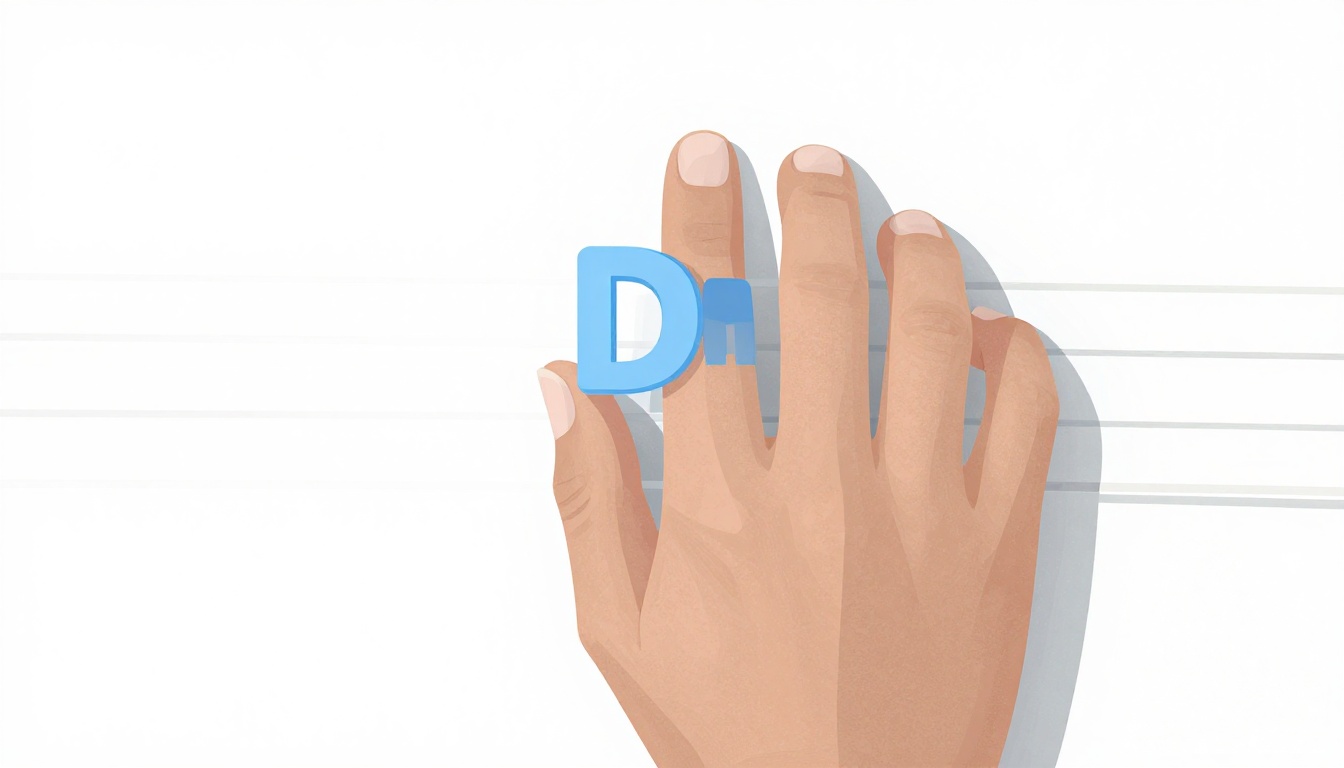
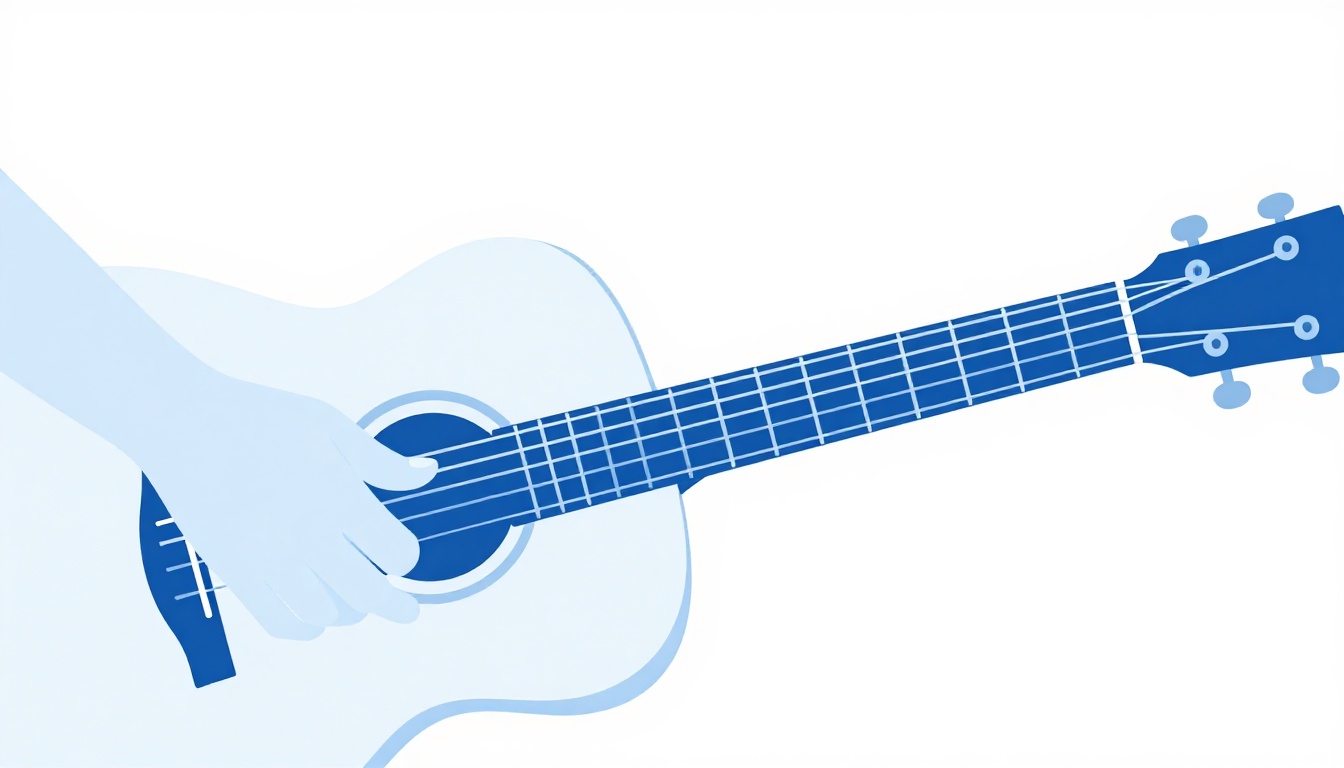
Dm/A is a D minor chord played with A, not D, as the lowest note. On guitar you play the exact same shape you already know as open Dm, index finger on the 1st fret of the high E string, middle finger on the 2nd fret of the G string, ring finger on the 3rd fret of the B string, but instead of muting the open A string you let it ring as the bass. Mute only the low E string and strum from the A string down. That is the whole chord. Everything below covers why this shape is the one nearly everyone actually plays, what changes if you want true root-position Dm instead, and how to move in and out of it without losing the beat.
| String | Fret | Finger |
|---|---|---|
| 6 (low E) | Muted | - |
| 5 (A) | Open | - |
| 4 (D) | Open | - |
| 3 (G) | 2 | 2 (middle) |
| 2 (B) | 3 | 3 (ring) |
| 1 (high E) | 1 | 1 (index) |
What the slash actually means
A chord name with a slash in it, like Dm/A, reads as "chord, over bass note." The letters before the slash, Dm, tell you which chord you are playing: D minor. The letter after the slash, A, tells you which note has to be the lowest one sounding when you strum. Everything else about the chord, the notes above the bass, stays the same as plain Dm.
This is different from a chord with a completely different name. Dm and Am are two different chords with different notes. Dm/A is still a D minor chord, D, F, and A, just voiced with A on the bottom instead of D. If you already know how to spell out Dm, you already know Dm/A. The only thing that changes is which note the bass string plays.
Slash chords do not have to use a note that already belongs to the chord, either, though Dm/A does. Some slash chords put a note underneath that is not one of the chord's own notes at all, added purely to create a specific bass line, a passing tone rather than part of the harmony. Dm/A is the simpler, more common case: A is already one of D minor's own notes, its fifth, so nothing about the chord's identity is being stretched. You are only choosing which of the notes you were already playing gets to be the lowest one.
The forward slash itself is just notation, a way of writing "this chord, but with that note underneath" without inventing a brand new chord symbol for every possible bass note a chord could sit on. Read left to right, chord first, bass note second, and the symbol tells you everything it is going to tell you.
The notes in Dm/A, and why A is in the bass
D minor is built from D, F, and A: the root, the minor third, and the perfect fifth. In root position, D sits on the bottom. In Dm/A, the fifth of the chord, A, sits on the bottom instead. Music theory calls this a second inversion chord: the note a fifth above the root has been moved underneath it.
Moving the fifth into the bass does not add or remove any notes from the chord. D minor is still D minor. What changes is the color of the low end. A sits a fourth below D, so instead of the bass line landing squarely on the root, it sits on a note that pulls gently toward the chords around it. That is the entire reason slash chords exist: same harmony, different bass note, different feel underneath it.
It helps to compare all three notes side by side and hear what each one does to the chord's weight. D in the bass is the most settled version, the one your ear reads as fully resolved and at rest. F in the bass, Dm/F, leans slightly, since a third in the bass always sounds a little suspended rather than grounded. A in the bass, Dm/A, sits somewhere between the two: stable enough that the chord still clearly reads as D minor, but with a lighter, more open low end than root position gives you, largely because A is a fifth, the most consonant interval above the root there is. That consonance is why A works so well as an alternate bass note almost anywhere Dm would otherwise go.
Step-by-step: playing the Dm/A shape
Here is the shape broken into the order your hand actually builds it in.
- Bring your fretting hand to the neck with your thumb resting behind the first and second fingers, not wrapped over the top. This gives your fingers room to arch.
- Place your index finger on the 1st fret of the high E string (1st string).
- Place your middle finger on the 2nd fret of the G string (3rd string).
- Place your ring finger on the 3rd fret of the B string (2nd string). Your ring and middle fingers will be close together and slightly staggered, ring finger further down toward the soundhole.
- Rest your fretting hand's palm so the low E string (6th string) is naturally muted, either by the side of your thumb or the back of your index finger brushing it.
- Strum from the A string (5th string) down through the high E string. Five strings ring: A, D, G, B, and high E, all open except the three you fretted.
The open A string is not an accident and not optional in this version, it is the bass note that makes this chord Dm/A rather than plain Dm.
Whether you use a pick or your bare thumb for this strum changes very little about the shape itself, but it changes how forgiving the attack is. A pick gives a brighter, more even attack across all five strings and makes it easier to strum quickly, which is useful once you are changing chords inside a song. A bare thumb, dragged across the strings, gives a softer, rounder start to the chord, closer to what you get from fingerstyle, and can be more forgiving while you are still checking that every string rings. Neither is more correct than the other. Pick whichever matches what the rest of the song you are playing uses.
The one-string secret: Dm/A is the Dm chord you already know
Here is the part most chord charts never say out loud. If you learned open Dm by muting the low E string and strumming everything else, top four or five strings, there is a good chance you have already been playing Dm/A without a label for it. Several chord references describe Dm/A as "the same shape as open Dm, but with the open A string included instead of muted," and that is exactly right.
The distinction only shows up depending on which string you start your strum on:
| You strum from | Bass note | Chord name |
|---|---|---|
| A string (5th string) | A | Dm/A |
| D string (4th string), skipping the A string | D | Dm (root position) |
Both use the identical fretted shape, index on the high E 1st fret, middle on the G 2nd fret, ring on the B 3rd fret. Nothing about your fretting hand changes. The only difference is whether your strumming hand includes the open A string on the way down. This is why Dm/A rarely feels like "a new chord" once you understand it. It is a strumming-hand decision layered on a shape your fretting hand already owns.
Why plain Dm asks you to skip the A string
If Dm/A is just Dm plus one extra open string, it is worth knowing what "true" root-position Dm looks like, because some songs and some teachers do want D, not A, on the bottom.
To play root-position Dm, use the same fretted shape, but strum starting from the open D string and stop your pick or fingers before they reach the A string. The low E and the A string are both left silent. Only D, G, B, and high E ring out, with D as the lowest note.
In practice this is harder to control than it sounds, especially with a pick moving fast in a strum pattern, which is part of why so many players end up brushing the open A string anyway and playing Dm/A without meaning to. If your rhythm does not require a strict root-position bass, there is no real cost to letting the A string ring. If a chart specifically calls for plain Dm under a bass line that is doing something else, that is when the extra care to skip the A string actually matters.
One reliable way to control this with a pick is to change where your strum starts rather than trying to steer around a string mid-strum. Rest the pick lightly against the D string before you begin the downstroke, so the stroke naturally starts there instead of higher up on the A string. This is easier to control consistently than trying to skip a string in the middle of a fast strum, which asks your picking hand to make a small, precise adjustment at speed, exactly the kind of movement that tends to fail first when a strum pattern speeds up.
If you are playing with a full band or alongside a bass player, this decision usually gets made for you by whatever the bass is doing. A bass player holding down a D root note underneath your guitar chord means your own choice of Dm or Dm/A barely matters to the listener, since the lowest note in the overall mix comes from the bass regardless of what your open strings are doing. The distinction matters most when the guitar is the only instrument providing the low end, which is exactly the situation most solo players and singer-guitarists are actually in.
Common mistakes: why your Dm/A is not ringing clean
Every fault below has one cause and one fix. Work through them in order.
The high E string is buzzing or muted
Your index finger is on the 1st fret of the high E string, and it is easy to press with the flat pad of the finger instead of the tip, which can deaden the string or catch the fret at an angle. Press with the tip, positioned just behind the fret wire, and keep the rest of your index finger from leaning across the neck.
The B string sounds choked
Your ring finger on the 3rd fret of the B string needs to come down close to the fret without straddling it. If the ring finger is flattened rather than arched, its side can brush the high E string next to it and mute the note you just fretted with your index finger.
The G string does not ring
Your middle finger on the 2nd fret of the G string is doing double duty next to your ring finger, which is one fret further down and one string over. If your fingers are not staggered enough, the middle finger's knuckle can nudge the B string and dull it. Arch your middle finger higher than usual to clear the string beside it.
The low E string is ringing when it should not be
This is the fault that turns Dm/A into a different, muddier chord entirely, because a low E under a D minor chord is not part of the harmony. Rest the side of your fretting hand's thumb lightly against the top of the low E string, or let the underside of your index finger's first knuckle brush it as it reaches for the high E string. You are not fretting it, just resting enough weight to stop it vibrating.
The chord sounds thin or incomplete
If you are only catching three or four strings, you are likely starting your strum too late, past the A string, and clipping the high E string too early on the way up. Aim the pick or thumb to start just above the A string and follow through past the high E string, even if your follow-through continues into the air past the guitar.
Your fingers are cramping trying to get there fast
The middle and ring fingers sit close together with a one-fret offset, which is an unusual stretch until your hand has practiced it. Do not force the shape at full strumming speed early on. Place the shape slowly, check each string rings, and only then add strumming speed.
The chord sounds fine alone but falls apart mid-song
This is almost never a fretting problem. It means the shape has not been practiced as a landing point, only as a static position. Your hand can hold the chord perfectly when it has three seconds to get there and completely miss the same shape when it has half a beat. The fix is not more practice of the chord in isolation, it is slow, repeated practice of arriving at the chord from whatever comes before it, covered in the transitions section below.
You are carrying tension from the previous chord
If the chord before Dm/A used a barre or a stretch, it is common to arrive at Dm/A still gripping the neck with the same tension, which stiffens your fingers and makes the offset between middle and ring finger harder to manage than it needs to be. Release your grip fully between chords, even if only for a fraction of a second, rather than dragging tension from one shape into the next.
Alternative fingerings for the same shape
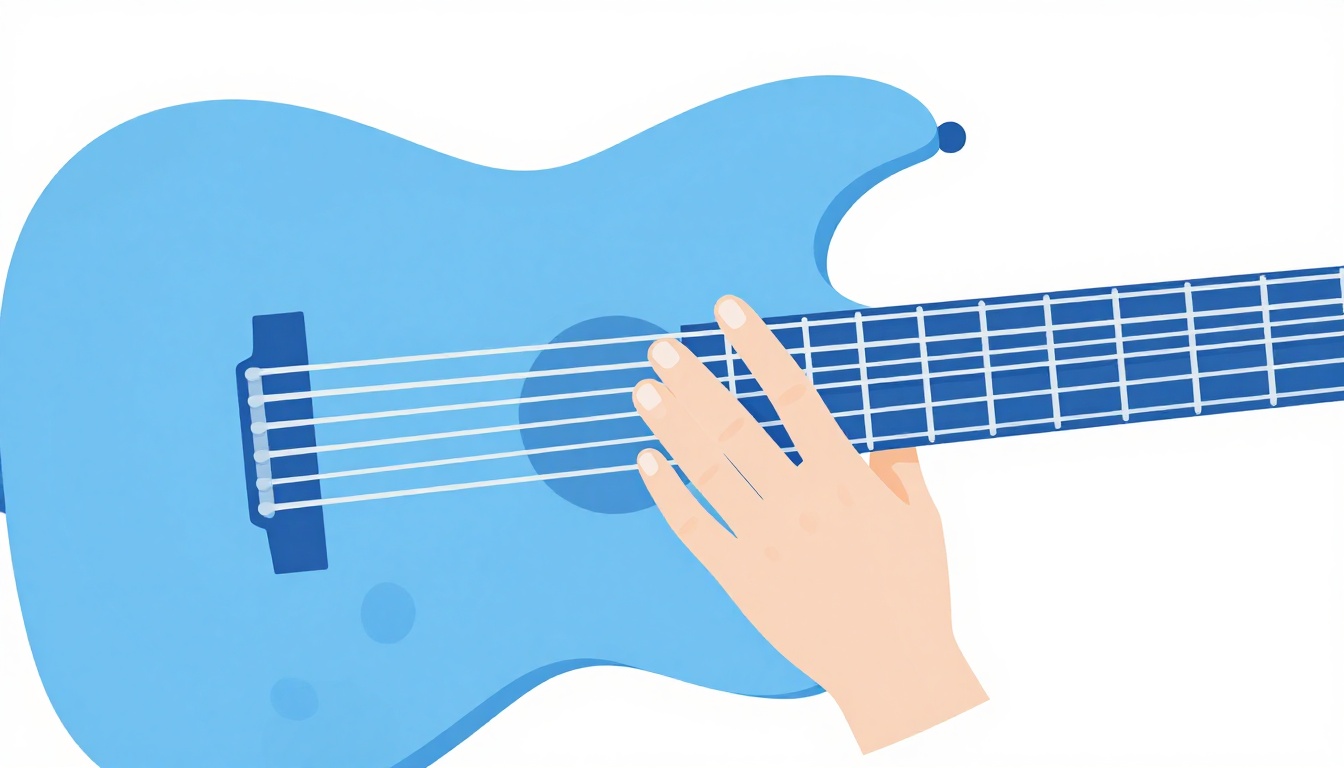
The frets never change, but which fingers you use to get there can. Two fingering patterns show up across chord references for this exact shape.
| Fingering style | Index/finger 1 | Finger on B string, fret 3 | Finger on G string, fret 2 |
|---|---|---|---|
| Standard | Index, high E fret 1 | Ring | Middle |
| Alternative | Middle, high E fret 1 | Pinky | Ring |
The alternative fingering, using middle, ring, and pinky instead of index, middle, and ring, frees your index finger entirely. That matters most when the chord before or after Dm/A needs your index finger already in position, or when you are adding a hammer-on or a bass note with your index finger while the rest of the chord holds. For most players learning the shape for the first time, the standard fingering, index-middle-ring, is easier and the one worth building first.
Playing Dm/A fingerstyle
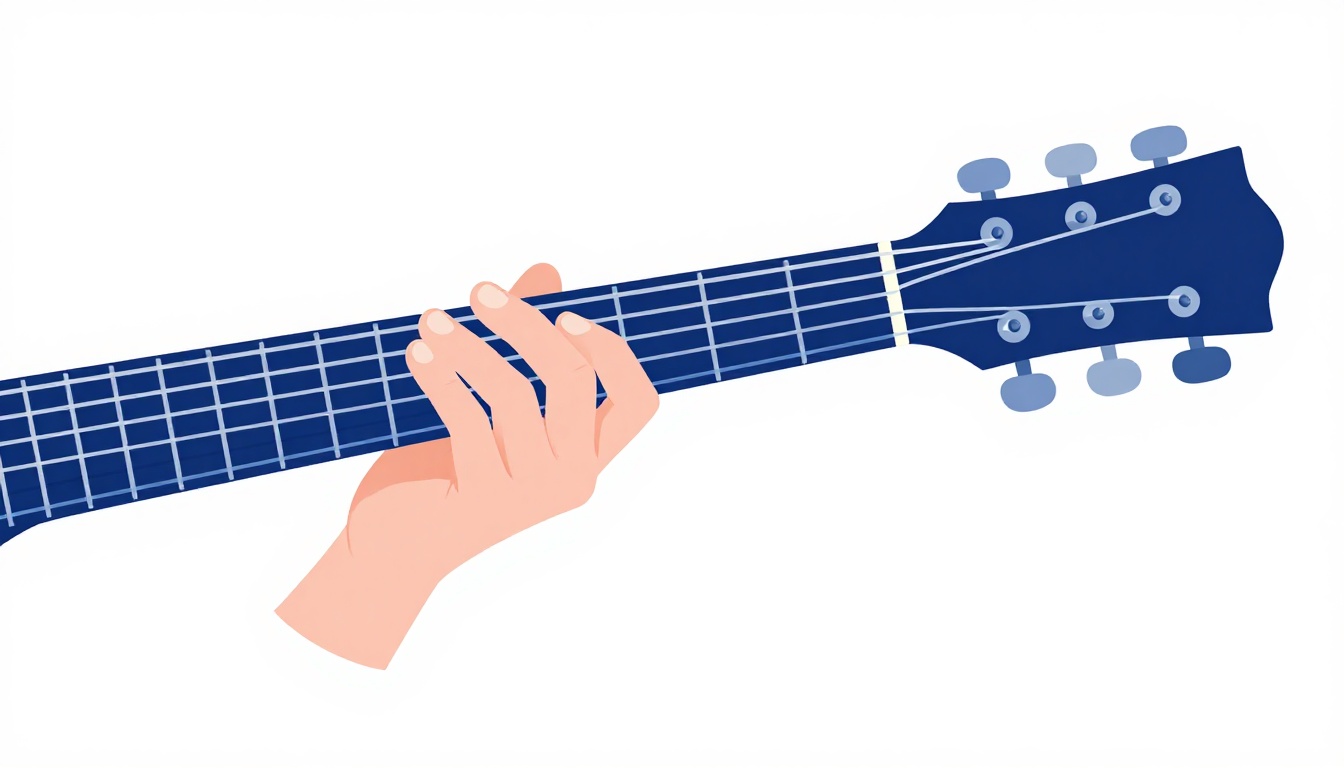
Strumming is not the only way to bring out the A bass note. Fingerstyle playing actually makes the "A in the bass" idea more obvious, because your thumb and fingers are assigned to specific strings rather than sweeping across all of them at once.
| Right hand part | String | Note |
|---|---|---|
| Thumb | 5 (A) | A, bass note |
| Index finger | 4 (D) | D |
| Middle finger | 3 (G) | A |
| Ring finger | 2 (B) | D |
A simple pattern to start with: thumb plucks the open A string alone on the first beat, then your index, middle, and ring fingers pluck the D, G, and B strings together, or in a rolled sequence, on the beats after. This makes the bass note land clearly on its own before the rest of the chord fills in above it, which is exactly the effect a slash chord is written to create. Leave the high E string out of the pattern entirely if you want a slightly darker, less bright voicing, or add it back in with your pinky if your right hand can manage a fourth finger comfortably.
Fingerstyle also makes the mute-the-low-E problem easier to manage than strumming does, since your thumb only ever touches the string it is assigned to and never brushes the low E by accident.
A second pattern worth trying once the first one feels natural: alternate the thumb between the open A string and the open D string, bass note then a second, lower-register note, while your fingers pick out the G, B, and high E strings in a simple repeating order, index, middle, ring. This gives the chord more forward motion than plucking everything together, and it is close to how a lot of folk and singer-songwriter fingerpicking patterns treat any chord, slash or otherwise. The point either way is the same: your thumb's job is to keep the bass note distinct and audible, and Dm/A is one of the clearest chords to practice that separation on, since the bass note is a single open string with nothing else competing for the thumb's attention.
Dm/A vs. Dm/F: the other inversion
D minor has three notes, which means three possible bass notes: D itself, F, and A. Root position puts D on the bottom. Dm/A, our chord, puts A on the bottom. There is a third option, Dm/F, which puts F on the bottom instead.
| Chord | Bass note | Inversion | Typical guitar approach |
|---|---|---|---|
| Dm | D | Root position | Strum from the D string, skip the A string |
| Dm/F | F | First inversion | F sounds as the lowest note, usually by fretting a low F or muting everything below it |
| Dm/A | A | Second inversion | Open A string rings as the bass under the Dm shape |
Dm/A is by far the easier of the two inversions to play on guitar, because the open A string does the work for you. Dm/F usually asks you to fret a bass note rather than rely on an open string, which makes it less common in casual chord charts and more common in written arrangements where the bass line is doing something specific, like descending step by step through D, then a chromatic passing note, then C.
You will see both written out in progressions where the songwriter wants the bass to move smoothly rather than jump. A progression like Gm to Dm/F to Eb walks the bass down in small steps instead of leaping between root notes.
It is worth asking, when you see either inversion written in a chart, what job it is doing. Dm/F usually shows up mid-phrase, a stepping stone in a bass line that is clearly headed somewhere, rarely a chord a song lingers on for long. Dm/A is more flexible. Because it is so easy to reach on guitar, and because a fifth in the bass reads as fairly stable rather than obviously "in transit," Dm/A can sit for a full bar or more without sounding like it is waiting to resolve, which is part of why it turns up in slower, more sustained passages as well as in quick passing motion.
Dm/A vs. Am: chords that look related but are not
Because "Dm" and "Am" share letters with the note A, it is worth being explicit: Dm/A and Am are not the same chord, and not close relatives by accident. Dm/A is D minor (D, F, A) with A in the bass. Am is A minor (A, C, E), a completely different chord built on a different root.
| Dm/A | Am | |
|---|---|---|
| Notes | D, F, A | A, C, E |
| Chord | D minor, 2nd inversion | A minor, root position |
| Shape (low E to high E) | x 0 0 2 3 1 | x 0 2 2 1 0 |
They share the open A string as their lowest note, and both are minor chords, which is likely why they get confused when read quickly off a chart. But if a chart says Dm/A and you play Am instead, the chord that comes out has an entirely different set of notes above the bass. Read the letter before the slash carefully. It names the chord. The slash only tells you about the bass note underneath it.
By ear, the two are not hard to tell apart once you know what to listen for. Strum Dm/A, then strum Am, right after each other, and pay attention to the D string, the B string, and the high E string, the three strings whose fretting changes between the shapes: Dm/A leaves the D string open where Am frets it at the 2nd fret, and Dm/A frets the B string and high E string, at the 3rd and 1st frets, where Am leaves the B string barely fretted at the 1st and the high E string open. The G string is the one string that happens to land on the same fret, the 2nd, in both chords. If you ever second-guess which one you are looking at on a chart, playing both back to back and listening for that difference is a faster check than trying to recompute the spelling of each chord from scratch.
Why songwriters reach for a slash chord at all
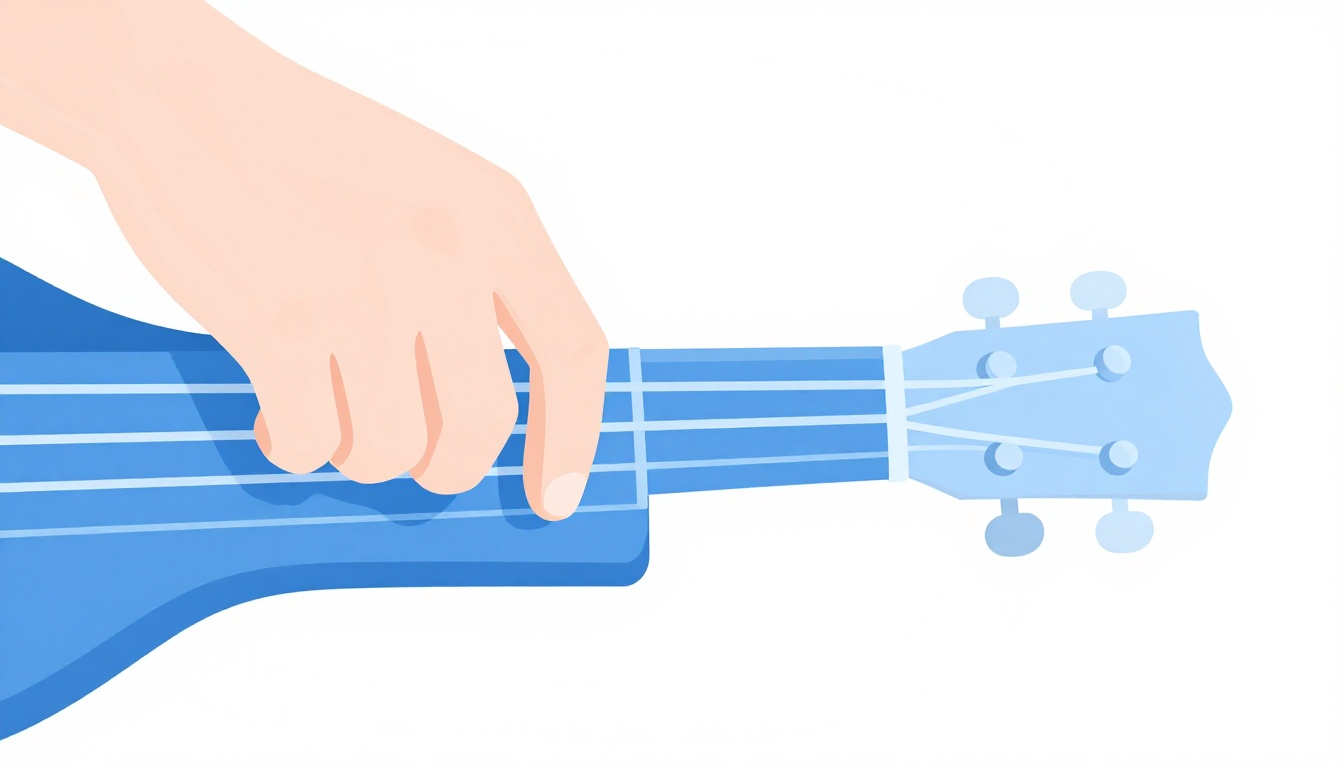
A plain chord progression can jump between root notes in ways that feel abrupt, even when the harmony itself is fine. Slash chords let the bass line move in smaller steps, often chromatically or stepwise, while the chords above it still do whatever the song needs.
The classic use is a descending or ascending bass line under chords that otherwise repeat or stay close together: the chord names change less than the bass notes do, and the ear tracks the smooth line underneath more than it tracks each chord change. A progression like Dm/A moving to Bb and then to C keeps the top of the chord doing normal chord-progression work while the bass steps down from A to Bb's root to C's root in tidy motion.
This is also why Dm/A shows up more often in written charts, sheet music, and jazz or worship lead sheets than it does in guitar tab for three-chord songs. A vocalist or arranger thinking in terms of a bass line will write Dm/A specifically because they want that A underneath, not because the fingering is different from Dm for a guitarist.
Think of the bass line on its own, separate from the chords riding above it. If a song moves from C to Dm/A to Bb, the chord letters jump around, C to D minor to B flat, but the bass notes underneath move C, A, Bb, a much smaller set of steps. A bassist or a guitarist's low strings tracing that line gives the progression a sense of direction that the chord letters by themselves do not show. That directional bass line is the entire reason the slash notation exists instead of the arranger simply writing Dm and trusting the bass player to improvise something smoother.
The same trick works on other minor chords
Dm/A is not a special case. The same idea, an open chord you already know with one previously-muted string allowed to ring, shows up on other minor chords whenever the fifth of the chord happens to land on an open string.
The clearest parallel is Am. Standard open Am mutes the low E string and starts its strum from the open A string, root position, A in the bass. A minor's fifth is E, and the low E string you have been muting is already tuned to that exact note. Let it ring instead of muting it, and the identical Am shape becomes Am/E, second inversion, the same relationship Dm/A has to Dm, just one string lower.
| Chord | Root-position shape | Fifth of the chord | Slash chord version |
|---|---|---|---|
| Dm | Mute low E, strum from A string, skip it, land on D | A | Dm/A: stop muting the A string |
| Am | Mute low E, strum from A string as the root | E | Am/E: stop muting the low E string |
This does not work for every minor chord. Em, for example, is already a full six-string open chord with nothing muted, so there is no spare string sitting there to unmute. The trick only appears when the chord's fifth happens to coincide with a string you were already leaving silent, which is a coincidence of standard tuning rather than a rule that applies everywhere. But wherever it does apply, it is worth knowing, because it turns a chord that looks like a new voicing into a chord you can already play with one small change of habit.
Reading Dm/A in a chord chart for the first time
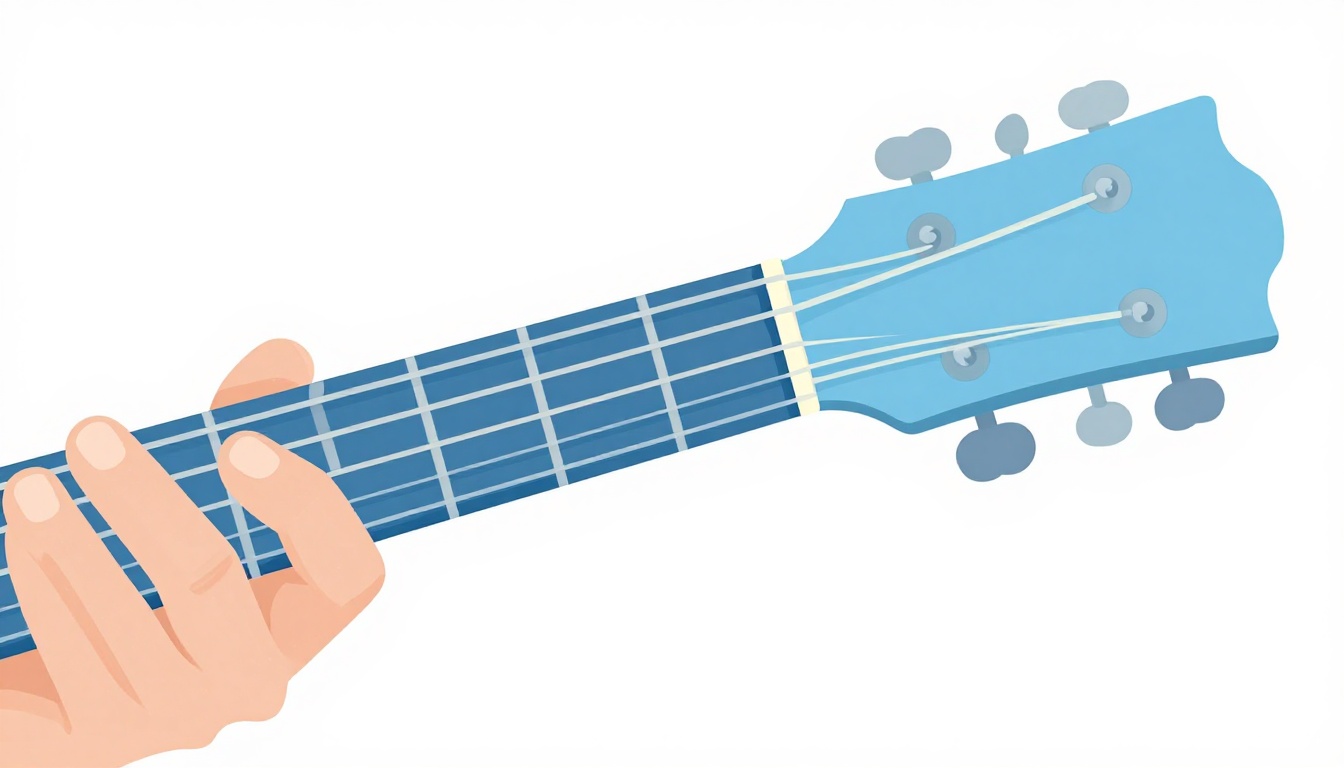
If you are new to slash chords and you hit one in a chart, the fastest way to parse it: read the first letter and its quality (major or minor) to know the chord, then read the letter after the slash to know what has to ring lowest. You do not need to recalculate the whole shape from scratch. Most of the time, especially with Dm/A, the shape is one you already have under your fingers, and the slash is only telling you not to mute a string you might otherwise mute out of habit.
If you see a slash chord you do not recognize the shape for, the chord before the slash still tells you which notes to fret. Worst case, you can play the plain version of that chord and simply be careful about which string ends up lowest in your strum.
It is also worth knowing what a slash chord is not. It is not an instruction to add a bass note on top of an unrelated chord, and it is not two chords played at once. It is one chord, one set of notes, with a specific instruction about which of those notes, or occasionally which added note, belongs on the bottom. Once that clicks, slash chords stop looking like a separate category of chord you need to learn from scratch and start looking like a small modifier attached to chords you already know, in exactly the same way a 7 or a sus4 modifies a chord you already know without replacing it.
The habit that saves the most time in practice is this: whenever you meet a slash chord for the first time, play the plain chord first, listen to where its bass note naturally sits, and only then work out what changes to get the written bass note underneath it. Most of the time on guitar, as with Dm/A, the change turns out to be smaller than the new-looking chord symbol suggests.
Changing into and out of Dm/A
The shape itself is rarely the hard part once your hand knows it. The transition is what most players actually practice. A few common neighbors and what changes:
From C to Dm/A. C uses your ring finger on the A string 3rd fret, your middle finger on the D string 2nd fret, and your index finger on the B string 1st fret. Moving to Dm/A, your ring finger slides from the A string to the B string, jumping up two frets. Your middle finger moves from the D string to the G string, staying on roughly the same fret. Your index finger moves from the B string up to the high E string. Practice this one slowly, all three fingers move to a different string at once.
From F to Dm/A. If you are playing a simplified two or three finger F, your middle finger, which likely sits on the D string 3rd fret for F, drops down to the G string 2nd fret for Dm/A while your index finger slides from the G string over to the high E string.
From Bb to Dm/A. Both chords keep a finger on the B string, which gives your hand a small anchor point to pivot around while the other fingers resettle.
From Gm to Dm/A. If your Gm voicing is a barre shape, releasing the barre entirely and rebuilding the open Dm/A shape from scratch is usually cleaner than trying to keep any part of the barre in place.
From Am to Dm/A. Am and Dm/A share the open A string as their lowest note, so the bass keeps ringing while your fretting hand resets above it. Am's ring finger on the B string 2nd fret shifts up one fret to become Dm/A's ring finger on the B string 3rd fret, a small movement. Am's middle finger on the G string 2nd fret lifts off entirely, since Dm/A's middle finger stays on the same string and fret, and Am's index finger on the D string 2nd fret jumps across to the high E string 1st fret. This is one of the smoother changes into Dm/A because the bass note never has to move.
From Em to Dm/A. Em rings all six strings open except two fretted notes, so moving to Dm/A means muting the low E string for the first time while your middle and ring fingers travel from the A and D strings, where Em's fingers usually sit, over to the G and B strings for Dm/A. Because Em has no fretted note anywhere near the high E string, your index finger has to travel the farthest of any finger in this particular change, which is why this transition often feels slower to clean up than the others.
In every case, the fastest fix for a sloppy change is not speed, it is precision: land all three fingers at once rather than one at a time, even if you have to slow the whole change down to do it. It is also worth noticing which finger in each pair of chords barely has to move at all, and using that finger as your anchor, the point of contact your hand can trust while the other two fingers travel.
A practice routine for Dm/A today
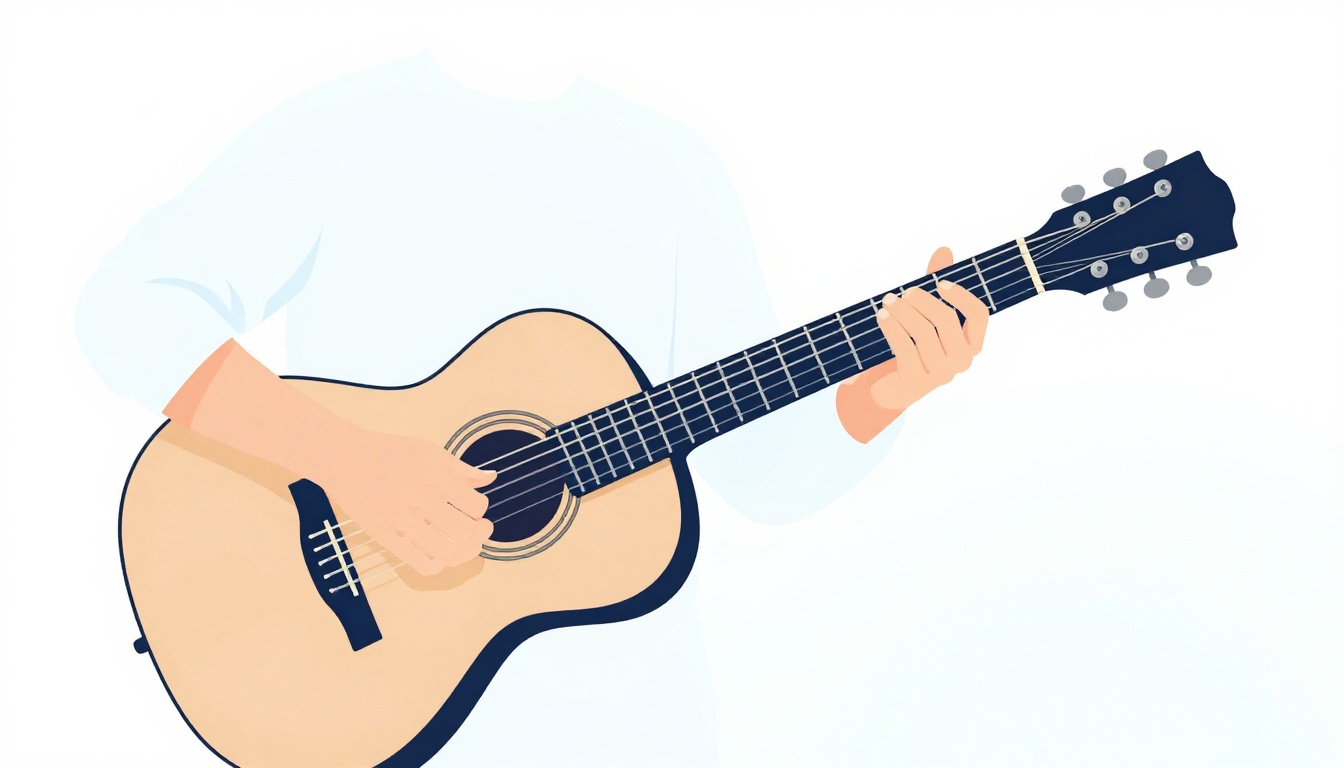
- Place the shape with no strumming. Press index, middle, ring into position, then pluck each string one at a time, low A string to high E string, checking every one rings clean. Fix any string that buzzes before moving on.
- Strum slowly, four counts per chord, for one minute. Focus on starting the strum from the A string every time, not the low E string.
- Pick one neighboring chord, C, F, Bb, or Gm, and practice changing to and from it eight times in a row, counting one full bar per chord. Do not rush the count, the goal is a clean landing every time, not speed.
- Once eight changes land cleanly at a slow tempo, raise the tempo slightly and repeat. Add speed only after accuracy, never before it.
- Finish by playing through the progression Dm/A, Bb, C, Gm slowly, listening for the bass line moving underneath the chords rather than just the chord shapes themselves.
Five to ten minutes of this, focused rather than casual, moves the shape into your hand faster than an hour of unfocused strumming.
Spreading it across a week
If you are folding this into a regular fifteen minute practice session rather than a single sitting, here is roughly how the same five steps stretch across a few days.
Day one and two. Spend most of the time on step one, placing the shape silently and plucking string by string, and step two, slow strumming. The goal is not speed, it is removing every buzz and every muted string until the chord rings clean without you having to think about each finger individually.
Day three and four. Introduce one neighboring chord from step three, C or Am are the gentler starting points since each keeps at least one finger anchored across the change. Keep the tempo slow enough that every change lands cleanly; a clean change at a crawl is worth more than a sloppy one at tempo.
Day five and six. Add a second neighboring chord, and start alternating between two different transitions in the same practice block, for example C to Dm/A to Bb to Dm/A. This is where your hand starts learning that Dm/A is a hub it returns to, not a one-off change.
Day seven. Play through a full slow progression using at least three of the chords covered above, and only then bring the tempo up to something closer to a real song. If any single change breaks down at the faster tempo, drop back to that one change in isolation rather than restarting the whole progression from the top.
Does Dm/A ever need a capo?
No. Dm/A is an open-position chord built from open strings and low frets, so a capo is never required to play it. If a song is in a different key and a chart calls for a chord shaped like Dm/A relative to a capoed position, the fretted shape and the open string relationship stay the same, only the sounding pitch changes. You will not encounter a situation where Dm/A specifically requires a capo to be playable.
Where a capo does become relevant is the reverse situation: you are playing along with a recording or a chart written in a key where the equivalent chord is not this easy open shape, and a capo lets you shift back into the fingering you already know. If a song's chart calls for a minor chord in second inversion built on a note that is not naturally an open string, for example something a whole step or more away from D minor's shape, clipping a capo on and playing the familiar Dm/A shape behind it can be simpler than learning an unfamiliar fretted voicing from scratch. This is the same shortcut guitarists use for barre chords generally, applied here to an inversion rather than a plain major or minor triad.
Where Dm sits in the key you are playing in
Dm/A is still a D minor chord underneath, so it fills whatever role Dm itself plays in a key. That role changes depending on what key the song is actually in, which is worth knowing so you can predict which chords will sit comfortably next to it.
| Key | Dm's role | Chords that usually surround it |
|---|---|---|
| C major | The ii chord | C, F, G, Am |
| F major | The vi chord | F, Bb, C, Gm |
| D natural minor | The i chord, home base | Gm, A, Bb, C |
In C major or F major, Dm tends to feel like a stopping point on the way somewhere else, not the destination. In D minor, Dm is the destination, the chord everything else in the song is measured against. Dm/A in any of these three settings does the same harmonic job as plain Dm, the only difference is the bass note it sits on top of, which is why swapping Dm for Dm/A never changes what key or what chord family a progression belongs to.
Where Dm/A actually shows up
Slash chords built on a minor triad's fifth are most common in progressions built for a moving or descending bass line, in music that already thinks in terms of chord/bass pairs rather than plain triads: jazz standards, worship and gospel charts, and pop or folk arrangements transcribed from piano, where the left hand naturally plays a bass note independent of the right hand's chord voicing. Guitarists reading directly off a lead sheet or a piano-derived chart will meet Dm/A far more often than guitarists working from tab written by another guitarist, since guitar tab tends to default to whichever shape is easiest to finger, which is usually plain Dm.
This also explains why two guitarists can play the same song from two different sources and end up with slightly different chords in the same spot without either being wrong. A tab site transcribing purely by ear and by feel for what is easy to finger will often simplify Dm/A down to plain Dm, since the difference is subtle and the plain shape is marginally easier to control. A chart transcribed from a piano part or an official lead sheet is more likely to preserve the slash notation exactly, because the piano's left hand made a clear, deliberate choice about the bass note that the transcriber wants to carry across. Neither source is more legitimate than the other for casual playing, but if you are trying to match a specific recording closely, the piano-derived chart with the slash chord intact is usually the more accurate one.
Frequently asked questions
Is Dm/A hard to play if I already know Dm? No. If you can already play open Dm, you can play Dm/A immediately, since the fretted shape is identical. The only change is letting the open A string ring as part of your strum instead of muting it.
Do I need to change my fretting hand at all for Dm/A? No. Your fretting hand plays the exact same shape as open Dm: index on the high E 1st fret, middle on the G 2nd fret, ring on the B 3rd fret. Only your strumming hand's starting string changes.
Why does my chart say Dm/A instead of just Dm? The writer wants A specifically in the bass, usually because the bass line is moving stepwise through a progression and A fits that motion better than D would in that spot. It is a deliberate choice about the low end, not a different chord from Dm.
Is Dm/A the same as Am? No. Dm/A is a D minor chord, D, F, A, with A as the bass note. Am is a completely different chord, A minor, A, C, E. They share the open A string as their lowest note, which is likely why they get confused, but the notes above that bass note are not the same.
Can I just play plain Dm instead of Dm/A if a chart calls for it? Usually yes, without anyone noticing, since the difference is one bass note and both use the same fretted shape. It only matters when another instrument, like a bass or piano, is specifically relying on A being the lowest note in the overall mix and your guitar playing D instead would clash with it.
What is a second inversion chord? It means the note a fifth above the root is in the bass instead of the root itself. For Dm, that fifth is A, so Dm/A is D minor in second inversion. First inversion would put the third, F, in the bass instead, written Dm/F.
Why does the shape feel like a stretch between my middle and ring fingers? Those two fingers sit a string apart and a fret apart in an offset that is unusual for a beginner shape. It gets easier with repetition. Slow, deliberate placement before adding strumming speed is what fixes it fastest.
Do other minor chords have an equivalent slash chord shape this easy? Not always this cleanly. Dm/A works especially well on guitar because A, the note needed in the bass, happens to be an open string right next to the low E string you are already muting. Other minor chords built on notes that are not open strings usually need a fretted bass note instead, which is less convenient.
Getting the change solid
The Dm/A shape itself takes most players one sitting to get comfortable with, since it is the Dm shape they likely already know with one string unmuted. What actually takes practice is everything around it: landing the shape cleanly at speed, starting the strum from the right string without thinking about it, and moving into and out of it from whatever chord comes before and after in the song you are playing. Give that transition the slow, deliberate repetition described above and the rest of the chord takes care of itself.
The bigger payoff is not this one chord. Once Dm/A stops looking like a special case and starts looking like "the Dm shape, plus a decision about which string to start strumming from," slash chords in general stop being intimidating. The next one you meet on a chart, whatever letters sit on either side of that slash, is very likely asking for the same kind of small adjustment: a shape you already own, with one habit about muting or strumming changed on purpose. Look for that pattern first, before assuming you need to learn an unfamiliar new fingering, and most slash chords turn out to be far closer to chords you already play than their notation suggests.
GuitarLowKey
Ready for fifteen focused minutes?
Open the web app and train the change that is blocking your song.