
Aluminum Guitar Display Stand: A Full Buyer's Guide
What separates a good aluminum guitar display stand from one that damages your finish or tips over, and how to pick the right style for your room.

An aluminum guitar display stand is a lightweight, rust-resistant stand built from aluminum tubing instead of steel or wood, usually in a folding A-frame design with padded contact points that cradle the guitar's body and neck. It is the most portable and least expensive way to keep a guitar upright and visible in a room, but the aluminum itself is rarely the thing that decides whether the stand is good. The padding, the base width, and whether it fits your guitar's shape decide that, and this guide covers every part of choosing one correctly.
What Makes a Guitar Stand "Aluminum" (and Why It Matters)
Most guitar stands are built from one of three materials: steel tubing, aluminum tubing, or wood. Aluminum sits in the middle on strength but wins on weight, at roughly a third the density of steel for the same tube diameter. That is the entire practical case for choosing aluminum over steel: a folded aluminum A-frame stand weighs little enough to toss in a gig bag's side pocket or carry with one hand alongside an amp and a cable bag, where an equivalent steel stand adds noticeably more to what you are hauling.
Aluminum also does not rust. Steel stands left in a damp basement or a garage practice space can develop surface rust at the tube joints within a season, especially where the powder coat has worn thin from folding and unfolding. Aluminum forms a thin, stable oxide layer instead of rusting, so it holds up better in exactly the environments, garages, basements, unheated spare rooms, where a lot of home practice setups end up living.
What aluminum does not change is how the stand touches your guitar. The tubing is just the frame. The parts that actually make contact with your instrument, the yoke that cradles the body, the arm that supports the neck, the feet on the floor, are almost always a separate material: rubber, foam, vinyl, or felt, glued or clipped onto the aluminum frame. That padding matters more to your guitar's safety than the frame material does, and it gets its own section further down because it is the single most common thing people get wrong.
Display Stands vs Utility and Gig Stands
"Display" in the product name is not just marketing language, it usually points to a real design difference from the plainer stands sold for backstage or rehearsal use.
A utility or gig stand is built for one job: hold the guitar upright between sets, fold small, survive being thrown in a van repeatedly. It is usually finished in matte black, with visible rubber or foam padding and exposed hardware, because none of that needs to look good under stage lighting for thirty seconds between songs.
A display stand is built to sit in a room permanently, so it is designed to be looked at as much as to function. That usually means a lower-profile frame, a base shape that reads as furniture rather than equipment, and finish options beyond plain black, brushed or anodized aluminum in silver, gunmetal, or a color, with the padding chosen to blend into the frame rather than stand out against it. Some display-specific stands also drop the fold entirely in favor of a fixed, slightly heavier frame, since a stand that never travels does not need to collapse, and a rigid frame can look cleaner without the fold line breaking up its shape.
Neither type holds a guitar any more safely than the other; the padding and base width covered elsewhere in this guide matter far more than which category a stand falls into. The distinction matters for expectation-setting: if you want something to disappear into a living room, look specifically for stands marketed as display or home models rather than the cheapest folding A-frame in a gear store's stage accessories section, since the cheapest option in that category is optimized for durability under travel, not for how it looks parked next to a couch.
Aluminum vs Steel, Wood, and Plastic Stands
Each material makes a different tradeoff, and none of them is wrong for every situation.
| Material | Weight | Rust risk | Typical use | Downside |
|---|---|---|---|---|
| Aluminum | Light | Very low | Gigging, travel, most home stands | Can feel less rigid on very cheap, thin-wall tubing |
| Steel | Heavy | Higher in damp rooms | Studio racks, stands that never travel | Adds real weight to a gig bag |
| Wood | Heavy | None (but can warp) | Living room display, matched to furniture | Bulky, not foldable, harder to adjust |
| Plastic/composite | Light | None | Budget single stands, kids' instruments | Lower weight capacity, can crack in cold |
For a stand that lives in one spot and never gets folded up, the material matters less. For anything that travels between a bedroom and a gig, or that gets folded and unfolded weekly, aluminum's combination of light weight and rust resistance is the reason it dominates that category of stand.
Aluminum's surface finish is also worth a second look, since it changes both looks and durability. Raw or brushed aluminum shows fingerprints and can dull slightly with handling over time. Anodized aluminum, which has been electrochemically treated to build up a thicker, harder oxide layer, resists scratching and fingerprints better and is how most colored aluminum stands, silver, black, gunmetal, get their tint, since the color is sealed into the anodized layer rather than painted on top of it. A painted finish over plain aluminum is the cheapest option but is also the one most likely to chip at the folding joints, where metal-on-metal contact happens every time the stand opens and closes.
Adjustable Yokes and Cradles: Fitting More Than One Guitar Shape
A neck yoke or body cradle that adjusts in width does more for a stand's long-term usefulness than almost any other single feature, especially if you own, or expect to own, more than one guitar.
Neck widths vary more than people expect: a classical or nylon-string neck typically measures close to two inches at the nut, noticeably wider than a standard electric neck at around one and five-eighths inches, and a bass neck is wider still, plus longer overall. A stand with a fixed, narrow yoke sized for a single electric guitar can pinch a classical guitar's wider neck or fail to support a bass properly, while a stand with an adjustable yoke, usually a sliding collar or a screw-adjustable arm, closes that gap by fitting whichever instrument is currently on it rather than being built around one specific neck width.
Body cradle depth matters the same way for the lower support arm. A dreadnought acoustic sits noticeably deeper than a solid-body electric, and a cradle sized tightly for a thin electric body can leave an acoustic's edge resting awkwardly rather than settling flat into the support. Stands marketed as fitting "all guitar types" rely on an adjustable or generously oversized cradle to make that claim true rather than a single fixed size that happens to work for everything, and it is worth checking the adjustable range specifically rather than taking the "universal fit" label at face value.
A-Frame, Tripod, and Fixed Designs Compared
Aluminum stands come in a handful of structural designs, and the design affects stability more than the material does.
A-frame folding stands are the most common style. Two aluminum legs open into an A shape, locked with a cross brace or a sliding collar, with a neck yoke and a lower body rest. They fold flat for storage or travel and are what most single-guitar aluminum stands use.
Tripod stands use three legs instead of two, which spreads the base out in three directions rather than one line. They tend to feel more stable on uneven floors, like a hearth or an outdoor patio, because a three-point base always sits flat even where a four-point or A-frame base can rock.
Fixed-frame stands do not fold at all. They are usually heavier gauge tubing welded into one shape, sacrificing portability for rigidity. These show up more often in wood or steel than in aluminum, since one of aluminum's main selling points is the fold.
For a stand that stays in a bedroom or living room and gets picked up and put down daily, an A-frame is the right call: it is the lightest to move if you rearrange furniture, and folding it flat matters less when it is not traveling. For a stand that goes to open mics or rehearsal spaces, the same A-frame folds down small enough to matter, which is exactly why it is the default rather than tripod or fixed designs in that use case.
Floor Stand or Wall Hanger: Which One Fits Your Room
An aluminum floor stand is not the only way to display a guitar, and it is worth deciding between a floor stand and a wall-mounted hanger before you buy either one, because they solve different problems.
A floor stand needs no installation, no drilling, and no commitment to a wall. You set it down, it holds the guitar, and you can move it the next time you rearrange the room. That makes it the obvious choice if you rent, if you are not sure where the guitar should live yet, or if you want to move it between a bedroom and a living room depending on the day. The tradeoff is floor space: a stand takes up a footprint on the ground, and a lightweight one can be knocked over by a pet, a vacuum cord, or a foot in the dark.
A wall hanger uses a bracket and a cradle mounted directly to a wall stud, holding the guitar by the neck so the body hangs free. It uses no floor space at all, and once it is installed there is nothing to knock over at floor level, though a guitar can still be bumped off a wall hanger if the cradle is too shallow or the guitar is set on it carelessly. It also turns the guitar into something closer to wall art, which some players like and others find exposes the guitar to more direct sunlight or wall-temperature swings than a floor stand in the middle of a room would.
| Factor | Floor stand | Wall hanger |
|---|---|---|
| Installation | None | Requires drilling into a stud |
| Floor space used | Yes | None |
| Portability | High, move it anytime | Low, fixed once mounted |
| Renting a home | No commitment | May require patching holes later |
| Multiple guitars | Easy with a rack-style stand | Needs one hanger per guitar |
| Knock-over risk | From the floor | From the wall, if bumped |
Neither one is strictly better. A studio with several guitars and no wall space to spare leans toward stands. A small bedroom where floor space is the scarce resource leans toward a hanger. If you are not sure yet, start with a floor stand, since it commits you to nothing.
Single-Guitar Stands vs Multi-Guitar Racks
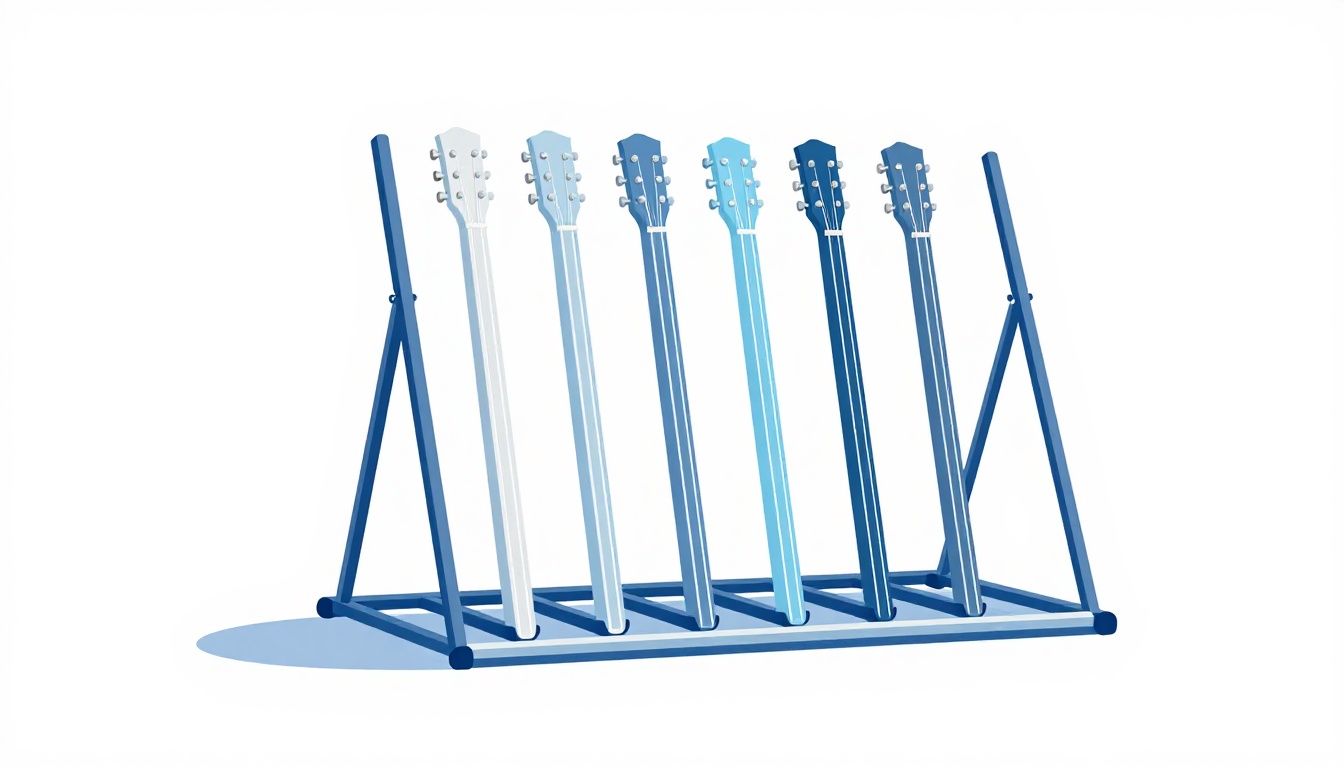
If you own more than one guitar, the next decision is whether to buy one stand per guitar or one aluminum rack that holds several.
A multi-guitar rack is more space-efficient per instrument and keeps a small collection organized in one footprint instead of scattered stands across a room. The tradeoff is stability at partial load: a rack sized for five or six guitars, with only one or two guitars actually on it, has its weight concentrated on one side rather than distributed evenly across the base, which makes it noticeably easier to tip than the same rack fully loaded. If you own two guitars now and plan to grow your collection, a rack sized slightly larger than your current count, rather than exactly matching it, keeps the load more centered as you add instruments.
For most home setups, three to five guitar capacity balances stability, footprint, and how easy each guitar is to reach without shuffling others out of the way first. Racks built for six or seven guitars usually assume slim-body electrics; mix in a full-depth acoustic or a bass and you will comfortably fit fewer than the rack's stated capacity, since acoustic bodies need more spacing between slots than electrics do.

Will an Aluminum Stand Damage Your Guitar's Finish?
This is the question the product listings do not answer, and it is a real one. The aluminum frame itself never touches your guitar; the padding does, and the padding can react badly with certain finishes.
Nitrocellulose lacquer is the finish at risk
Nitrocellulose lacquer, the finish used on many vintage-style guitars and higher-end reissues, is a softer, more chemically reactive finish than modern polyurethane. Some rubber and foam compounds, particularly ones with a high sulfur or plasticizer content, can react with nitro over time, softening or discoloring the finish exactly where the pad made contact. Guitarists on forums for nitro-finished instruments, including Gibson and PRS players, have reported this as etching or a sticky residue left where a stand's rubber yoke pressed against the guitar's neck or body for an extended period, usually after weeks or months of continuous contact rather than a single session.
Polyurethane and satin finishes are largely unaffected
Modern polyurethane finishes, which cover most production guitars including nearly all budget and mid-range instruments, form a harder, more chemically inert surface. The same rubber or foam padding that can mark a nitro finish generally does not affect poly, which is why this is a real concern for owners of nitro or vintage-style guitars specifically, not a universal warning against stands.
How to protect a nitro-finished guitar on any stand
If your guitar has a nitro finish, or you are not sure and it is an older or higher-end instrument, three things reduce the risk to close to zero:
- Wrap the stand's contact points in a soft cotton cloth or a strip of felt before resting the guitar on them, creating a barrier between the rubber and the finish.
- Avoid leaving the guitar on the same stand, in the same contact position, for weeks at a time without moving or rotating it slightly.
- Check the contact points periodically for any softness, tackiness, or discoloration, and switch to a cloth barrier immediately if you see any.
None of this means avoid stands entirely if you own a nitro guitar. It means treat the contact material as something to check once, the same way you would check a case's interior lining before leaving an instrument in it for months.

Matching the Stand to Your Guitar's Shape
Not every guitar body fits a generic stand cleanly, and this is where a lot of buyers get surprised after the fact.
| Guitar type | What to look for in a stand | Common issue |
|---|---|---|
| Standard acoustic or dreadnought | Wide base, deep body cradle | Body can be too deep for a shallow yoke |
| Solid-body electric (Stratocaster, Les Paul style) | Standard neck yoke and body arm | Usually fits any generic stand |
| Bass guitar | Taller stand, wider yoke for a longer neck and body | Standard stands can be too short |
| Classical or nylon-string | Wide, rounded body cradle | Similar to acoustic, but check basses are wide enough |
| Flying V or other angular body shapes | A neck-yoke style stand rather than a body-cradle style | The body has no flat lower bout to rest against a standard cradle |
| Ukulele or mandolin | A stand with an adjustable, narrower cradle, or a dedicated small-instrument stand | Full-size guitar stands are often too wide to hold a small body securely |
The Flying V case is worth calling out specifically, because it trips up more buyers than any other shape. A conventional stand supports the guitar by resting its lower bout in a body cradle, and a V-shaped body has no lower bout, just two points where the wings meet at an angle. Stands designed around a neck yoke instead of a body cradle, where the guitar hangs by the neck rather than sitting on its body, handle V shapes and other unconventional bodies correctly. If you own an oddly shaped guitar, check whether a stand's listing photos show a body cradle or a neck yoke before buying, since the difference is not always obvious from the name alone.

Housing More Than Guitars: Ukuleles, Mandolins, and Banjos
Many aluminum stands are marketed as fitting guitars, basses, ukuleles, banjos, and mandolins all on the same frame, and that claim is true only as far as the cradle actually adjusts down to each instrument's size, which is not automatic.
A full-size guitar stand's body cradle is built around a guitar's lower bout, generally eight inches wide or more. A soprano or concert ukulele body is roughly half that width, and setting one in a cradle sized for a guitar leaves it with almost no side support, free to slide or tip sideways inside a cradle built for something twice its size. The same problem shows up with a mandolin, whose narrow waist and small body can slip through a wide cradle rather than resting securely in it. A banjo inverts the issue: its round rim is often wider in diameter than an average guitar's lower bout, so a cradle sized for a guitar can actually be too narrow to seat a banjo's rim properly.
The fix is the same adjustability covered above: a stand whose cradle width closes down significantly rather than one built around a single mid-size assumption. If you are buying one stand to rotate between a guitar and a smaller instrument, check the cradle's minimum width specifically, not just its maximum, since "fits all instrument types" printed on a listing describes the widest range the frame can reach, not a guarantee that a specific ukulele or mandolin will sit securely at the narrow end of it. When in doubt, a dedicated small-instrument stand, sized specifically for ukulele or mandolin, holds those instruments more securely than a full-size guitar stand adjusted down as far as it goes.
Weight Capacity and Tip-Over Risk
An aluminum stand's weight capacity is rarely the limiting factor. A single guitar weighs somewhere between six and twelve pounds, and even a lightweight folding aluminum stand is typically rated well above what one instrument requires. The real risk is not the stand failing to hold the weight, it is the whole stand tipping over.
Tipping risk comes down to base width relative to the guitar's height and weight distribution. A narrower base, common on the smallest and lightest folding stands, gives less resistance against a sideways bump, whether that is a foot catching a leg, a pet brushing past, or a vacuum cord snagging a tube. As a rough guideline, a base spread of at least fourteen to sixteen inches gives a full-size guitar meaningfully more resistance to tipping than a narrower base does, particularly on carpet, where a narrow-footed stand can also sink slightly and lean over time.
Multi-guitar racks add a second variable on top of base width: how evenly the load sits across the rack. A rack partially filled on one end, rather than centered, shifts its effective center of gravity toward that side, which is why a rack that feels rock solid with five guitars on it can feel wobbly with just one.
If tipping is a real concern in your space, whether because of pets, small children, or a high-traffic doorway nearby, a wall hanger removes the risk entirely, since there is no base to knock, and it is worth weighing that against the flexibility a floor stand offers.
Protecting Your Floor From the Stand
The feet on an aluminum stand are usually rubber or a rubber-coated cap, chosen for grip rather than floor protection, and grip and floor protection are not always the same thing.
On hardwood or laminate floors, a rubber foot that grips well can also leave faint scuff marks over time, especially if the stand gets dragged rather than lifted when moved, and rubber left in one spot for months can occasionally leave a slight discoloration on certain floor finishes, similar to the finish concern with guitar bodies. Felt pads under the stand's feet solve the scuff problem and let the stand slide slightly if bumped rather than gripping and tipping, which is a reasonable tradeoff in a room where the stand rarely needs to move. On carpet, rubber feet work well as-is and grip is more useful than slide resistance, since carpet already provides enough friction that a small added risk of scuffing does not apply.
A cheap and effective fix either way is a thin adhesive felt pad, the same kind sold for chair and table legs, applied to the bottom of each foot. It takes a few minutes and works on any stand regardless of brand.
Stand or Case? The Real Tradeoff
This is the question that matters most and gets addressed least in most buying guides, because it is not really about the stand, it is about how you use the guitar.
A case is unambiguously better for the instrument itself. It buffers the guitar against humidity and temperature swings, which is the single biggest cause of long-term damage, cracked tops, sunken bridges, warped necks, especially in rooms without climate control. Guitar care guides generally recommend keeping an instrument in its case when not in active use, particularly in a room where humidity swings meaningfully with the seasons or where the guitar sits near a window, radiator, or air vent.
A stand is unambiguously better for how often you pick the guitar up. This is the part gear guides skip and the part that matters most if your actual goal is playing the instrument regularly rather than preserving it in the best possible condition. A guitar in a case in a closet gets played less than a guitar standing next to the couch, not because anyone loves it less, but because a case adds a step, unlatch, unzip, lift out, between deciding to play and actually playing, and that one extra step is often the difference between a real fifteen-minute practice session and a night where you meant to but didn't. A stand removes that step entirely.
The honest answer for most players in a normal, climate-controlled home is that a stand in a stable room, away from direct sun, vents, and exterior walls, poses very little risk to the guitar and a real benefit to how often it gets played. The case matters more if the room has real humidity or temperature swings, if the guitar is going unplayed for weeks at a time regardless of where it sits, or if it is a nitro-finished or vintage instrument where finish preservation carries extra weight. For a guitar you are actively trying to build a daily habit around, visibility usually wins.
Where to Place the Stand in a Room
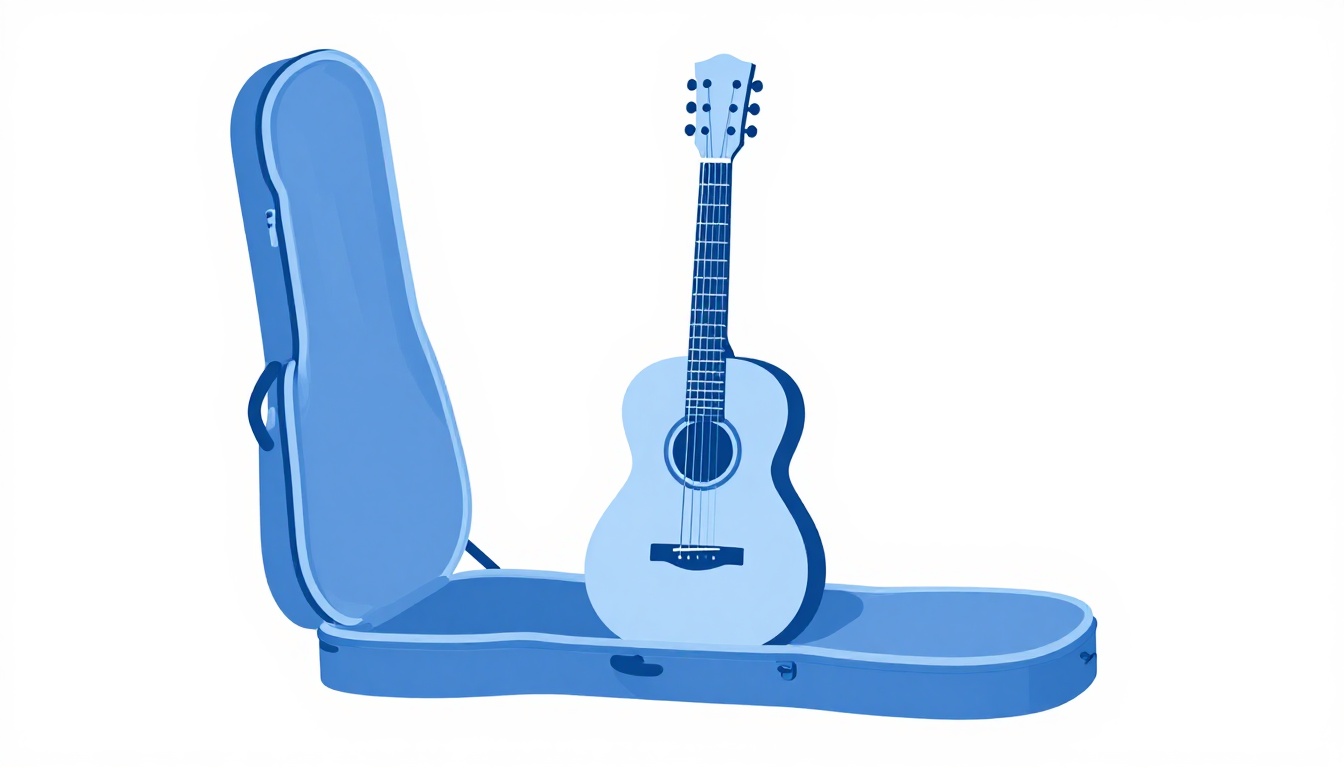
Once you have decided on a stand, where you put it changes both the guitar's long-term condition and how often you actually play it.
Keep it away from direct sunlight. A window that gets direct afternoon sun can heat the area around it well above room temperature, and prolonged direct sun exposure can fade a finish or, in extreme cases, soften it, the same underlying risk as the padding contact issue above, just from a different heat source.
Keep it away from heating vents, radiators, and fireplaces. These create localized dry heat that pulls moisture out of the wood faster than the rest of the room, which is one of the more common causes of cracks and fret buzz from wood shrinkage, independent of anything the stand itself is doing.
Keep it away from exterior walls if you are choosing a wall hanger specifically. An exterior wall runs colder or hotter than the interior room air depending on the season, and a guitar hanging flush against one has its back acclimating to a different temperature than its top, which can stress the joints over time in a way that a freestanding floor stand in the middle of a room does not.
Keep it out of high-traffic paths. A stand positioned where someone walks through daily, next to a doorway or in a narrow hallway, is a stand that eventually gets bumped. A spot beside a couch, a desk, or a chair you actually sit in gets both the safety benefit of being out of the way and the practice benefit of being where you already spend time.
Folding Mechanisms and Portability for Gigs
If the stand needs to travel, the folding mechanism is worth checking before the material.
Most folding aluminum A-frames use one of two locking systems: a sliding collar that clicks into a notch, or a pin that drops through aligned holes in the legs. Collar mechanisms tend to be faster to set up and less likely to lose a small part, since the collar stays attached to the frame. Pin mechanisms can be marginally more secure once set, but a lost pin, easy to happen in a dark venue or a packed gig bag, leaves the stand unable to lock at all until it is replaced.
ABS plastic joints connecting the aluminum tubes are the most common failure point on budget stands, more often than the aluminum tubing itself, since the tubing rarely bends or cracks under normal use while a thin plastic joint can crack after repeated folding in cold weather, when plastic becomes more brittle. If a stand is going to fold and unfold weekly for gigs or rehearsals, joints described as reinforced or high-strength ABS, rather than unspecified plastic, tend to hold up longer under that repeated cycling.
For actual transport, a stand that folds flat enough to fit in a gig bag's accessory pocket or a backpack is the practical bar, since a stand that only folds to the size of a small suitcase defeats the portability aluminum is chosen for in the first place.
Cleaning and Maintaining an Aluminum Stand
Aluminum needs very little upkeep compared to steel, but it is not entirely maintenance-free.
A dry microfiber cloth handles routine dust. For visible grime or fingerprints on the aluminum tubing, a damp cloth with a small amount of mild soap, wiped and then dried immediately, keeps the surface clean without leaving water spots, which plain water alone tends to do on bare aluminum. Avoid abrasive cleaners or steel wool on the tubing; aluminum's protective oxide layer is thin, and scrubbing through it with anything abrasive exposes fresh metal that oxidizes unevenly, leaving a patchy, dull appearance rather than the smooth finish it started with.
The padding wears out faster than the frame does. Rubber and foam contact points compress and can harden or crack after a few years of regular use, especially in a stand kept somewhere with temperature swings, a garage or an unheated room. Cracked or hardened padding no longer cushions the guitar the way it did when new, and it is worth replacing rather than continuing to rest an instrument on padding that has gone stiff. Most stands use a standard clip-on or slide-on pad that is simple to swap without replacing the whole stand, and this is a cheaper fix than it might sound.
Check the folding joints periodically for looseness. A joint that has developed slight play after years of folding is still usually safe, but it is worth confirming the stand still locks fully into position and does not wobble under the guitar's weight before trusting it with an instrument you care about.
This kind of upkeep works best as a habit rather than a project, the same way restringing a guitar is easiest when it happens on a schedule instead of only after a string snaps. A once-a-season glance at the padding and joints catches wear long before it becomes a real problem.
Setting Up a Stand That Actually Gets Used
The single biggest variable in whether a display stand helps your playing is not the stand at all, it is where you put it relative to where you already spend time.
A stand tucked into a corner of a spare room you rarely enter provides none of the benefit a stand next to your regular chair does, even though both hold the guitar identically well. The entire practical case for a stand over a case, made above, depends on the guitar being somewhere you will actually see it and reach for it without a deliberate decision to go get it. Put it beside the couch where you watch television, next to the desk where you work, or by the chair where you already sit for fifteen minutes at the end of the day, not in the room you use least.
This matters more than almost anything else covered in this guide. The stand's material, its folding mechanism, its padding, all affect how safely it holds the guitar. Where you put it affects whether you pick the guitar up at all, and that second thing is the entire reason to own a display stand instead of a case in the first place.

Tying It Back to a Real Practice Routine
None of the above matters much if the stand does not change how often the guitar comes off it. A stand earns its place in a room the same way a chord earns its place in a song: by getting used, not by looking good sitting still.
The habit that actually works is small and boring: when you walk past the guitar on its stand, pick it up for whatever time you have, even two minutes, rather than waiting for a longer session that may not come. A guitar that is visible and within reach turns "I should practice later" into "I am already holding it," which is the entire mechanical advantage a stand has over a case. Over a few weeks, those small unplanned pickups add up to more actual playing time than a handful of longer sessions that got skipped because the guitar was zipped away in another room.
If you are choosing between a floor stand and a wall hanger and both are equally practical for your space, pick whichever one sits closer to where you actually spend your downtime. That single decision will do more for how much you play than any spec on the stand itself, and it is the same idea behind learning the guitar you already own in short daily sessions: lowering the friction to start is worth more than any single piece of gear.
Setting Up a New Stand for the First Time
A few minutes of checking before you trust a new stand with your guitar catches most problems before they become a dropped instrument.
Unfold the stand fully and confirm the locking mechanism, whether a sliding collar or a pin, is fully seated before doing anything else. A collar that looks locked but is not fully clicked into its notch can slip partway under load, which is a different failure than the stand simply being unstable, and it only shows up the first time real weight goes onto it.
Adjust the neck yoke and body cradle to your specific guitar before resting it there unattended. If the yoke is adjustable, set it snug enough that the neck cannot slide side to side but not so tight that it pinches against the finish, and check that adjustment again after the first few uses, since some slide-adjustable yokes loosen slightly with repeated use until you snug them back down.
Test the stand with light pressure before trusting it fully. Rest a hand on the guitar's body once it is seated and apply gentle downward and sideways pressure, roughly what an accidental bump would deliver, before walking away and leaving the guitar unattended on a brand new stand. This takes ten seconds and catches a leg that is not fully locked or a base that is less stable on your specific floor than expected.
Give it a few days in its intended spot before treating the arrangement as permanent. A stand that seemed stable on a showroom floor or in a product photo can behave differently on your carpet, your hardwood, or your slightly uneven floor, and it is easier to adjust placement or add a wider-based stand in the first week than after months of treating an unstable setup as fine.
Common Mistakes People Make With Display Stands
A handful of avoidable mistakes account for most of the complaints you will find in reviews and forums.
Buying a stand before checking the guitar's body shape
Ordering a generic body-cradle stand for a Flying V, an offset body, or another unconventional shape is the single most common return reason. Check the listing photos for a neck-yoke design if your guitar's body does not have a conventional lower bout.
Loading a multi-guitar rack unevenly
Placing one guitar on the far end of a rack built for five or six, rather than starting from the center slots, concentrates weight on one side and makes the whole rack easier to tip, even though the same rack is stable once more guitars fill it out.
Ignoring the padding material on a nitro-finished guitar
This is covered in detail above, but it bears repeating here because it is the mistake with the most permanent consequence: a marked finish does not come back the way a scuffed floor does.
Placing the stand somewhere the guitar rarely gets played
Not a safety mistake, but the most common reason a stand ends up feeling like a waste: buying one and putting it somewhere out of the way defeats its entire purpose, as covered in the sections above.
Skipping floor protection on hardwood
A small oversight that is easy to fix after the fact with a felt pad, but easier to avoid by adding one before the stand has had months to scuff the same spot.
Assuming aluminum means indestructible
Aluminum resists rust, but the ABS joints and rubber padding are the parts that actually wear out, and treating the whole stand as maintenance-free skips the periodic checks that catch a cracked joint before it fails under a guitar's weight.
How Long an Aluminum Stand Lasts, and When to Replace It
The aluminum frame itself is close to permanent under normal indoor use. It does not rust, does not fatigue the way steel can under repeated flexing, and the tubing itself rarely fails outright. What wears out is everything attached to it.
Padding is the first thing to go. Rubber and foam contact points compress, harden, or in some cases crack after a few years of regular use, faster in a garage or unheated space with real temperature swings than in a stable indoor room. Hardened padding no longer cushions the way it did new, and it is a sign to replace the pad, not necessarily the stand, since most designs use a clip-on or slide-on pad that swaps out independently of the frame.
Folding joints are the second wear point, particularly on stands that fold and unfold often for travel. A joint with slight developed play after years of use is not automatically unsafe, but it is worth testing under load, the same light-pressure check covered above, before continuing to trust it. A joint that has visibly cracked, rather than just loosened, is a real safety issue and the stand should be retired or the joint replaced if the manufacturer sells parts for it.
The locking collar or pin mechanism is the third thing to check periodically, since it takes direct mechanical stress every time the stand opens and locks. A collar that no longer clicks firmly into its notch, or a pin hole that has worn oval rather than round, reduces how securely the stand holds its open position, and either one is worth addressing before it fails while a guitar is resting on the stand rather than after.
As a rough guide, a well-built aluminum stand kept in a stable indoor room, checked periodically and with its padding replaced when it hardens, can reasonably last a decade or more, since the actual failure points are wear items rather than the frame itself. A stand that travels weekly to gigs and gets folded and unfolded hundreds of times a year wears through its joints and locking mechanism considerably faster, simply from the added mechanical cycles, and is worth inspecting more often than one that sits in the same spot at home.
FAQ
Are aluminum guitar stands safe for guitars? Yes, for the vast majority of guitars and finishes. The main exception is nitrocellulose lacquer finishes, where certain rubber or foam padding can react with the finish over months of continuous contact. A cloth barrier between the padding and the guitar removes that risk almost entirely.
Is a floor stand or a wall hanger better? Neither is universally better. A floor stand needs no installation and is easy to move but uses floor space and can be knocked over. A wall hanger uses no floor space and cannot tip, but requires drilling into a wall and is fixed once installed. Choose based on your floor space, whether you rent, and how often you expect to rearrange the room.
Can one aluminum stand hold multiple guitars? Yes, multi-guitar racks are common and typically hold three to seven guitars depending on size, though a mix of acoustic and electric bodies usually fits fewer instruments than the rack's stated maximum, since acoustics need more spacing between slots.
Will the padding on a stand hurt my guitar's finish? Only in specific cases, mainly nitrocellulose lacquer finishes reacting with certain rubber or foam compounds over extended contact. Polyurethane and satin finishes, which cover most production guitars, are generally unaffected.
How do I stop my guitar stand from tipping over? Choose a stand with a base at least fourteen to sixteen inches wide for a full-size guitar, keep multi-guitar racks loaded from the center outward rather than from one end, and avoid placing any stand in a high-traffic path.
Can I leave my guitar on a stand all the time instead of a case? In a stable, climate-controlled room away from direct sunlight, heating vents, and exterior walls, yes, with low risk to most guitars. A case is still the better choice in rooms with real humidity or temperature swings, or for a nitro-finished or vintage instrument where finish preservation matters most.
Do aluminum stands fit bass guitars? Many do, but check the stand's listed dimensions for neck length and yoke width specifically, since a stand sized for a standard guitar neck can be too short or too narrow for a bass neck and body.
How do I clean an aluminum guitar stand? A dry microfiber cloth for routine dust, and a lightly damp cloth with mild soap for grime, dried immediately afterward. Avoid abrasive cleaners or steel wool, which can strip the aluminum's protective oxide layer and leave a patchy finish.
Does an adjustable neck yoke matter if I only own one guitar? Less so, but it still helps get a snug fit for that one guitar's specific neck width rather than settling for whatever a fixed-size yoke happens to provide. It matters far more if you own, or plan to own, guitars with different neck widths, such as a classical alongside an electric.
What's the difference between a "display" stand and a regular guitar stand? Mostly appearance and where it is meant to live. Display stands tend to have a lower profile, a cleaner finish such as anodized aluminum in a color, and padding designed to blend in, built for sitting permanently in a room. Plainer utility or gig stands prioritize durability under travel over how they look, and both hold a guitar equally securely when the padding and base width are comparable.
Can I use an aluminum guitar stand outdoors, on a porch or patio? The aluminum frame itself tolerates outdoor exposure far better than a steel stand would, since it will not rust. The bigger risk outdoors is the guitar, not the stand: direct sun, humidity swings, and temperature changes outdoors are more extreme than in a climate-controlled room, and those affect the instrument regardless of what it is resting on. Treat an outdoor stand as a short-term prop for the time you are actually playing, not a permanent spot to leave the guitar between sessions.
GuitarLowKey
Ready for fifteen focused minutes?
Open the web app and train the change that is blocking your song.