
How to Play Dmaj7 on Guitar (Every Shape, No Buzzing)
The easiest Dmaj7 shape on guitar, a no-barre alternative, moveable voicings up the neck, and the fixes for every buzz this chord causes.

Play an open D chord, then lift your ring finger off the 2nd string and drop it back down one fret closer to the nut, onto the 2nd fret instead of the 3rd. Your low E and A strings stay silent, your D string rings open, and the three fingers now sitting at the 2nd fret across strings 3, 2, and 1 give you Dmaj7. That single-fret move is the whole difference between a D chord and a Dmaj7 chord.
If that instruction already made sense, the tables below give you the exact frets and fingers to double-check against. If you are starting from nothing, the next section builds the shape finger by finger, plus a version that avoids the mini barre entirely, a voicing further up the neck, and every fix for the buzzes and dead strings this chord produces more than most.
Dmaj7 is not a chord beginners are usually handed first, and that is a mistake. It uses the same fret and the same general hand shape as the plain D chord most new guitarists already know, it needs no barre if you do not want one, and it opens the door to the entire family of major seventh chords that show up constantly in pop, jazz, soul, and singer-songwriter music. Once your hand can find it reliably, half the "sophisticated" sound in songs you like stops feeling out of reach.
What Notes Make Up Dmaj7
Dmaj7 is a major seventh chord built from four notes: D, F#, A, and C#. That is a D major triad (D, F#, A) with a major seventh (C#) stacked on top.
| Note | Interval from D | Role in the Chord |
|---|---|---|
| D | Root | Root |
| F# | Major third | Major third |
| A | Perfect fifth | Perfect fifth |
| C# | Major seventh | Major seventh |
The "seventh" in the chord's name refers to that C#, the note a major seventh above the root. This is a different animal from the more common D7, which uses a flattened, minor seventh (C natural) instead, and from Dm7, which flattens both the third and the seventh. All three chords share the letter name D and the word "seventh," and all three sound different enough that mixing them up is the single most common mistake tied to this chord. There is a full comparison in the next section.
The major seventh interval (C# sitting one half step below the octave D) is what gives Dmaj7 its particular character: warm and settled like a major chord, but with a floating, slightly unresolved edge that a plain major triad does not have. Musicians describe it as dreamy, jazzy, or lush. It is the chord of a wistful chorus, not a driving rock riff.
That half-step distance is worth listening for on its own. Play the open D string, then play the same string's octave up wherever it sits on your guitar, and finally play the C# a fret below that octave. The C# does not sound like a wrong note next to D, it sounds like it is reaching toward the octave without quite landing on it. That unresolved reach, present in every voicing of Dmaj7 no matter where on the neck you play it, is the entire personality of the chord. A dominant seventh chord's flattened seventh pulls hard toward another chord. A major seventh's seventh just hovers.
String Names, Numbers, and Standard Tuning
Every fret number in this post refers to strings by both name and number, so it is worth having the numbering straight before anything else.
| String Number | Name | Standard Tuning |
|---|---|---|
| 6 | Low E | E |
| 5 | A | A |
| 4 | D | D |
| 3 | G | G |
| 2 | B | B |
| 1 | High E | E |
Strings are numbered thinnest to thickest, so the 1st string is the thinnest, the high E, and the 6th string is the thickest, the low E. That numbering runs opposite to how your eye meets the strings when you look down at the neck, where the low E is the first one you see, but it follows pitch, not viewing order.
Standard tuning, low to high, is E-A-D-G-B-E. Every fret and finger position below assumes your guitar is in standard tuning. Dmaj7 leans on one open string (the D string) ringing cleanly against three fretted notes a fret away from an octave, so if your tuning has drifted, this chord will sound sour in a way that is easy to blame on your fingers when the real problem is a peg.
Dmaj7 vs D, D7, and Dm7
Four chords share the letter D and get confused for each other constantly, especially in search results and tab sheets where the names get abbreviated. Each one changes exactly one note from the plain D major triad.
| Chord | Notes | What Changes from D Major |
|---|---|---|
| D (D major) | D, F#, A | Baseline triad |
| D7 (dominant seventh) | D, F#, A, C | Adds a flattened (minor) seventh, C natural |
| Dm7 (minor seventh) | D, F, A, C | Flattens the third to F natural and adds a flattened seventh, C natural |
| Dmaj7 (major seventh) | D, F#, A, C# | Adds a major seventh, C# |
D7 is the chord that wants to resolve, the one built for blues turnarounds and dominant motion toward G. Dm7 is a darker, minor-key chord. Dmaj7 keeps the bright major third of plain D and adds a seventh that floats rather than pulls, which is why it works as a stable, restful chord rather than one that needs to move somewhere else.
On the guitar, the practical trap is that D7 and Dmaj7 are built from nearly identical open shapes, one fret apart on the same string, so a single misplaced finger turns one into the other without your ear immediately flagging it as wrong, since both are legitimate chords. If a chart calls for Dmaj7 and what you are playing sounds a little too "finished" or a little too bluesy, check whether your 2nd string finger has landed on the 1st fret (that is D7 territory) instead of the 2nd fret.
For comparison, the standard open D7 shape looks like this:
| String | Fret | Finger |
|---|---|---|
| 6 (low E) | Muted | - |
| 5 (A) | Muted | - |
| 4 (D) | Open | - |
| 3 (G) | 2 | 3 (ring) |
| 2 (B) | 1 | 1 (index) |
| 1 (high E) | 2 | 2 (middle) |
Set this next to the Dmaj7 tables further down and the relationship is easy to see: the 3rd and 1st strings stay at the 2nd fret in both chords, and the only string that moves is the 2nd string, sliding from the 1st fret (D7) to the 2nd fret (Dmaj7). Knowing that single string is the entire difference between the two chords makes it much faster to fix either one when it sounds wrong.
Tuning Up Before You Play This Chord
Dmaj7's open shape relies on one ringing open string, the D string, sitting against three fretted notes a single fret apart from landing on a plain D chord. That closeness means a slightly flat D string will not just sound a little off, it can make the chord ring as something between D and Dmaj7 that satisfies neither.
Check your tuning with a clip-on tuner or a tuning app before working on this chord, particularly the open D string itself, since it is the one note in the easy shape you are not actively fretting and therefore the one your ear is least likely to catch as the culprit.
It is worth re-checking tuning more often than feels necessary in the first weeks of learning a new chord. New strings stretch and drift for days after being put on, and even settled strings shift slightly with temperature and humidity. A chord that sounded clean yesterday and sounds slightly sour today is more often a tuning problem than a sign your hand has forgotten the shape, so tuning is always worth ruling out first, before spending time troubleshooting your fingers.
The Easiest Way to Play Dmaj7
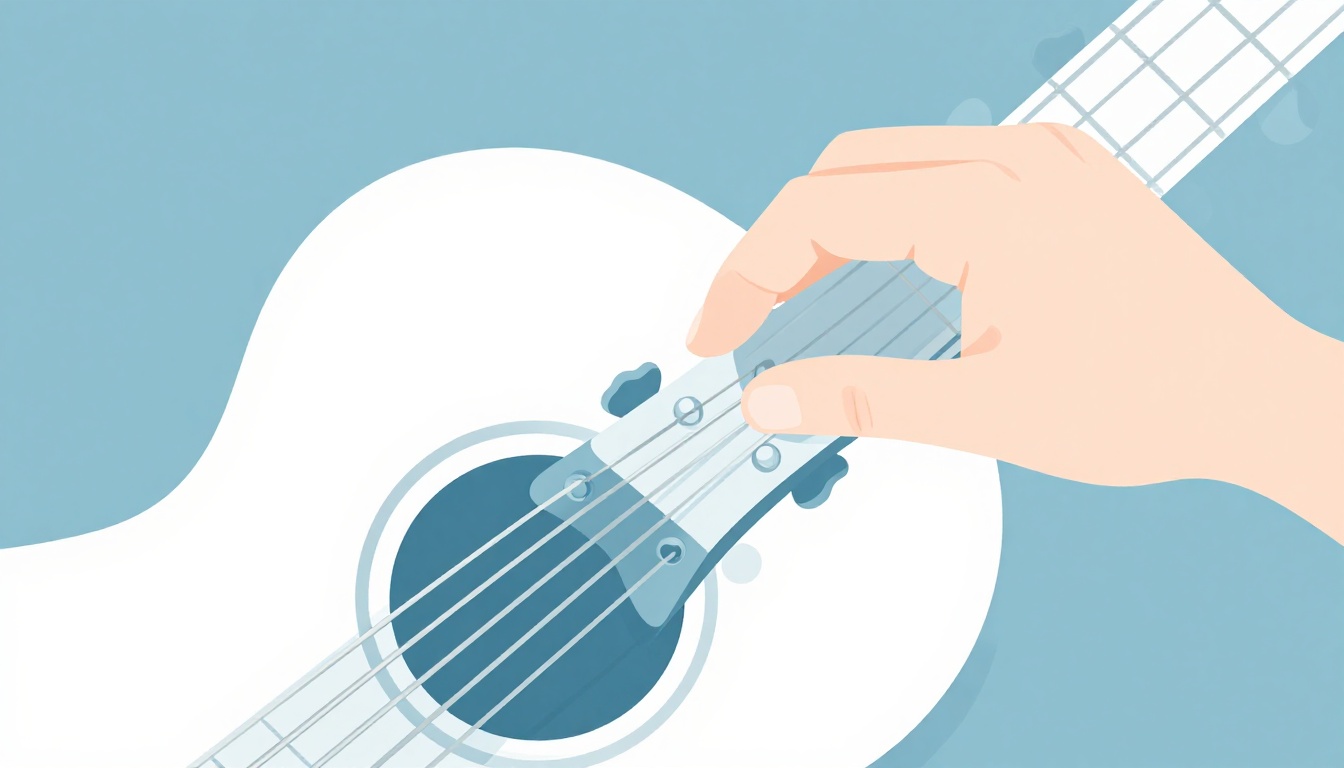
This is the shape most guitarists reach for first, because it grows directly out of the open D chord shape almost everyone already knows.
| String | Fret | Finger |
|---|---|---|
| 6 (low E) | Muted | - |
| 5 (A) | Muted | - |
| 4 (D) | Open | - |
| 3 (G) | 2 | 1 (index) |
| 2 (B) | 2 | 1 (index) |
| 1 (high E) | 2 | 1 (index) |
Your index finger lies flat across the top three strings at the 2nd fret, forming a small barre, while the 4th string (D) rings open beneath it and the 5th and 6th strings stay silent. Strum from the 4th string down through the 1st, missing the low E and A strings entirely.
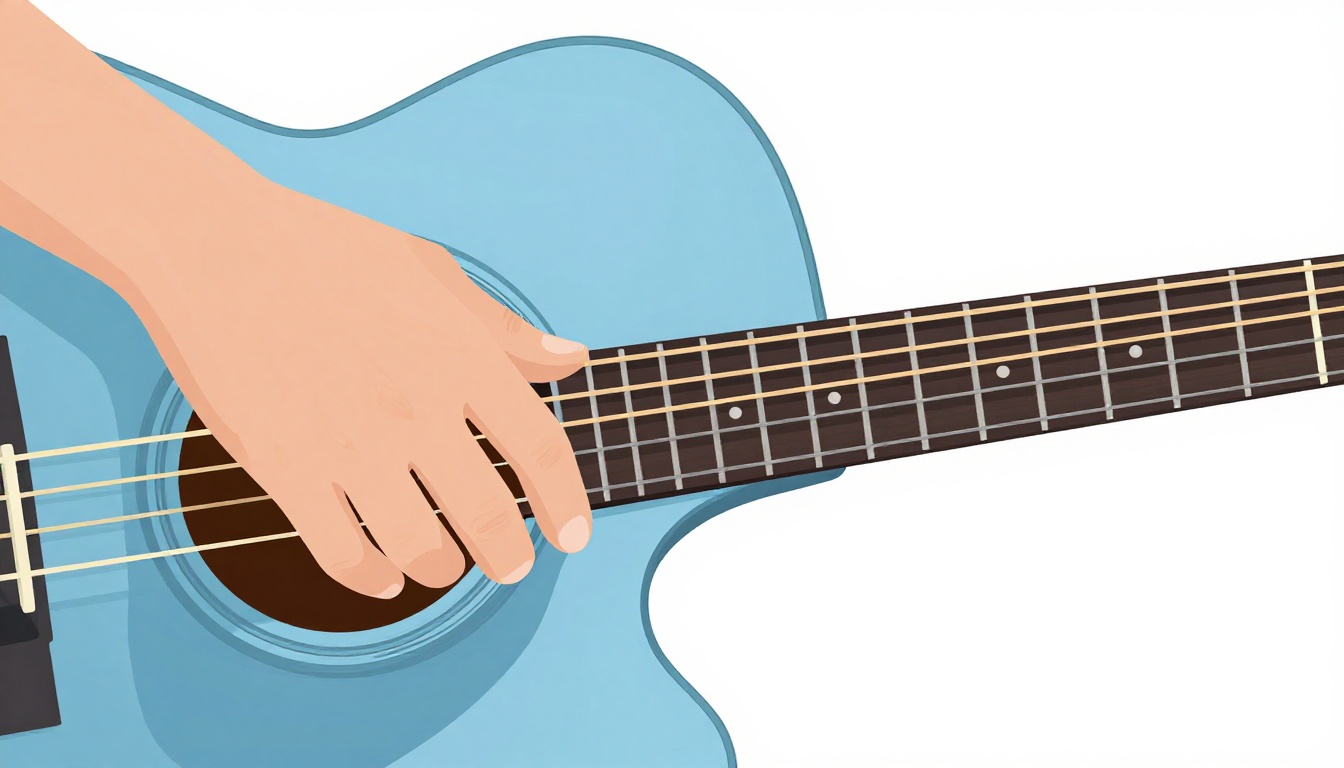
Compare this to the standard open D chord, where the same three top strings are fretted by three separate fingers, with the 2nd string landing on the 3rd fret instead of the 2nd. Dmaj7 is what happens when that one note moves a fret closer to the nut. If your hand already knows D, this shape is one small adjustment away, not a new chord to learn from scratch.
Step by Step: Placing Your Fingers for Dmaj7
Build the shape in stages rather than dropping your hand down all at once. It is far easier to fix one wrong finger than to untangle three that landed together.
- Start from open strings. Rest your fretting hand near the first three frets, no fingers down, thumb behind the neck roughly behind your first finger.
- Lay your index finger flat across strings 1, 2, and 3 at the 2nd fret. This is a small, three-string barre, not a full six-string one, so it asks far less of your hand than a real barre chord does. Keep your finger close to the fret wire, not centered in the middle of the fret space.
- Check the string directly behind your palm. Your palm and the side of your hand should be resting near, but not on top of, the 5th and 6th strings, keeping them from ringing without you having to think about it.
- Pick each of the top three strings one at a time. Each should ring clearly with no buzz and no muted thud. If one is dead, your finger has probably rolled off the fret slightly, or another part of your finger is brushing the string next to it.
- Add the open D string. Pick it on its own. It should ring bright and unmuffled, since nothing in your fretting hand should be touching it.
- Strum from the D string down. Once all four notes ring individually, strum through them together, starting at the 4th string.
Work through these six steps slowly the first several times, checking each one before moving to the next, rather than rushing to get to the full strummed chord. Once the shape starts forming reliably without you consciously stepping through each check, you can skip straight to forming the whole chord at once and only fall back to the individual checks when something sounds off.
The Three-Finger Version (No Barre Needed)
The mini barre above is fast once your hand is used to it, but a three-string barre with one finger is still a fine-motor skill some beginners have not built yet, especially in the first few weeks of playing. There is a version of the exact same chord that swaps the barre for three separate fingers landing on the same three frets.
| String | Fret | Finger |
|---|---|---|
| 6 (low E) | Muted | - |
| 5 (A) | Muted | - |
| 4 (D) | Open | - |
| 3 (G) | 2 | 1 (index) |
| 2 (B) | 2 | 2 (middle) |
| 1 (high E) | 2 | 3 (ring) |
This produces exactly the same notes as the barre version, D, A, C#, F#, because the frets have not changed, only the fingers assigned to them. What changes is the physical demand: instead of one finger needing even pressure across three strings, each string gets its own dedicated finger, which is often more reliable for a hand that has not built barre strength yet.
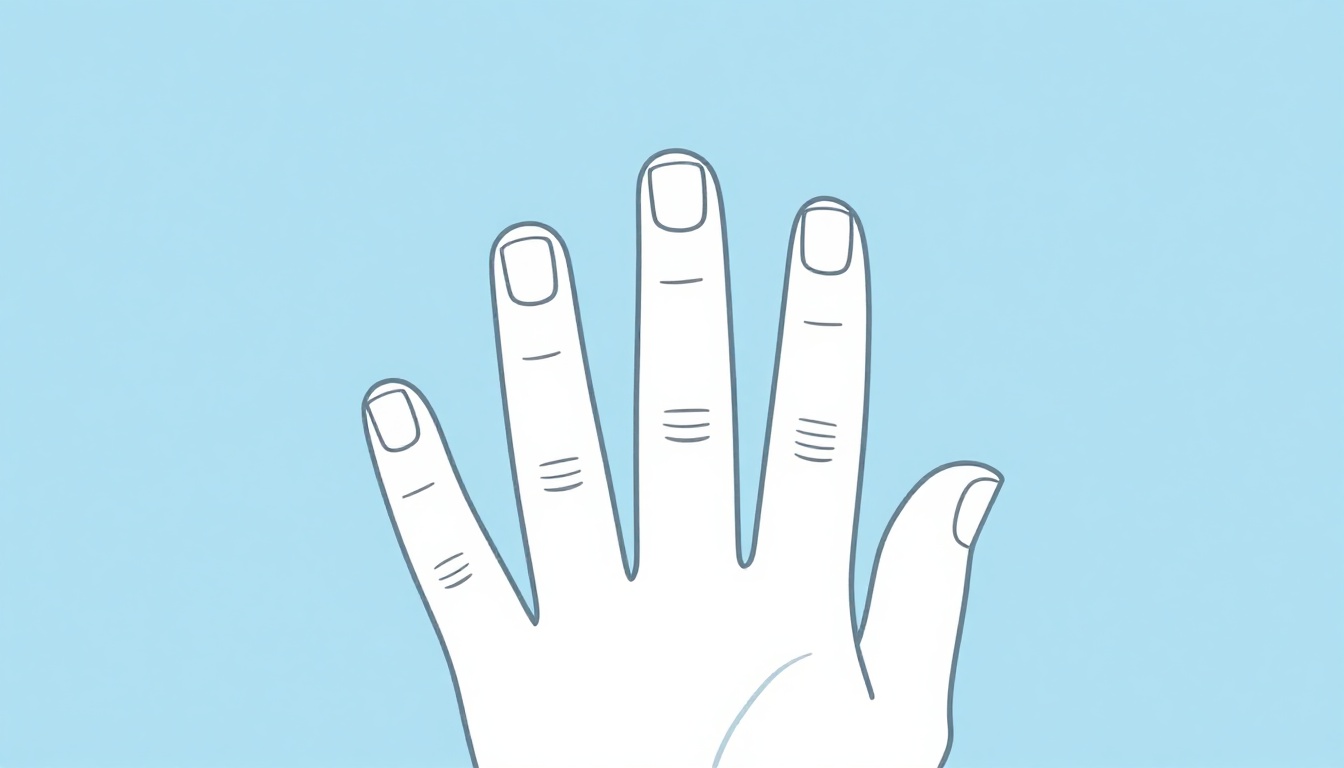
The tradeoff is that three fingers crowded onto three adjacent strings at the same fret takes more care to keep from leaning on each other and muting the string next door. Arch each finger so only its tip touches the string, and angle your hand slightly so your fingers land in a small fan rather than stacked in a straight line. Most players graduate from this version to the single-finger barre naturally, once the mini barre stops requiring conscious effort, but there is nothing wrong with sticking to whichever version rings cleaner for you.
Why Dmaj7 Is Not Working
Every fault below has a distinct cause and a distinct fix. Work through them one at a time rather than guessing at the whole chord.
The top strings buzz or sound choked
This is almost always finger placement on the mini barre. Your index finger needs to sit close to the 2nd fret wire, on the side nearer the guitar's body, not floating in the middle of the fret space or crowding up against the 1st fret. Move your finger a few millimeters toward the fret wire and try again. If you are using the three-finger version instead, check that each finger is arched enough to land on only its own string, since a flattened index finger can accidentally mute the string next to it.
One of the top three strings sounds muted or thuds instead of ringing
A dead string under a barre usually means the pressure across your finger is uneven, pressing down hard in the middle and lightly at the ends. Roll your finger very slightly toward its outer edge (the side away from your palm), which distributes pressure more evenly than the flat pad of the finger does. If it is the outer string (1st or 3rd) that is dying, your finger may simply not be reaching far enough across, so extend it a little further past that string.
The open D string is not ringing
Something in your fretting hand is touching it without your noticing, most often the underside of your index finger curling too far down as it forms the barre, or your thumb creeping up over the top of the neck. Check your thumb position first, behind the neck and roughly opposite your index finger, then check that your barre finger is not drooping onto the string below it.
The low E and A strings ring when they should not
This is a strumming problem more often than a fretting one. Since the easy Dmaj7 shape only uses the top four strings, your strumming hand needs to start its downstroke at the D string, not the low E. Practice starting your strum on the 4th string in isolation, without fretting anything, until your hand finds that starting point by feel. If your fretting hand's palm naturally rests near the 5th and 6th strings, let it lightly touch them to mute any accidental contact from your pick.
It sounds like a plain D chord, or like D7, instead of Dmaj7
Check your 2nd string finger specifically. If it has landed on the 3rd fret, you are playing something closer to a plain D. If it has landed on the 1st fret, you are playing D7. Dmaj7 needs that finger precisely on the 2nd fret, matching the other two fingers in the shape.
The chord sounds right note by note but muddy strummed together
Strum more slowly and check your strumming hand is not catching a string you intend to leave silent. A single unintended open low E ringing under this chord clashes enough to read as "muddy" even though every fretted note is correct, since the low E is not a chord tone here.
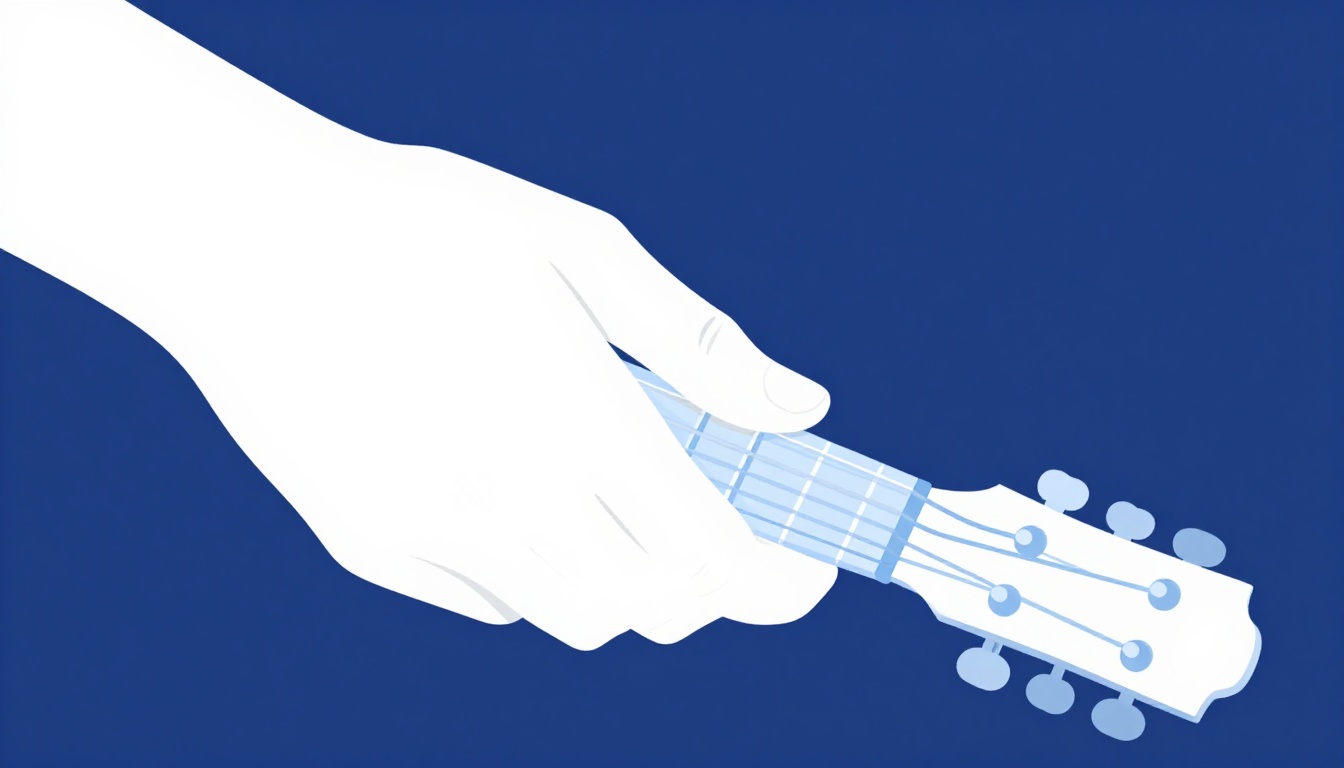
The chord sounds thin compared to a full six-string strum
This is not a fault to fix so much as a feature of the easy shape to understand. Because the easy voicing only uses the top four strings, it will always sound lighter than a full six-string chord like an open D or G played across every string. If a song needs Dmaj7 to sit as fully and heavily in the mix as the chords around it, reach for the voicing that lets the open A string ring, covered next, or the A-shape barre further down, both of which fill out more of the guitar's range.
Letting the Open A String Ring
The easy shape above mutes the 5th string, but that is a choice, not a rule. The open A string is the perfect fifth of Dmaj7, a genuine chord tone, so letting it ring instead of muting it produces a fuller, slightly lower-anchored version of the same chord.
| String | Fret | Finger |
|---|---|---|
| 6 (low E) | Muted | - |
| 5 (A) | Open | - |
| 4 (D) | Open | - |
| 3 (G) | 2 | 1 (index) |
| 2 (B) | 2 | 2 (middle) |
| 1 (high E) | 2 | 3 (ring) |
The fretting is identical to the three-finger version above. The only change is where your strumming hand starts, at the 5th string instead of the 4th, and keeping your palm clear of it instead of resting against it. This version fills out the low end of the chord and works well when Dmaj7 is carrying a verse on its own, without other instruments filling that space. The low E string still needs to stay muted, since it is not part of the chord and clashes against the C# a half step away.
Playing Dmaj7 Fingerstyle
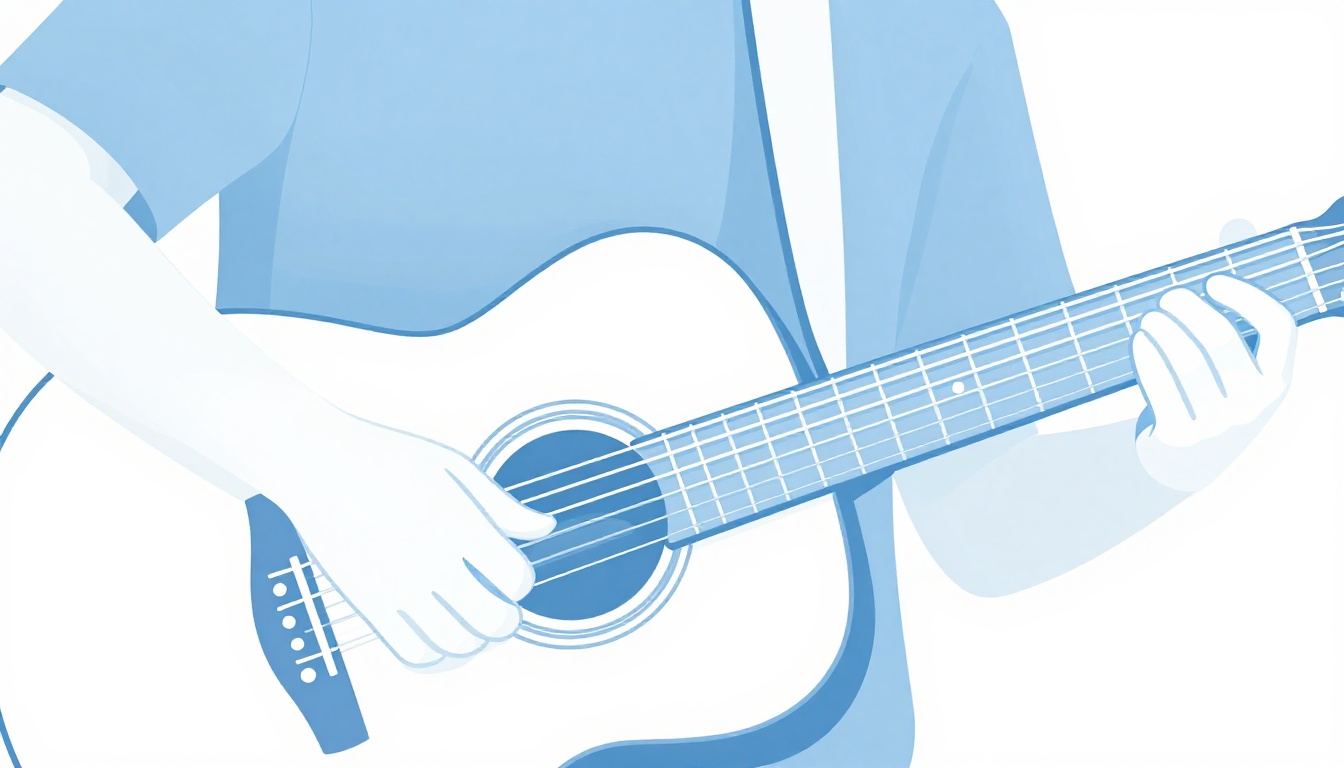
Dmaj7's floating, unresolved sound is easy to lose in a fast strum, where all four notes hit at once and blur together. Picked one note at a time, the chord opens up, and the major seventh has room to actually be heard against the root instead of getting buried in the strum.
A simple starting pattern, using the three-finger or open-A voicing rather than the muted mini-barre version, is to pick the notes in this order: thumb on the lowest ringing string (either the open D or the open A, depending on which voicing you are using), then index finger on the 3rd string, middle finger on the 2nd string, ring finger on the 1st string, one at a time, low to high. Let each note ring into the next rather than damping it, since the overlap between the notes is where the chord's character lives.
| Finger | Assigned String |
|---|---|
| Thumb (T) | Lowest ringing string (4th or 5th) |
| Index (1) | 3rd string |
| Middle (2) | 2nd string |
| Ring (3) | 1st string |
Once that ascending pattern feels steady, try reversing it, high string down to low, or picking the top three strings together as a small block while the thumb keeps a separate, steady pulse on the bass note underneath. This thumb-and-fingers split, a steady low note against a moving or overlapping upper voice, is the basic mechanic behind most fingerstyle acoustic playing, and Dmaj7 is a forgiving chord to practice it on, since nothing in the shape needs to move while your picking hand works out the pattern.
Moving the Shape Up the Neck: The A-Shape Barre
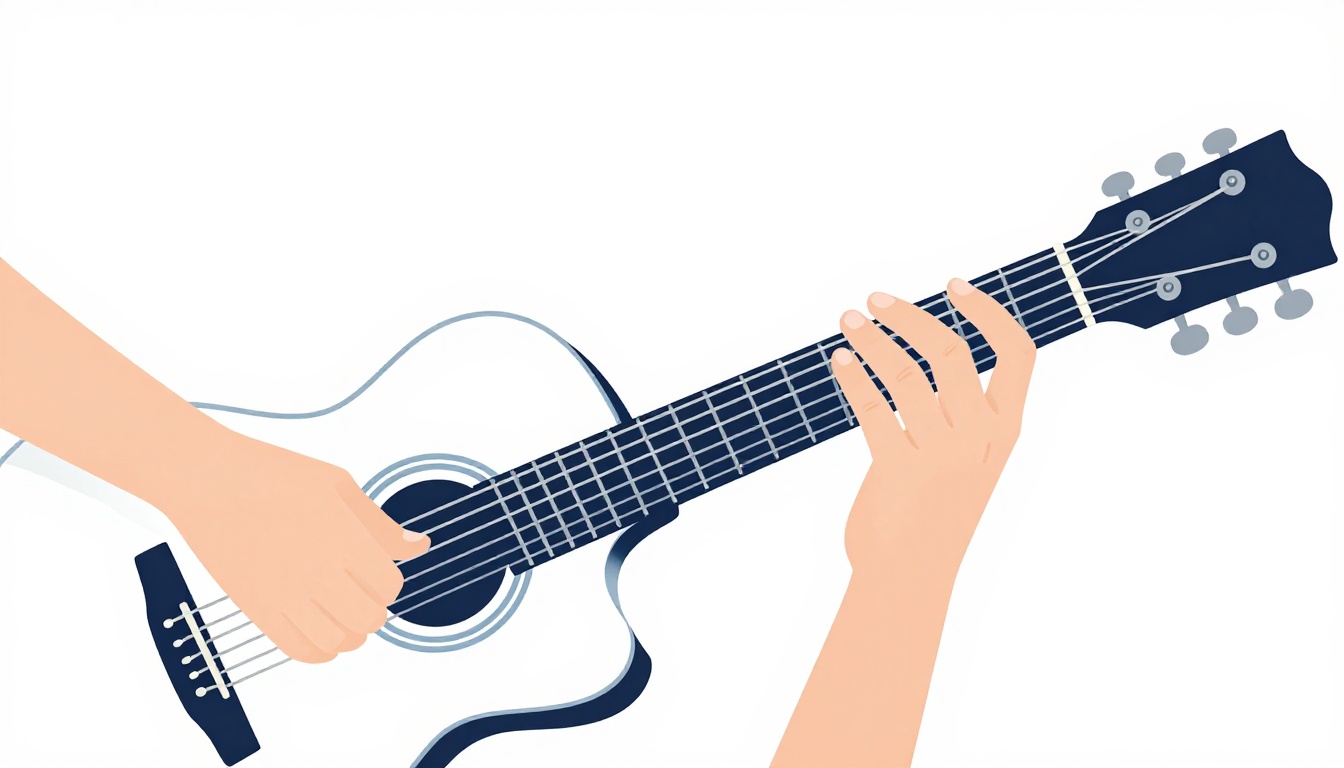
The open voicings above are rooted to the open position, which is convenient but limited. Barre chords built on the A-shape family let you play Dmaj7, and any other major seventh chord, anywhere on the neck by moving the same relative shape.
| String | Fret | Finger |
|---|---|---|
| 6 (low E) | Muted | - |
| 5 (A) | 5 | 1 (index, barre) |
| 4 (D) | 7 | 3 (ring) |
| 3 (G) | 6 | 2 (middle) |
| 2 (B) | 7 | 4 (pinky) |
| 1 (high E) | 5 | 1 (index, barre) |
The root sits on the 5th string, 5th fret (the A string, five frets up, lands on D), which is why this shape gives you D as its root even though your index finger is barring the 5th fret. Strum from the 5th string down, leaving the low E string muted by the underside of your barring finger.
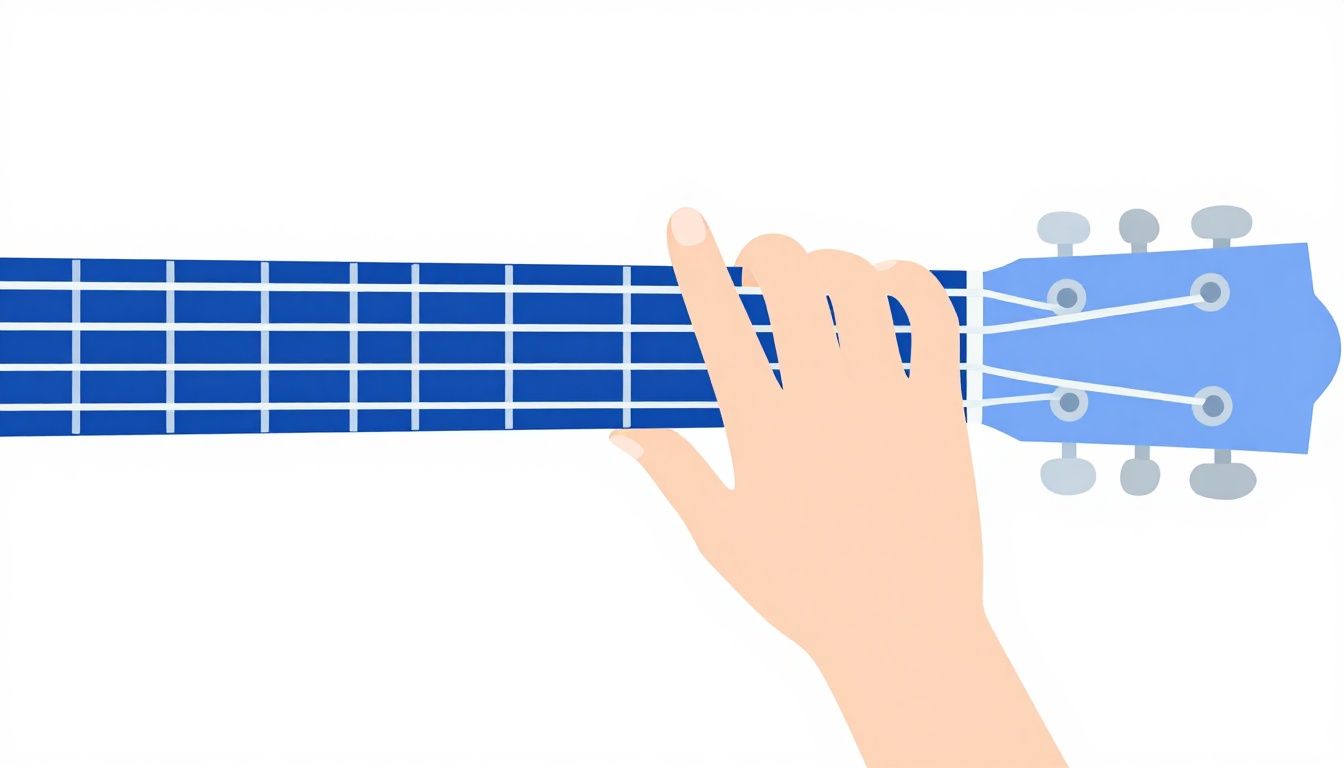
This shape is moveable: slide the whole hand shape up or down the neck and the barre fret becomes the new root, following the notes on the 5th string (A, A#, B, C, C#, D, and so on as you move up one fret at a time). It asks more of your fretting hand than the open version, since a full-length barre takes real finger and hand strength to hold cleanly, so it is worth coming back to once the open shapes feel automatic rather than as your first Dmaj7.
Where Dmaj7 Fits in a Key
Major seventh chords are not random additions to a progression. They show up in specific, predictable places once you know which scale degree they sit on.
As the I Chord in the Key of D Major
In the key of D major, stacking the scale's notes in thirds on top of the root produces a major seventh chord. That makes Dmaj7 the natural "home" seventh chord of the key of D, the jazzier, more colorful stand-in for a plain D major triad when a song wants that chord to feel settled rather than driving toward the next one.
Building a seventh chord on every note of the D major scale (D, E, F#, G, A, B, C#) gives the full set of diatonic seventh chords available in the key:
| Scale Degree | Chord | Type |
|---|---|---|
| I | Dmaj7 | Major seventh |
| ii | Em7 | Minor seventh |
| iii | F#m7 | Minor seventh |
| IV | Gmaj7 | Major seventh |
| V | A7 | Dominant seventh |
| vi | Bm7 | Minor seventh |
| vii° | C#m7b5 | Half-diminished |
Only two chords in the key of D major are major sevenths, the I (Dmaj7) and the IV (Gmaj7), which is part of why the two show up together so often in progressions built in this key.
As the IV Chord in the Key of A Major
The same chord shows up a fourth scale degree up from the key's root in any major key. In the key of A major, the chord built on the 4th scale degree (D) is also a major seventh, so Dmaj7 frequently appears as the IV chord in songs written in A, especially in pop and soul progressions that favor a lush IV chord over a plain major triad.
| Scale Degree | Chord | Type |
|---|---|---|
| I | Amaj7 | Major seventh |
| ii | Bm7 | Minor seventh |
| iii | C#m7 | Minor seventh |
| IV | Dmaj7 | Major seventh |
| V | E7 | Dominant seventh |
| vi | F#m7 | Minor seventh |
| vii° | G#m7b5 | Half-diminished |
Recognizing both roles matters practically: if you are playing along with a song and a Dmaj7 shows up, checking whether the song is centered on D or on A tells you whether the chord is the tonal "home" or a warmer detour through the IV, which affects how you approach the chord change around it. A Dmaj7 acting as the I of D major tends to want to stay put or move to the ii or vi. A Dmaj7 acting as the IV of A major tends to resolve back down to the I.
The Sound of Maj7 Chords and When to Reach for One
Major seventh chords carry a reputation as "jazz chords," and there is truth in that, they are a staple of jazz harmony, but they are just as common in pop, R&B, soul, bossa nova, and singer-songwriter guitar music. What they share across all those genres is a settled, unresolved brightness that a plain major triad does not have. Where a major chord sounds finished, a major seventh sounds like it is glowing, present but not urgently pulling toward the next chord.
That character makes Dmaj7 a strong choice anywhere a progression wants to breathe rather than push forward, verses that linger, choruses that resolve softly instead of landing hard, or an ending chord that fades rather than snaps shut. It is a poor substitute for a plain D chord in anything that wants drive or urgency, a driving rock rhythm part usually wants the plainer, more percussive D triad instead.
The distinction is easiest to hear by playing both chords back to back on the same beat, a plain D strummed hard, then Dmaj7 strummed the same way. The D chord closes a musical thought. Dmaj7 leaves it slightly open, like a sentence ending on a comma instead of a full stop. Neither is better on its own, they simply do different jobs, and part of getting comfortable with maj7 chords generally is training your ear to hear which job a given moment in a song actually needs.
Changing Between Dmaj7 and Other Chords
A chord you can hold but cannot move into or out of in time is not useful in a song yet. Dmaj7's fingering shares enough with several common chords that the transitions are more approachable than they first look.
Dmaj7 to D. The closest possible change, since only your 2nd string finger has to move, sliding one fret further from the nut, from the 2nd fret to the 3rd. Practice this one alone until it happens without you looking at your hand.
Dmaj7 to G. Your whole hand shifts down toward the nut and reshapes: index finger to the 2nd fret of the 5th string, middle finger to the 3rd fret of the 6th string, ring finger to the 3rd fret of the 1st string. None of the fingers carry over directly, so this change benefits from slow, deliberate practice, lifting your whole hand as one unit rather than one finger at a time.
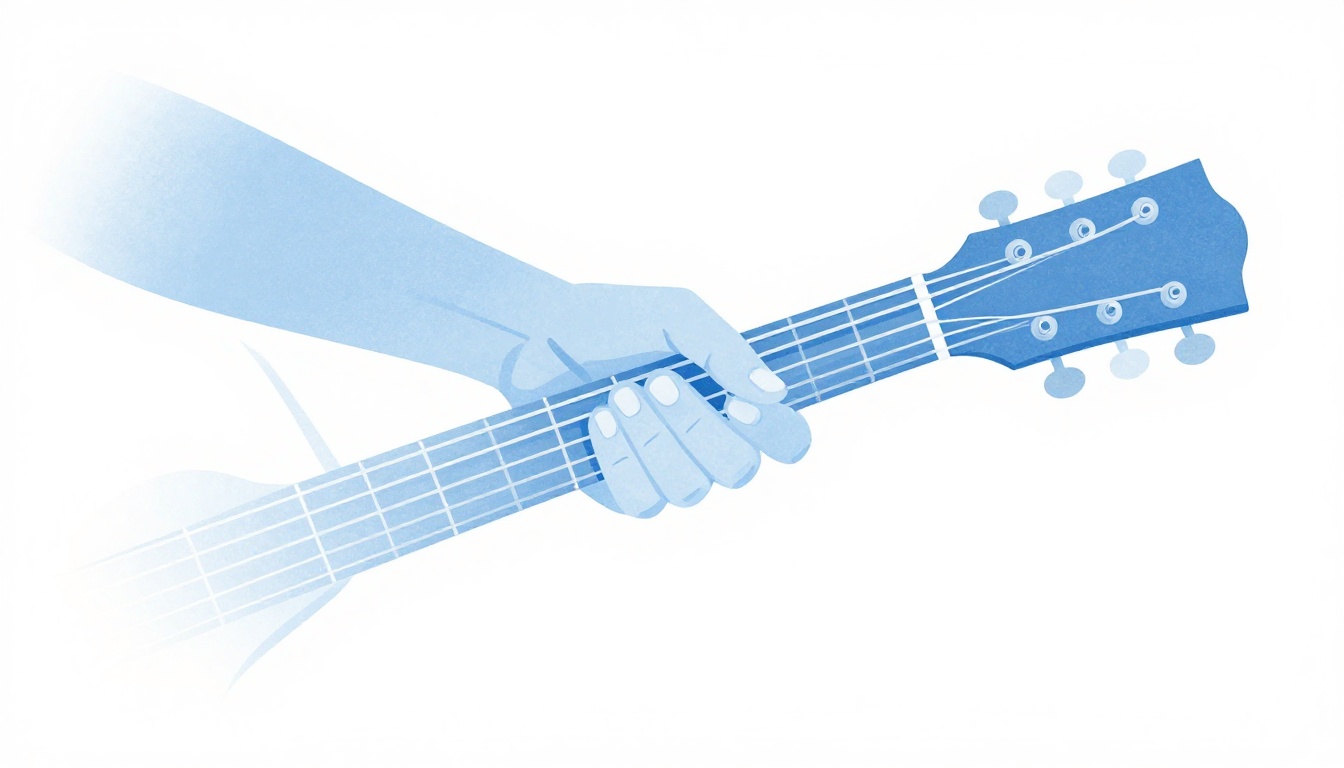
Dmaj7 to A. Your index finger stays roughly in the same neighborhood, moving from the 2nd fret of the 3rd string to the 2nd fret of the 4th string, while your other fingers reorganize around it.
Dmaj7 to Em7. Both chords are unusually easy on the fretting hand, and the change between them mostly involves relocating your fingers rather than fighting tension, since neither chord asks for a full barre. If you already know the open Em7 shape, alternating it with Dmaj7 is a good way to build comfort with major seventh and minor seventh voicings side by side.
Dmaj7 to Bm. Bm is commonly played as a barre chord, so moving from the light touch of Dmaj7 into a barre is the biggest jump in this list. Practice landing the Bm barre cleanly on its own first, then insert the change from Dmaj7 once the barre itself is reliable.
Dmaj7 to F#m7. These two chords are neighbors in the key of D major, the I and the iii, and share more fretting-hand geography than the letter names suggest. F#m7 is often played as a barre or partial barre further up the neck, so this change works best practiced slowly, with attention to keeping the beat steady rather than rushing the shift.
In every case, practice the change in isolation, back and forth, slowly, before trying it inside a song at tempo. Speed is the last thing to add, not the first. A change that is clean at a slow, deliberate tempo and falls apart at speed usually needs more isolated repetition, not a faster metronome setting, since rushing a shaky transition mostly just trains the mistake to happen faster.
Chord Progressions That Use Dmaj7
A few progressions come up often enough to be worth knowing by name, since recognizing them speeds up learning any new song that uses one.
I-vi-ii-V in D major (Dmaj7, Bm7, Em7, A7). A jazz-leaning turnaround built entirely from the diatonic chords of D major, using the major seventh, two minor sevenths, and a dominant seventh to create smooth, stepwise voice leading between chords.
IV-I in A major (Dmaj7 to A). A common pop and soul move, resolving the warmer IV chord back to the home A major triad.
I-IV-vi-V type progressions with Dmaj7 swapped in for a plain I or IV. Many pop progressions built on plain major triads can be dressed up by swapping a Dmaj7 in wherever a D major chord functions as either the I or the IV of the key, without changing the underlying progression's shape.
ii-V-I in D major (Em7, A7, Dmaj7). This is one of the most common cadences in jazz harmony, and it uses exactly the chords already laid out in the diatonic chord table above: the ii (Em7) moves to the V (A7), which resolves into the I (Dmaj7). Even outside jazz, this same three-chord shape turns up constantly at the end of a verse or the close of a chorus, because the motion from ii to V to I is one of the strongest, most familiar resolutions in Western harmony. Practicing this specific three-chord sequence on its own, slowly, is one of the more efficient ways to get comfortable with Dmaj7 as a destination chord rather than just an isolated shape.
Songs Built Around Dmaj7
Dmaj7 shows up across genres, but it is especially common in music that leans acoustic and unhurried, where the chord's floating quality has room to be heard rather than getting buried under a full band arrangement.
Neil Young's "Harvest Moon" is a well-documented example, built around Dmaj7 voicings, including a version played with the low E string tuned down to D for a fuller bottom end under the chord. That dropped-D tuning turns the previously muted 6th string into a second root, an octave below the open 4th string, thickening the chord without changing any of the fretted notes above it. It is a good illustration of how much a chord's character can shift just from what is allowed to ring underneath it, even when the fretting hand does not move at all.
Beyond that specific example, major seventh chords in general lean on much the same effect across genres: jazz standards use them constantly as tonic or IV chords within their progressions, bossa nova built entire genres of guitar accompaniment around their smooth, unresolved color, and singer-songwriter acoustic music reaches for them whenever a chorus wants to land softly instead of snapping shut. That shared thread, a chord that resolves without fully closing, is part of why maj7 voicings read as "jazzy" or "sophisticated" to most listeners even in music that has nothing to do with jazz.
Common Beginner Mistakes With Dmaj7
Confusing Dmaj7 with D7. Covered in detail above, but worth repeating as the single most common error: a finger one fret off on the 2nd string turns Dmaj7 into D7, and both are legitimate chords, so your ear may not immediately flag the mistake as wrong, only as not matching what a chart or recording is doing.
Pressing too hard on the mini barre. New players often compensate for an unfamiliar barre by squeezing harder than necessary. A three-string mini barre needs far less force than a full six-string barre chord. Excess tension tires your hand fast and does not actually fix buzzing, which is almost always a placement problem, not a pressure problem.
Forgetting to check the open D string. Because the D string is the one note in the easy shape you are not fretting, it is easy to strum through the chord without noticing that string has gone dead from an errant finger or thumb. Get in the habit of picking it alone as a quick check.
Treating all maj7 shapes as interchangeable. The open shape, the three-finger version, and the A-shape barre all produce chord tones from Dmaj7, but they sit in different registers and suit different musical moments. A song that wants a light, airy Dmaj7 in a verse is usually better served by the open voicing than by a barre chord built five frets up the neck.
Strumming the full chord before checking it note by note. It is tempting to skip straight to strumming once your fingers feel like they are roughly in place. A chord that sounds "mostly fine" strummed can be hiding one dead or buzzing string that a slower, note-by-note check would have caught immediately. Building the habit of checking each string individually, especially in the first few weeks with a new chord, saves far more time than it costs.
Letting the fretting hand's wrist collapse. Because the easy Dmaj7 shape needs less overall hand strength than a full barre chord, it is easy to get lazy with hand position, letting the wrist bend sharply or the palm press flat against the back of the neck. That habit does not usually break Dmaj7 itself, but it carries over into every chord you learn after it, including ones where poor wrist position does cause buzzing. Keep the same relaxed, slightly arched hand position here that you would use for any other chord, even though this one asks less of it.
A Practice Routine for Dmaj7
Fifteen minutes is enough if it is spent deliberately rather than just strumming through the chord repeatedly.
- Two minutes: build the shape from nothing. Start with your hand off the neck each time, form the easy Dmaj7 shape, and check each string individually before strumming. Repeat five times.
- Three minutes: the three-finger version. Switch to the no-barre fingering and run the same individual-string check, comparing how it feels against the mini barre.
- Five minutes: one transition, isolated. Pick a single change, Dmaj7 to D is the easiest starting point, and go back and forth slowly, counting a full beat before each change, gradually tightening the gap.
- Five minutes: the change inside a simple strum pattern. Use a slow, steady down-up strum and move between Dmaj7 and one other chord on a fixed schedule, four strums per chord, then two, then one, as the change gets more comfortable.
Consistency across several short sessions beats one long session. A hand that practices this chord for fifteen minutes on four separate days will outpace one hour spent on a single day, since the fine motor memory this shape depends on needs repetition spread across rest, not one long grind.
Once the fifteen-minute version stops feeling like effort, usually after a week or two of daily practice for most beginners, fold Dmaj7 into whatever songs or progressions you are already working on rather than continuing to drill it in isolation. A chord only really sticks once it is doing a job inside actual music, not just sitting in a warm-up routine.
Every Dmaj7 Voicing at a Glance
With four different shapes covered above, it helps to see them side by side.
| Voicing | Root Position | Fingers Needed | Best For |
|---|---|---|---|
| Easy open shape | 4th string, open | 1 (mini barre) | Fast strumming, first-time learners |
| Three-finger version | 4th string, open | 3 | Beginners not yet comfortable barring |
| Open with ringing A | 5th string, open | 3 | A fuller, bass-anchored sound |
| A-shape barre (5th fret) | 5th string, 5th fret | 4 (full barre) | Moving the chord to other keys |
None of these is the "correct" way to play Dmaj7. They are the same four notes arranged for different hands and different moments in a song, and most players end up using two or three of them depending on what else is happening in the chord progression around it.
FAQ
Is Dmaj7 hard to play? The open shape is not much harder than a plain D chord, since it uses the same general hand position with one finger moved a single fret. The mini barre across three strings is the only part that takes new players a little extra practice, and the three-finger alternative sidesteps that entirely.
What is the difference between Dmaj7 and D7? D7 uses a flattened seventh (C natural), giving it a bluesy, unresolved pull that wants to move toward another chord. Dmaj7 uses a major seventh (C#), which sounds settled and floating rather than urgent. On the guitar, the two shapes differ by a single fret on the 2nd string.
Can I play Dmaj7 without a barre? Yes. The three-finger version uses the identical frets as the mini-barre shape, just split across three fingers instead of one, and produces exactly the same notes.
Why does my Dmaj7 sound like a plain D chord? Your 2nd string finger has most likely landed on the 3rd fret instead of the 2nd. Check that finger specifically against the tables above.
Do I need to mute the low E and A strings? In the easy open voicing, yes, since neither is a chord tone in that version and both will clash if they ring. The alternate voicing further up this post lets the open A string ring instead, since A is the chord's fifth, but the low E should stay muted in every open-position version covered here.
Where does Dmaj7 come up in real songs? Most often in music with a relaxed, unhurried feel, singer-songwriter acoustic guitar, soul, bossa nova, and jazz standards, where the chord's floating quality has space to be heard. Neil Young's "Harvest Moon" is a widely cited example built around Dmaj7 voicings.
Is there a version of Dmaj7 higher up the neck? Yes, the A-shape barre chord covered above puts the root on the 5th string and is moveable to any key, though it demands more hand strength than the open voicings.
What does the "maj7" actually mean in the chord name? It means the chord is a major triad with a major seventh added on top, as opposed to a plain "7" (dominant seventh, which uses a flattened seventh) or "m7" (minor seventh, which flattens both the third and the seventh).
Should I learn Dmaj7 before or after a plain D chord? After. Dmaj7 borrows its hand position directly from the open D chord, so it is much easier to learn once your hand already knows where D sits on the neck. Trying to learn Dmaj7 first removes the reference point that makes the single-fret adjustment obvious.
Is Dmaj7 the same as D add9 or Dsus2? No. Both of those replace or add different notes, not a major seventh, and are built and fingered differently even though they share the letter D. If a chart specifically calls for Dmaj7, playing a D add9 or Dsus2 in its place will not produce the same notes, even though all three can sound pleasant in a similar musical context.
Once the easy shape stops needing conscious thought, the real payoff of Dmaj7 is how it changes the songs you already play, swap it in wherever a plain D chord is acting as your key's I or IV chord and listen to how much warmer the progression gets. From there, the Em7 chord is a natural next stop, since the two chords share fingering habits and turn up together constantly in the same progressions.
GuitarLowKey
Ready for fifteen focused minutes?
Open the web app and train the change that is blocking your song.