
How to Play the Eb Guitar Chord (Every Shape, No Buzzing)
The Eb guitar chord has no easy open version. Here is the barre shape most players use, two easier alternatives, and how to stop it from buzzing.

To play the Eb chord on guitar, barre your index finger across the 6th fret of the 5th (A), 4th (D), 3rd (G), 2nd (B) and 1st (high E) strings, then add your ring finger on the 8th fret of the D string, your middle finger on the 7th fret of the G string, and your pinky on the 8th fret of the B string. Mute the low E string. Strum from the A string down. That is the shape most players reach for first. Eb has no simple open-string version the way C or G does, so every route into this chord involves either a barre or a workaround, and this post covers all of them: the full shape, a three-finger version near the nut for players who cannot barre yet, the fuller six-string barre further up the neck, why it buzzes and how to fix that, the capo shortcuts, and every chord built on the same root.
| String | Fret | Finger |
|---|---|---|
| 6 (low E) | Muted | - |
| 5 (A) | 6 | 1 (barre) |
| 4 (D) | 8 | 3 |
| 3 (G) | 7 | 2 |
| 2 (B) | 6 | 1 (barre) |
| 1 (high E) | 6 | 1 (barre) |
Why Eb Doesn't Have an Easy Open Chord
Every open chord you already know, C, G, D, A, E, works because at least a few of the six open strings happen to land on notes that belong to the chord. An open G chord rings a G on the low E string once you fret it at the 3rd fret, and the open D, G and B strings fall right into place around it. Eb major is built from the notes Eb, G and Bb. None of the six open strings, E, A, D, G, B, E, is one of those three notes, so there is no combination of open strings and a couple of fretted notes that produces a clean Eb triad near the nut. The chord has to be built entirely from fretted notes, which is why every practical version of it is either a barre or a shape borrowed from further up the neck.
This is the same reason F is the first barre chord most players learn: F also sits between open chords with no open-string shortcut. Eb is one fret harder than F in the sense that the full barre sits further from the nut, but the hand shape is identical.
It is worth naming why this feels discouraging the first time you look it up: almost every other chord a beginner meets in their first few weeks, C, G, D, Em, A, has an open-string shortcut, so it is easy to assume every chord does. Eb is usually the first one that flatly does not, and running into it is often what pushes a player to actually learn a barre chord properly instead of avoiding barres altogether. There is no version of this chord waiting to be discovered that skips the barre and still gives you the full, root-in-the-bass sound. The three-finger shape below gets close without one, but it is a genuine trade-off, not a secret shortcut.
The Three-Finger Version Near the Nut
If the full barre is still out of reach, there is a genuinely easier version that stays close to the nut and uses only three fingers, no barre at all.
| String | Fret | Finger |
|---|---|---|
| 6 (low E) | Muted | - |
| 5 (A) | Muted | - |
| 4 (D) | Optional, 5 | 4 |
| 3 (G) | 3 | 1 |
| 2 (B) | 4 | 2 |
| 1 (high E) | 3 | 3 |
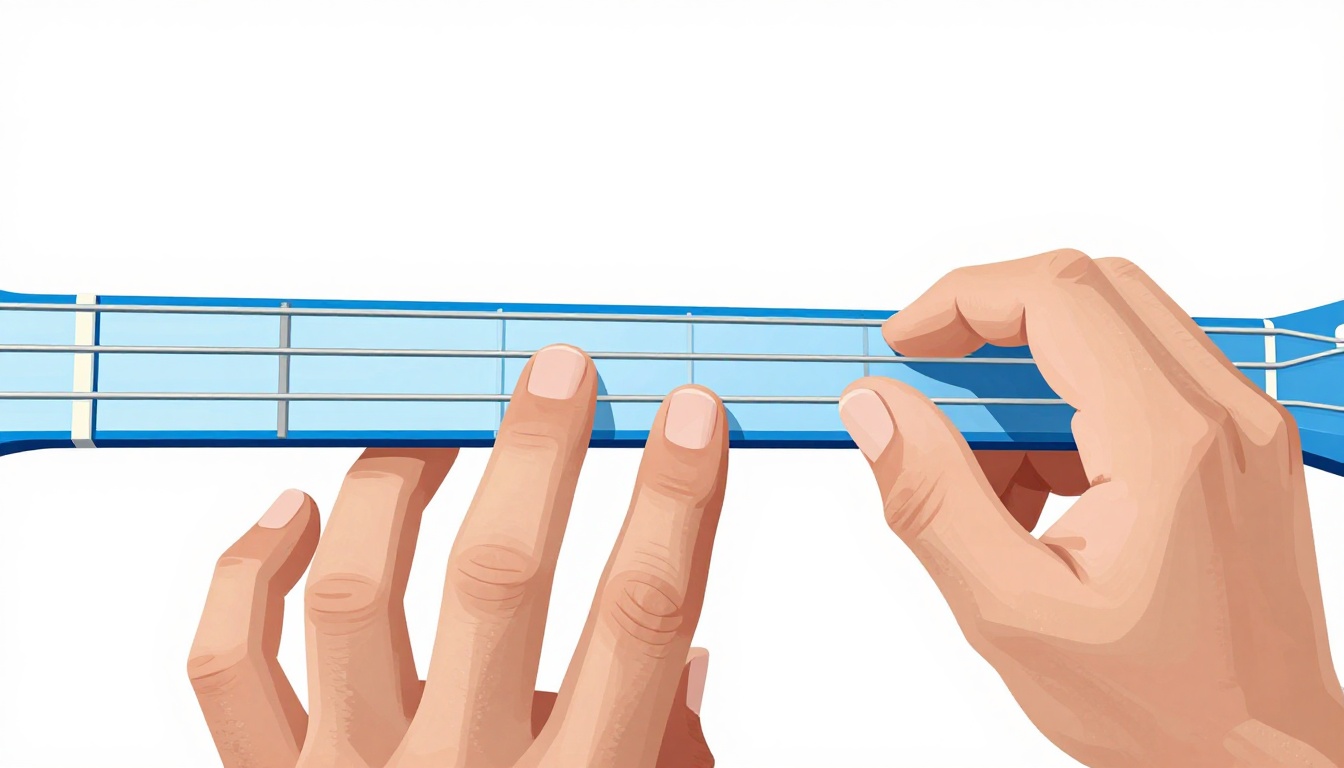
Strum only the G, B and high E strings (add the D string at the 5th fret with your pinky if you want a fuller sound, but it is optional). This shape is the open D chord moved up one fret, and it produces the same three notes, Eb, G and Bb, just voiced higher and without the root in the bass. It will not sound as full as the barre version because the lowest note you are playing is a G, not an Eb, but it is genuinely three fingers and no stretch, which makes it the right starting point if your hand is not ready for a barre yet.
The Full Six-String Barre Version
Once the five-string version above feels solid, there is a fuller six-string barre shape further up the neck that gives you a proper bass note on the low E string.
| String | Fret | Finger |
|---|---|---|
| 6 (low E) | 11 | 1 (barre) |
| 5 (A) | 13 | 3 |
| 4 (D) | 13 | 4 |
| 3 (G) | 12 | 2 |
| 2 (B) | 11 | 1 (barre) |
| 1 (high E) | 11 | 1 (barre) |
This is the same shape as an open E major chord, moved up so the barre sits on the 11th fret. It is a bigger stretch and a longer barre than the fret-6 version, and most players find it harder to keep clean simply because the frets are spaced slightly wider than they are down at fret 6. Use it when you want the fuller sound of six strings ringing together, and use the fret-6 version for everyday playing.
Notice that both barre shapes are really the same two movable patterns every barre chord player eventually learns: an A-shape barre (root on the 5th string, used here at fret 6) and an E-shape barre (root on the 6th string, used here at fret 11). Once your hand knows these two shapes, you are not learning a new chord every time you barre somewhere else on the neck, you are sliding one of these two patterns to a new fret and reading off whatever root note happens to sit there.
Finding Any Other Barre Chord Once You Know These Two Shapes
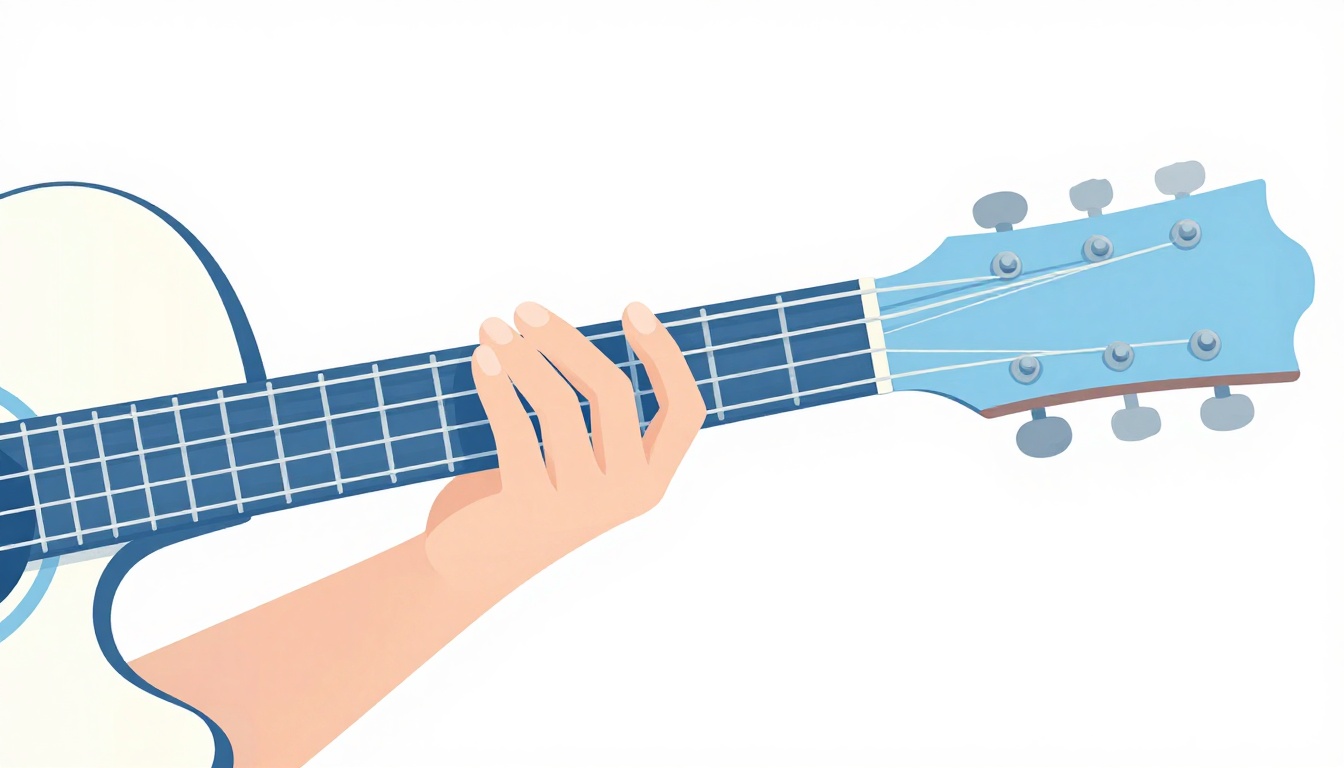
Since both Eb shapes are just the A-shape and E-shape barre patterns moved to a particular fret, the same two shapes give you every other major chord on the neck if you slide them to a different fret. The root note is whatever note is being played on the string the barre finger sits on.
| Fret | A-shape barre (root on 5th string) | E-shape barre (root on 6th string) |
|---|---|---|
| 1 | Bb | F |
| 3 | C | G |
| 5 | D | A |
| 6 | Eb | Bb |
| 8 | F | C |
| 10 | G | D |
| 11 | Ab | Eb |
Read the table by matching the shape to the fret: the A-shape barre at fret 6 is Eb, which is the version this post opened with, and the E-shape barre at fret 11 is also Eb, which is the fuller six-string version further up the neck. Slide either shape to a different fret and the fingering does not change at all, only the root note printed on the chord chart does. This is the single most useful thing to internalize about barre chords: once your hand can hold the shape, you already know every chord that shape can produce, you just need to know which fret to put it on.
Fixing the Buzz and Muted Strings
Barre chords buzz for a small number of specific, fixable reasons. Go through them in order.
Your index finger is barring with the flat of the finger instead of the side
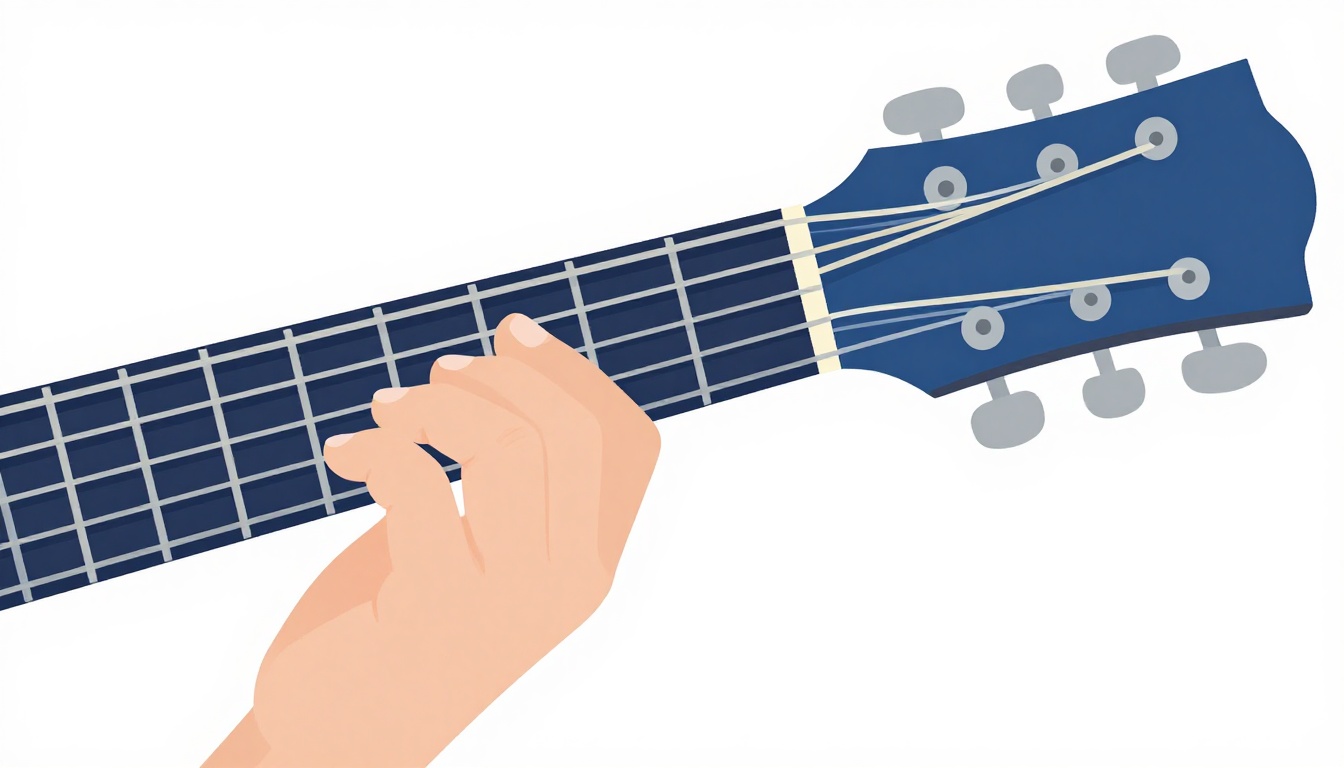
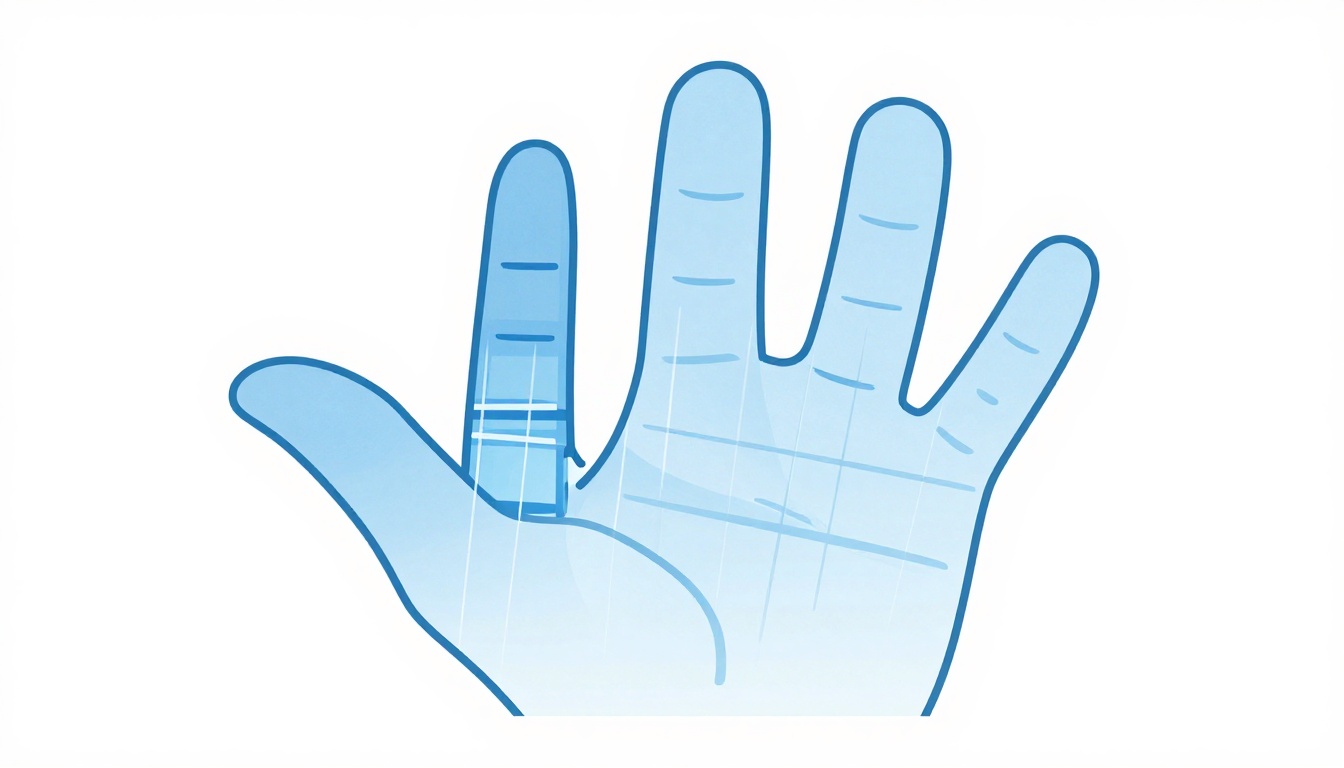
The flat pad of the index finger has a soft dip right where the middle knuckle bends, and that dip sits directly over the strings when you lay the finger flat. Roll your index finger slightly onto its outer edge, toward the side closest to the headstock, so the harder, straighter part of the finger is what presses the strings. This single adjustment fixes more barre chord buzz than anything else on this list.
The thumb is creeping over the top of the neck
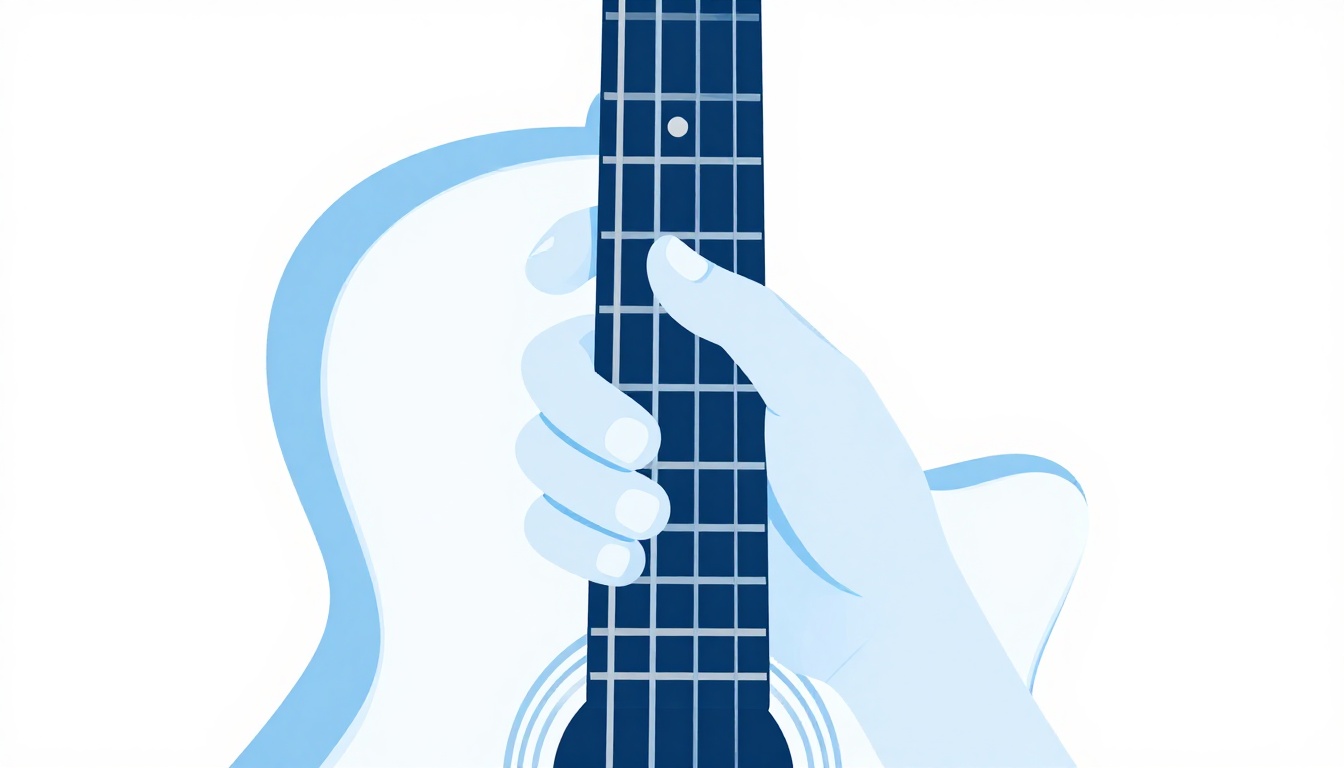
If your thumb is hooked over the top edge of the neck, your fingers cannot close down evenly across all six strings, and the strings closest to the floor when you hold the guitar (the B and high E strings) tend to buzz or die first. Bring your thumb down to roughly the middle of the back of the neck, pointing toward the headstock, and use it as a pivot to apply even pressure with the barre finger opposite it.
Not enough pressure on the fingers doing the higher frets
The ring, middle and pinky fingers on the 7th and 8th frets need to come down on their fingertips, close to the fret wire, not flat on the pad and not in the middle of the fret space. A finger planted in the middle of a fret space, rather than right up against the fret wire, needs noticeably more pressure to ring clean, and that is exactly where beginner hands run out of strength.
The wrist is bent at an awkward angle
A wrist that is cocked sharply, either bent hard toward the palm or pushed way back, robs your fingers of leverage before they even reach the strings. Keep your fretting wrist reasonably straight, with a slight forward curve, so the muscles in your forearm are doing the work of closing the hand rather than your fingers fighting the joint.
You are strumming the muted low E string by accident
On the fret-6 version, the low E string is deliberately left out of the chord. If your barre finger accidentally presses it down and you strum across all six strings, you will hear an extra low note that does not belong to the chord and muddies the sound even when nothing is technically buzzing. Practice starting your strum from the A string, and check with a slow, one-string-at-a-time pluck that the low E string is either fully muted by the side of your index finger or simply skipped by your strumming hand.
Common Beginner Mistakes Beyond Buzzing
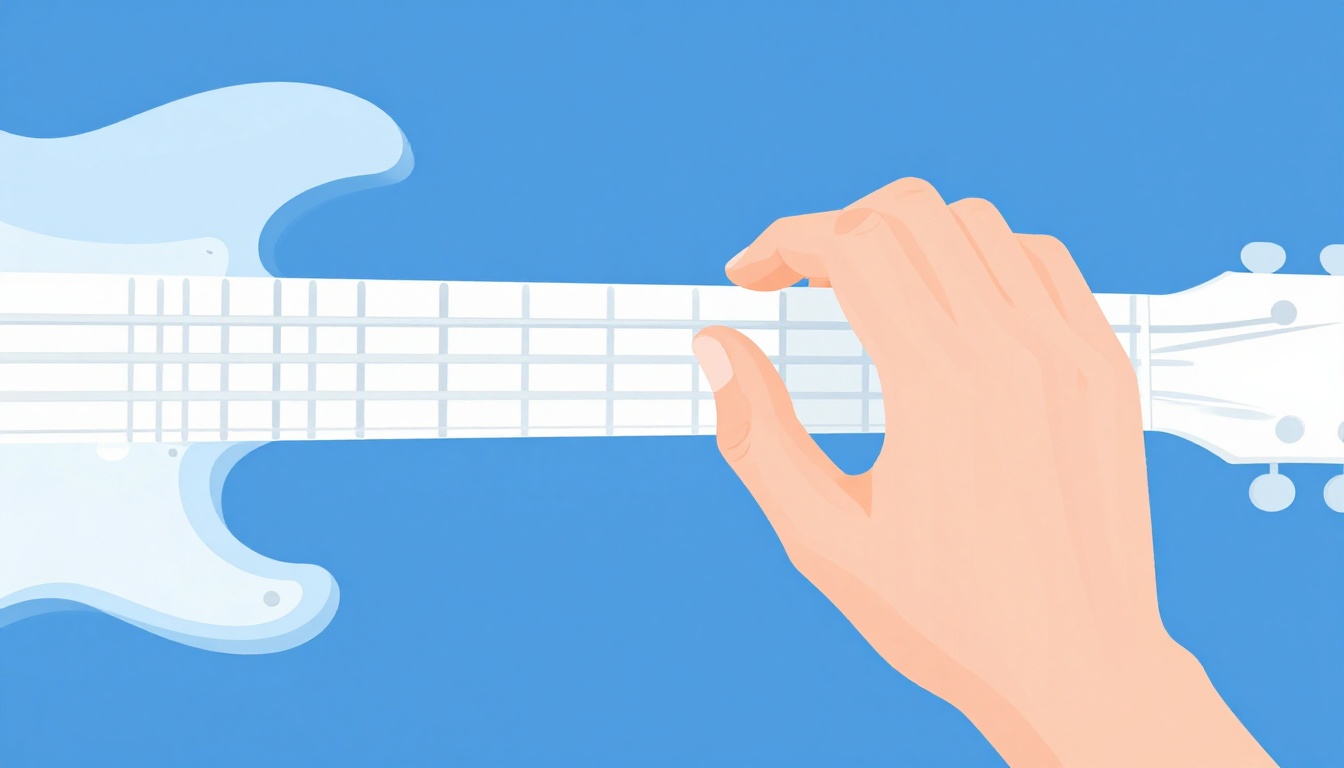
Buzzing and dead strings are the obvious problems. These are the quieter ones that slow a barre chord down even after it stops buzzing.
Squeezing harder than the chord needs
Once a barre chord finally rings clean, it is tempting to keep gripping it at full strength the whole time you hold it, out of fear that easing off will bring the buzz back. In practice this just tires your hand out fast and makes every chord change after it slower and clumsier. Find the minimum pressure that keeps the chord ringing clean, not the maximum pressure your hand can produce, and rest at that minimum between strums.
Reforming the whole hand shape from scratch every time
If every chord change means fully releasing the barre and rebuilding all four fingers from nothing, you will always be a beat behind. Once the fret-6 barre and the fret-11 barre both feel familiar, practice moving between them, and between Eb and its neighboring barre chords, by sliding the shape rather than collapsing it and starting over. Your hand should travel as one unit between related shapes.
Letting the pitch creep sharp under a hard barre
If a barre chord sounds slightly out of tune compared with your open chords even though your tuner says the guitar is fine, the usual cause is pressing down harder than necessary, which can pull the string sharp by a small but audible amount, especially close to the nut. This is one more reason to aim for the lightest pressure that keeps the chord clean rather than clamping down as hard as you can.
Practicing the chord only in isolation
It is easy to get the fret-6 barre ringing clean while sitting still and holding it, and then find it falls apart the moment it shows up inside an actual song. That gap closes only by practicing the chord the way it will actually be used, arriving at it from a strum pattern, at tempo, after a different chord, rather than only ever forming it from a resting hand. Once the shape itself feels familiar, shift most of your practice time toward the transitions in and out of it rather than continuing to drill the static shape alone.
Check Your Tuning Before You Blame Your Technique
Before spending a practice session convinced your hand is doing something wrong, tune the guitar with an actual tuner and recheck. A barre chord uses five or six strings at once, so any single string that has drifted slightly out of tune becomes far more obvious in a full barre chord than it ever was in an open chord that only used two or three fretted notes. What sounds like a bad barre chord is sometimes just one string that needed a small adjustment.
It is also worth retuning after your hand has warmed up and you have played a few barre chords, not only before you start. New strings in particular stretch slightly during the first few sessions of play, and the extra pressure a barre chord puts on the neck can reveal a string that was only barely in tune to begin with. Ruling this out first saves you from troubleshooting your finger position for a problem that was never about your finger position.
Small Hands and Alternate Fingerings
If your ring finger, middle finger and pinky feel cramped trying to land on three separate frets (7 and 8) right next to each other, there is an alternate fingering that some players find easier: flatten your ring finger slightly to form a mini-barre across the D, G and B strings at once, at whichever fret makes the shape ring clean for your hand, rather than assigning a separate finger to each string. It takes some of the individual finger independence out of the equation and turns it into one motion, which is often easier for a smaller hand than three fingers stacked a fret apart from each other.
Another option is to use your thumb to fret the low E string from over the top of the neck on the fret-11 version, freeing your index finger to focus only on the barre across the remaining five strings. This is a common technique on an electric guitar with a slim neck profile and considerably harder on a wide classical or dreadnought acoustic neck, so try it and see whether your instrument and hand size make it practical.
If none of the fret-6 or fret-11 shapes feel manageable yet, do not force it. Go back to the three-finger version near the nut and spend real practice time there first. A chord you can actually hold cleanly at a lower difficulty is more useful than a barre you are fighting with every time it comes up in a song.
How Long This Actually Takes
There is no fixed timeline for getting a barre chord to ring clean every time, and it depends heavily on how much you have already played, how often you practice, and how your particular hand and guitar interact with this specific shape. Some players get a passable barre within their first couple of weeks of consistent practice. Others spend a month or more before it stops feeling like a fight.
What matters more than the calendar is the direction the chord is moving in. If it buzzes on three strings this week and only one string next week, that is real progress even if the chord is not clean yet, and it is a far more useful thing to track in a practice log than how many days have passed. A barre chord that never improves session to session usually points to one of the technique issues covered earlier in this post, most often the flat-finger barre or the thumb creeping over the neck, and is worth troubleshooting directly rather than waiting out.
Electric vs Acoustic: Why the Same Shape Feels Different
The exact same Eb barre shape can feel like two different chords depending on which guitar you play it on, and it is worth knowing why before you assume you are doing something wrong.
Electric guitars typically have a narrower, flatter neck profile, lighter gauge strings, and lower action (the height of the strings above the fretboard), all of which make less finger pressure necessary to fret a clean barre. Acoustic guitars, especially dreadnought and jumbo body styles built for volume rather than ease of playing, tend to run higher action and often carry heavier strings, both of which make the same barre shape require noticeably more strength from your fretting hand.
If you are learning this chord on an acoustic and finding it far harder than a friend describes on their electric, that is a real difference in the instruments, not necessarily a gap in your technique. It is also worth having a guitar's action checked by someone who sets up instruments if barre chords feel unusually hard even after weeks of consistent practice, since strings sitting higher than necessary above the frets make every barre chord harder than it needs to be regardless of how correctly you are fretting it.
Classical and flamenco guitars, strung with nylon rather than steel strings, sit somewhere in between. The strings themselves are softer under the finger, but the necks are usually noticeably wider than an electric or steel-string acoustic neck, which asks more of your barre finger's reach even as it asks less of your fingertip strength. None of this changes the shape covered in this post, only how much effort it takes to hold it, so if your first guitar happens to be an acoustic or a classical, be patient with the process and know that the exact same fingering will feel more available to you once you also spend time on a lower-action instrument, or once your action gets adjusted.
The Capo Shortcut: Playing Eb Without a Full Barre
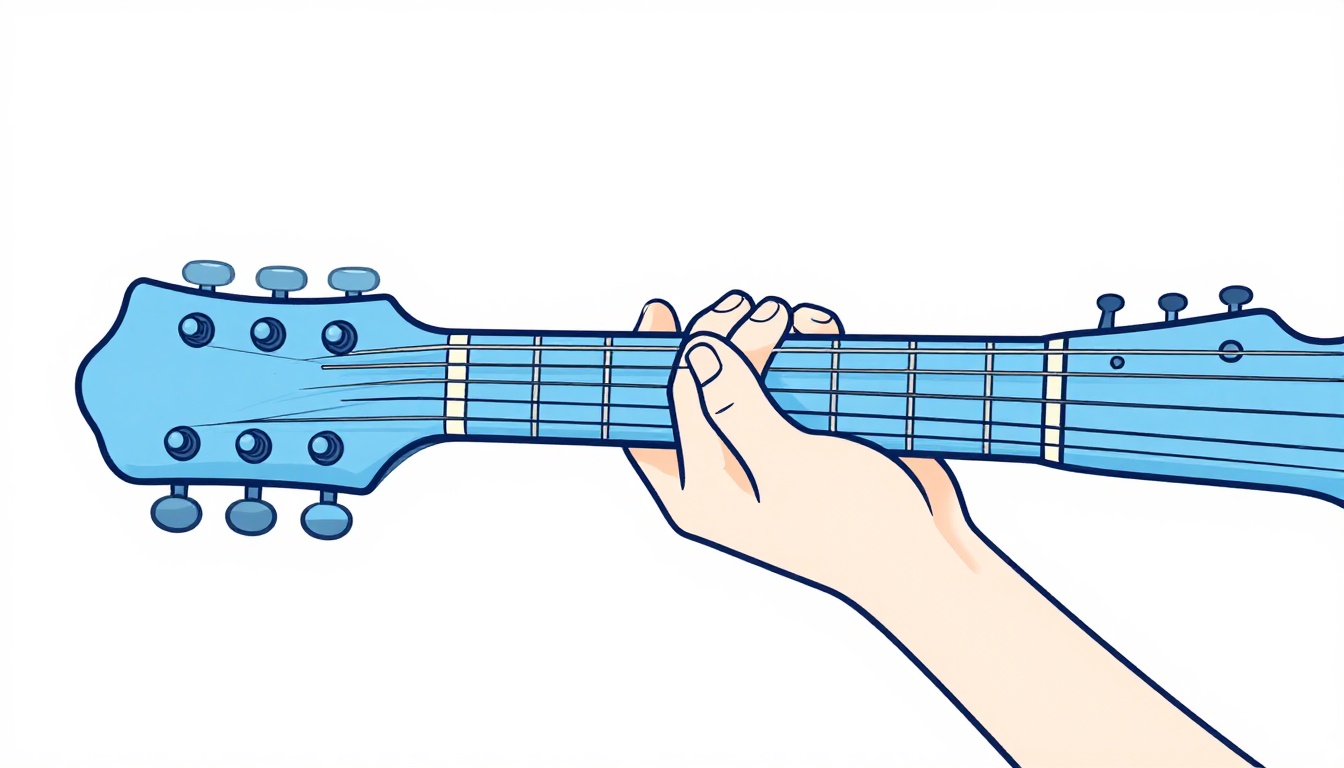
A capo turns any open chord shape into a different chord, and there are two capo positions that reach Eb using shapes you may already know.
| Capo fret | Chord shape to play | Result |
|---|---|---|
| 1st fret | Open D shape | Eb |
| 3rd fret | Open C shape | Eb |
| 11th fret | Open E shape | Eb (impractical this high) |
Clip a capo on the 1st fret and play an ordinary open D chord, and what comes out is Eb, because every note in the D shape has been raised by one half step. Clip it on the 3rd fret and play an open C chord for the same result, since C raised by three half steps is Eb. The 11th-fret option exists in theory (an open E chord raised by 11 half steps is Eb) but the frets are so close together that high on the neck it is rarely worth it in practice.
The capo does not make you play a "real" barre chord, and if a song calls for Eb alongside other chords that only make sense in standard tuning, a capo changes every chord in the song, not just this one. But if you are playing solo, or the whole progression can be reached from D-shape or C-shape chords, it is a completely legitimate way to get a clean Eb sound while you are still building barre chord strength.
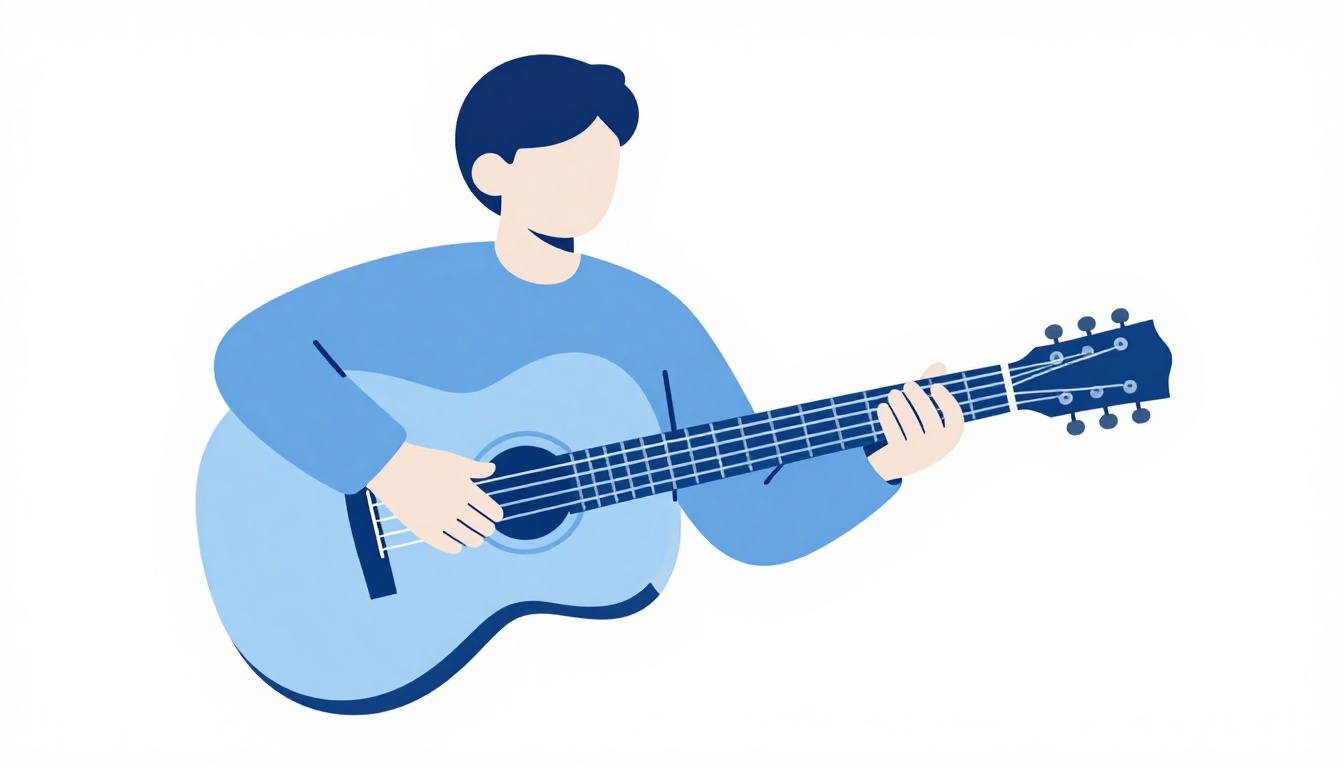
What Notes Make Up the Eb Chord
Eb major is a triad built from the 1st, 3rd and 5th notes of the Eb major scale.
| Scale degree | Note | Role in the chord |
|---|---|---|
| 1 (root) | Eb | Root |
| 3rd | G | Major third |
| 5th | Bb | Perfect fifth |
Measured in semitones from the root, the third sits 4 semitones above Eb and the fifth sits 7 semitones above Eb. That 4-then-3 spacing (4 semitones from root to third, then 3 more from third to fifth, for 7 total) is what defines a major triad on any root note, not just this one. Shrink the first gap from 4 semitones to 3 (and the second gap grows from 3 to 4 to keep the fifth in the same place) and you get the minor third that turns this chord into Ebm, which is exactly the one-fret adjustment described later in this post.
The Eb major scale itself runs Eb, F, G, Ab, Bb, C, D, and back to Eb. Every fingering in this post, the barre at fret 6, the barre at fret 11, the three-finger version near the nut, is the same three notes, Eb, G and Bb, just arranged across the strings in a different order and in different octaves. Knowing that the note names stay fixed while the shape changes is what makes it possible to recognize the chord in a new position instead of relearning it from scratch every time.
The Chords That Live Next to Eb
If you build a triad on every note of the Eb major scale, using only notes that already belong to the scale, you get a fixed, predictable set of chords. This is the same logic that gives every major key its own family of chords, and knowing it saves you from treating each new chord in a song as an unrelated shape.
| Degree | Chord | Notes |
|---|---|---|
| I | Eb | Eb, G, Bb |
| ii | Fm | F, Ab, C |
| iii | Gm | G, Bb, D |
| IV | Ab | Ab, C, Eb |
| V | Bb | Bb, D, F |
| vi | Cm | C, Eb, G |
| vii (dim) | Ddim | D, F, Ab |
A song written in the key of Eb major will lean heavily on Eb, Ab and Bb (the I, IV and V chords), with Fm, Gm and Cm showing up as the minor chords that connect them. If you see Eb followed by Ab and Bb in a chord chart, that is not a coincidence, it is the most common chord movement in the key the song is written in, and it is worth learning to recognize on sight rather than treating each chord change as a surprise.

A useful way to put this table to work is to practice a short progression built entirely from it, rather than practicing Eb in isolation. Try Eb, Ab, Bb, Eb, four bars each, at a slow, steady tempo. Eb, Ab and Bb are all major chords, so all three use the same major barre shape logic from earlier in this post (an A-shape or E-shape barre, just rooted on a different fret), which means the same hand shape is doing the work and only the position changes. Once that loop feels smooth, bring in Cm, which uses the minor version of the same barre shape covered in the next section, so your hand also practices switching between the major and minor barre shapes that share this key.
Eb vs D#: Same Chord, Different Name
Eb and D# are the same pitch. On a piano they are the same key. On a guitar they are the same fret. The difference is entirely in spelling, and which name gets used depends on the key signature of the song. In a key built around flats, like Bb major or Eb major itself, this chord is written Eb. In a key built around sharps, like B major or F# minor, the identical chord and the identical fret get written D#. If you have seen the exact same shape called D#m somewhere else, that is because a chord chart in a sharp key would call the minor version of this chord D#m rather than Ebm, even though your hand does not do anything different. Our D#m guitar chords guide covers that chord and its shapes in full if that is the one you actually came looking for.
You will also see this chord written a handful of other ways depending on the source: E-flat, with the word spelled out, is common in method books and beginner material. Ebmaj or EbM sometimes appears where a writer wants to make it explicit that the chord is major, usually to avoid confusion with Ebm sitting nearby on the same chart. None of these are different chords. They are the same three notes, Eb, G and Bb, written by different conventions, and once you know to expect the variation, none of them should slow you down when you meet it on a page.
Eb Minor (Ebm): How It's Different
Eb minor is built from Eb, Gb and Bb, flatting the third of the major chord you just learned by one half step. It is the exact same chord as D#m, just spelled with flats instead of sharps, and every shape, the barre positions and the capo tricks, carries over directly. The full breakdown of Ebm/D#m shapes, including a capo trick that turns an open Dm shape into it without a barre at all, is in the D#m guitar chords guide. The short version: change the middle finger's fret in the barre-6 shape above from the G string 7th fret (G, the major third) down one fret to the 6th fret (Gb, the minor third), and the chord becomes Ebm.
That one-fret difference is worth sitting with for a moment, because it is the same relationship between every major and minor chord that shares a root: the minor third is always exactly one fret below the major third, everything else in the shape staying put. Once that clicks for Eb and Ebm, it applies to every other major and minor pair you barre the same way.
Eb7: Adding the Dominant Seventh
Eb7 adds a flattened seventh, Db, to the triad, giving you Eb, G, Bb and Db. The cleanest way to reach it is the same barre position as the full six-string Eb shape at the 11th fret, with one change.
| String | Fret | Finger |
|---|---|---|
| 6 (low E) | 11 | 1 (barre) |
| 5 (A) | 13 | 3 |
| 4 (D) | 11 | (barre) |
| 3 (G) | 12 | 2 |
| 2 (B) | 11 | (barre) |
| 1 (high E) | 11 | (barre) |
Compare this to the plain Eb barre at fret 11: the only string that moves is the D string, which drops from the 13th fret (a doubled root) down to the 11th fret, played by the same barre finger as the rest. That single change is what turns a major chord into a dominant seventh, and it is the same relationship you will see if you already play E7, since Eb7 is nothing more than that same open E7 shape moved up to the 11th fret.
Ebmaj7: The Jazzier Version
Ebmaj7 keeps the full, unflattened seventh, D natural, giving you Eb, G, Bb and D. It sits in the same family as the fret-6 barre shape.
| String | Fret | Finger |
|---|---|---|
| 6 (low E) | Muted | - |
| 5 (A) | 6 | 1 (barre) |
| 4 (D) | 8 | 4 |
| 3 (G) | 7 | 3 |
| 2 (B) | 8 | 4 |
| 1 (high E) | 6 | 1 (barre) |
The change from the plain major chord is on the G string: instead of the 7th fret (G, the major third, played with the middle finger in the plain Eb chord), fret the 7th fret with your third finger and add the D string and B string a fret higher at the 8th fret, letting the major seventh, D, ring out above the third. It is a jazzier, softer-sounding chord than the plain triad and shows up often in R&B, soul and jazz voicings rather than straightforward rock or pop strumming.
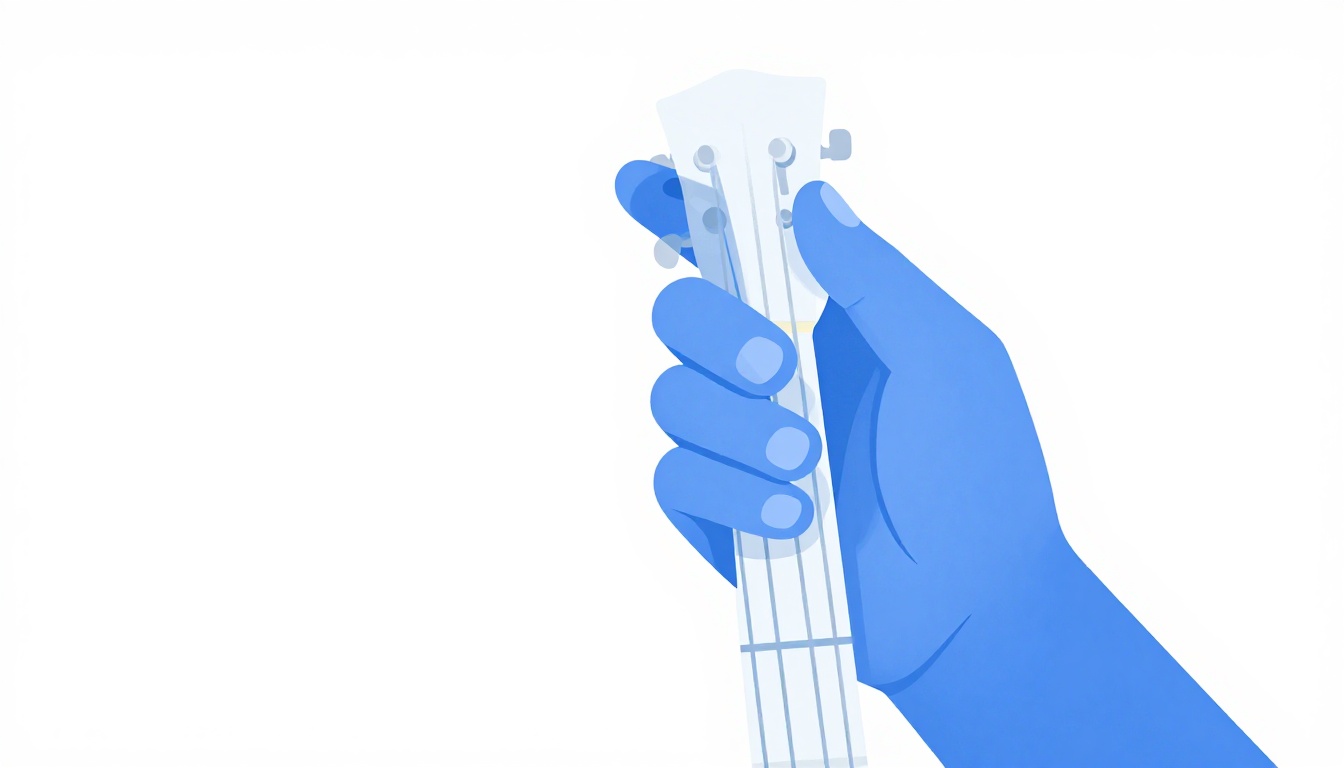
Ebsus2 and Ebsus4: Swapping Out the Third
A sus chord replaces the third of the chord with either the second or the fourth degree of the scale, removing the major or minor quality entirely and leaving an open, unresolved sound.
Ebsus2 (Eb, F, Bb) swaps the third for the second and is built from the same fret-6 barre position as the plain Eb chord:
| String | Fret | Finger |
|---|---|---|
| 6 (low E) | Muted | - |
| 5 (A) | 6 | 1 (barre) |
| 4 (D) | 8 | 3 |
| 3 (G) | 8 | 4 |
| 2 (B) | 6 | 1 (barre) |
| 1 (high E) | 6 | 1 (barre) |
Ebsus4 (Eb, Ab, Bb) swaps the third for the fourth and is built from the fret-11 barre position:
| String | Fret | Finger |
|---|---|---|
| 6 (low E) | 11 | 1 (barre) |
| 5 (A) | 13 | 3 |
| 4 (D) | 13 | 4 |
| 3 (G) | 13 | 2 |
| 2 (B) | 11 | 1 (barre) |
| 1 (high E) | 11 | 1 (barre) |
Both are a single fret's difference from the plain major shape in the same family, which makes them a quick, low-effort way to add a moment of tension into a progression that is otherwise built on straightforward Eb.
Sus chords work by removing the note that decides whether a chord is major or minor and replacing it with a note a step away on either side, which leaves the chord sounding unresolved, like it wants to move somewhere. The most common way to use one is right before the plain major chord it is built from: strum Ebsus4 for a beat or two, then let it resolve into Eb. That brief hesitation before landing on the full major chord is a very familiar sound in acoustic strumming patterns and is usually more effective as a short accent within a progression than as a chord you sit on for a long stretch.
Why Songs End Up in Eb
There are two separate reasons a guitar part ends up sounding like it is in Eb, and they are not the same thing.
The first is that the song is genuinely written in the key of Eb, often because a horn section is involved. Saxophones and trumpets are commonly built as Bb or Eb transposing instruments, so bands that write with horns in the room frequently land on flat keys like Bb and Eb because those keys sit comfortably for the horns, and the guitar has to follow along with the barre chords covered in this post.
The second, more common reason has nothing to do with the key at all: a guitarist has tuned every string down by one half step, commonly called Eb tuning, and is then playing completely ordinary open-position chords, an E shape, an A shape, a G shape, that now sound a half step lower than standard tuning would produce. This is popular in blues and rock because it lets a player use heavier strings at a comfortable tension and gives the guitar a slightly deeper, warmer tone, and it means every open chord shape you already know still works exactly as you learned it, just sounding darker. If you hear a chord chart that says "tune down a half step" rather than showing you a barre shape, that is this second case, and none of the barre positions in this post are what is actually being played. The two situations produce a similar sound but completely different techniques, so it is worth knowing which one a chord chart is actually asking for before you reach for a barre.
Changing Into and Out of Eb Smoothly
The shape is rarely the hard part once your hand knows it. The hard part is arriving at the barre in time and leaving it without a dead beat while you reposition.
Practice moving between Eb (fret-6 barre) and its neighbors one pair at a time, slowly, with a metronome:
- Eb to Fm (barre one fret down): since both are barre shapes in the same family, the whole hand can slide as a unit rather than being rebuilt finger by finger. This is the easiest transition on this list and worth practicing first to build confidence.
- Eb to Ab (same shape, different string set): Ab uses the same fret-6 family shifted to a root-6 barre position, so the transition is more about relocating the whole barre than changing the finger pattern underneath it.
- Eb to Bb (barre shape one string set over): keep your index finger's barre angle consistent and think of it as moving the whole hand rather than releasing and reforming it from nothing each time.
The general fix for choppy chord changes is the same for every barre chord: lift your fingers only as far off the strings as the next shape requires, never higher, and keep the barre finger's angle and pressure consistent as you slide it rather than releasing and reapplying it fresh at each new position.
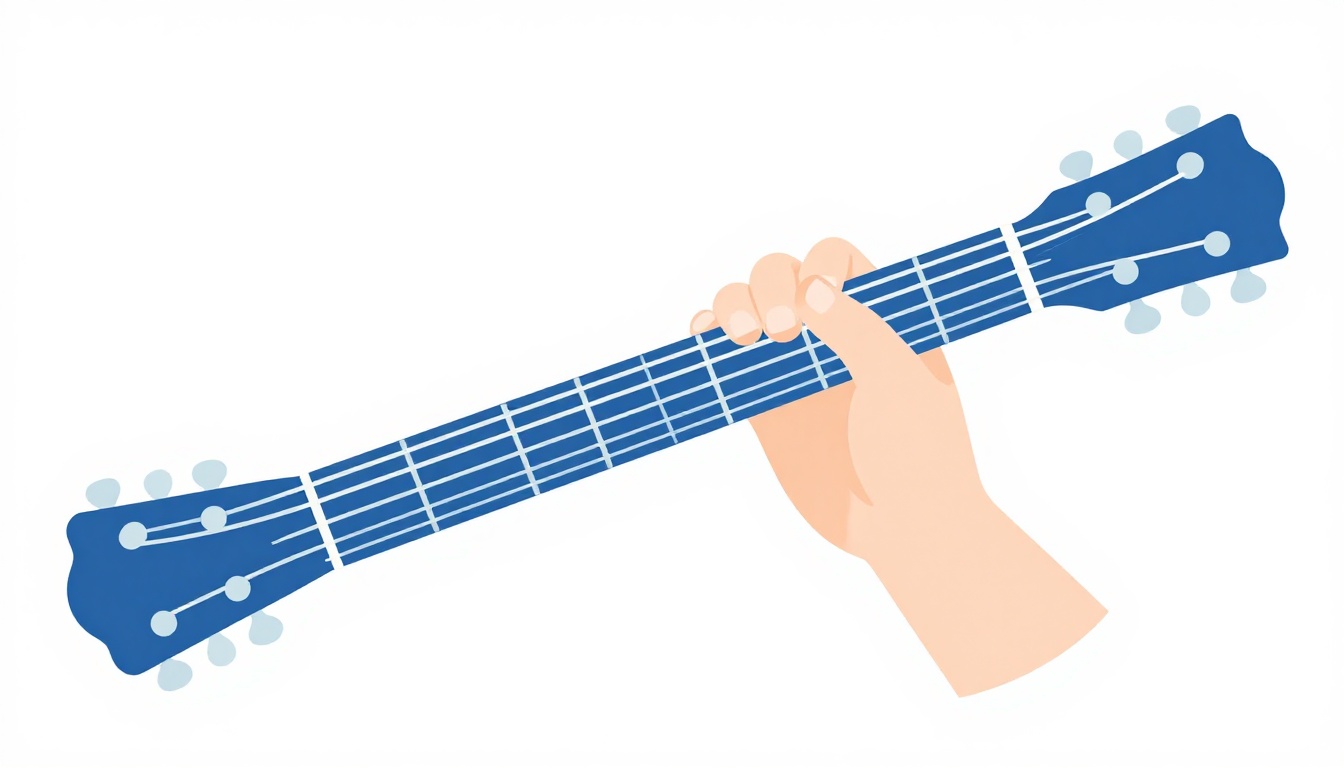
Building the Hand Strength to Hold This Shape
Barre chords are as much a strength and endurance problem as a technique problem, and strength only comes from time spent under the specific demand of holding a barre down, not from any shortcut around it.
A few ways to build that strength without spending your whole practice session fighting a chord that will not ring clean yet:
- Practice a two-string barre first. Lay your index finger across just the high E and B strings at any fret and get both to ring clean. Once that is reliable, add the G string, then the D string, building the full barre one string at a time rather than demanding all six strings work on day one.
- Hold the shape longer than you strum it. Form the fret-6 barre and simply hold it, checking each string, for longer stretches than you would in a song. Static holding builds the specific muscles involved faster than constant strumming and releasing.
- Rest before your hand aches, not after. Barre chords tire the hand quickly when it is new to the movement. Short, frequent practice sessions build the strength faster and with less risk of frustration than one long session that ends with your hand cramping.
- Do not compensate by pressing every finger as hard as possible. It feels like it should help, but excess tension in fingers that do not need it usually makes the whole hand less coordinated, not more, and it is the opposite of the light, minimum-pressure grip this post has been building toward throughout.
Strength here builds in the same way as anywhere else in guitar playing: a little bit most days, consistently, rather than a lot once in a while.
It also helps to remember that the strength you build practicing this one barre chord is not specific to Eb. The same index finger, the same forearm rotation, and the same hand shape carry over directly to every other barre chord on the neck, major or minor, at any fret. Time spent here is not a detour on the way to learning other chords, it is the foundation those other chords are built on.
A Practice Routine for Today
- Two minutes, no strumming: form the fret-6 barre shape and pluck each of the five strings one at a time (skip the low E). Note which string is dead or buzzing and adjust only that finger before moving on.
- Three minutes, full strums: strum the shape slowly on a steady four count, resetting your hand fully between each strum so you are practicing forming the chord from nothing, not just holding it.
- Five minutes, one transition: pick one neighbor chord, Fm or Ab, and practice moving into Eb and back out, eight times, slower than feels necessary, adding speed only once every rep rings clean.
- Five minutes on the easier shape: if the barre is still inconsistent, spend the rest of your practice time on the three-finger version near the nut instead, so you are reinforcing a clean chord rather than reinforcing a buzzy one.
Fifteen minutes a day on this one chord, focused on cleanliness before speed, gets a barre chord solid faster than an hour of unfocused strumming.
Spread across a week, that daily routine might look like this: the first two or three days, spend most of your time on the pluck-each-string check and the three-finger version, since a barre chord your hand has never held before takes a few sessions just to feel familiar. By days four and five, the barre should be starting to ring clean more often than not, and that is the point to bring in the single transition drill. By the end of the week, the goal is not perfection, it is that Eb no longer feels like a special event in your practice session, just one more chord your hand knows how to find.
Fifteen focused minutes a day is enough to make real progress on this chord, in line with practicing guitar in short daily sessions rather than occasional long ones.
FAQ
Is there any way to play Eb as a truly open chord? No. None of the six open strings are Eb, G or Bb, so every version of this chord involves either a barre, a capo, or borrowing a shape from higher up the neck.
Why does my barre chord sound fine on some strings and dead on others? Almost always uneven pressure along the length of your index finger, usually because the finger is flat rather than rolled onto its side, or because the thumb has crept over the top of the neck and is preventing the hand from closing evenly.
Do I need a barre chord at all if I just want to play along with a song? If the whole song can be reached from D shape and C shape chords, a capo on the 1st or 3rd fret lets you play an Eb sound without a barre. If Eb is mixed in with chords that only work in standard tuning, you will need the barre eventually.
Is Ebm the same shape as D#m? Yes, exactly. They are the same notes on the same frets. Only the name changes depending on which key signature the song is written in.
Which barre shape should I learn first, the fret-6 version or the fret-11 version? The fret-6 version. The frets are closer together lower on the neck, which makes the stretch and the barre itself noticeably easier while your hand strength is still building.
Why do some chord charts show Eb with a small circle or triangle after it? A small circle usually marks a diminished chord and a triangle usually marks a major seventh, neither of which is the plain Eb major chord covered in the first half of this post. Check the chart's own legend, since symbol conventions vary between sources, and never assume a symbol means the same thing on every chart you read.
Does it matter which finger I use for the barre, as long as the notes ring? The index finger is used for barring in every shape in this post because it is the longest, straightest finger available for laying flat across multiple strings, leaving your stronger, more independent ring, middle and pinky fingers free for the individual fretted notes. Using a different finger to barre is technically possible but makes the remaining fingers noticeably less capable of reaching the other notes cleanly, so it is not a substitution worth making.
Can I use my thumb to fret the low E string instead of muting it? On the fret-11 six-string barre, yes, some players hook their thumb over the top of the neck to fret the low E string there, freeing the index finger for the rest of the barre. It depends heavily on your neck width and hand size.
GuitarLowKey
Ready for fifteen focused minutes?
Open the web app and train the change that is blocking your song.