
Guitar Chords for 'Like a Stone' by Audioslave
Capo 3, then Em, D, Bm7 and C carry the verse. Every chord shape, the full song structure, and the bridge chords most tabs skip, in tables.

Capo on the 3rd fret. From there, the verse of Audioslave's "Like a Stone" runs on Em, D, Bm7, and C, the chorus adds G and B7, and the bridge briefly introduces Cm and A7 before the song settles back into its main progression. Every shape here is a chord most guitarists already half know, played relative to the capo, not up at the true pitch the record sounds at.
That capo is the part people miss. Search a few tabs for this song and you will find contradictory chord names, Gm and F on one page, Em and D on another, for what is actually the same guitar part played the same way. This post covers the full progression with the capo in place, the two ways to finger Bm7, what the bridge actually does, and why so many transcriptions disagree on something that is really just one detail.
Song Basics at a Glance
| Detail | Value |
|---|---|
| Key (as played, with capo) | E minor |
| Sounding key (actual pitch) | G minor |
| Capo | 3rd fret |
| Tempo | Around 107 BPM |
| Time signature | 4/4 |
| Verse chords | Em, D, Bm7, C |
| Chorus chords | Em, G, D, C, B7 |
| Bridge chords | C, G, B7, Cm, A7 |
Two things to settle before you touch the guitar. First, the capo is not optional if you want to match the recording. Every chord shape below assumes it is clamped at the 3rd fret. Second, "Em" and the other chord names in this post describe the shape your hand makes, not the pitch that comes out of the amp. With the capo on, an open Em shape actually sounds as G minor. That distinction is the entire reason different tabs for this song look like they disagree with each other.
A Quick Setup Check Before You Start
A few minutes spent here saves a lot of confusion once you are trying to learn the actual chord changes.
Tune to standard first. This song uses no alternate tuning. If your low E, A, D, G, B, and high E strings are not each at the correct pitch before the capo goes on, every chord in this post will sound slightly wrong no matter how accurately you finger it.
Place the capo after tuning, not before. A capo can pull strings very slightly sharp, especially on guitars with lower action. Tune the open strings first, then clamp the capo at the 3rd fret, and spot check that the open strings still sound in tune once it is on.
Check the capo is parallel to the fret, close behind it. A capo placed too far from the fret wire, or seated at an angle, is the single most common reason a beginner's version of this song sounds subtly wrong even when every fingered note is correct. It should sit just behind the 3rd fret wire, running straight across the neck.
Confirm which chord names a chart is using. If you are cross-referencing another tab for this song alongside this post, check whether it lists Em, D, Bm7, and C, or Gm, F, Dm7, and Eb, before assuming it disagrees with what is written here. Chances are it does not, it is just describing the same guitar part from the other side of the capo.
Where "Like a Stone" Came From
"Like a Stone" is credited to all four members of Audioslave, Chris Cornell on vocals, Tom Morello on guitar, Tim Commerford on bass, and Brad Wilk on drums, and it appears on the band's self-titled debut album, released in 2003 and produced by Rick Rubin. It became the band's biggest hit in the United States, reaching the top of both the Mainstream Rock and Modern Rock charts and crossing over to the Billboard Hot 100, a rare feat for a song built on a slow, sparse verse rather than an obvious radio hook.
Bassist Tim Commerford has said he originally read the lyrics as being about an old man waiting for death after losing everyone close to him. Cornell offered a different account, describing the song as being about imagining an afterlife worth hoping for rather than the version most religious traditions promise, and about how living a good life does not guarantee a good outcome. Both readings sit comfortably over the same slow, minor-key chord progression, which is part of why the song has stayed open to interpretation for listeners for so long.
The music video, directed by Meiert Avis and filmed in a Silver Lake mansion once owned by Jimi Hendrix, shows the band performing in that house and became one of the most watched rock videos of its era. None of that changes a single chord shape, but it is worth knowing why this particular song carries more weight for most listeners than a typical rock single, since that weight is exactly what the guitar part is built to support rather than compete with.
What the Song Is About
The two accounts from the band members who wrote it point in slightly different directions, and both are worth knowing before you play it, since they shape how you might approach the dynamics.
Commerford has described his own read on the lyrics as being about an old man near the end of his life, reflecting on everyone he has lost. Cornell offered a broader explanation in interviews, framing the song as being less about a specific character and more about imagining an afterlife worth hoping for, one that does not depend on a single religious tradition's promises, and about the uncomfortable truth that living well does not guarantee anything good waits on the other side. Neither reading requires you to play the song any differently, but the slow build from a hushed verse into a fuller, more open chorus mirrors both readings well: a quiet address building toward something larger and less certain.
Cornell died in 2017, and "Like a Stone" has carried additional weight for many listeners since, given its subject matter and the fact that it remains one of the most recognized vocal performances of his career. That context is not something a chord shape can express, but it is part of why a guitarist covering this song, solo or with a band, tends to treat the dynamics with more care than a typical rock ballad.
None of this changes how a single chord is fingered. But songs that ask for restraint rather than power reward a guitarist who understands what the restraint is for. Keep that in mind through the sections below on strumming lightly in the verse and opening up in the chorus, since the point of that contrast is not just technique for its own sake.
Why the Capo Goes on the 3rd Fret
A capo clamps across all six strings at a given fret and acts as a movable nut, shortening every string by the same amount and raising the pitch of the whole guitar without changing which shapes you finger relative to it. Placing a capo on the 3rd fret and playing an open Em shape does not sound like Em. It sounds three semitones higher, which is G minor, the key the recording actually sits in.
This is exactly why chord sheets for this song disagree. A tab written for "no capo, real pitch" will tell you the song uses Gm, F, Dm, and Eb. A tab written "with capo 3" will tell you Em, D, Bm7, and C. Both are describing the same guitar part. The capo version is dramatically easier to play, since it trades a set of barre-heavy minor chords for open shapes most guitarists already know, which is exactly why this post, and most guitar lessons for this song, teach it with the capo rather than at true pitch.
| Shape you play (capo 3) | Actual sounding chord |
|---|---|
| Em | Gm |
| D | F |
| Bm7 | Dm7 |
| C | Eb |
| G | Bb |
| B7 | D7 |
| Cm | Ebm |
| A7 | C7 |
If you ever need to play along with another instrument that is not capoed, such as a keyboard reading from a lead sheet, that right-hand column is the chord you would call out. For guitar, ignore it entirely and use the shapes on the left.
The Em Chord
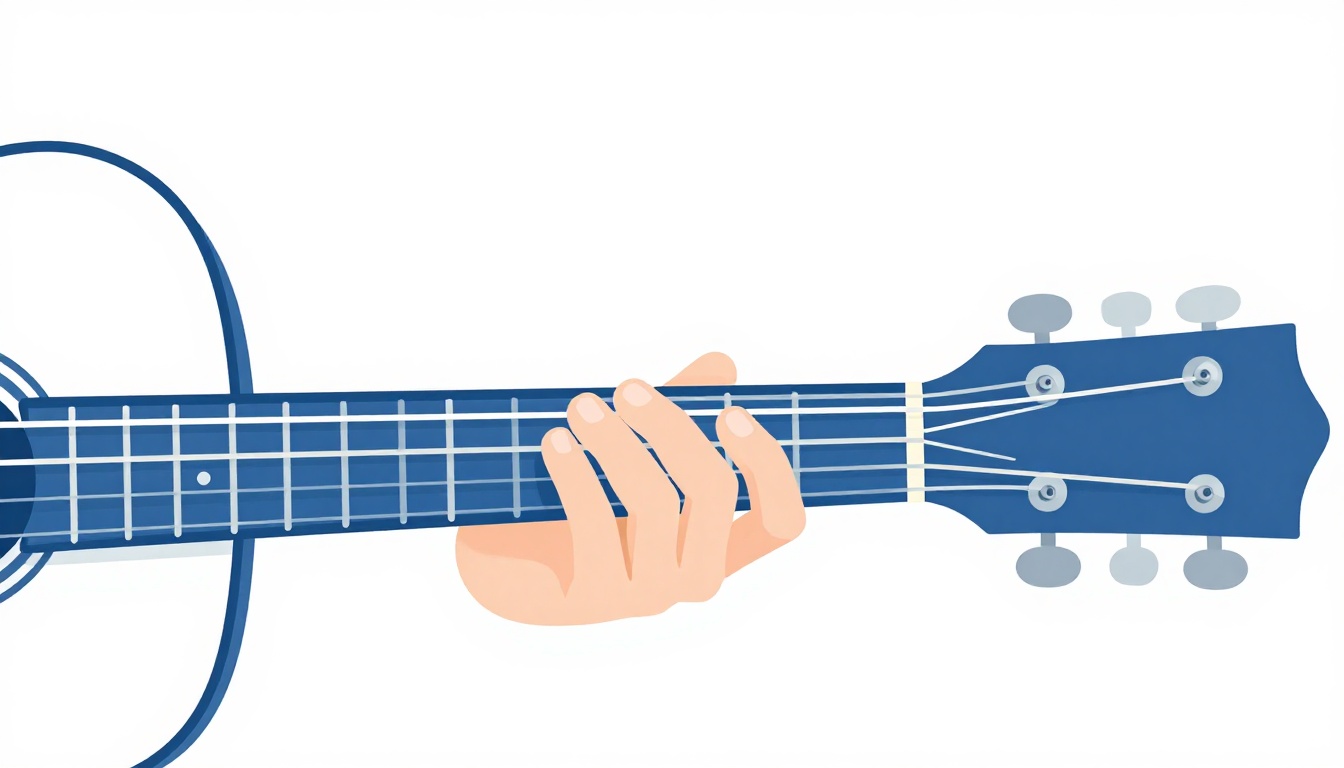
Em opens the verse, opens the chorus, and is the chord the whole song keeps returning to.
| String | Fret | Finger |
|---|---|---|
| 6 (low E) | Open | - |
| 5 (A) | 2 | 2 |
| 4 (D) | 2 | 3 |
| 3 (G) | Open | - |
| 2 (B) | Open | - |
| 1 (high E) | Open | - |
Four of the six strings ring open, which makes Em one of the easiest full chords on the instrument, and one reason this song is a reasonable pick for a guitarist who has only been playing a few weeks. Strum all six strings freely here, unlike some of the other shapes in this song where a muted string matters.
The D Chord
D follows Em in the verse and reappears throughout the chorus.
| String | Fret | Finger |
|---|---|---|
| 6 (low E) | Muted | - |
| 5 (A) | Muted | - |
| 4 (D) | Open | - |
| 3 (G) | 2 | 1 |
| 2 (B) | 3 | 3 |
| 1 (high E) | 2 | 2 |
Keep the pick or your strumming hand away from the 5th and 6th strings on this chord. A D chord with the low E or A string ringing underneath it sounds muddy and out of tune even when every fretted note is correct, since neither low string belongs to a D major triad.
The Bm7 Chord, Two Ways
Bm7 is the shape in the verse that trips up newer players, because the common barre version asks for a stretch across four strings with one finger. There is a genuinely easier open-position version that produces the same chord.
The Easy Version (No Barre)
| String | Fret | Finger |
|---|---|---|
| 6 (low E) | Muted | - |
| 5 (A) | 2 | 1 |
| 4 (D) | Open | - |
| 3 (G) | 2 | 2 |
| 2 (B) | Open | - |
| 1 (high E) | 2 | 3 |
This voicing uses three fingers spread across three separate frets rather than one finger barring across several strings, and it spells out the same four notes, B, D, F#, and A, that make the chord a Bm7. For most beginners this is the version to learn first.
The Barre Version
| String | Fret | Finger |
|---|---|---|
| 6 (low E) | Muted | - |
| 5 (A) | 2 | 1 |
| 4 (D) | 4 | 3 |
| 3 (G) | 2 | 1 |
| 2 (B) | 3 | 4 |
| 1 (high E) | 2 | 1 |
Here your index finger lies flat across the 5th, 3rd, and 1st strings at the 2nd fret while your ring and pinky fingers reach further up the neck. This is the shape to grow into once the easy version feels automatic, since it is more common in chord charts for this song and moves into other barre chords more easily if you continue past this piece.
The C Chord
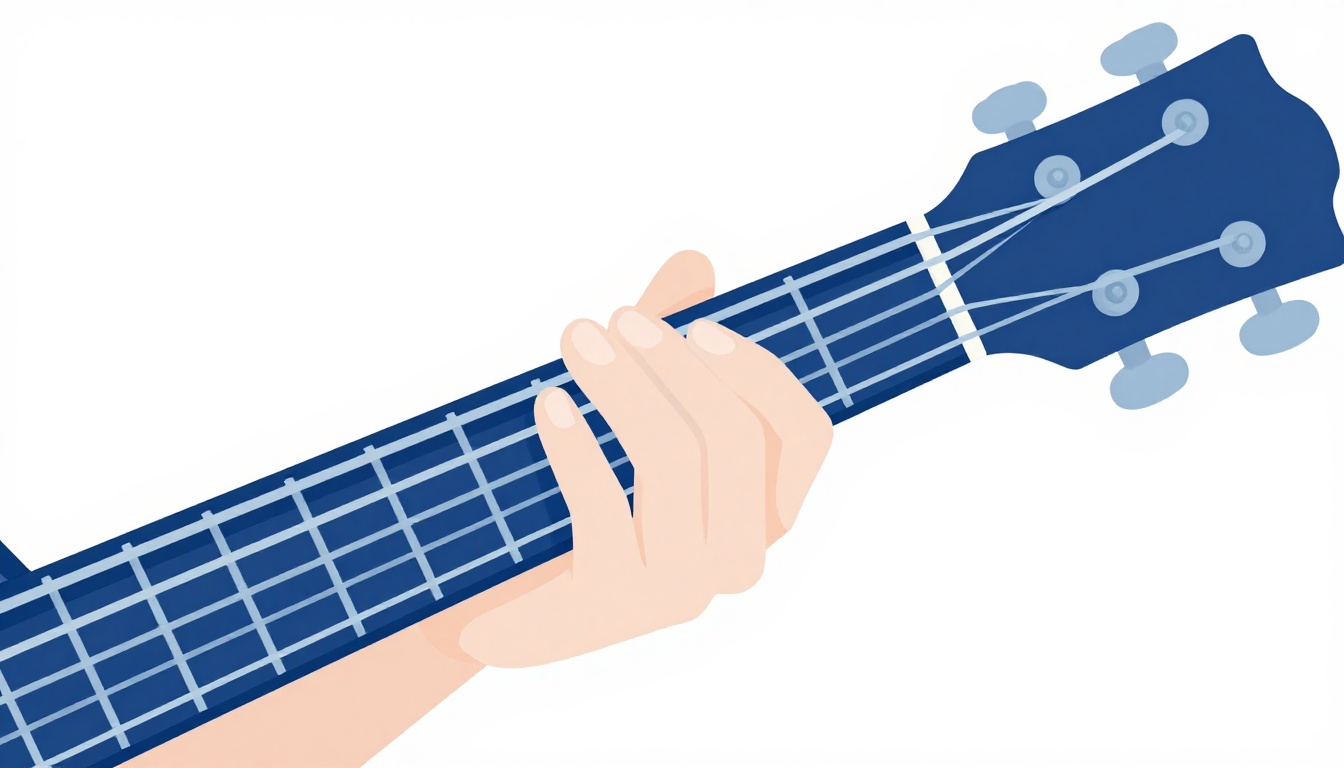
C closes out the four-chord verse loop and shows up again in the chorus and bridge.
| String | Fret | Finger |
|---|---|---|
| 6 (low E) | Muted | - |
| 5 (A) | 3 | 3 |
| 4 (D) | 2 | 2 |
| 3 (G) | Open | - |
| 2 (B) | 1 | 1 |
| 1 (high E) | Open | - |
The Bm7-to-C change, whichever Bm7 shape you use, moves your hand only a short distance up the neck, which makes it one of the more forgiving transitions in the song once you have run it a few dozen times slowly.
The Verse: Em, D, Bm7, C
The verse cycles through all four chords covered so far, in this order, played slowly with space to let each one ring.
| Section | Chord 1 | Chord 2 | Chord 3 | Chord 4 |
|---|---|---|---|---|
| Verse (repeated) | Em | D | Bm7 | C |
This same four-chord loop also opens the song as the intro, typically played through twice before the vocal enters. The pacing matters more than speed here. "Like a Stone" builds from almost nothing, so resist the urge to strum through this section at full volume. A light touch on the verse is what makes the chorus land when it eventually opens up.
The G Chord
G does not appear in the verse at all. It shows up for the first time in the chorus, adding a brighter color against the surrounding minor chords.
| String | Fret | Finger |
|---|---|---|
| 6 (low E) | 3 | 2 |
| 5 (A) | 2 | 1 |
| 4 (D) | Open | - |
| 3 (G) | Open | - |
| 2 (B) | Open | - |
| 1 (high E) | 3 | 3 |
This is the standard three-finger open G. Some players add a fourth finger on the 2nd string, 3rd fret, for a fuller voicing, but that note is not required to play this song correctly.
The Chorus: Em, G, D, Em (and Where B7 Comes In)
The chorus keeps the same Em foundation as the verse but swaps Bm7 and C for G, then loops back through Em and D before resolving on B7 near the end of each pass.
| Section | Chords |
|---|---|
| Chorus, first two lines | Em - G - D - Em |
| Chorus, closing lines | C - Em - D - Em, then C - Em - B7 - B7 |
That final B7 is doing real work. Every other chord in the chorus belongs naturally to the key the song is in, but B7 pulls slightly outside it, creating tension that resolves back into Em when the next verse or the bridge begins. Give that chord its full beat or two rather than rushing through it. It is the one moment in the chorus that is meant to feel unresolved.
The B7 Chord
B7 shows up at the end of the chorus and repeatedly through the bridge, making it worth learning cleanly on its own before trying to drop it into either progression.
| String | Fret | Finger |
|---|---|---|
| 6 (low E) | Muted | - |
| 5 (A) | 2 | 2 |
| 4 (D) | 1 | 1 |
| 3 (G) | 2 | 3 |
| 2 (B) | Open | - |
| 1 (high E) | 2 | 4 |
This shape asks three different fingers to land on three different frets across three non-adjacent strings, which is more of a stretch than it looks on paper. Practice fretting it slowly on its own, checking that the open 2nd string rings clearly and is not accidentally muted by your ring or pinky finger brushing against it.
The Bridge: Introducing Cm and A7
The bridge is the only section of the song that steps outside the Em, D, Bm7, C, G, B7 vocabulary used everywhere else, briefly touching Cm and A7 before returning to the main progression.
| Section | Chords |
|---|---|
| Bridge, first half | C - G - B7 - C |
| Bridge, second half | Cm - A7 - B7 - Em |
That second half is the harmonic high point of the song. Cm and A7 both sit outside the home key, and moving through them before landing back on B7 and then Em creates the strongest pull of tension and release anywhere in the arrangement. If you have been playing everything else in this song with a light touch, the bridge is where a slightly fuller strum earns its keep, since the chord changes themselves are already supplying the drama.
You do not need to understand why Cm and A7 work here to play them correctly, but it helps explain why the bridge feels like it is reaching further than the rest of the song. Every other chord in this progression, Em, D, Bm7, C, G, and B7, either belongs naturally to the key or serves a clear, familiar role as a dominant chord resolving home. Cm and A7 do not belong to that same set. Borrowing chords from outside the home key for a few bars, then resolving cleanly back into it, is a common songwriting device for creating a sense of departure and return without changing key entirely, and it is exactly what the bridge of this song does before folding back into the familiar Em-based progression.
The Cm and A7 Chords
Both bridge-only chords are barre or near-barre shapes, and both are worth isolating before you try to drop them into the full bridge progression.
Cm
| String | Fret | Finger |
|---|---|---|
| 6 (low E) | Muted | - |
| 5 (A) | 3 | 1 |
| 4 (D) | 5 | 3 |
| 3 (G) | 5 | 4 |
| 2 (B) | 4 | 2 |
| 1 (high E) | 3 | 1 |
This is a barre shape rooted on the 5th string, index finger flat across the 3rd fret on the outer strings while your other three fingers fill in the middle. It is the same shape as a barred Am chord, moved up two frets.
A7
| String | Fret | Finger |
|---|---|---|
| 6 (low E) | Muted | - |
| 5 (A) | Open | - |
| 4 (D) | 2 | 2 |
| 3 (G) | Open | - |
| 2 (B) | 2 | 3 |
| 1 (high E) | Open | - |
A7 is a much easier shape than Cm, using only two fingers across two frets with the rest of the strings open. After the barre stretch of Cm, this chord should feel like a relief, which is a useful thing to notice while practicing the bridge, since the difficulty in this section is uneven rather than constant.
Playing It Without a Capo
If you genuinely do not have a capo, or you want to play along with a recording of the true pitch, you can play the same progression at true pitch by shifting every shape up three frets worth of harmony and using barre chords throughout. In practice this means playing Gm, F, Dm7, Eb, Bb, D7, Ebm, and C7 in place of the shapes covered above, all as barre chords rather than open ones.
This is significantly harder than the capoed version and is not the recommended way to learn this song. Every open chord in this post becomes a barre chord without the capo, and several of them, particularly Ebm and Eb, sit in barre positions that are awkward even for experienced players. Unless you have a specific reason to avoid a capo, use one. It is not a beginner's shortcut here, it is simply the more sensible way to play this particular arrangement.
The Chris Cornell Solo Acoustic Version (No Capo)
There is a genuinely different, easier way to play a recognizable version of this song with no capo at all, drawn from Chris Cornell's own solo acoustic performances. It is not the same guitar part as the full band recording transposed. It is a simplified arrangement built around a shorter set of open chords in the key of A minor.
| Section | Chords |
|---|---|
| Main progression | Am - F - Am - G - Em - G - Am - C |
Every chord in that progression is one most beginners already have some experience with, and none of them require a barre. If the full band version's Bm7, Cm, and A7 shapes feel out of reach right now, this is a legitimate way to play a real, sourced arrangement of the same song while those shapes develop.
The Am Chord
| String | Fret | Finger |
|---|---|---|
| 6 (low E) | Muted | - |
| 5 (A) | Open | - |
| 4 (D) | 2 | 2 |
| 3 (G) | 2 | 3 |
| 2 (B) | 1 | 1 |
| 1 (high E) | Open | - |
The F Chord, Simplified
| String | Fret | Finger |
|---|---|---|
| 6 (low E) | Muted | - |
| 5 (A) | Muted | - |
| 4 (D) | 3 | 3 |
| 3 (G) | 2 | 2 |
| 2 (B) | 1 | 1 |
| 1 (high E) | Muted or 1 (barred with finger 1) | 1 |
This four-string version drops the low E and A strings entirely, avoiding the full six-string barre that trips up most beginners on F. The Em, G, and C shapes in this progression are identical to the ones covered earlier in this post for the capoed version, since a chord shape does not change based on which arrangement it appears in.
Which Version Should You Learn First?
If your goal is to play along with the Audioslave recording, learn the capo 3 version covered throughout most of this post. It matches the record chord for chord, and the capo does the transposing work for you.
If you do not own a capo, or you are earlier in learning barre chords and want a version of this song you can play today, the Cornell solo arrangement above gets you singing and playing something real far sooner, using only chords most beginners already have. Neither version is the "correct" one. They are two different, legitimately sourced ways people actually play this song, and which one to start with depends on what you already have, a capo and some barre chord practice, or neither.
Playing It on Electric vs Acoustic Guitar
The recorded version is built around a full band arrangement with electric guitar, but every chord shape in this post works equally well on an acoustic. Nothing about the progression itself, capo included, requires one instrument over the other.
On acoustic, the open chords in the verse, Em and D especially, ring out with the natural sustain the arrangement leans on, and a light strumming or fingerpicking touch translates directly. On electric, a clean or lightly overdriven tone suits the verse and bridge well, and saving a fuller, more driven tone for the chorus mirrors the quiet-to-loud shape of the song without needing to change a single chord shape along the way. If you only have access to one type of guitar, use it. The dynamics and the chord changes covered throughout this post matter far more to how the song comes across than which instrument you are holding.
Why It Is Not Sounding Right
If every chord shape is correct but the song still does not sound like the recording, the cause is almost always one of these.
The Capo Is Not Seated Straight
A capo that sits at an angle, or that is not pressed down firmly parallel to the fret, will cause some strings to buzz or fret out while others ring clean. Check that the capo bar sits directly behind the 3rd fret wire, parallel to it, and that it is tightened enough that no string feels looser than the others when you press it.
The Bm7 Shape Is Buzzing on One String
Both Bm7 voicings ask multiple fingers to land close together on adjacent strings. If one string buzzes, check that no neighboring finger is resting against it. This is especially common on the easy, no-barre Bm7 shape, where three fingers on three different frets can easily brush against strings they are not meant to touch.
The Barre Chords Sound Muted or Dead
Cm and the barre version of Bm7 both fail in the same way for new players: the index finger presses hard enough in the middle of the barre but lightens up near the strings closest to the guitar's edges, muting the low or high string in the shape. Roll your index finger slightly onto its side rather than pressing flat with the pad, which concentrates pressure more evenly across all the strings it covers.
You Are Strumming the Verse Like the Chorus
"Like a Stone" builds in clear stages, and playing the verse with the same strumming intensity as the chorus flattens that build entirely. Pull your strumming hand back on the verse, use less wrist motion, and save the fuller strum for the chorus and bridge, where the arrangement actually opens up.
The B7-to-Em Resolution Feels Flat
If the transition from B7 back to Em at the end of the chorus does not feel like it resolves anything, you are likely cutting the B7 chord short. Let it ring for its full duration rather than rushing into the next chord. That brief moment of tension is the entire point of using B7 instead of a chord that belongs more naturally to the key.
The Chorus Does Not Feel Like It Is Building
If G, D, and Em in the chorus sound correct in isolation but the section as a whole feels flat compared to the verse, check your dynamics rather than your fingering. The chord names alone do not create the lift this section is supposed to have. A slightly fuller strum, more consistent downstrokes, and a touch more volume than the verse are what actually separate the two sections, and none of that shows up in a chord chart. Play the verse and chorus back to back and listen specifically for whether the second one is doing more work than the first.
Easier Versions for Beginners
If any shape in this song is still out of reach, a few substitutions keep the song recognizable while you build up to the full versions.
Use the easy, no-barre Bm7 shape covered earlier rather than the barre version. It is a completely legitimate voicing of the same chord, not a simplified stand-in, and plenty of recordings use exactly this shape.
If Cm in the bridge is not happening yet, a plain open Am played in its place keeps the chord progression moving, even though it is not the correct chord. Swap the real Cm back in once your hand can manage the barre comfortably.
If B7 is giving you trouble, a plain open B minor style stretch is harder, not easier, so there is no simpler substitute worth reaching for here. Instead, isolate B7 on its own, fretting and releasing it slowly outside the context of the song, until the shape becomes familiar before you try to use it inside the chorus or bridge.
None of these substitutions are meant to be permanent. They exist so you can play through the whole song while specific shapes are still developing, then swap the correct chord back in once it is comfortable.
Common Mistakes With This Song
A few habits show up repeatedly with this particular song, separate from the buzzing and muting issues covered earlier, mostly because the chord shapes themselves are not the hardest part of playing it well.
Playing Every Section at the Same Volume
The verse, chorus, and bridge are each meant to occupy a different dynamic level, quiet, fuller, and most intense, in that order. Strumming through the whole song at one consistent volume is the single most common way to flatten a performance of this song, even when every chord is technically correct.
Forgetting the Capo Changes What Chord Names Mean
If you switch between reading a chord chart written for the capoed version and one written at true pitch without noticing, you will end up trying to play Gm using an Em shape or vice versa. Confirm which version a chart is written for before you start, and stick with the shapes in this post, which consistently assume the capo is on.
Treating Bm7 as a Plain Bm
The two chords differ by one note, but that note matters. Plain Bm omits the flattened seventh that gives Bm7 its softer, less resolved character, and swapping it in changes the color of the entire verse, even though the chord names look similar enough to mix up at a glance.
Rushing Into the Bridge
Because the bridge introduces new chords, some players unconsciously slow down to think through Cm and A7, then speed back up once they land on familiar territory again. Practice the bridge enough in isolation that it does not require conscious thought, so the tempo stays consistent with the rest of the song rather than dipping right where the harmony gets more interesting.
The Strumming Pattern
Tabs for this song commonly suggest a down, mute, up, up, mute, up pattern, written as D-x-u-u-x-u, where the "x" beats are a light muted scratch rather than a full strum. This keeps the rhythm moving without adding extra volume, which fits the verse especially well.
For the chorus and bridge, where the song opens up, a fuller down-up strum on more of the beats works better than sticking rigidly to the muted pattern throughout. Treat the strumming pattern as a starting template rather than a fixed rule. What matters more than matching a specific pattern exactly is keeping the contrast between the restrained verse and the fuller chorus, which is true of this song regardless of the precise strum you land on.
Fingerpicking vs Strumming the Verse
The verse works with a pick and a light strum, but it also suits fingerpicking well, and switching to fingers for that section alone is a common approach among guitarists covering this song solo.
A simple starting pattern for the verse: thumb on the lowest note of whichever chord you are holding, the 6th string for Em, the 4th string for D, C, and Bm7, followed by your index, middle, and ring fingers picking the remaining strings low to high. Played slowly and evenly, this creates the same forward motion as strumming without adding volume, which suits the hushed opening of the song better than even a light strum pattern can.
If fingerpicking is new to you, do not attempt it at full tempo right away. Practice the pattern on Em alone until your thumb and fingers move independently without conscious effort, then apply the same motion to D, Bm7, and C once it feels automatic. Many guitarists switch to a pick or a fuller strum specifically for the chorus, where the song calls for more volume than fingerpicking alone comfortably provides, and go back to fingers for the verse that follows. Switching technique mid-song is normal here, not a sign that you have not settled on one approach.
Changing Between Chords Without Losing the Feel
Individually, none of the chords in this song beyond Cm and the barre Bm7 are difficult. What makes the song feel hard the first several times through is keeping a steady, unhurried feel while your hand moves between shapes, particularly through the verse's four-chord loop.
Two habits help more than anything else. First, practice each change in isolation, just two chords back and forth at a slow, even tempo, before attempting the full progression. Second, notice which fingers barely move between chords rather than resetting your whole hand on every change. In the Em to D change, for example, your fretting hand shifts position but several fingers land close to where they just were. Spotting these small anchor points turns a string of separate hand shapes into one continuous motion, which is exactly what keeps the strumming hand relaxed enough to stay quiet through the verse.
The Outro and How the Song Ends
The song closes by returning to the same Em-G-D-Em chorus progression that carries the rest of the track, without introducing any new chords in its final moments. There is no dramatic key change or unfamiliar shape waiting at the end, which makes the outro one of the more forgiving sections to play once you have the chorus itself under your fingers.
What changes at the end is intensity, not harmony. Treat the final pass through the progression as the loudest, fullest point in the song, matching the sense of release that "Like a Stone" builds toward across its verses, chorus, and bridge. Letting the final chord ring out rather than cutting it off abruptly with a palm mute suits the song's slow, deliberate character better than a hard, sudden stop.
Full Chord Shape Reference
Every chord this song uses, with the capo on the 3rd fret, gathered in one place. Strings are numbered 1 to 6, thinnest to thickest, and fingers are numbered 1 to 4, index to pinky.
| Chord | 6 (low E) | 5 (A) | 4 (D) | 3 (G) | 2 (B) | 1 (high E) |
|---|---|---|---|---|---|---|
| Em | Open | 2 (finger 2) | 2 (finger 3) | Open | Open | Open |
| D | Muted | Muted | Open | 2 (finger 1) | 3 (finger 3) | 2 (finger 2) |
| Bm7 (easy) | Muted | 2 (finger 1) | Open | 2 (finger 2) | Open | 2 (finger 3) |
| Bm7 (barre) | Muted | 2 (finger 1) | 4 (finger 3) | 2 (finger 1) | 3 (finger 4) | 2 (finger 1) |
| C | Muted | 3 (finger 3) | 2 (finger 2) | Open | 1 (finger 1) | Open |
| G | 3 (finger 2) | 2 (finger 1) | Open | Open | Open | 3 (finger 3) |
| B7 | Muted | 2 (finger 2) | 1 (finger 1) | 2 (finger 3) | Open | 2 (finger 4) |
| Cm | Muted | 3 (finger 1) | 5 (finger 3) | 5 (finger 4) | 4 (finger 2) | 3 (finger 1) |
| A7 | Muted | Open | 2 (finger 2) | Open | 2 (finger 3) | Open |
Keep this table open on a second screen the first few times you play through the song. It is faster to glance at than scrolling back through each section once you already know which chord is coming next.
A Practice Routine for This Song
A realistic first week on this song, assuming you already know basic open chords and have a capo on hand, looks like this.
| Days | Focus |
|---|---|
| 1 to 2 | The verse loop, Em-D-Bm7-C, slow tempo, easy Bm7 shape |
| 3 | Add the chorus, Em-G-D-Em, then C-Em-D-Em, then the B7 ending |
| 4 | B7 on its own until the shape is clean, then back inside the chorus |
| 5 | The bridge, C-G-B7-C, then Cm and A7 in isolation |
| 6 | The full bridge progression, Cm-A7-B7-Em, at a slow tempo |
| 7 | Full song, verse through bridge, focusing on the quiet-to-loud build |
Do not treat the seventh day as a finish line. It is the first point where you are allowed to play the song slowly and imperfectly from start to finish, not the point where every dynamic shift should already sound like the recording. That comes with repetition, once the chord changes themselves no longer take up your attention.
Once the full song is playable at a slow tempo, the next useful step is playing along with the actual recording rather than a metronome alone. A metronome tells you whether your timing is even. Playing with the record tells you whether your dynamics, the quiet verse, the fuller chorus, the reaching bridge, actually land the way they are supposed to, which is something a click track cannot check for you.
If you are building this into a short daily habit rather than one long session, the homepage has more on structuring focused practice blocks that actually stick over time. If chord changes in general are still slow for you, working through something more repetitive first, like the loop in Johnny Cash's "Hurt", builds the same kind of finger memory this song asks for.
Frequently Asked Questions
Do I need a capo to play "Like a Stone"?
Not strictly, but every widely used chord chart for this song, and this post, assumes a capo on the 3rd fret. Without one, you would need to play the same progression as barre chords at true pitch, which is significantly harder and not the recommended way to learn it.
Why do some tabs list completely different chords for this song?
Because some tabs describe the shape you play with a capo on (Em, D, Bm7, C, G, B7, Cm, A7) and others describe the actual sounding pitch without a capo (Gm, F, Dm7, Eb, Bb, D7, Ebm, C7). Both describe the same guitar part. The capo version is the one to learn.
What key is "Like a Stone" in?
The recording sounds in G minor. Played with a capo on the 3rd fret, your hands are working in the shape of E minor, which is why this post refers to the chords as Em, D, and so on throughout.
Is Bm7 required, or can I just play Bm?
Most transcriptions of this song specifically call for Bm7, not plain Bm, and the easy no-barre voicing in this post gives you that exact chord without requiring a full barre. Plain Bm is close enough to pass in a pinch, but it is not the chord the recording actually uses.
What is the hardest chord in this song?
Cm, in the bridge. It is a full barre chord rooted on the 5th string at the 3rd fret, and it is the one shape in the song without a genuinely easier substitute. Isolating it on its own before attempting the full bridge is worth the extra practice time.
Is this a good song for a beginner guitarist?
The verse is approachable, built on Em, D, and two shapes most players find manageable early on. The chorus and especially the bridge raise the difficulty with B7, Cm, and A7, so this suits a guitarist who already has a handful of open chords under their fingers rather than someone in their first week.
What tempo should I practice at first?
The recording sits around 107 BPM, but for the first several run-throughs, prioritize clean chord changes over matching that tempo exactly. Speed comes naturally once the shapes themselves no longer require conscious thought.
Do I need to learn the barre version of Bm7 at all?
Not to play this song. The easy, no-barre voicing is a legitimate way to play the same chord. Learning the barre version is worth it eventually if you plan to keep playing barre chords in other songs, since the shape shows up constantly elsewhere, but it is not required here.
Why does the bridge sound so different from the rest of the song?
Because it is the only section that uses Cm and A7, both of which sit outside the home key the rest of the song is built in. That brief departure, followed by a return through B7 to Em, is what gives the bridge its lift compared to the more settled verse and chorus.
What is the difference between the Audioslave version and the Chris Cornell acoustic version?
The Audioslave recording is the full band arrangement, played with a capo on the 3rd fret using Em, D, Bm7, C, G, B7, Cm, and A7. Chris Cornell's solo acoustic performances use a simpler arrangement with no capo, built on Am, F, G, Em, and C. Both are legitimate ways to play the song, but they are not the same guitar part.
Should I strum or fingerpick this song?
Either works, but many guitarists fingerpick the verse to keep the volume down and switch to a pick or a fuller strum for the chorus, where the song opens up. Matching the technique to the section works better than picking one approach and using it throughout.
Do I need to sing this song to play it well?
No, but if you plan to, practice the chord changes completely on their own first, without singing, until they no longer require conscious thought. Layering a vocal melody on top of chord shapes you are still learning usually means both suffer.
GuitarLowKey
Ready for fifteen focused minutes?
Open the web app and train the change that is blocking your song.