
Baritone Guitar Tuning: B Standard and Every Other Option
Baritone guitar tuning explained: B standard, A standard, C standard and drop tunings, the right string gauge for each, and how to tune one today.

The standard tuning for a baritone guitar is B standard: B-E-A-D-F#-B from the 6th string (low B) to the 1st (high B), a perfect fourth below regular E-A-D-G-B-E tuning. That is the tuning most baritone guitars ship set up for, but it is not the only one. A standard, C standard, drop tunings and open tunings all show up on real instruments, and which one is right for you depends on your guitar's scale length, your strings, and what you are trying to play. Here is every common baritone tuning, the string gauge each one needs, how to actually get there with a tuner in your hand, and what to do when the guitar fights you on the way down.
What Baritone Tuning Actually Is
A baritone guitar is a six-string guitar built with a longer scale length, usually 27 to 30 inches from nut to bridge instead of the 24.75 to 25.5 inches on a standard electric or acoustic. That extra length is the whole trick. It lets the strings sit under normal, playable tension even though they are tuned well below E-A-D-G-B-E. Tune a regular short-scale guitar down that far with regular strings and the strings go slack and flap against the frets. Do it on a baritone with the right gauge strings and it feels and plays like a normal guitar, just lower.
| Standard guitar | Baritone guitar | |
|---|---|---|
| Typical scale length | 24.75 to 25.5 inches | 27 to 30.5 inches |
| Standard tuning | E-A-D-G-B-E | B-E-A-D-F#-B |
| Lowest open note | E2 | B1 |
| Typical string gauge | .010 to .046 | .013 to .062 or heavier |
B standard sits five half steps, a perfect fourth, below regular E standard. The interval pattern between the strings does not change: each string is still tuned a perfect fourth above the one below it, except the 3rd to 2nd string, which is still a major third. That matters more than it sounds like it should, because it means every chord shape and scale pattern you already know on a standard guitar works exactly the same way on a baritone. You are just starting from a lower note.
Scale length changes tuning options for a simple physical reason: a string's pitch depends on its tension, its thickness, and the length that is actually vibrating between the nut and the bridge. Stretch that vibrating length out and you need less added tension to reach the same pitch than a shorter string would. A baritone's extra two to five inches of scale is exactly what lets its strings reach down to B1 or lower while still sitting under enough tension to feel taut under a pick, ring clearly, and stay in tune when you bend a note. Shrink the scale back to a standard 25.5 inches at the same pitch and gauge, and the string goes slack long before it gets there.
B Standard, the Default Baritone Tuning
B standard is what most baritone guitars come from the factory tuned to, and it is the tuning to start with if you are not chasing a specific lower sound.
| String | Note | Compared to standard tuning |
|---|---|---|
| 6th (thickest) | B1 | A perfect fourth below the 6th string's usual E |
| 5th | E2 | A perfect fourth below the 5th string's usual A |
| 4th | A2 | A perfect fourth below the 4th string's usual D |
| 3rd | D3 | A perfect fourth below the 3rd string's usual G |
| 2nd | F#3 | A perfect fourth below the 2nd string's usual B |
| 1st (thinnest) | B3 | A perfect fourth below the 1st string's usual E |
Because every string moved down by the same interval, an open E chord shape played on a baritone in B standard sounds as a B major chord. An open A shape sounds as D. An open G shape sounds as C. The shape stays the same; the name of the chord it produces shifts down a perfect fourth. If you already play standard guitar, this is the fastest baritone tuning to feel at home in, because your fretting hand does not have to relearn a single shape.
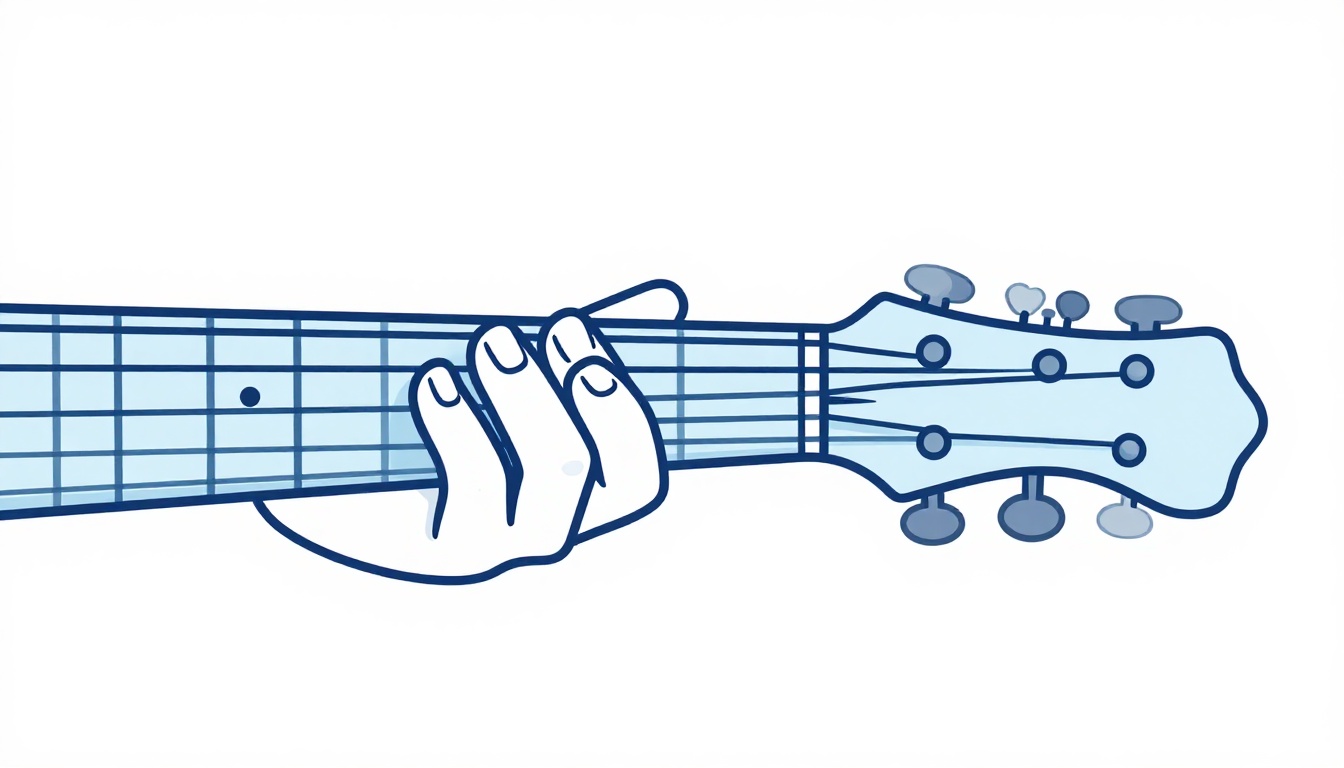
A Standard, One Step Lower
A standard tunes the whole guitar a further whole step below B standard, a perfect fifth below regular E standard.
| String | Note |
|---|---|
| 6th (thickest) | A1 |
| 5th | D2 |
| 4th | G2 |
| 3rd | C3 |
| 2nd | E3 |
| 1st (thinnest) | A3 |
A standard needs a longer scale, thicker strings, or both, compared to B standard, because you are asking the same six strings to sit two steps lower without going slack. Players who use A standard tend to be on 27 to 28 inch scale baritones with heavier gauge sets, often built specifically around this tuning rather than adapted from a B standard setup. The chord shapes still transpose the same way B standard's do, just a step further down: an open E shape becomes an A chord, an open A shape becomes a D.
A standard sits close enough to a bass guitar's low A string that some players reach for it specifically to lock in tightly with a bass part, playing rhythm guitar that shares the bass's fundamental note while still voicing full chords rather than a single bass line. That overlap is also why A standard needs more care in a mix or a band setting than B standard does: two instruments sitting on the exact same low note can turn muddy fast if the arrangement does not leave room for both.
C Standard, a Third Below E
C standard drops the guitar a major third below regular E standard, which puts it between B standard and A standard in pitch.
| String | Note |
|---|---|
| 6th (thickest) | C2 |
| 5th | F2 |
| 4th | Bb2 |
| 3rd | Eb3 |
| 2nd | G3 |
| 1st (thinnest) | C4 |
C standard is popular in metal and hard rock circles where a specific riff or song is written in C, since it lets a player use familiar open shapes instead of transposing everything into a barre chord. A 27 inch scale baritone can handle C standard with at least a .012 gauge low string, though many players prefer to go heavier for a tighter feel, and a slightly longer scale (27.7 inches or more) gives you more room to sit comfortably between B and C without the string feeling loose. Because C standard sits only a single semitone above B standard, a baritone already set up and intonated for B standard often needs only minor tuning peg adjustment, not a full restring, to sit comfortably in C, which makes it one of the easier alternate tunings to try before committing to a different gauge setup entirely.
Drop Tunings on a Baritone
Drop tunings lower only the 6th string, leaving the rest of the guitar in whatever standard tuning you are already using. On a baritone, that most often means Drop A: take B standard and drop the low B string down a whole step to A, while the other five strings (E-A-D-F#-B) stay where they are.
| String | Drop A tuning |
|---|---|
| 6th (thickest) | A1 |
| 5th | E2 |
| 4th | A2 |
| 3rd | D3 |
| 2nd | F#3 |
| 1st (thinnest) | B3 |
The appeal is the same reason drop D works on a standard guitar: dropping one string lets you play a power chord with a single finger laid flat across the bottom three strings, which is fast for palm-muted riffing without giving up the rest of your open-position chord vocabulary. Drop A is common in metal and hard rock, where a baritone's added low end is used specifically for heavier rhythm parts. Because only one string moves, retuning between B standard and Drop A mid set is quick and does not require a full re-setup.
Open Tunings on a Baritone
Open tunings, where strumming all six open strings produces a full major or minor chord, work on a baritone the same way they do on a standard guitar, just transposed down. Open G (D-G-D-G-B-D on a standard guitar) becomes a lower open G chord when built from a baritone's lower starting point, and the same goes for open D or open E shapes. Slide and fingerstyle players use open tunings on baritones for a fuller, more resonant chord when strumming across all six strings, since the extra length and lower pitch give an open chord more sustain and a deeper fundamental than the same open tuning on a short-scale guitar. If you already have an open tuning you like on a regular guitar, the same relative string relationships transfer directly. You are shifting the whole reference point down, not changing the pattern between strings.
Should a Beginner Start on a Baritone Guitar?
Generally, no, not as a first guitar. A baritone plays exactly like a standard guitar in terms of chord shapes and technique, so nothing about the tuning itself is harder to learn. The friction is practical rather than musical. Baritones are physically larger, with a longer scale that means wider fret spacing and a longer stretch for a barre chord or a wide-fingered shape, which is more demanding on a hand that has not yet built any guitar-specific strength or flexibility. Chord charts, lesson videos, and songbooks are almost universally written for standard tuning, so a total beginner working from those materials on a baritone would either need to constantly transpose in their head or accept that everything sounds a fourth lower than the source, both of which add a layer of friction that a standard-scale guitar in standard tuning does not have. Once you already have chord shapes and basic technique under your fingers on a standard guitar, moving to a baritone is a genuinely easy transition, closer to picking up a slightly different guitar than learning a new instrument. It is the order that matters: standard tuning first, baritone once the fundamentals do not need conscious thought anymore.
Eight-String and Extended Baritones
Most baritones are six-string instruments, but eight-string baritones exist and extend the same tuning logic upward rather than down. A common eight-string baritone layout keeps the same low B1-E2-A2-D3-F#3-B3 core as B standard, then adds two more strings above the top B, continuing the same perfect-fourth spacing: E4 and A4. The result, B-E-A-D-F#-B-E-A from low to high, gives a player the baritone's low end on the bottom six strings plus two extra high strings for reaching further up into lead lines without running out of fretboard. It is a different solution to a different problem than a seven or eight-string extended-range guitar, which usually adds low strings to a standard-tuned instrument rather than high strings to a low-tuned one. Because an eight-string baritone still keeps the same perfect-fourth spacing all the way up, none of the chord-shape logic covered elsewhere in this guide changes, you simply have two additional strings above the original six to work with for lead lines and extended chord voicings.
Why Baritones Need Heavier Strings for the Same Tuning
Every one of these tunings depends on string gauge matching scale length. Tune a normal set of .010 to .046 strings down to B standard and they go floppy: low tension means poor sustain, buzzing frets, and strings that go out of tune the moment you bend a note. The fix is not a shorter path to the same pitch, it is a heavier string that needs more tension to reach that pitch, which restores the feel a standard guitar has in standard tuning.
| Tuning | Typical low string gauge | Typical scale length |
|---|---|---|
| B standard | .062 to .068 | 27 inches |
| A standard | .068 to .080 | 27 to 28 inches |
| C standard | .064 to .070 | 27 to 27.7 inches |
| Drop A | .070 to .078 | 27 inches |
These ranges are a starting point, not a rule. String tension depends on pitch, scale length and gauge together, so the exact gauge that feels right on your particular guitar can sit above or below these numbers. If you are building a set from scratch rather than buying a baritone pack off the shelf, a string tension calculator that takes your scale length and target note will get you closer than guessing, and most string manufacturers publish tension charts for exactly this reason. A good target to aim for on the low string is somewhere around 18 to 26 pounds of tension: tight enough to feel solid under a pick, not so tight that it fights the neck.
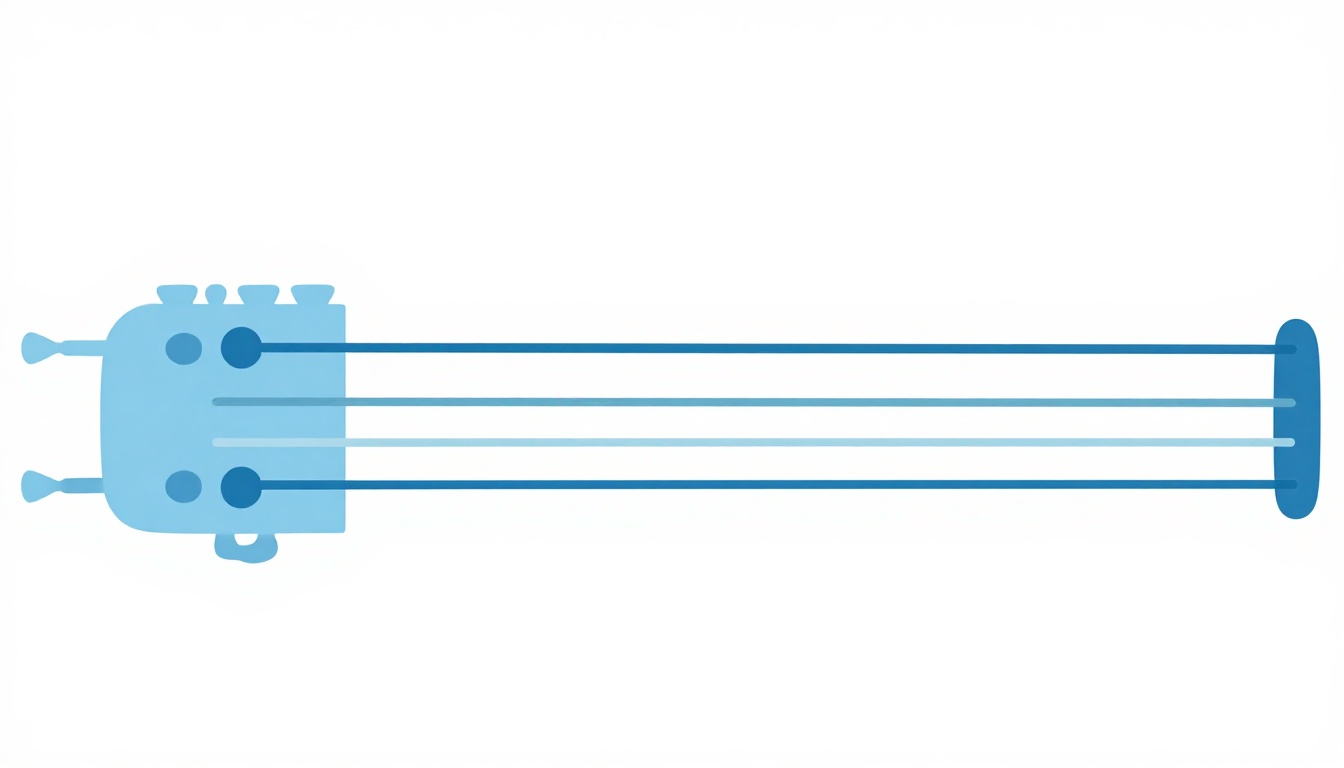
If your baritone is already strung with the manufacturer's baritone set and you are only changing between the tunings above, you likely do not need to change strings at all. Moving between B standard, Drop A and even C standard is usually within range for a single well-chosen set. It is only when you push all the way down to A standard, or want to bring a baritone up into standard E tuning, that gauge becomes the deciding factor, and when a gauge change is what you need, the actual process of pulling the old set and putting on the new one is the same restringing process as any guitar, just with a heavier set of strings.
Can You Tune a Baritone Guitar to Standard E?
Yes, with the right guitar and strings, though it works better in one direction than the other. A baritone with a shorter scale in its range (around 27 inches) strung with extra light strings, .009s or even .008s, can be tuned up to regular E-A-D-G-B-E and will hold, because the long scale length keeps tension reasonable even at the higher pitch with very thin strings. Most baritones can handle standard tuning with strings up to about an .011 gauge before the neck and hardware start to feel the strain. Go heavier than that in standard tuning and you are stacking two things working against you at once: high pitch and high gauge, both of which add tension.
The tradeoff is tone. A baritone tuned up to standard E with very light strings tends to sound brighter and thinner than the same tuning on a standard-scale guitar, because the longer scale changes the harmonic balance of the string. Some players like this, since it gives regular chords an unusually clear, chiming quality. It is not, however, what the guitar was designed for, and it is not a reason to buy a baritone if standard tuning is what you actually want to play in day to day. Treat it as a novelty you can reach for occasionally, not a replacement for a standard-scale guitar.
Where this genuinely earns a place in a setup is with players who own one guitar and want it to cover both jobs: a shorter-scale baritone, strung light and kept near standard pitch most of the time, then dropped to B standard for a handful of songs that need the lower register. That approach works because it is the same guitar and the same rough tension range both ways, just at opposite ends of what a light-gauge, short-scale baritone can comfortably do. It asks more of your tuning discipline than owning two separate guitars would, since you are retuning the whole instrument rather than reaching for a different one, but it is a realistic way to get baritone tone without a second guitar case.
Using a Capo Instead of Retuning
A capo works on a baritone exactly the way it works on any guitar: it clamps across all six strings and shortens the vibrating length, raising every open string by one semitone per fret. On a standard guitar, that only ever moves you up from standard tuning. On a baritone in B standard, it means something more useful: since B standard sits exactly five semitones, a perfect fourth, below standard E-A-D-G-B-E, placing a capo on the 5th fret brings every open string back up to E-A-D-G-B-E exactly. At that capo position, your baritone behaves like a standard-tuned guitar for every chord shape and every chart written in standard tuning, with no retuning at all.
This is the fastest way to play a piece written for standard tuning on a baritone without losing the low tuning for everything else you play. Move the capo lower than the 5th fret and you land somewhere between B standard's own pitch and full standard tuning, which is useful for matching a specific song's key without either a full retune or a capo all the way up. A capo at the 1st fret, for example, brings a B-standard baritone up to C standard tuning without touching a single tuning peg, which is a faster way to reach that pitch for one song than restringing or fully retuning and back. A capo also saves you from the string-gauge tradeoffs of actually tuning up to standard E discussed above, since the strings never leave the tension they were set up for. The tradeoff is the same one every capo carries: your open, unfretted low string below the capo is no longer available, and very heavy baritone gauge strings can be stiffer under a capo than a standard set, so a good quality capo with even clamping pressure matters more here than on a lightly strung standard guitar.
How to Actually Tune a Baritone Guitar
The mechanics are identical to tuning any guitar, the only difference is the notes you are tuning to.
- Pick your tuning and know the six notes. For B standard, that is B1, E2, A2, D3, F#3, B3 from the 6th string to the 1st. Write them down or keep this page open the first few times, until the notes are memorized.
- Use a chromatic tuner, not a guitar tuner set to standard. A clip-on or pedal tuner that reads any chromatic note works for every baritone tuning. A tuner app or pedal that only offers "guitar mode" presets tuned to E-A-D-G-B-E will not recognize B standard's notes correctly, so switch it to chromatic mode and read the note name and octave it detects against the notes above.
- Tune from the 6th string to the 1st, checking as you go. Bring the low string to pitch first, then work up. On a fresh restring or a big tuning change, go through all six strings two or three times, since bringing one string up to pitch changes the tension on the neck slightly and pulls the others flat.
- Play a few open chords and check by ear once you are close. A chromatic tuner gets you in the right zone, but playing a chord you know well, even transposed to its new baritone name, is a fast way to catch a string that is slightly off without staring at a tuner screen the whole time.
- Stretch new strings before trusting the tuning. If you just put on a fresh set for this tuning, pull each string gently away from the fretboard a few times after tuning up, then retune. New strings settle in over the first several minutes of play, and skipping this step means retuning constantly for the first day.
How Baritone Guitar Tabs and Chord Charts Are Written
This trips up a lot of players moving to their first baritone: tab and chord charts written specifically for baritone guitar almost always describe finger positions and shapes, not the absolute pitch that comes out. A tab that says "open E shape" or shows a chord diagram labeled E means play that familiar shape, and it assumes you already know which actual chord it produces in your tuning. Some baritone-specific songbooks and chord charts, aware of the confusion, will label a shape with both names, the shape name and the sounding chord name in B standard, especially for beginner-facing material. Standard-tuning tab and chord charts, the vast majority of what exists online, make no adjustment at all for baritone, so playing from one on a baritone in B standard means every chord you play will sound a fourth lower than written, which is fine as long as you know that going in and are not trying to match a specific recording's key. If matching the original key matters, either transpose the chart yourself before you play it (moving every chord up a fourth) or use the capo trick above to bring the whole guitar back to standard pitch. Transposing by hand is mostly a matter of moving each chord name up the musical alphabet by the right number of steps and is quicker with practice than it sounds, but if you would rather not do the mental math for every chart you play, the capo route gets you there with zero transposition at all.
Do Chord Shapes Change When You Retune?
No, and this is the detail that makes switching to a baritone far less intimidating than it looks on paper. The distance between each pair of adjacent strings in B standard, A standard, C standard, and standard E tuning is identical: four perfect fourths and one major third, in the same order. That means every chord shape, scale pattern, and fingering you already know maps directly onto a baritone. What changes is only the letter name of the chord that shape produces.
| Shape you play | Sounds as in standard tuning | Sounds as in B standard | Sounds as in A standard |
|---|---|---|---|
| Open E shape | E major | B major | A major |
| Open A shape | A major | D major | G major |
| Open D shape | D major | G major | F major |
| Open G shape | G major | C major | Bb major |
| Open C shape | C major | F major | Eb major |
If you already read chord charts or tabs written for standard tuning and want to play them on a baritone at pitch, you have two options: play the same shapes and accept that the song now sounds a perfect fourth (B standard) or fifth (A standard) lower than the recording, or transpose the shapes up so the chord names match the original song. Most players who buy a baritone specifically for its lower sound choose the first option, since the point of the instrument is the deeper register.
Baritone Guitar vs. Bass Guitar Tuning
A baritone guitar and a bass guitar solve a similar problem, going lower than a standard guitar, in different ways, and mixing them up leads to buying the wrong instrument. A bass guitar is tuned a full octave below a standard guitar's bottom four strings (E1-A1-D2-G2) and usually carries four or five strings built for a rhythm and low-end role, with a scale length that runs even longer than most baritones, often 34 inches or more, to keep that much lower pitch under proper tension. A baritone guitar is tuned a perfect fourth to a perfect fifth below standard, keeps all six strings, and is voiced to sit in the guitar's mid range rather than replace the bass. You can strum full chords and play lead lines on a baritone the same way you would on any six-string guitar. A bass is not built for that role, and a baritone, even at its lowest common tunings, does not go anywhere near as low as a bass. If you already play bass and are curious how its scales and fretboard patterns compare, the shapes do not transfer the way baritone shapes do from a standard guitar, since a bass drops a whole octave rather than a fourth or fifth.
Is the Fender Bass VI the Same as a Baritone Guitar?
No, though the two get confused constantly because they look similar and both go lower than a standard guitar. A Bass VI, the design Fender introduced in the 1960s and still sells today, uses a 30 inch scale and is tuned to standard E-A-D-G-B-E, the same note names a regular guitar uses, but a full octave lower. It is strung with bass strings and, despite having six strings and looking like an oversized guitar, is built and used as a bass instrument. A baritone guitar, by contrast, is tuned only a fourth or fifth below standard, not a full octave, and is voiced and played as a guitar, with chords and lead lines rather than a bass line. If you see six strings on a long-scale instrument and are not sure which one you are looking at, the tuning is the tell: a perfect fourth or fifth below standard is a baritone, a full octave below standard is a Bass VI.
Baritone Tuning vs. Extended-Range Guitars
Seven and eight-string guitars solve the low-end problem a different way: by adding strings rather than lengthening the scale. A seven-string in standard tuning adds a low B string below a regular six-string's low E, landing on roughly the same low B pitch a baritone reaches on its 6th string, but keeps the top six strings at standard E-A-D-G-B-E. An eight-string baritone, by contrast, tunes the whole instrument down and adds strings on both ends. If what you want is occasional access to a lower note while keeping your standard tuning intact for everything else, a seven-string is usually the simpler answer. If you want the entire instrument, every string, living in a lower register with fatter tone throughout, that is what a baritone is built for.
Setting Up a Baritone After Changing Tuning
Moving between B standard, A standard and C standard on the same set of strings, or restringing to a heavier gauge for a lower tuning, changes the load on the neck enough that a quick setup check is worth doing every time. None of this is baritone-specific technique, it is the same truss rod, intonation and action work every guitarist eventually learns, just triggered more often because a baritone's tuning options span a wider range of string tension than a standard guitar's do.
Check the Truss Rod
Heavier strings and lower tunings both add tension to the neck compared to a lighter set, which can pull it into more forward bow (relief) than you want. If you notice the action getting higher or the neck feels like it is bowing after switching to a heavier gauge, a small truss rod adjustment, a quarter turn at a time, brings it back. If you are new to truss rod adjustments, make one small turn, retune, and reassess before turning again. If you switch tuning often, get comfortable with this rather than avoiding it, since a neck set up for B standard at .062s will not sit the same way once you drop to A standard at .078s.
Recheck Intonation
Changing string gauge changes intonation, because a thicker string needs a slightly different saddle position to play in tune up the neck compared to a thinner one. After a gauge change, check each string's 12th fret harmonic against its fretted 12th fret note. If the fretted note is sharp compared to the harmonic, move the saddle back, away from the neck. If it is flat, move it forward. This is the same intonation process as any guitar, it just needs rechecking any time the string gauge changes, not only when you first buy the instrument.
Adjust Action If Needed
A heavier string vibrates with a wider swing than a thin one, so a saddle height that gave you buzz-free clearance with a .046 low string may need to come up slightly for a .068. Raise the action in small increments at the bridge or saddle and test for buzz before committing to a bigger change.
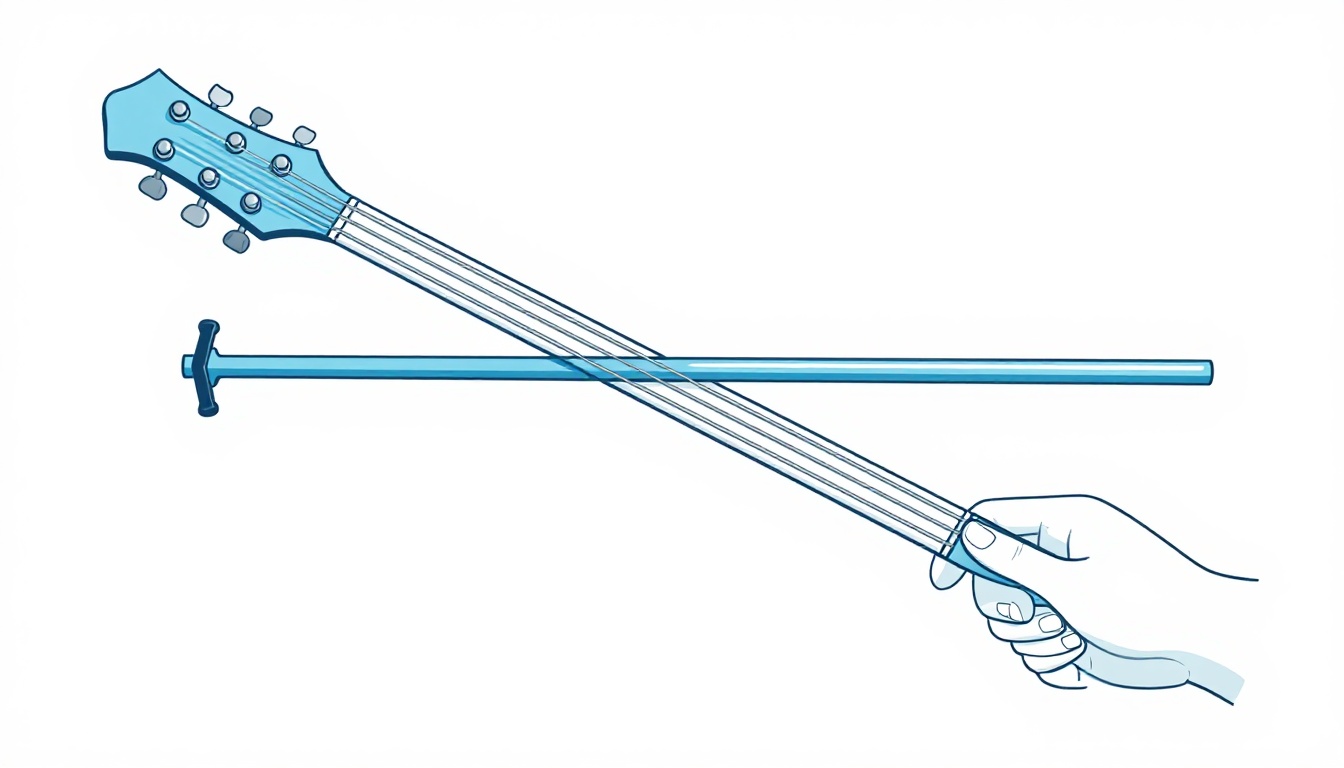
Why Your Baritone Won't Hold Tune
A baritone that keeps drifting flat, especially on the wound strings, almost always traces back to one of a few specific causes. Work through them in order, since the earlier ones are both more common and faster to check than the later ones.
The Strings Are Too Light for the Tuning
Light strings under low tension are more prone to slipping at the tuning post and stretching unevenly, because there is less force keeping the winds tight against each other. If you are chasing A standard or C standard on strings gauged for B standard, upgrading to the correct heavier gauge for that tuning is usually the actual fix, not a tighter winding technique.
New Strings Haven't Stretched In
Fresh strings, especially the plain (unwound) high strings, stretch measurably over their first hour or two of play. Retuning constantly right after a restring is normal, not a sign of a bad guitar or bad strings. Stretch each string by hand after the initial tune-up and expect two or three more passes before it settles.
The Nut Slots Are Too Tight or Rough
A string that catches in the nut slot instead of sliding freely will hold a slightly wrong tension across the nut, then pop free when you bend or play hard, throwing that string flat. This shows up as a specific string that always seems to need retuning while the others hold fine. A light graphite pencil rubbed into the slot, or a proper nut file if the slot is genuinely too narrow for a heavier baritone gauge, solves this.
The Neck Hasn't Settled After a Big Gauge Change
Jumping straight from a light standard set to a heavy baritone set puts new load on the neck all at once, and it can take a day or two of the wood settling under that tension before tuning stabilizes fully. This is different from the strings themselves stretching. If your baritone was fine yesterday and everything is drifting slightly flat today after a big gauge change, give it another day before assuming something is actually wrong.
Worn or Cheap Tuning Machines
Tuning pegs with loose gears or worn bushings slip under the higher torque that heavier baritone strings put on them, even after the strings themselves have settled. If one specific tuner needs constant retuning while identical strings on other posts hold fine, the tuner itself, not the string or the setup, is usually the problem.
The Guitar Was Set Up for a Different Tuning Than It Is In Now
A baritone that came from the factory set up for B standard and has since been moved to A standard or Drop A without any other adjustment is carrying string tension and neck relief that were never dialed in for its current tuning. This shows up less as a single string slipping and more as a general sense that the whole guitar feels slightly off, harder to fret cleanly, buzzier in some spots than others, without one obvious cause. The fix is the full setup pass covered above, truss rod, intonation and action together, rather than chasing one symptom at a time.
Acoustic vs. Electric Baritone Tuning
The tunings themselves do not change between acoustic and electric baritones, B standard is B standard on either one, but the practical range players reach for tends to differ. Acoustic baritones carry the low tension of a heavy tuning through the top and bracing rather than through a magnetic pickup and amplifier, so builders and players generally stay closer to B standard or C standard, where the extra tension is well within what a braced acoustic top handles comfortably over years of string changes. Electric baritones, backed by a solid body that does not need to project acoustic volume, are pushed further, into A standard and Drop A, more often, since the neck and body are not doing the same job an acoustic top is. If you are buying an acoustic baritone specifically to detune further than C standard, ask the builder or manufacturer what tunings the bracing is rated for before you commit to a heavier string gauge, since acoustic tops are more sensitive to sustained extra tension than a solid electric body.
Baritone Tuning by Genre and Style
Different tunings became standard in different corners of guitar playing, largely because of what the instrument was first used for.
Surf and Twang
The baritone's earliest popularity, starting with the Danelectro baritone in the late 1950s, came from surf and twang players using B standard for a deep, reverberant lead tone, most famously in Duane Eddy's recordings. That register, below a standard guitar but still clearly a guitar rather than a bass, is what gave the instrument its early identity.
Nashville and Country
Session players in Nashville have long used baritones, often in B standard, to double a song's bass line an octave up in what is commonly called the "tic-tac" bass sound, adding a percussive, articulate low layer under a rhythm section without competing with the actual bass guitar. Country artists including Willie Nelson, Merle Haggard and Glen Campbell have all used the baritone's deep, warm resonance in recordings, and B standard, rather than any of the heavier tunings, is what suits this role, since the goal is a fuller low end under a song, not detuned riffing.
Metal and Hard Rock
From the late 1980s onward, heavier tunings, C standard, A standard and Drop A among them, became common in metal specifically because a baritone reaches those pitches with normal-feeling tension and intonation, where a standard-scale guitar tuned that low would buzz and go slack. Bands writing riffs that need a genuinely low, heavy tone, including Machine Head, Korn and Metallica, lean on exactly the tunings covered above, using the baritone's longer scale to keep heavily detuned riffs tight and articulate rather than loose and undefined.
Indie, Alternative and Fingerstyle
More recently, baritones in B standard or open tunings have shown up in indie and alternative rock, in bands like Arctic Monkeys, and in more atmospheric singer-songwriter work, including Phoebe Bridgers, valued less for extreme heaviness and more for the fuller, more resonant tone a lower, longer-scale instrument gives a simple chord progression or fingerpicked pattern. Jazz and fingerstyle players, Pat Metheny among them, have also used baritones for the same reason: the extended low range opens up voicings and bass movement a standard-scale guitar cannot reach on its own.
Choosing the Right Tuning for What You Play
If you are picking a tuning rather than inheriting one from a song you already want to play, start from what you actually want the guitar to do. B standard is the right default for almost everyone, since it is what most baritones ship tuned to, it needs the least aggressive string gauge, and every standard chord shape still works. Reach for A standard or C standard only when a specific song or genre calls for that exact pitch, since both ask more of your strings and your setup than B standard does. Drop A is worth learning if you play riff-based rock or metal and want the one-finger power chord option without giving up B standard's open-position chords elsewhere on the neck. Open tunings are a style choice more than a range choice, useful specifically for slide and fingerstyle playing rather than for reaching a lower pitch.
It also helps to think about how often you plan to switch. If you expect to move between two tunings regularly, say B standard for most songs and Drop A for a handful of heavier ones, pick a single string gauge that sits comfortably in both rather than the gauge that is technically ideal for either one alone, since restringing every time you switch is not realistic for regular practice or a live set. If you only ever plan to play in one tuning, it is worth stringing and setting up the guitar specifically for that tuning rather than compromising, since a setup dialed in for one exact tuning always plays and intonates better than one splitting the difference between two.
Practicing the Switch to Baritone Tuning
The guitar side of switching to a baritone is nearly free, since your chord shapes do not change. What takes practice is your ear and your sense of pitch, since a familiar shape now produces an unfamiliar-sounding chord.
Start today with a simple exercise: tune to B standard, then play through a chord progression you already know cold on standard guitar, an open E to A to D progression works well. Do not think about what the chords are now called. Just listen to how the same shapes sound a fourth lower, and let your ear catch up to what your hands already know. Do this for five minutes a day for a week before trying to learn anything new on the baritone specifically. Once the lower register stops sounding unfamiliar, move on to actually working out what a favorite riff or song sounds like transposed into B standard, which is the real payoff of owning the instrument.
If your baritone needed a fresh set of strings to get properly into tune for the gauge your target tuning needs, work through a full restring and stretch-in before you start this practice routine, since strings still settling in will fight you at exactly the moment you are trying to train your ear.
The same fifteen-minutes-a-day habit that gets any new skill on guitar to stick works here too: five minutes of the ear exercise above, five minutes revisiting a shape or progression you are shaky on, and five minutes just playing something you enjoy in the new tuning so the session ends on a win rather than a drill. If you are still building that daily habit generally, GuitarLowKey is built around exactly this kind of short, consistent daily practice for players learning on the guitar they already own.
Frequently Asked Questions
Is B standard the only correct baritone guitar tuning? No. B standard is the most common factory default and the easiest to reach with typical baritone string gauges, but A standard, C standard, drop tunings and open tunings are all legitimate baritone tunings used regularly by different players for different reasons.
Do I need special strings for baritone tuning? Yes, in most cases. Baritone guitars need heavier gauge strings than a standard guitar, typically starting around .013 to .062 for B standard and going heavier for lower tunings like A standard, because the low tuning needs extra tension to stay taut and in tune at that scale length.
Will a baritone guitar sound like a bass if I tune it low enough? No. Even at its lowest common tunings, a baritone stays in the guitar's mid-range register and is voiced for chords and lead lines, not the low-end, rhythm-section role a bass guitar fills. The two instruments are built and tuned for different jobs.
Can I use a regular guitar tuner for baritone tuning? Yes, as long as it is set to chromatic mode rather than a "guitar" preset locked to standard E-A-D-G-B-E. A chromatic tuner reads any note by name, which is what you need for B standard, A standard, or any other baritone tuning.
Why does my baritone guitar keep going out of tune? The most common causes are strings that are too light for the tuning you are asking them to hold, new strings that have not fully stretched in, or worn tuning machines. Working through each of those in order usually finds the cause.
Do chord shapes change when I switch a baritone's tuning? No. The interval pattern between adjacent strings stays the same across B standard, A standard, C standard and regular E tuning, so every chord shape and scale pattern you already know transfers directly. Only the name of the chord that shape produces changes.
Can I use a capo instead of retuning a baritone? Yes, and it is usually the more practical option. Placing a capo on the 5th fret of a B-standard baritone raises every open string exactly a perfect fourth, which reproduces standard E-A-D-G-B-E tuning without loosening or restringing anything, so you can play along with a standard-tuning chart directly.
Is a Fender Bass VI the same as a baritone guitar? No. A Bass VI is tuned a full octave below standard guitar tuning and is strung and used as a bass instrument. A baritone guitar is tuned only a perfect fourth or fifth below standard and is played as a guitar, with chords and lead lines rather than a bass line.
GuitarLowKey
Ready for fifteen focused minutes?
Open the web app and train the change that is blocking your song.