
How to Play the Fm Chord on Guitar (Every Shape, No Buzz)
The full barre Fm chord shape, an easier no-barre version using a capo, why it buzzes at fret one, and how to change into Fm without stopping the song.

Fm is built from F, Ab, and C, and none of those notes ring open on a standard-tuned guitar, so there is no open-chord version of it, only barre shapes and a couple of genuine shortcuts. The shape most players learn first is a six-string barre rooted on the low E string at the 1st fret. There is also a real shortcut that skips the barre entirely: clip a capo on the 1st fret and play an open E minor shape behind it, and it sounds as Fm using only two fingers. Every version, every fix for the buzz, and every way to move into and out of this chord smoothly is below.
The Fm chord, string by string
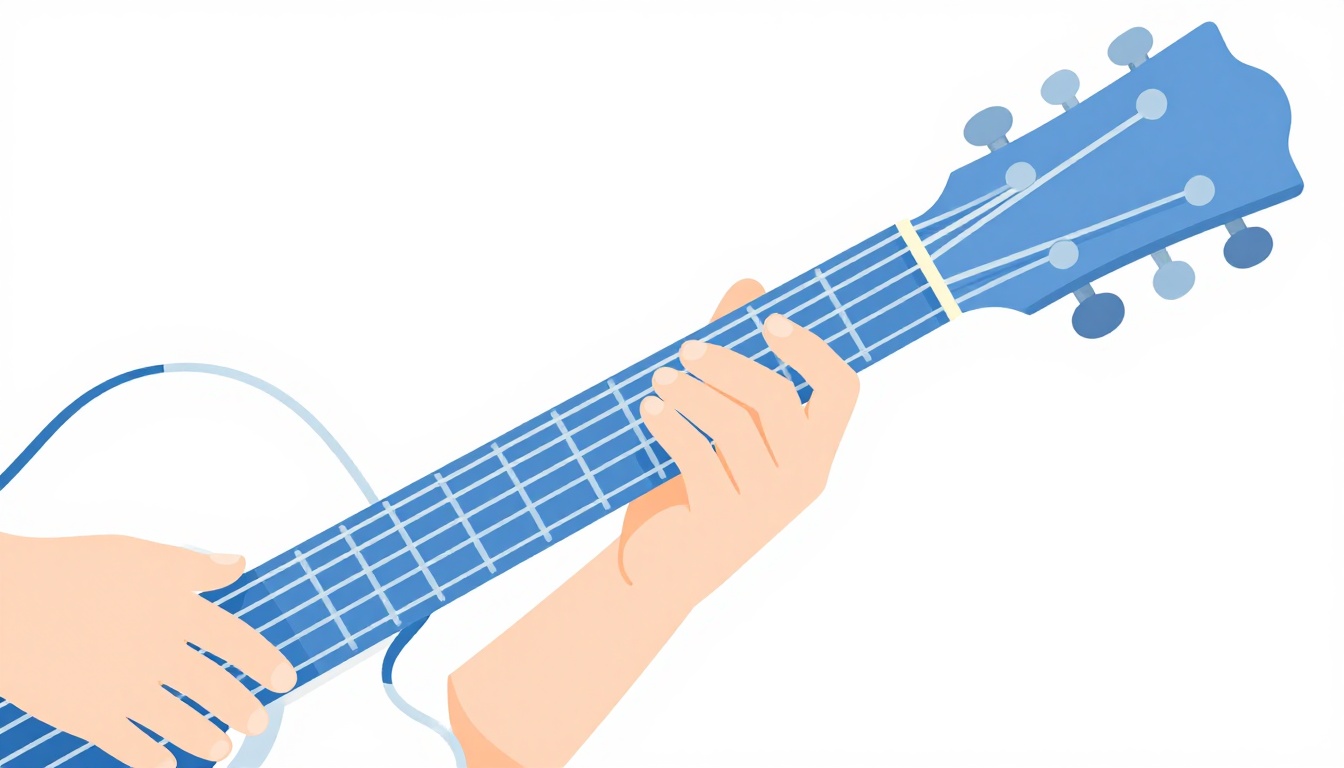
This is the shape most chord charts show first, a six-string barre built on the low E string, using the same finger pattern as an open E minor chord slid up the neck. "Finger" uses standard numbering: 1 is your index finger, 2 is your middle finger, 3 is your ring finger, 4 is your pinky.
| String | Fret | Finger |
|---|---|---|
| 6 (low E) | 1 | 1 (barre) |
| 5 (A) | 3 | 3 (ring) |
| 4 (D) | 3 | 4 (pinky) |
| 3 (G) | 1 | 1 (barre) |
| 2 (B) | 1 | 1 (barre) |
| 1 (high E) | 1 | 1 (barre) |
Lay your index finger flat across all six strings at the 1st fret, pressing firmly enough that every string rings. Then add your ring finger on the 5th string (A) two frets ahead, at the 3rd fret, and your pinky right next to it on the 4th string (D), also at the 3rd fret. The 3rd, 2nd, and 1st strings are covered by the barre alone, no extra fingers needed. Strum all six strings.
This is exactly the open E minor chord shape (low E, A, D, G, B, high E played 0-2-2-0-0-0), just moved up one fret with a barred index finger standing in for the nut. Slide that same shape to any other fret and you get a different minor chord, and at fret 1 the root note lands on F.
Most players find it easier to lay the barre down first, since it acts as an anchor for the rest of the hand, then add the ring and pinky together as a pair. Trying to place all three fingers down at exactly the same instant is a common reason the barre slips slightly out of position right as you strum.
What makes Fm a minor chord
A chord's name comes from the notes stacked on top of its root. Fm is a triad: the root (F), a minor third above it (Ab), and a perfect fifth above the root (C). Swap that minor third for a major third and you would have A instead of Ab, which makes the chord F major, not F minor. That one note, the third, is the entire difference between a chord that sounds bright and one that sounds unsettled or melancholic.
| Interval | Note | Semitones from root |
|---|---|---|
| Root | F | 0 |
| Minor 3rd | Ab | 3 |
| Perfect 5th | C | 7 |
You do not need to memorize interval math to play the chord, but it explains why certain notes repeat across the shape above. In the six-string barre, F appears on three different strings (the 6th, 4th, and 1st), C appears twice (5th and 2nd strings), and Ab appears once (3rd string). Doubling the root and fifth while keeping a single minor third is standard practice in guitar chord voicings, it reinforces the chord's foundation without muddying the note that actually defines it as minor.
Why Fm has no open-string version
Every open string on a standard-tuned guitar is one of six fixed pitches: E, A, D, G, B, E. None of those six letters are F, Ab, or C, so there is no combination of open strings that spells out an Fm triad the way an open Em or open Am can be strummed with barely any fretting at all. That is not a coincidence specific to Fm, either. F minor, F# minor, and Bb minor are the three minor chords guitarists run into most often that have no open-position version at all, precisely because none of their notes line up with the six open strings.
This is also why Fm feels like a jump in difficulty the first time a beginner meets it. Chords like Am, Em, and Dm ease a new player into fretting because at least part of the chord is already "free," since A, E, and D are themselves open strings. F is not one of the six open strings, so neither is any chord built on it. Fm offers no such head start, every note has to be fretted by hand, which is exactly why the shortcuts later in this guide matter more here than they do for most other chords.
The easiest way in: skip the barre with a capo
If a full six-string barre still feels out of reach, there is a genuine shortcut that most chord charts leave out entirely: clip a capo onto the 1st fret and play an open E minor shape behind it. A capo presses down every string at that fret in one motion, doing exactly the job your index finger does in the barre shape above, and it does it more evenly than most beginner hands can manage. Behind a capo on the 1st fret, an open Em shape sounds as Fm using only two fretting fingers.
| String | Fret (counted from the capo) | Finger |
|---|---|---|
| 6 (low E) | Open | - |
| 5 (A) | 2 | 3 (ring) |
| 4 (D) | 2 | 4 (pinky) |
| 3 (G) | Open | - |
| 2 (B) | Open | - |
| 1 (high E) | Open | - |
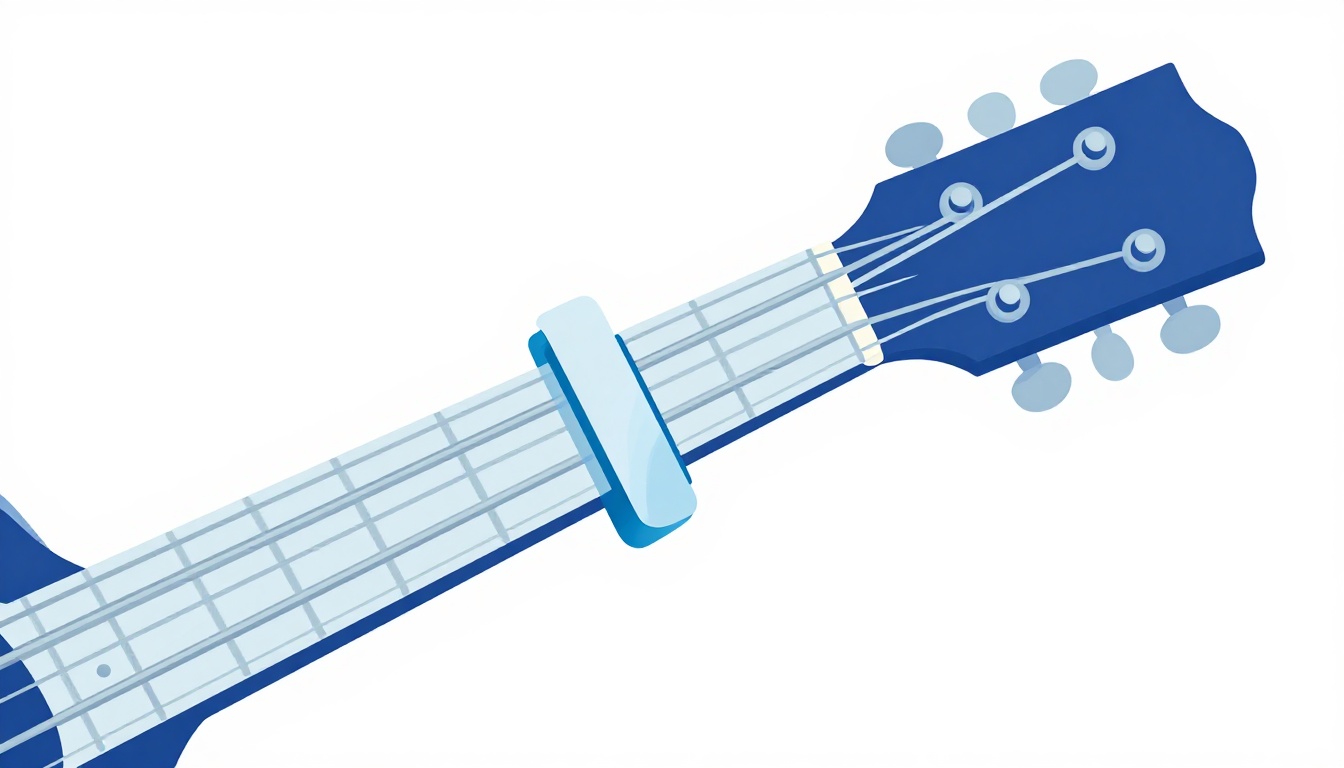
Clip the capo on so it sits just behind the 1st fret wire, pressing evenly enough that every string rings clearly when picked open. Then finger the shape exactly as you would an open Em chord: ring finger on the 5th string (A) two frets up from the capo, pinky on the 4th string (D) two frets up from the capo, and every other string left open. Strum all six strings.
This is not a "beginner cheat" you will need to unlearn later. It works because a capo does mechanically what a barring index finger does, it just does it with a spring-loaded clamp instead of a joint that gets tired. The only real trade-off is that you need a capo with you, and if a song moves through several unrelated chords that need the full fretboard, you may need to remove it partway through.
There is a second option if you would rather use a familiar three-finger open shape instead of Em. Capo the 3rd fret and play an open D minor shape behind it, and that also sounds as Fm.
| String | Fret (counted from the capo) | Finger |
|---|---|---|
| 6 (low E) | Muted | - |
| 5 (A) | Muted | - |
| 4 (D) | Open | - |
| 3 (G) | 2 | 2 (middle) |
| 2 (B) | 3 | 3 (ring) |
| 1 (high E) | 1 | 1 (index) |
Both capo positions produce the identical set of notes as the full barre shape, F, Ab, and C, just voiced slightly differently depending on which open shape you borrow. Use whichever open chord your hand already knows best.
The three-string mini shape
There is a smaller, still barre-based version of Fm that some players find easier to grab quickly, since it only asks your index finger to cover three strings instead of six.
| String | Fret | Finger |
|---|---|---|
| 3 (G) | 1 | 1 (barre) |
| 2 (B) | 1 | 1 (barre) |
| 1 (high E) | 1 | 1 (barre) |
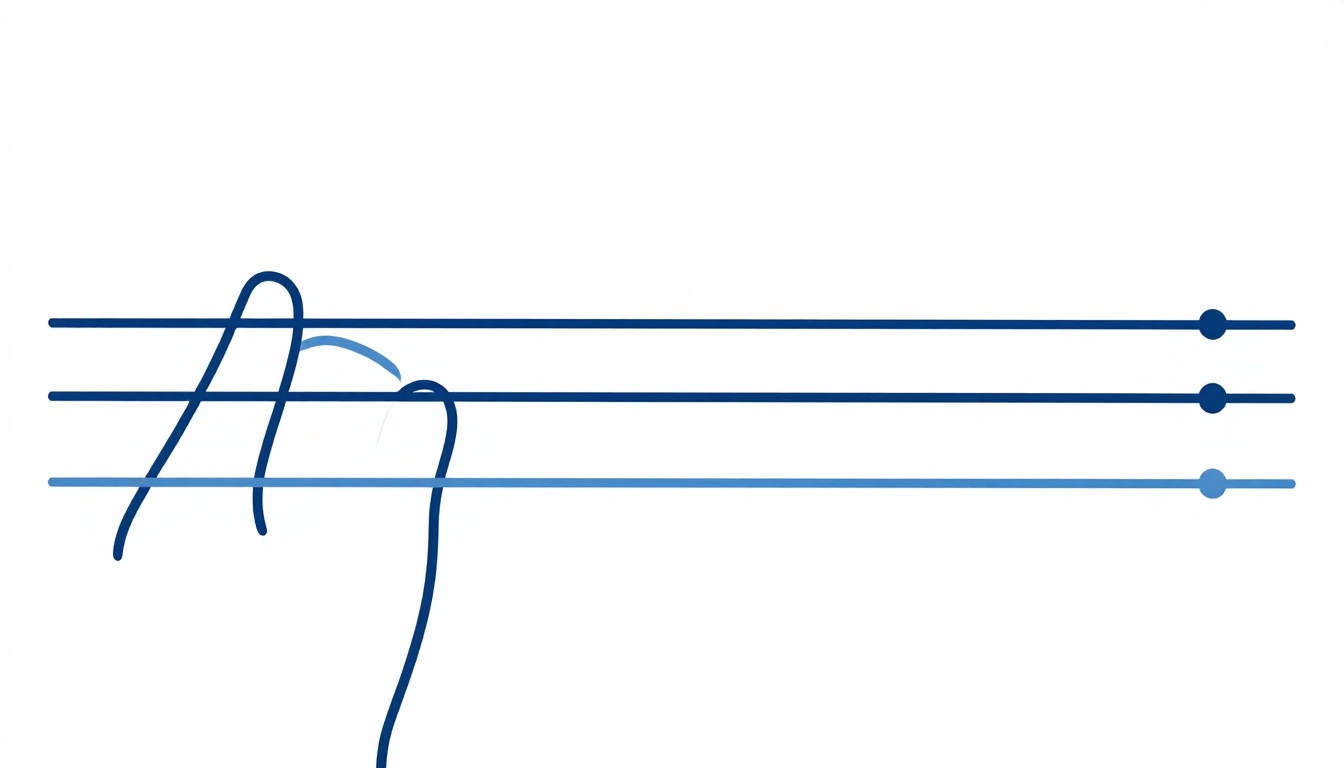
Lay your index finger flat across just the top three strings (G, B, and high E) at the 1st fret, leaving the low E, A, and D strings unplayed. This gives you the full Fm triad, root, minor third, and fifth, with a much smaller barre to manage than the full six-string version. The trade-off is an obviously thinner sound with no low end, so this version works best for light strumming, fingerpicking, or as a quick substitute when a song only briefly touches Fm before moving on. It is a genuine shortcut for a small three-string barre, not the full chord's usual voicing, but it is correctly fingered and it is not a compromise on pitch.
The root 5 barre shape further up the neck
A second common way to play Fm roots the chord on the 5th string (A) instead of the low E, using the same finger pattern guitarists use for the open B minor chord shape. This version leaves the low E string muted.
| String | Fret | Finger |
|---|---|---|
| 6 (low E) | Muted | - |
| 5 (A) | 8 | 1 (barre, root) |
| 4 (D) | 10 | 3 (ring) |
| 3 (G) | 10 | 4 (pinky) |
| 2 (B) | 9 | 2 (middle) |
| 1 (high E) | 8 | 1 (barre) |
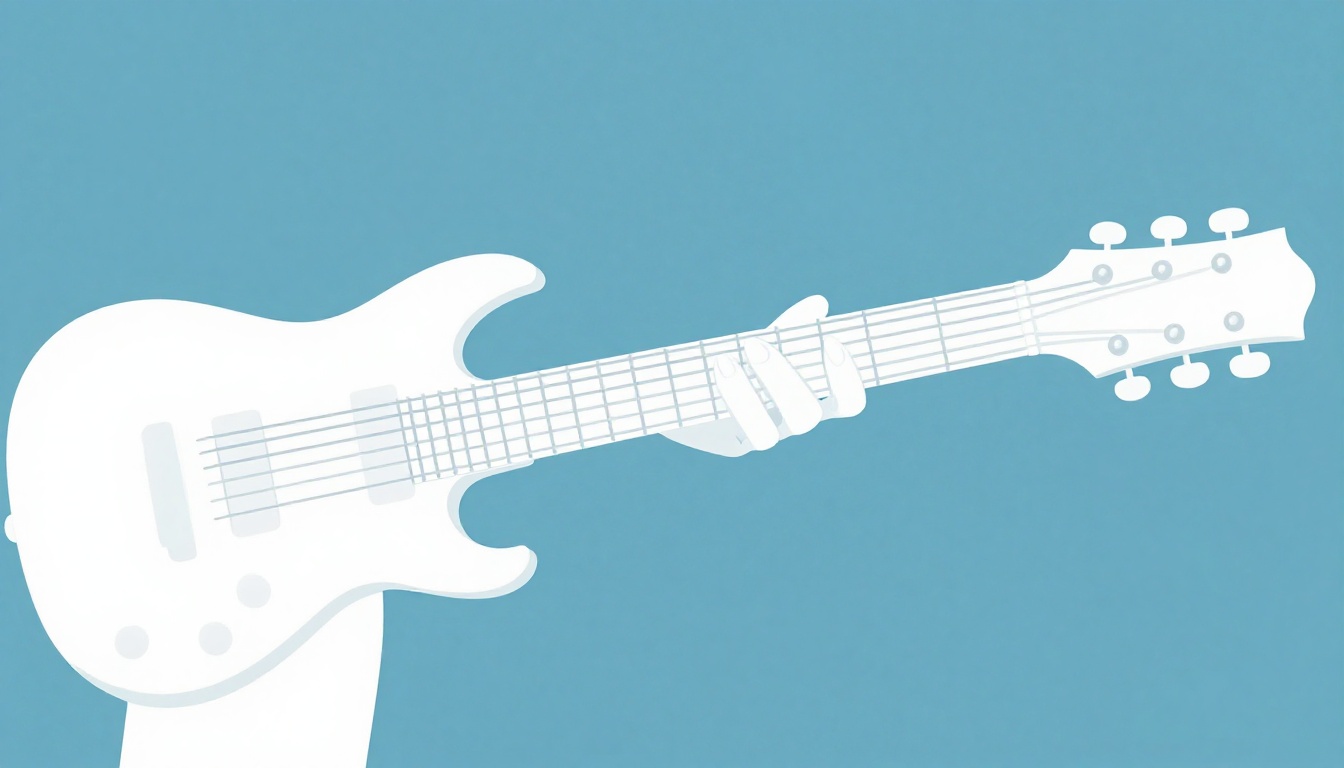
Barre your index finger across the top five strings at the 8th fret (you can let it rest lightly on the low E string too, it just should not be played, so mute it with the underside of your index finger or simply avoid striking it when you strum). Your ring finger goes on the 4th string (D) at the 10th fret, your pinky right beside it on the 3rd string (G), also at the 10th fret, and your middle finger fills in the 2nd string (B) at the 9th fret.
This shape is identical, finger for finger, to how most players learn the Bm chord, just moved six frets further up the neck. If you already know Bm, Fm in this shape is simply Bm slid up by six frets. Which of the two full barre shapes should you use? The root 6 shape at fret 1 has the lowest, fullest sound and matches most chord charts, but it also happens to sit at the single hardest fret on the neck to barre cleanly, which the next section explains. The root 5 shape at fret 8 sits in a stretch of the neck where the frets are closer together and generally easier to press, at the cost of a slightly higher-pitched voicing and a muted low string. Try both and use whichever your hand takes to faster, they produce the identical set of notes.
Playing Fm if your guitar is in Drop D tuning
If you regularly leave your guitar in Drop D (low E string tuned down to D, everything else standard), the root 6 Fm shape above needs a small adjustment. In Drop D, the open low string is D, not E, so fretting it at the 1st fret the way you normally would gives you D#, not F, a note that does not belong in the Fm triad at all and will clash badly if you strum it.
The fix is simple: either mute the low string entirely and treat the shape as a five-string barre starting from the A string, exactly as your hand is already positioned, or skip playing it with your pick and thumb. If you want a low F specifically while in Drop D, you would need to fret that string separately at the 3rd fret, which breaks the convenience of a single-fret barre and is rarely worth the trouble for one extra low note.
The root 5 shape at the 8th fret is unaffected by Drop D entirely, since it never uses the low E (or low D) string in the first place. If your guitar lives in Drop D most of the time, that shape is generally the more reliable of the two to build muscle memory around.
Why your Fm chord is buzzing or sounds dead
This is the section that actually decides whether you keep working on this chord or give up on it. A barre chord that buzzes or goes dead on certain strings almost always traces back to one of five specific, fixable causes. Work through them one at a time.
Your index finger is too flat
If your index finger lies completely flat against the fretboard, the soft, fleshy part of the finger absorbs pressure unevenly across its length, and whichever string sits under the thinnest or least-pressured section of the finger buzzes or dies. This is the single most common reason a barre chord sounds incomplete, and it is worse at fret 1 than anywhere else on the neck, for reasons covered below.
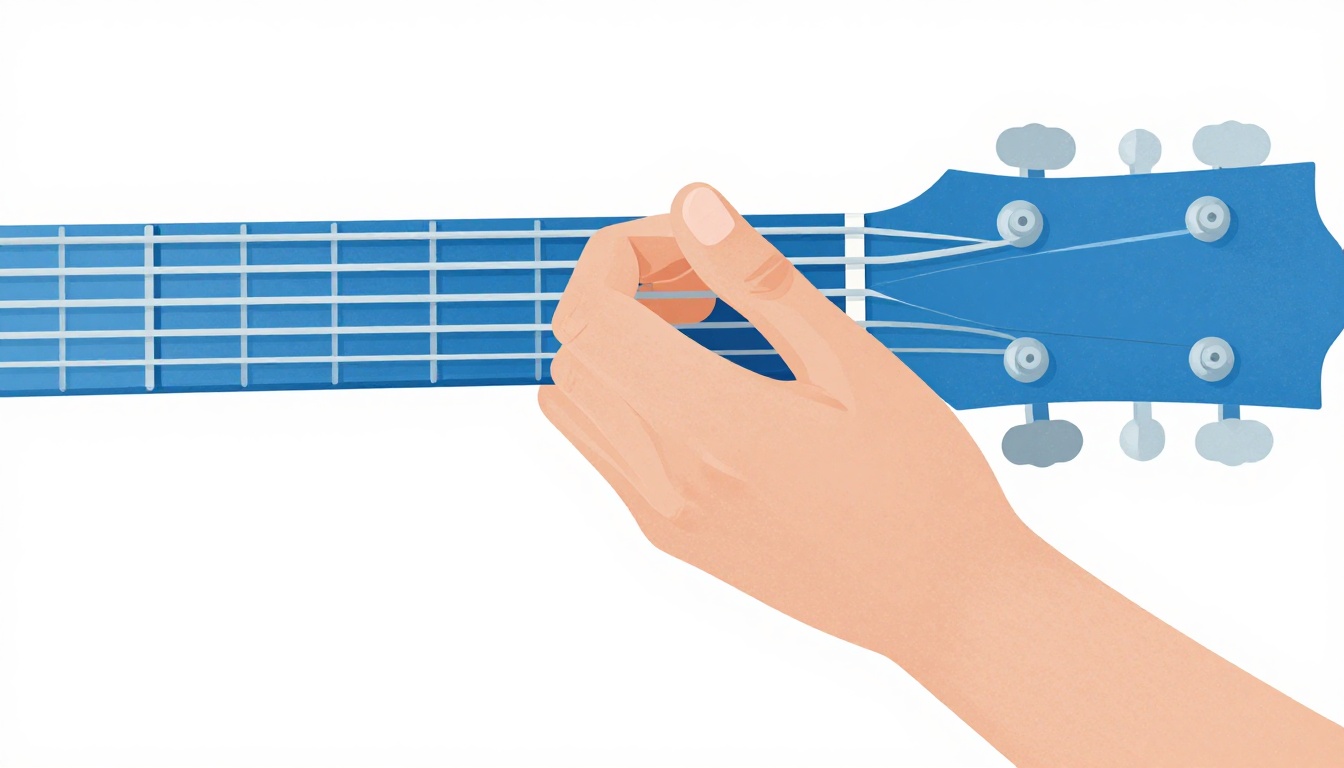
Roll your index finger slightly onto its outer edge, the side closer to your thumb. The edge of the finger is bonier and firmer than the pad, and it distributes pressure more evenly across all six strings with less overall effort from your hand.
Your index finger isn't rolled onto its edge
This sounds like the same fix as above, but it is worth separating because the correction is specific: it is not just about flattening less, it is about actively rotating the finger. Picture turning your index finger about a quarter turn toward the headstock, so you are pressing with the side of the fingertip rather than the center of the pad. Players who fix "flatness" by simply pressing harder in the same flat position tire out fast and still get inconsistent results. Rotating the finger fixes the underlying leverage problem instead of trying to force through it.
Your thumb is riding too high on the neck
Check where your thumb sits on the back of the neck. If it has crept up so it is visible over the top edge, peeking out above the fretboard, it is pulling your whole hand into a position where your fingers come down flatter than they should. Bring your thumb back down to roughly the middle of the back of the neck, generally somewhere behind your index or middle finger. This alone fixes a surprising amount of barre chord buzz, because it changes the angle everything else works from.
One string is collapsing under a neighboring finger
Your ring and pinky fingers sit close together on adjacent strings at the same fret. It is easy for one of them to lean slightly and mute the string next to the one it is meant to fret. Pick each fretted note individually and listen. If the A string (5th) sounds fine but the D string (4th) is dead, your pinky likely needs to arch more or shift its contact point slightly.
You're not pressing hard enough yet
Sometimes every element of technique is correct, the finger is rolled, the thumb is positioned well, the angle is right, and the chord still buzzes because the hand simply has not built the specific strength a barre chord demands yet. This is common and temporary. Barre chords require sustained pressure across multiple strings at once, which is a different demand than fretting a single note, and that strength builds with repetition, not instantly. If everything else checks out and it still buzzes, the fix is time, not a technique adjustment.
Fret 1 is the hardest barre on the guitar, and here's why
Most guides treat every barre chord as equally difficult, but the fret-1 barre that Fm's main shape needs is genuinely the hardest one on the instrument, for two physical reasons that have nothing to do with your technique.
First, fret spacing. Frets get closer together the further up the neck you go, which is why the root 5 shape at fret 8 above feels noticeably more compact under your fingers than the root 6 shape at fret 1. The gap between the nut and the 1st fret is the single widest gap on the entire fretboard, which means your index finger has to press across a barre with the least amount of favorable finger curl of anywhere on the neck.
Second, string tension and setup. Guitars are generally set up so that strings sit slightly higher near the nut than they do further up the neck, partly to prevent open strings from buzzing against the frets. That means the exact spot where Fm's main shape asks you to barre is also, on most guitars, the spot with the least forgiving action on the whole fretboard.
Neither of these is a flaw in your playing. It is worth knowing before you spend a session frustrated that Fm's standard shape genuinely asks more of your hand than a same-shape barre chord would ask at, say, the 5th or 8th fret. If the fret-1 barre is not cooperating yet, that is exactly the situation the capo trick above and the root 5 shape at fret 8 exist to solve, not a sign you are doing something wrong.
Getting the wrist and hand position right
Beyond the finger-by-finger fixes above, your overall wrist and arm position sets the baseline for how much pressure actually reaches the strings versus how much gets lost to an inefficient angle.
Keep your wrist slightly bent outward, away from the neck, rather than collapsed inward toward it. A wrist that collapses inward, so your palm nearly touches the back of the neck, forces your fingers into a flatter angle and makes it much harder to get the arch each finger needs. Your elbow should hang relatively naturally at your side rather than pinning tightly against your ribs, which restricts the whole arm's ability to rotate into position.
It also helps to check your guitar's position generally. If the neck is angled too low, close to horizontal, gravity works against your fretting hand's ability to press efficiently. Tilting the headstock up somewhat, whether you are sitting or standing, tends to make barre chords noticeably easier to hold, and it matters more at fret 1 than anywhere else on the neck for the reasons covered above.
Building the strength to hold a barre chord
If you are new to barre chords in general, not just this one, it is worth knowing that the strength and finger independence they require is trained, not something your hand either has or does not. A few concrete things speed that up.
Practice the barre alone before adding the other fingers. Lay your index finger across all six strings at any comfortable fret, higher up the neck if fret 1 is too much right now, and pick through each string one at a time, adjusting pressure and position until every one rings clearly, with no other fingers involved yet. This isolates the hardest part of the shape and lets you focus entirely on it.
Hold shorter than you think you need to. Fretting a barre chord for two or three seconds at a time, resetting, and doing it again trains the specific muscles involved without exhausting your hand before it has built any capacity. Long, forced holds when the hand is not ready tend to build tension and bad habits rather than strength.
Move the barre around. Practicing the exact same fret over and over trains one specific position. Sliding the same shape to different frets, even without naming the resulting chord, builds a more general, transferable version of the skill, and it lets you feel directly how much easier the same shape gets a few frets up the neck.
Expect weeks, not days. Most players report a noticeable jump in barre chord control within two to four weeks of short, regular practice, not because the chord itself changes but because the hand's strength and muscle memory catch up. If your hand hurts sharply (not just tired) while attempting a barre, stop and rest, sharp pain is your hand telling you to back off, dull fatigue is normal.
Does your guitar's setup make Fm harder than it needs to be?
If you have worked through every technique fix above and Fm still buzzes no matter what your hand does, the problem may not be your technique at all. It is worth ruling out the guitar itself before assuming the fault is entirely yours.
String height (action). Every guitar has strings sitting some distance above the frets, called the action. Higher action means every finger, especially a barre, needs more force to press a string all the way down to the fret. A guitar with high action can make a barre chord genuinely, physically harder than the identical chord on a guitar with lower action, no matter how good your technique is. If barre chords feel dramatically harder on your guitar than they look in videos of other players, high action is a common, fixable culprit, and it is generally worth having a guitar technician check and adjust, since doing it yourself without the right tools risks damaging the instrument.
String gauge. Thicker strings need more force to fret than thinner ones. Beginners are sometimes handed a guitar strung with heavier strings than necessary, which makes every chord, barre chords especially, harder than it needs to be while you are still building hand strength. Lighter gauge strings are easier to press down, at some cost to tone and volume, and many new players find them a reasonable trade while their hands develop.
Electric versus acoustic. Electric guitars are typically strung with lighter strings and set up with lower action than acoustic guitars, partly because their thinner, narrower necks and different string tension make it practical to do so. If you are learning Fm on an acoustic and finding it noticeably harder than you expected, that is a real, physical difference, not just a perception, electric guitars are generally easier to barre chord on, especially for a beginner hand.
New strings versus old strings. Old strings that have lost their brightness also tend to feel stiffer and less responsive under the fingers over time as grime builds up in the windings, which can make fretting, barre chords included, feel more effortful than it should. If your strings have been on the guitar for many months of regular play, that is worth ruling out too.
None of this means technique does not matter, it still does, and most players' barre chord struggles are genuinely about hand position and pressure rather than the instrument. But if you have checked your finger angle, thumb position, and pressure carefully and Fm still will not ring clean, a quick look at the guitar itself is a reasonable next step before assuming your hand is the only variable.
Fm compared to the chords it gets confused with
A handful of chord names look or sound close enough to Fm that they are worth telling apart clearly, especially if you are reading a chord chart quickly and want to be sure you are grabbing the right shape.
Fm versus F. F on its own (no "m") means F major, built from F, A, and C. The middle note is the only difference from Fm: a major third (A) instead of a minor third (Ab). One note changes, and the emotional character of the chord changes with it. F major is itself a notoriously tricky early chord because its own common shape also involves a small barre at the 1st fret, so if F major has already given you trouble, know that Fm asks for a full six-string version of that same fret-1 barre.
Fm versus F#m. These share almost nothing beyond starting with the letter F. F#m is F sharp minor, built from F#, A, and C#, a full half step higher than Fm's F, Ab, and C. They are unrelated chords that happen to look similar in text, and mixing them up on a chart is an easy, common mistake since the names differ by a single character.
Fm versus Fdim. Fdim (F diminished) shares its root and minor third with Fm, F and Ab, but flattens the fifth, using Cb (the same pitch as B) instead of C. Diminished chords have a tense, unresolved quality quite different from a standard minor chord, and they are used far less often, generally as a brief passing chord rather than a chord a song settles into.
Fm versus Fm7. Fm7 takes the full Fm triad, F, Ab, C, and adds a fourth note, Eb, a minor seventh above the root. It is a genuinely different, though closely related, chord, common in blues, soul, and classic rock arrangements where a smoother, less plain sound is wanted. Aerosmith's "Dream On" leans on this exact relationship, moving between Fm, Fm7, and Fm6 within the same verse.
Fm versus Fm6. Fm6 replaces the minor seventh with a major sixth (D) instead. It has a distinct, slightly brighter flavor than Fm7 despite both being built by adding one note to the base triad. It shows up constantly in the same kind of classic rock and soul writing that leans on Fm7, often as a passing chord between the two.
The pattern across all of these: the difference between chords that share most of a name usually comes down to one single note, most often the third (major versus minor) or an added extension (a 6th or 7th on top). Once you can hear that one-note difference, telling related chords apart by ear gets considerably easier.
Where Fm sits in a key
Fm rarely shows up on its own, it is usually one chord inside a progression built around a key, and knowing which keys it belongs to helps you predict what other chords are likely to sit alongside it.
Fm is the relative minor of Ab major, meaning the two keys share the exact same notes, just built from different starting points. Any progression written in Ab major can be recast starting from Fm and it will use the same set of chords. Fm is also the ii chord (the second scale-degree chord) in the key of Eb major, and the iv chord in the key of C minor.
| Key | Fm's role | Other common chords in that key |
|---|---|---|
| F minor | i (the tonic, "home" chord) | Bbm, Cm, Db, Eb |
| Ab major | vi (relative minor) | Ab, Db, Eb, Fm |
| Eb major | ii | Eb, Fm, Ab, Bb, Cm |
| C minor | iv | Cm, Ddim, Eb, Fm |
If you come across Fm in a song and want to guess what else might be in the progression, checking whether the surrounding chords match one of these families is a faster route than guessing at random.
Chord progressions that use Fm
A few genuinely common progression patterns, built from standard music theory, show how Fm tends to get used in practice.
In the key of F minor itself, a i, iv, v progression gives you Fm, Bbm, Cm, one of the most fundamental minor-key movements across almost every genre. A i, VI, VII gives you Fm, Db, Eb, a very common minor-key pop and rock movement, structurally the same shape as Am, F, G in A minor, just transposed.
As the vi chord in Ab major, Fm often appears in a vi, IV, I, V pattern: Fm, Db, Ab, Eb, one of the most widely used chord cycles in popular music generally, just voiced in this particular key.
Fm also turns up as the destination of a minor ii, V, i movement, Gm7b5, C7, Fm, a progression borrowed directly from jazz harmony but common in soul and R&B writing too, where the tension of the ii chord resolves through the V into the i.
Aerosmith's "Dream On" is a well documented real example built almost entirely around Fm and its close relatives. The intro runs Fm, Cm/F, Fm6, Bbm6, Fm, C7sus, Fm, and the verse repeats Fm, Fm7, Fm6, Bbm6, staying in the key of F minor throughout before the chorus moves through Eb and Db. It is one of the clearest illustrations of how a song can build almost its entire harmonic identity around this one chord and its small variations.
These are patterns, not prescriptions, plenty of music uses Fm outside of them entirely. But if you are trying to work out a song by ear and you have found Fm, checking whether the next chord fits one of these families is a reasonable first guess.
Scales for soloing over Fm
If you want to improvise or solo over an Fm chord rather than just strum it, the most direct starting point is the F natural minor scale, sometimes also approached through the F minor pentatonic scale (a simplified five-note version that is considerably easier to learn first) or, for a more textured, modal sound, the F Dorian or F Phrygian modes.
Scales are their own deep topic with their own fretboard patterns, well beyond what a chord-focused guide like this one can properly cover. If soloing over Fm specifically is what you are after, that deserves its own dedicated walk-through of the actual fretboard patterns rather than a summary paragraph here.
Changing between Fm and other chords smoothly
Knowing the shape is rarely the hard part once you have put in the practice above, the hard part is getting into and out of it at tempo without a dead beat while your hand repositions. A few specific transitions come up often enough to be worth practicing on their own.
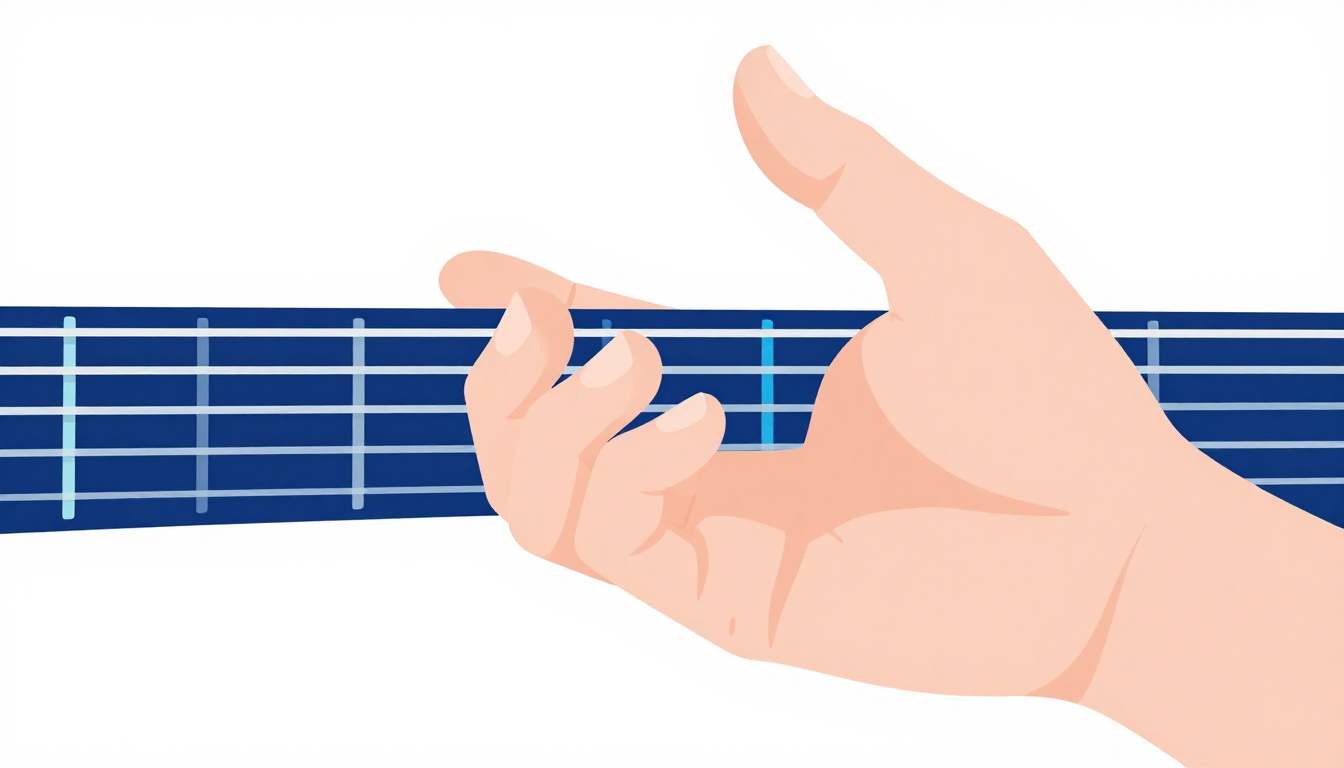
Moving from Fm to Ab major (in the root 6 shape, this means sliding the entire barre, fingers included, from fret 1 to fret 4, since Ab major uses the identical shape as an E major barre chord) is a manageable jump, because the hand shape barely changes, only the position on the neck does, and both the barre and the extra fingers move together as a unit.
Moving from Fm to Cm is a bigger jump if you are using the root 6 Fm shape (fret 1) and a root 6 Cm shape, since Cm in that position sits at fret 8, a seven-fret slide. Practicing this specific jump slowly, watching your hand lift cleanly off the strings and land as one unit rather than finger by finger, prevents the buzzy, half-formed chord that comes from fingers arriving at slightly different times.
Moving from the capo'd Em shape into another open chord is generally the fastest of all these transitions, since you are working with familiar open-position fingerings rather than sliding a barre, which is part of why the capo trick earlier in this guide is worth learning even if you can already play the full barre shape.
Moving from Fm to Bbm (the i to iv movement common in F minor progressions) using root 6 shapes means sliding the entire barre from fret 1 to fret 6, a five-fret jump. Because both chords use the identical finger pattern, the trick is to move the whole hand as one rigid unit rather than letting any single finger lead, if your index finger arrives at fret 6 slightly before your ring and pinky catch up, you will hear a brief, messy scrape before the chord settles.
In all of these, the fix for a messy change is almost never "practice the individual chords more." It is practicing the change itself, in isolation, slowly, over and over, until the specific motion between those two exact shapes is memorized on its own.
Playing Fm in a fingerpicking pattern
Not every use of Fm is a strummed barre chord. In fingerstyle playing, you fret the same shapes covered above and simply pluck the strings individually or in a set pattern rather than strumming across all of them at once, which changes what you need from the chord.
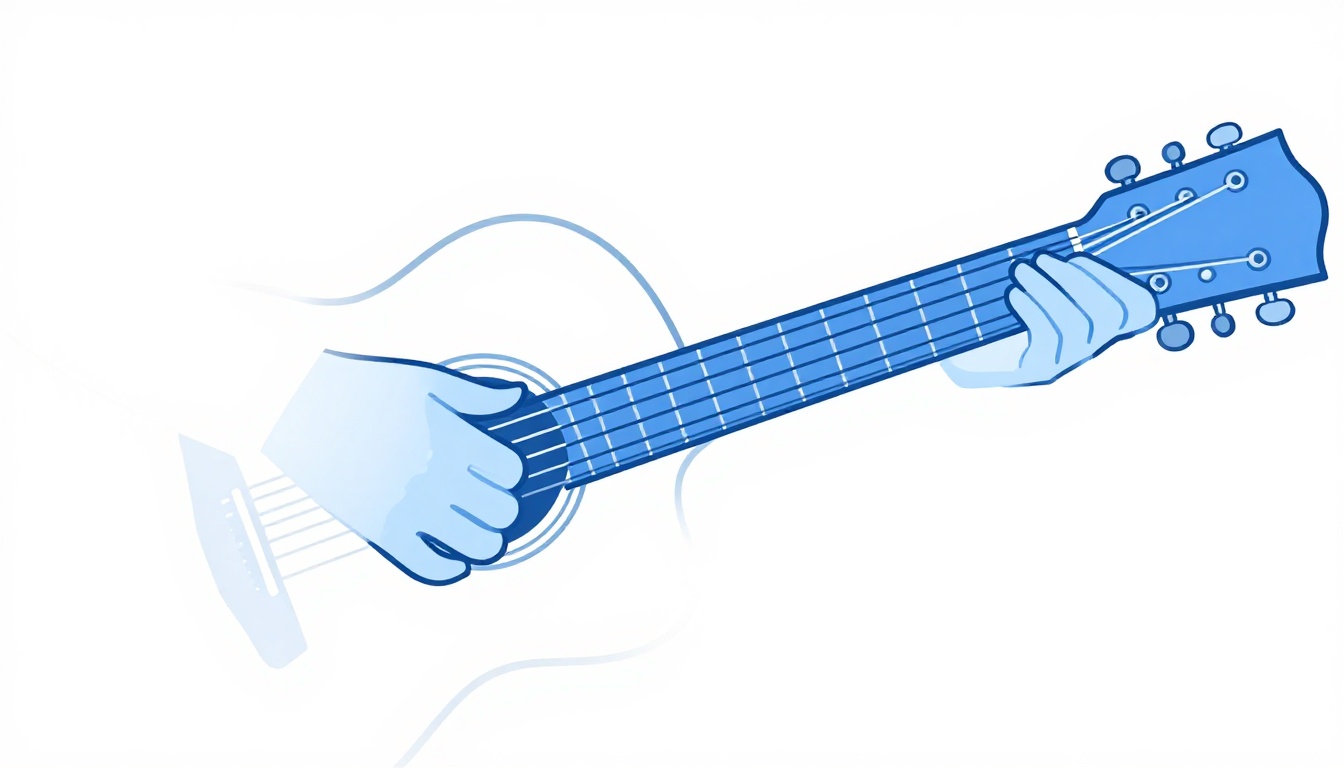
A common basic pattern, using the root 6 barre shape, plucks the low E string (root, F) with your thumb first, then the D string, G string, and B string in sequence with your remaining fingers, skipping the A string and high E string on the way up, then reversing back down. Because a fingerpicked chord sustains each note individually rather than all at once in a single strum, any string that is buzzing or muted becomes far more obvious than it would in a fast strum, where a weak note can hide inside the overall sound. This makes fingerpicking a genuinely useful diagnostic tool even if you mostly plan to strum: play the shape fingerstyle first, slowly, and you will hear exactly which string, if any, still needs work.
The capo'd Em shape works the same way and is particularly friendly to fingerpicking, since only two strings need active fretting and the rest ring open, letting you focus your right-hand attention entirely on the picking pattern rather than splitting concentration between both hands.
Common mistakes beyond buzzing
A few habits show up often enough in players working on Fm specifically that they are worth naming directly.
Trying to learn the full six-string barre at fret 1 before the hand has any barre chord experience at all. If Fm is your very first barre chord, consider practicing an easier barre shape higher up the neck first, where the physics genuinely favor you, or lean on the capo trick above while your hand builds general barre strength, rather than getting frustrated at a chord that happens to sit at the single hardest fret for a total beginner.
Strumming through a change before the new chord shape is actually formed. This produces a scratchy, unclear strum right on the beat where the chord changes, which is often mistaken for a strumming problem when it is really a timing problem in the fretting hand. Slowing the whole progression down until the chord is fully formed before the strum arrives fixes this faster than practicing the strum pattern alone.
Assuming a barre chord needs maximum force. More pressure than necessary tires the hand fast and does not actually produce a cleaner sound past a certain point, since buzzing is almost always a positioning problem, not a strength problem, once your hand has built baseline strength at all.
Only ever practicing at fret 1. Because Fm's standard shape happens to sit at the single hardest fret to barre on the whole neck, players who drill exclusively there sometimes conclude they simply cannot play barre chords, full stop. Sliding the identical shape up to an easier fret first, even without naming the resulting chord, is often what proves that the hand genuinely can do this, it just needed a fairer starting point.
A practice routine for Fm
Something concrete to do today, rather than a vague instruction to "practice more."
Spend the first few minutes on the barre alone, no other fingers, picking through all six strings one at a time at the 1st fret until each rings cleanly, adjusting your index finger's angle and your thumb position as you go. Then add the ring and pinky fingers and repeat the same string-by-string check.
Next, fret the full chord and strum it slowly four times, resting your hand completely between each strum. This teaches your hand to form the shape from scratch repeatedly, rather than holding it continuously, which better matches how the chord actually gets used in a song.
Then pick one transition, Fm to Ab is a good first choice since the shape barely changes, and practice moving between the two chords slowly, at a tempo slow enough that every note rings cleanly on both sides of the change. Speed comes later, accuracy first.
Finally, if the full barre is still not cooperating, spend the last few minutes on the capo trick or the three-string mini version instead, so the session ends with a version of the chord that actually sounds right. Ending on something that works, rather than something that still buzzes, matters more for staying motivated than it might seem.
Ten to fifteen minutes of this, most days, moves faster than longer, less frequent sessions, mostly because your hand needs repeated short exposure to build the specific strength a barre chord asks for, not one long grinding session.
A metronome helps once the chord itself is reliable. Set it slow, somewhere you can comfortably strum on every beat without rushing, and practice landing the Fm shape cleanly right on the click after coming from another chord. Speeding the metronome up gradually over several sessions, rather than all at once, is what eventually turns a chord you can play into a chord you can play in time.
Frequently asked questions
Why is there no easy, open version of Fm?
Because none of the six open strings on a standard-tuned guitar (E, A, D, G, B, E) are part of the F, Ab, C notes that make up Fm. Every note in the chord has to be fretted, unlike Am or Em, which both borrow open strings. This is genuinely why Fm feels like a jump in difficulty compared to chords a beginner usually meets first.
What is the easiest way to play Fm without a full barre?
Clip a capo onto the 1st fret and play an open Em shape behind it, using only your ring and pinky fingers. It produces the exact same notes as the full barre shape with far less effort, and it is not a compromise, professional players use capos for this kind of shortcut constantly.
Why does the Fm barre chord feel harder than other barre chords?
Because it sits at the 1st fret, which is physically the hardest fret to barre on the entire guitar. Fret spacing is widest right after the nut, and most guitars have slightly higher string action near the nut than further up the neck. Both work against you at exactly the fret Fm's standard shape asks for.
Can I play Fm higher up the neck instead of at fret 1?
Yes. The root 5 shape at the 8th fret produces the identical set of notes, F, Ab, and C, using the same finger pattern as a Bm chord. Many players find it easier to hold than the fret-1 version, since the frets are closer together further up the neck, and it is also the version to reach for if your guitar is tuned to Drop D, since it does not depend on the low string at all.
Is Fm the same as F#m?
No, despite the similar names. Fm is built from F, Ab, and C. F#m is built from F#, A, and C#, a full half step higher. They are two different, unrelated chords that simply share the letter F in their names.
What is Fm7, and how is it different from Fm?
Fm7 adds a fourth note, Eb, a minor seventh, on top of the Fm triad. It is a related but distinct chord, common in blues and soul writing for a smoother sound. Aerosmith's "Dream On" moves between Fm, Fm7, and Fm6 throughout its verses, which is a good real example of how closely these chords sit next to each other in practice.
Do I need a capo to play Fm properly?
No, a capo is a shortcut, not a requirement. The full barre shape works on any guitar with no capo at all. The capo trick exists specifically to make the chord accessible before your hand has built barre chord strength, or as a genuinely faster option if you already have a capo on for another reason.
Is Fm a common chord in songs?
It shows up less often than chords like Em, Am, or G, mostly because fewer songs are written in keys that call for it. But it is a completely standard chord, and it carries real songs on its own, Aerosmith's "Dream On" is one of the clearest examples, staying centered on Fm and its close relatives (Fm7, Fm6, Cm/F) for most of its runtime.
If a full barre chord still feels out of reach while you work on Fm, it is worth building general chord-shape confidence on easier ground first. The open C chord uses no barre at all and is a good place to build the finger independence that makes barre chords like this one click faster once you come back to them. And once Fm's shape feels comfortable, D#m is a natural next barre chord to learn, since it uses the exact same movable finger pattern at a different fret.
GuitarLowKey
Ready for fifteen focused minutes?
Open the web app and train the change that is blocking your song.