
Short Scale Bass Guitar: What It Is and Who Should Play One
What a short scale bass guitar is, the exact scale lengths that define it, how the tone and feel change, and how to pick the right one for your hands.

A short scale bass guitar is any bass with a scale length, the distance from the nut to the bridge, of around 30 inches or less, compared to the 34 inch scale of a standard bass. That shorter distance means lower string tension, frets spaced closer together, a lighter and often smaller-bodied instrument, and a warmer, less snappy tone than a full-size bass. It is not a toy or a beginner-only downgrade. It is a different set of trade-offs, and for a lot of players, the right one.
Here is the whole picture in one place before the detail.
| Scale type | Typical length | Feel | Common on |
|---|---|---|---|
| Micro | 28.6" and under | Very loose, very close frets | Travel basses, small-hand basses |
| Short | Around 30" | Loose, easy to fret and bend | Hofner Violin Bass, Fender Mustang, Squier Bronco |
| Medium | Around 32" | A middle ground | Some modern boutique and travel-friendly builds |
| Long (standard) | 34" | The default tension and reach | Fender Precision, Fender Jazz, most basses sold |
| Extra long | 35" to 37" | Tighter, brighter, used for low B strings | 5 and 6 string basses tuned low |
What Counts as a Short Scale Bass
Scale length is measured from the inside edge of the nut to the center of the bridge saddle, doubled if you are measuring from the 12th fret instead, since the 12th fret sits at the exact midpoint. It is a fixed number set by the instrument's design, not something you can adjust, and it is the single biggest factor in how a bass feels and sounds, ahead of the body wood, the pickups, or the brand on the headstock.
The industry does not use one universal cutoff, but the ranges cluster consistently across manufacturers and retailers:
- Micro scale, 28.6 inches and under. Built for very small hands, young players, or minimal travel gear. The Ibanez GSRM20 miKro sits here at 28.6 inches.
- Short scale, roughly 29.75 to 30.5 inches. This is the range most people mean when they say "short scale bass." The Hofner 500/1 Violin Bass, the Fender Mustang Bass, the Squier Bronco Bass, and the Gibson EB-3 all live in this band.
- Medium scale, around 32 inches. Less common, and treated by some builders as its own category and by others as a variant of short scale. It aims for a middle ground between a short scale's ease and a long scale's output.
- Long scale, 34 inches. The standard. A Fender Precision Bass and a Fender Jazz Bass are both 34 inches, and most basses built since the 1950s default to this number.
- Extra long scale, 35 to 37 inches. Used mostly on 5 and 6 string basses so the low B string keeps enough tension to stay tight and defined rather than flopping.
For guitar players getting their bearings, a standard electric guitar runs 24 to 26 inches. A short scale bass, at around 30 inches, is closer to a guitar's proportions than a long scale bass is, which is a large part of why it feels more familiar in the hand the first time you pick one up.
A Short History: How the Short Scale Bass Became a Beginner Standard
Short scale basses were not an afterthought squeezed in below the "real" instrument. Fender had already built a run of short scale student guitars, the single-pickup Musicmaster and the two-pickup Duo-Sonic, back in the mid-1950s, aimed at younger players and schools. When Leo Fender turned to designing a companion student bass in 1964, a short scale was the obvious choice for the same reason those guitars used one: an easier reach for a player still growing into the instrument.
The result, the Fender Mustang Bass, launched in 1966 as a 30 inch scale, lightweight, offset-body bass aimed squarely at the student market as an entry-level companion to Fender's flagship Precision and Jazz basses of the era. It was also the last bass Leo Fender personally designed for the company. Rather than fading out once players graduated to a "proper" long scale bass, the Mustang Bass built a reputation of its own, eventually finding its way into the hands of professional session and touring bassists, including Justin Meldal-Johnsen decades later, for its tone as much as its size.
The Hofner Violin Bass followed a parallel but separate path. Walter Hofner designed it in Germany in the mid-1950s, well before the Mustang Bass existed, as a lightweight, hollow-bodied instrument built to be comfortable for a guitarist doubling on bass, which is exactly the role it played for Paul McCartney when he picked one up in Hamburg in 1961. Both instruments arrived at a 30 inch scale independently, driven by the same practical goal: make a bass that does not fight the player holding it.
Short Scale vs Long Scale Bass: What Actually Changes
Four things move together when scale length changes, and none of them move independently.
String tension. For the same tuning and the same string gauge, a shorter scale carries noticeably less tension. As a concrete example, a .105 gauge low E string tuned to standard pitch carries roughly 34 pounds of tension on a short scale bass, compared to well over 45 pounds on an extra-long scale bass strung and tuned the same way. Strings feel looser under your fingers, which makes fretting notes and bending strings physically easier, especially in the lower frets where a long scale bass demands the most finger strength from a new player. The trade-off is that very low tension also makes a string more prone to fret buzz and to drifting slightly out of tune under a hard pluck, which is part of why gauge choice, covered later, matters more on a short scale than players expect.
Fret spacing. Frets are laid out as a fraction of the full scale length, so a shorter scale compresses every fret position closer to the one next to it. On a short scale bass, your fretting hand covers more frets per hand span than it would in the same position on a long scale neck, which matters directly for players with smaller hands.
Tone. A shorter vibrating string length changes the harmonic content of the note, not just its pitch. Short scale basses are consistently described as warmer and fatter, with a more rounded low end and less high-frequency snap, compared to the tighter, more articulate midrange of a 34 inch bass. Neither is objectively better. A short scale suits genres and mixes that want a rounded, sitting-in-the-pocket low end; a long scale suits playing that wants definition and punch to cut through.
Sustain. Lower tension also means the string's energy dissipates a little faster once you pluck it. Short scale basses generally sustain a note for less time than a long scale bass strung and tuned the same way. In practice this is a small effect, most audible when you are holding a long note or playing with a lot of natural sustain rather than short, percussive lines.
Weight and body size usually follow scale length too, since a shorter neck is paired with a smaller body more often than not, though this is a design choice rather than a rule. Some short scale basses, like the Gibson EB-3, have a full-size body with a short neck, and some long scale basses are built light. Scale length and body size are correlated, not identical.
Why the Frets Feel Closer Together
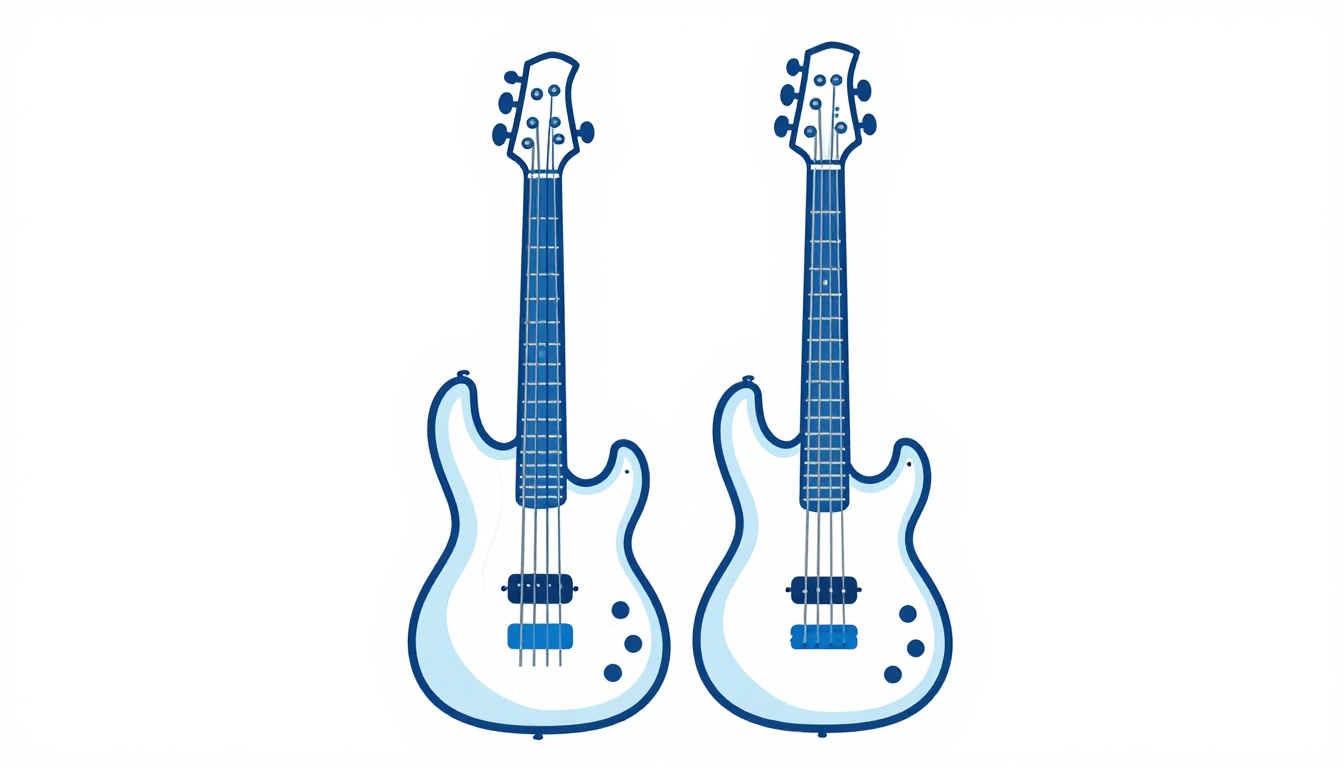
This is the detail that decides whether a short scale bass actually solves a problem for you or just changes it. On a 34 inch bass, the distance between the 1st and 2nd fret is roughly 1.9 inches. On a 30 inch short scale bass, that same first fret gap shrinks to around 1.7 inches, and the gap keeps shrinking as you move up the neck on both instruments, since fret spacing narrows logarithmically toward the body.
Multiply that difference across four or five frets in a hand position and the compounded gap becomes significant. A one-finger-per-fret pattern that requires an uncomfortable stretch on a long scale neck often sits comfortably under the hand on a short scale neck, without changing the notes you are playing or the pattern you are learning. This is why short scale basses are recommended so consistently for players with smaller hands, players still building hand strength, and children learning the instrument for the first time. It is not a compromise fingering. It is the same scale and interval pattern, physically closer together.
The same logic applies to reach across strings, not just along the neck. A short scale neck is also typically slightly narrower at the nut, which shortens the distance your thumb and fingers have to span to wrap around the neck, on top of the shorter reach along its length.
Does a Short Scale Bass Sound Different From a Long Scale Bass
Yes, and the difference is audible even through a basic amp, not just a subtle change picked up on a spectrum analyzer. Reviewers and players across sources consistently describe the same character: short scale basses lean darker, rounder, and fatter in the low end, with less of the bright top-end snap that a long scale bass delivers at the same string gauge and tuning.
Part of this comes from tension, discussed above, and part of it comes from where the pickups sit relative to the string's vibrating length. Even when pickup position looks similar on paper, a shorter scale changes the ratio between the pickup's position and the total string length, which shifts which harmonics the pickup picks up most strongly.
This tonal character is exactly why plenty of professional and touring bassists choose a short scale bass on purpose, not as a starter instrument they intend to outgrow. Paul McCartney kept his Hofner Violin Bass as his signature instrument for a career that needed no help finding an audience. The tone was the point, not a limitation he tolerated.
If you play in a style that wants a tight, aggressive, highly defined low end, particularly modern metal, slap-heavy funk, or anything tuned very low, a long scale or extra long scale bass will generally get you there with less fighting the instrument. If your ear is drawn to a rounder, vintage, more vocal low end, a short scale bass gets you closer to that sound without any EQ tricks.
Who a Short Scale Bass Is Actually Built For
A short scale bass is a genuine, permanent choice for several kinds of players, not a stepping stone everyone eventually leaves behind.
Players with smaller hands. Reduced fret spacing and a narrower neck profile make fingerings that would otherwise require an early stretch feel natural. This applies at any age, not only to children.
Guitarists adding bass. If your hand already knows a 24 to 26 inch guitar scale, a 30 inch short scale bass is a far smaller adjustment than jumping straight to a 34 inch long scale neck. More on this below.
Touring and traveling musicians. A shorter, often lighter instrument is easier to carry, easier to fit in tight backstage spaces, and easier to hold for a full set without shoulder and back fatigue building up.
Players who want that specific tone. As covered above, some players choose a short scale for the sound alone, independent of ergonomics.
Recording musicians layering a track. A short scale's warmer, rounder low end can sit under a mix in a way a long scale's brighter output does not, which is why some studio bassists keep one on hand specifically for that role, even when their main instrument is a long scale bass.
The one group that should think twice is a player committed to a genre that leans on extended range and maximum low-end definition, like 5-string metal or aggressive slap bass, where a long or extra long scale is the more direct path. Even then, plenty of players in those genres started on a short scale and moved up once technique, not sound, became the limiting factor.
How to Tell If a Short Scale Bass Actually Fits Your Hands
Scale length is easy to look up but hard to judge without holding the instrument, so use these checks if you get the chance to try one before buying.
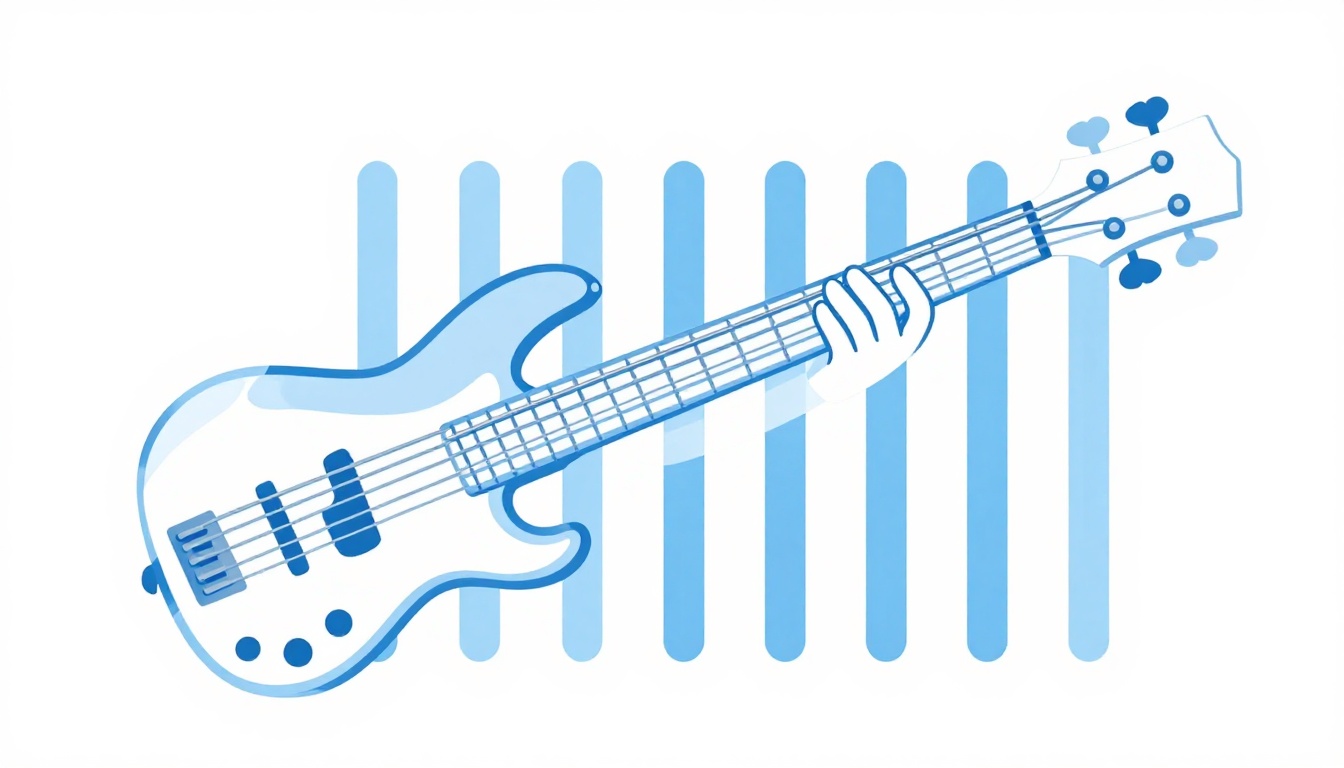
Rest your fretting hand on the first four frets in a normal one-finger-per-fret position, low on the neck near the nut, where the stretch is widest on any bass. If your hand sits there without straining to reach the fourth fret, the scale is a comfortable match. If you have to twist your wrist or stretch your pinky uncomfortably even here, on the widest part of the neck, a long scale bass will only make that worse, not better, and a short or even micro scale is worth trying next.
Check the neck width at the nut with your thumb, not just the string spacing. A short scale bass is often, though not always, built with a narrower neck profile to match its shorter length, and thumb comfort wrapping around the back of the neck matters as much as finger reach across the front.
Hold the bass standing up with a strap, not just seated. Weight and balance change how a scale length feels over a full song, and a short scale bass that feels effortless sitting down should stay comfortable standing, given its typically lighter overall build. If it does not, the issue may be the specific body shape rather than the scale length itself.
There is no measurement, hand span in inches or otherwise, that reliably predicts comfort on its own, since finger length, hand width, and playing style all interact differently. Trying the instrument in person, even briefly in a shop, tells you more than any spec sheet.
Coming to Bass From Guitar: Why a Short Scale Makes the Switch Easier
If you already play guitar and are picking up bass for the first time, a short scale is the more forgiving on ramp, and the reasons line up directly with how your hands already work.
Your fretting hand has spent its practice time learning fret spacing, string tension, and hand position on a 24 to 26 inch guitar neck. A 34 inch long scale bass asks that same hand to relearn all three at once: wider frets, heavier strings under more tension, and a completely different feel under the fingers. A 30 inch short scale bass keeps two of those three closer to what your hand already knows. The fret spacing sits much nearer to guitar proportions, and while bass strings are still thicker and under more tension than guitar strings even on a short scale, the gap is smaller than the gap to a long scale bass.
The four-string layout is also more familiar than it first appears. A bass in standard tuning, low to high E1-A1-D2-G2, mirrors the pitch names of a guitar's lowest four strings, just an octave lower and without the pitch-warping quirk of a guitar's major third between the G and B strings. Where a guitar has an irregular tuning interval between two of its strings, a bass is tuned in even fourths across all four strings, E to A to D to G, which is actually a more consistent, more predictable layout than the guitar you already know. Once that clicks, moving a pattern across strings on bass is more mechanical and less something to memorize by exception.
The plucking hand takes the longest to adjust regardless of scale length, since fingerstyle or pick technique on a single bass string asks for a different touch than strumming or picking multiple guitar strings at once. A short scale bass does not shortcut that part. What it does is remove one variable, the unfamiliar neck geometry, so you can spend your first weeks on right-hand technique and note choice instead of also fighting a stretch your hand has never made before.
Famous Short Scale Basses and the Players Who Made Them Iconic
Short scale basses have a long professional history, not a beginner-only reputation.
Paul McCartney and the Hofner 500/1 Violin Bass. Designed by Walter Hofner and built with a 30 inch scale and a distinctive violin-shaped hollow body, this bass became McCartney's defining instrument through the Beatles' catalog and after. Its lightweight, hollow construction and short scale were practical choices, easy to play while singing and moving on stage, and they also shaped the warm, rounded low end heard across those recordings.
Jack Bruce and the Gibson EB-3. Bruce, best known for his work with Cream, played a Gibson EB-3, a short scale bass at 30.5 inches with a slim SG-style body and two pickups, first produced in 1961. The EB-3's short scale and distinctive pickup pairing gave Bruce's lines a growl that a long scale bass of the same era would not have produced the same way.
Mike Kerr of Royal Blood. Kerr has played short scale instruments including a Fender Starcaster-derived bass and a Gretsch Junior Jet II bass, using pedals and a split signal to fill the sonic space a two-piece band needs from a single instrument. His choice shows the short scale is still an active, modern choice, not only a vintage one.
Justin Meldal-Johnsen and the Fender Mustang Bass. A first-call session and touring bassist, Meldal-Johnsen has used the Fender Mustang Bass, a 30 inch short scale model, across a career built on tone as much as technique.
None of these players used a short scale bass because they had to. Each chose it because the feel, the sound, or both, matched what the music needed.
Popular Short Scale Bass Models Worth Knowing
If you are shopping, these are the short scale models that come up most often, with their actual scale lengths so you know exactly what you are comparing.
| Model | Scale length | Notes |
|---|---|---|
| Ibanez GSRM20 miKro | 28.6" | Micro scale, built for very small hands or travel |
| Danelectro Longhorn Bass | 29.75" | Distinctive long-horned body despite the short neck |
| Hofner 500/1 Violin Bass | 30" | Hollow body, the McCartney instrument |
| Fender Mustang Bass | 30" | Solid body, offset shape shared with the Mustang guitar |
| Squier Bronco Bass | 30" | Fender's budget-friendly entry short scale |
| Gibson EB-3 | 30.5" | Full-size SG-style body on a short scale neck |
Scale length is only one spec. Body size, pickup configuration, and neck width all vary independently of it, so two basses at the same 30 inch scale can still feel quite different in your hands. Play before you commit wherever that is possible, and if it is not, at least compare the neck width at the nut and the overall weight alongside the scale length.
Solid Body, Hollow Body, and Semi-Hollow Short Scale Basses
Short scale is a neck measurement, not a body construction, and short scale basses come in all three common body types, each adding its own character on top of what the scale length already does.
Solid body short scale basses, like the Fender Mustang Bass, the Squier Bronco Bass, and the Gibson EB-3, are built from a solid block of wood the same way most electric guitars are. They are the most resistant to feedback at loud stage volumes and give the most predictable, consistent tone from instrument to instrument.
Hollow body short scale basses, the Hofner Violin Bass being the best-known example, are built with a resonant, largely hollow chamber, closer in construction to a small acoustic-electric guitar than to a solid-body instrument. This construction adds a natural acoustic resonance and even more warmth on top of the tonal effect of the short scale itself, along with a significant weight reduction, but it is more prone to feedback at high stage volume and needs more careful handling.
Semi-hollow short scale basses sit between the two, with a solid center block and hollow wings, aiming for some of a hollow body's resonance with more of a solid body's feedback resistance. Mike Kerr's Gretsch Junior Jet II bass, mentioned earlier, is built this way.
None of these constructions are exclusive to short scale necks. The connection is more historical than mechanical: hollow and semi-hollow basses were more common in the era, the 1950s and 1960s, when short scale designs were also more common, so the two traits are frequently found together on vintage-style instruments even though a builder could pair either body type with either scale length.
Left-Handed and Kids' Short Scale Basses
Short scale is the natural pairing for both of these groups, but availability is narrower than for standard right-handed, adult-sized instruments, so it helps to know where to look.
Left-handed short scale basses exist from several manufacturers rather than requiring a custom order, though the selection is smaller than the right-handed range for the same models. Ibanez, for example, produces a left-handed version of its short scale miKro alongside the standard right-handed model. If you are shopping left-handed, expect to compare a shorter list of models than a right-handed player would, and confirm left-handed availability before falling in love with a specific finish or body shape.
For younger or smaller players, short and micro scale basses are the standard recommendation, generally paired with a 3/4-size or smaller body to match the shorter neck, rather than a full-size body with just a shorter scale bolted on. As with any player, the right test is hand and body fit in person rather than age alone, since kids and smaller adults vary widely in reach and hand size at any given age.
Fretless and 5-String Short Scale Basses
Short scale is not limited to the standard 4-string, fretted format most beginners picture. Fretless short scale basses exist and are built by several manufacturers, trading the fixed pitch of a fret for the ability to slide continuously between notes and add vibrato, the same fretless approach available on long scale basses, just with the shorter reach and lower tension of a short scale neck underneath it. A fretless neck asks for accurate ear-led intonation from the player, since there is no fret to stop the string at the correct pitch, which makes it an instrument most players pick up after they are already comfortable on a fretted neck rather than as a first bass.
5-string short scale basses, adding a low B string below the standard E, also exist, though they are less common than 4-string models since the appeal of a low B, extended range for the lowest notes, works somewhat against the shorter, lower-tension design of a short scale neck. Where they do turn up is mostly among boutique and semi-custom builders rather than mass-market models. If extended range is the main reason you are shopping for a bass, a long or extra-long scale 5-string is the more common and typically better-supported choice, since that low B string keeps more usable tension and definition on a longer scale.
String Gauge on a Short Scale Bass
Scale length and string gauge work together to set tension, and getting the pairing wrong is the most common reason a short scale bass feels wrong to a new owner. Strings are sold labeled for the scale they are cut for, and using a set built for a longer scale on a short scale bass, or the reverse, causes real problems: too short and the string cannot reach the tuning post or bridge saddle correctly, too long and there is excess string flapping past the nut or wound around the post untidily.
| Gauge set | Typical use on a short scale bass |
|---|---|
| Light, around 40 to 100 | Easiest tension, closest to a "floppy" feel, good for fingerstyle beginners |
| Standard, around 45 to 105 | The most common starting point for standard tuning |
| Medium, around 50 to 110 | Adds tension back for players who find standard gauge too loose, or for drop tunings |
| Heavy, 55 to 115 and up | Used mainly for tuning down significantly while keeping some tension |
There is no rule that a short scale bass must be strung heavy to compensate for its lower natural tension. Plenty of players keep a light or standard set and simply enjoy the looser feel, since that looseness is often the exact reason they chose a short scale bass in the first place. Where gauge choice matters most is if you plan to tune down: dropping tuning on an already lower-tension short scale, with strings that were already on the light side, is where a set starts to feel genuinely floppy, buzz against the frets, and lose pitch definition. If you tune down regularly, moving up one gauge step is the straightforward fix.
Getting a Brighter Tone Out of a Short Scale Bass
If the warm, rounded default of a short scale bass is more than you want for a particular song or style, several adjustments push the tone brighter without changing the instrument itself.
String type. Roundwound strings, the ridged, textured type most basses ship with, are inherently brighter than flatwound strings, whose smooth surface rolls off high end and leans into the warm, thumpy tone associated with older recordings. If your short scale bass came with flatwounds, or you are chasing extra brightness, roundwounds are the first thing to try.
String material. Stainless steel roundwounds read brighter than nickel-plated steel strings of the same gauge, since stainless steel resists the high-frequency dampening that nickel's softer surface causes over time.
String gauge. Counterintuitively, a lighter gauge string is generally brighter and snappier than a heavier one, so if brightness is the goal rather than tension, sizing down works in the opposite direction from the tension advice covered above. The two goals, more tension and more brightness, do not always point at the same gauge choice, so decide which matters more for what you are playing.
Where you pluck. Plucking or picking closer to the bridge, rather than over the neck pickup or the end of the fretboard, produces a brighter, more defined attack on any bass regardless of scale length or string type. This costs nothing and is worth trying before changing any hardware.
Pickup selection, on basses with more than one pickup. A bridge pickup reads brighter, with more upper midrange and less low end, than a neck pickup on the same instrument. If your short scale bass has a pickup blend or selector switch, leaning toward the bridge pickup is a direct, no-cost way to brighten the tone.
None of these turn a short scale bass into a long scale one. They shift the short scale's own warm baseline brighter, which is usually what a player chasing more definition is actually after, rather than a fundamentally different instrument.
Tuning a Short Scale Bass
A short scale bass tunes exactly the same as any other 4-string bass. Standard tuning is E1-A1-D2-G2, low to high, an octave below a guitar's lowest four open strings.
| String | Note | Guitar equivalent |
|---|---|---|
| 4 (thickest) | E1 | Same letter name as guitar's 6th string, one octave lower |
| 3 | A1 | Same letter name as guitar's 5th string, one octave lower |
| 2 | D2 | Same letter name as guitar's 4th string, one octave lower |
| 1 (thinnest) | G2 | Same letter name as guitar's 3rd string, one octave lower |
| Optional 5th string | B0 | Added below the low E on 5-string basses, rare on short scale |
Scale length does not change what note a tuning peg is tuned to. It changes how the string feels while getting there and afterward. A short scale bass in standard tuning already carries less tension than a long scale bass in the same tuning, which is exactly the appeal for players who find long scale tension hard on the fretting hand. If you drop the tuning further, drop D (D1-A1-D2-G2) or lower, that tension drops again, and a light gauge set that felt fine in standard tuning can start to feel genuinely loose, buzz on the frets, and lose clarity. Moving to a medium or heavy gauge set, as covered above, is the standard fix, and it is a more reliable one than simply adjusting the truss rod or action, since those adjustments cannot restore string tension a lighter gauge does not have.
Short Scale vs Medium Scale vs Long Scale: Which One Should You Choose
There is no universally correct answer, only a match between your hands, your ears, and what you play.
Choose short scale if: you have smaller hands or are still building hand strength, you are coming from guitar and want the smallest adjustment, you value comfort and portability over maximum output, or you specifically want a warmer, rounder tone.
Choose medium scale if: you want more of a long scale's brighter output and sustain than a short scale offers, but still want reduced tension and reach compared to a full 34 inch neck. Medium scale basses are less common and worth trying in person before buying, since fewer models exist and specs vary more between builders.
Choose long scale if: you want the widest range of available models, the most defined and punchy low end, maximum sustain, or you are already comfortable with the reach and tension a 34 inch neck asks for. Long scale is also the safer default if you are not sure yet, simply because it is what the vast majority of basses, lesson material, and other bassists you will play alongside are built around.
None of these choices are permanent. Bassists regularly own more than one scale length and choose between them by song, by session, or by mood, in the same way a guitarist might switch between an acoustic and an electric.
A practical middle path, if you are genuinely unsure, is to start on a short scale for the reasons covered throughout this guide, easier reach, lower tension, a gentler adjustment from guitar, and add a long scale bass later once you know specifically what you are missing, rather than guessing at it now. Technique, ear training, and reading the fretboard all transfer directly between scale lengths. What does not transfer automatically is the physical feel, and that only becomes obvious once you have spent real time on one scale and then pick up the other.
The Trade-offs: What You Give Up With a Short Scale Bass
Every advantage above has a corresponding cost, and being honest about it up front avoids a disappointing first few weeks with the instrument.
Reduced sustain. A note fretted on a short scale bass and left ringing will decay noticeably faster than the same note on a long scale bass under otherwise identical strings and tuning. For most bass parts, which are rhythmic and repetitive rather than long sustained notes, this is a minor effect. For a bassist who leans on long sustained notes or heavy use of a sustain-dependent effect, it is more noticeable.
Less headroom for aggressive playing styles. Slap and pop technique, and hard, percussive fingerstyle playing, both benefit from the higher tension a long scale bass provides, since that tension gives the string more to push back against and more definition when struck hard. A short scale bass can still be slapped, but the technique needs to adapt to the looser strings, and the resulting tone will lean softer regardless of technique.
A narrower model selection. Long scale is still the default across the industry. If you are shopping for a specific brand, finish, or pickup configuration, you will find more choices at 34 inches than at 30. Short scale buyers sometimes need to compromise on a secondary spec to get the scale length they want.
A learning curve if you later move to long scale. The fret spacing and tension that make a short scale approachable are exactly what will feel different if you eventually add a long scale bass to your collection. This is a minor adjustment for most players, closer to switching guitars with different neck profiles than learning a new instrument, but it is real the first time you pick up the longer neck after months on a short scale.
None of these are reasons to avoid a short scale bass. They are reasons to choose it for what it is, not for what you assume it will grow out of.

Common Mistakes New Short Scale Bass Players Make
Fighting the neck like it is a long scale
The most common adjustment problem is not technical, it is expectation. Players who have watched long scale bassists, or who owned a long scale bass previously, sometimes grip harder and press further than a short scale actually needs. The lower tension means less force gets you the same clean note. Relax the fretting hand and let the shorter, looser strings do less work for you.
Stringing it with the wrong gauge
Covered in detail above, but worth repeating as a mistake specifically: buying strings labeled for a long scale bass and putting them on a short scale instrument, or the reverse, causes real setup problems, not just a suboptimal feel. Always buy strings labeled for your bass's actual scale length.
Assuming a lighter body means a toy
Some new players undervalue a short scale bass because it is lighter and smaller than what they picture a "real bass" looking like. As the players and models covered above show, short scale basses have carried entire professional careers. Weight and size are not a measure of an instrument's legitimacy.
Skipping a proper setup because the bass feels playable out of the box
A short scale bass's lower natural tension can mask action and intonation problems that would be more obvious on a higher-tension long scale neck. A bass that feels fine but is not properly set up will only get harder to play accurately as you improve and start noticing pitch and buzz issues you could not hear as a beginner.
Choosing scale length by price instead of fit
Short scale basses span the same range from entry-level to professional-grade builds as long scale basses do. Picking a bass because it happened to be the short scale option at hand, rather than because the scale length itself suits your hands and your ear, is a common regret. Try to test the actual scale length against your hand before deciding, not just the instrument in front of you.
Setting Up and Maintaining a Short Scale Bass
A short scale bass needs the same core maintenance as any electric bass: correct action height at the nut and bridge, accurate intonation so notes stay in tune up the neck, a truss rod set for a slight, even relief in the neck, and strings changed before they go dull and lose definition. None of these steps change because the scale is shorter, though the lower baseline tension means a poorly set up short scale bass can buzz or feel dead more readily than a long scale bass with the same setup flaws, simply because there is less string tension available to mask the problem.
If you are restringing a short scale bass yourself, buy a set specifically labeled for short scale, and the actual mechanics of pulling the old strings and fitting new ones is the same restringing process as any guitar or bass, just with thicker strings and a shorter run from nut to tuning post. A proper setup is worth a trip to a qualified tech if you are not confident doing it yourself, since intonation adjustment in particular requires an electronic tuner and a careful comparison between the open string and the 12th fret harmonic and fretted note.
A Practice Routine for Your First Weeks on a Short Scale Bass
The shorter reach and lower tension of a short scale bass mean you can spend your early practice time on musical fundamentals instead of fighting the instrument, which is the whole advantage of choosing one. A simple, repeatable session works better than an unstructured one.
Spend five minutes on open strings and basic fretting: play each open string, then fret the first few notes on each string cleanly, listening for buzz or a muted sound that signals a finger not pressing squarely behind the fret. Spend five minutes on a one-finger-per-fret exercise moving up and down the low frets on one string at a time, which builds the exact hand position a short scale neck rewards. Finish with five minutes applying that to something musical, a simple bassline from a song you know, played slowly and cleanly rather than fast and sloppy.
If you already read music theory or have played guitar, the major, minor, and pentatonic scale patterns on bass transfer directly to a short scale neck, just with the frets sitting slightly closer together than you may be picturing from a long scale diagram. The shapes and finger patterns do not change with scale length, only the physical distance your hand travels to play them.
Consistency matters more than session length here. Fifteen focused minutes a day on a short scale bass, given the reduced physical demand on your hands compared to a long scale instrument, is enough to build real technique within a few weeks, especially if you are coming to it fresh from guitar and already have a functioning sense of rhythm and fretting-hand control to build on.
Frequently Asked Questions
Is a short scale bass good for beginners? Yes, and it stays good well past the beginner stage for plenty of players. The lower tension and closer fret spacing reduce the physical demand on a new player's hands, which is exactly why it is recommended so often for players starting out, without being a compromise instrument you are expected to abandon.
What is the actual scale length of a short scale bass? Most short scale basses fall between about 29.75 and 30.5 inches, measured from the nut to the bridge. Anything shorter than roughly 28.6 inches is usually classed separately as micro scale. Standard long scale basses are 34 inches for comparison.
Do short scale basses sound worse than long scale basses? No, they sound different, not worse. Short scale basses lean warmer and rounder with less high-frequency snap, a tone plenty of professional bassists choose deliberately rather than settle for.
Can you tune a short scale bass down to drop D or lower? Yes, but the already-lower tension of a short scale bass drops further, and a light string gauge that felt fine in standard tuning can start to feel loose and buzz. Moving to a medium or heavy gauge set restores the tension you lose when tuning down.
Is a short scale bass easier to switch to from guitar? Generally yes. Its fret spacing and overall proportions sit closer to a guitar's than a long scale bass's do, which means less of an adjustment for a fretting hand that already knows guitar-scale distances, even though bass strings remain thicker and under more tension regardless of scale.
Do professional bassists actually use short scale basses? Yes. Paul McCartney, Jack Bruce, Mike Kerr of Royal Blood, and session bassist Justin Meldal-Johnsen have all built significant work around short scale instruments, choosing them for tone and feel rather than settling for them as entry-level gear.
What string gauge should I put on a short scale bass? A standard set around 45 to 105 is a reasonable starting point for standard tuning. There is no requirement to size up just because the scale is short; go heavier only if you want more tension back, or if you plan to tune down regularly.
Is a short scale bass harder to find in stores than a long scale bass? Model selection is narrower than for long scale basses, since 34 inches remains the industry default, but short scale options exist across entry-level to professional price points from most major manufacturers, so finding one is rarely difficult, just more limited in variety than long scale.
Can a short scale bass be a lifelong instrument, not just a starter one? Yes. Paul McCartney, Jack Bruce, and Mike Kerr never traded up to a long scale bass as their primary instrument, and session bassist Justin Meldal-Johnsen has recorded and toured extensively on one. A short scale bass is a legitimate permanent choice, not a stage every bassist is expected to grow out of.
Does a short scale bass need a different amp setting than a long scale bass? Not fundamentally. The tonal difference between scale lengths comes from the instrument itself, not the amp, so your usual gain, EQ, and volume settings are a reasonable starting point on either. If a short scale's naturally darker output needs more definition through your amp, a modest boost to the treble or presence control gets you there faster than changing the bass or midrange.
If you are building bass into your practice alongside guitar, the same short, consistent approach that works for GuitarLowKey on six strings works just as well on four: a focused fifteen minutes a day, on the instrument that actually fits your hands, beats an occasional long session on one that does not.
GuitarLowKey
Ready for fifteen focused minutes?
Open the web app and train the change that is blocking your song.