
The Dorian Scale on Guitar: Shapes, Sound, and How to Use It
How to play the Dorian scale on guitar, the shapes that make it playable in any key, the chords it fits, and how it differs from natural minor.

The Dorian scale is a minor scale with one note raised: the 6th degree. In A Dorian that means playing A B C D E F# G instead of the F natural you would get in plain A natural minor, and that single raised note is what gives Dorian its lifted, "minor but not sad" sound. The formula is 1 2 b3 4 5 6 b7, and you can play it right now if you already know the A minor pentatonic scale, because Dorian is that same pentatonic shape with two notes added.
Everything below covers how to actually get this scale under your fingers: the exact shapes to play it in, which chords and progressions it sits under, how it differs from the natural minor scale you probably already know, why it sounds the way it does, and how players from Santana to Miles Davis have leaned on it for decades.
What the Dorian Scale Actually Is
Dorian is the second mode of the major scale, which is a formal way of saying this: take any major scale, start and end on its 2nd note instead of its 1st, and you get that key's Dorian scale. C major is C D E F G A B. Start that same set of seven notes on D instead of C, and you get D E F G A B C, which is D Dorian.
Nothing about the notes changed. What changed is which note the pattern treats as home, and that single shift rearranges where the half steps fall relative to the root, which is what your ear actually reacts to.
| Degree | 1 | 2 | b3 | 4 | 5 | 6 | b7 |
|---|---|---|---|---|---|---|---|
| A Dorian | A | B | C | D | E | F# | G |
| D Dorian | D | E | F | G | A | B | C |
| E Dorian | E | F# | G | A | B | C# | D |
The formula in whole and half steps is: whole, half, whole, whole, whole, half, whole. Memorize the interval formula (1 2 b3 4 5 6 b7) rather than any single key's spelling, because that formula is what lets you build the scale from any root without needing to look it up every time.
Dorian vs. Natural Minor: the One Note That Matters
If you already play the natural minor scale (also called Aeolian), you are one note away from Dorian. Natural minor is 1 2 b3 4 5 b6 b7. Dorian is 1 2 b3 4 5 6 b7. The only difference is the 6th degree: flat in natural minor, natural (raised a half step) in Dorian.
| Scale | 6th degree | A-rooted spelling | General feel |
|---|---|---|---|
| A natural minor (Aeolian) | b6 (F) | A B C D E F G | Straightforwardly sad, settled |
| A Dorian | 6 (F#) | A B C D E F# G | Minor, but with a lift |
That raised 6th is doing all the work. Play a phrase using only the root, b3 and 5, the notes both scales share, and a listener cannot tell which one you are playing. Land on the 6th degree, or build a phrase that resolves onto it, and the scale announces itself as Dorian immediately. This is why players often describe Dorian as "the happy minor" or "minor without the gloom": the b3 keeps it minor, but the natural 6 stops it from sinking into the darker color that natural minor has.
If you want the fuller picture of how Dorian relates to the other six modes built from the major scale, Guitar Modes Explained covers all seven side by side.
The Fastest Way to Find Any Dorian Scale
You do not need to work out the whole-step and half-step formula from scratch every time you need a new key's Dorian scale. Because Dorian is the major scale starting on its 2nd degree, the shortcut runs in reverse: find the major scale that sits a whole step below the Dorian root, then play that major scale's notes starting and ending on your target root.
Want G Dorian? A whole step below G is F, so G Dorian is the notes of F major (F G A Bb C D E) starting from G: G A Bb C D E F. Want B Dorian? A whole step below B is A, so B Dorian is the notes of A major (A B C# D E F# G#) starting from B: B C# D E F# G# A.
| Dorian root | Major scale a whole step below | That major scale's notes | Dorian scale (same notes, starting on the root) |
|---|---|---|---|
| G Dorian | F major | F G A Bb C D E | G A Bb C D E F |
| B Dorian | A major | A B C# D E F# G# | B C# D E F# G# A |
| C Dorian | Bb major | Bb C D Eb F G A | C D Eb F G A Bb |
This trick only tells you which notes belong to the scale. It does not by itself tell you where those notes sit on the fretboard, which is what the shapes earlier and later in this guide are for, but it removes the need to count whole and half steps by hand every time you change keys.
You Already Know the Shape: Dorian From the Minor Pentatonic
The fastest way into Dorian is not a new scale to memorize from scratch. It is two notes added to a shape you likely already play: the minor pentatonic scale.
A minor pentatonic is A C D E G, the root, b3, 4, 5 and b7. Compare that to A Dorian: A B C D E F# G. The only notes missing from the pentatonic are the 2nd (B) and the 6th (F#). Add those two notes into a minor pentatonic box you already know, in the right spots, and the box becomes a Dorian box.
| Start from | Add these two notes | You get |
|---|---|---|
| A minor pentatonic (A C D E G) | 2nd (B) and b6th (F) | A Aeolian (natural minor) |
| A minor pentatonic (A C D E G) | 2nd (B) and natural 6th (F#) | A Dorian |
This matters because it means you do not need five new fretboard diagrams to start playing Dorian today. You need to know where two extra notes sit inside a box shape your hand already knows, which is a much smaller task than it sounds.
Position 1: The Moveable Dorian Box
Here is the most useful shape for actually soloing in Dorian: a six-string box built directly from the A minor pentatonic's most common shape (the one rooted on the 6th string, 5th fret), with the 2nd and 6th degrees added in.
| String | Frets used | Notes (degree) |
|---|---|---|
| 6 (low E) | 5, 7, 8 | A (root), B (2), C (b3) |
| 5 (A) | 5, 7, 9 | D (4), E (5), F# (6) |
| 4 (D) | 4, 5, 7, 9 | F# (6), G (b7), A (root), B (2) |
| 3 (G) | 4, 5, 7 | B (2), C (b3), D (4) |
| 2 (B) | 5, 7, 8 | E (5), F# (6), G (b7) |
| 1 (high E) | 5, 7, 8 | A (root), B (2), C (b3) |
This shape is moveable. The root note sits on the 6th and 1st strings at the same fret, so to play G Dorian, slide the whole shape down 2 frets so that root note lands on fret 3. To play B Dorian, slide it up 2 frets so the root lands on fret 7. The finger pattern never changes, only which fret you start it on.
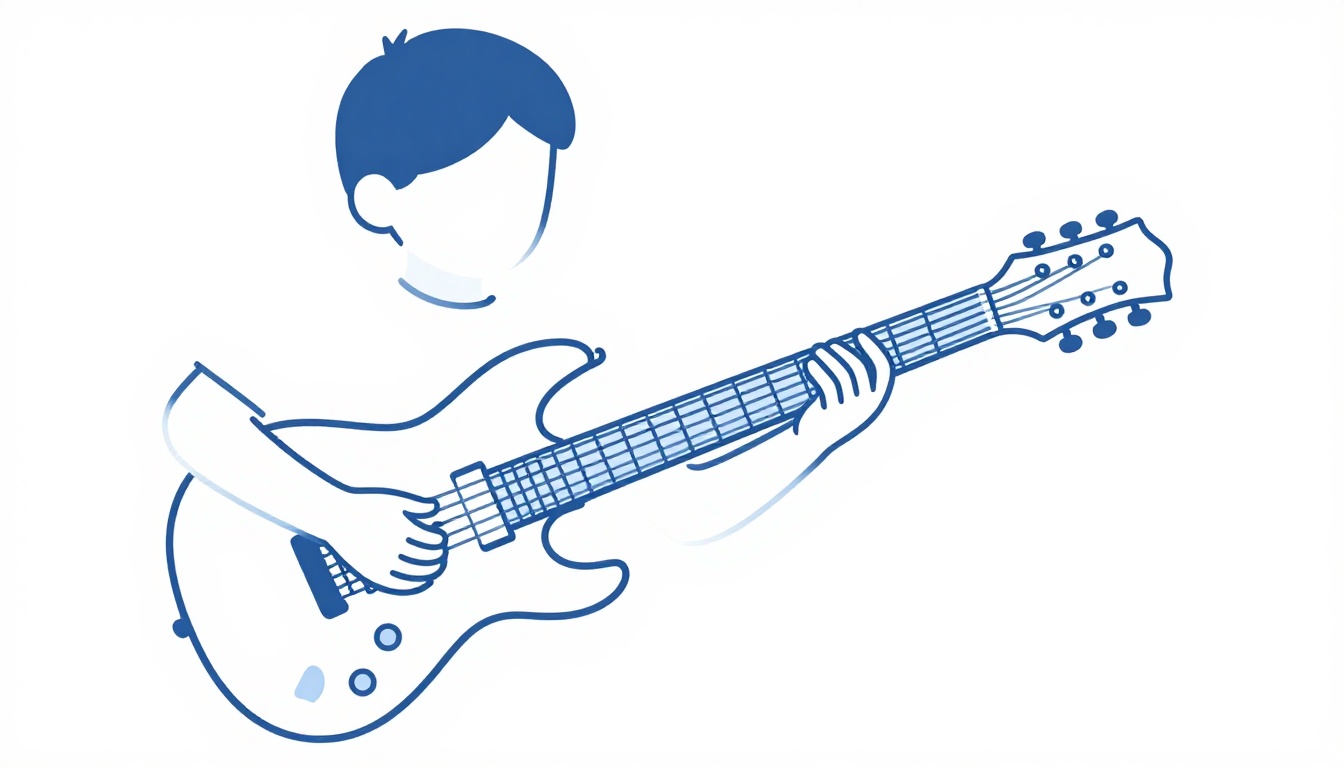
Play it slowly at first, one note at a time, saying the scale degree out loud as you go (root, 2, b3, 4, 5, 6, b7, root). That habit does more for actually learning the scale than speed ever will, because it ties the shape to the sound instead of just the fingers.
A One-Octave Pattern for Learning the Sound
The six-string box above is what you reach for once you can already hear Dorian. Before that, a simpler one-octave pattern, root to root, is a better way to learn what the scale actually sounds like without the visual clutter of a full box.
Here is A Dorian, one octave, root on the 6th string up to the same root an octave higher on the 4th string.
| Order | String | Fret | Note | Degree |
|---|---|---|---|---|
| 1 | 6 (low E) | 5 | A | Root |
| 2 | 6 (low E) | 7 | B | 2 |
| 3 | 6 (low E) | 8 | C | b3 |
| 4 | 5 (A) | 5 | D | 4 |
| 5 | 5 (A) | 7 | E | 5 |
| 6 | 5 (A) | 9 | F# | 6 |
| 7 | 4 (D) | 5 | G | b7 |
| 8 | 4 (D) | 7 | A | Root |
Play it ascending and descending until you can hum the 6th degree (F# here) before your finger gets there. That is the note doing all the work, and being able to anticipate it by ear is a better test of whether you have actually learned the scale than being able to run it fast.
Two-Octave Dorian Pattern for the Full Neck
Once the one-octave pattern and the box shape both feel comfortable, the next useful step is connecting them into a full two-octave run, root to root to root, without changing hand position. This uses the same fret region as the box above (roughly frets 4 to 9), just played as one continuous ascending line instead of a grid of available notes.
| Order | String | Fret | Note | Degree |
|---|---|---|---|---|
| 1 | 6 (low E) | 5 | A | Root |
| 2 | 6 (low E) | 7 | B | 2 |
| 3 | 6 (low E) | 8 | C | b3 |
| 4 | 5 (A) | 5 | D | 4 |
| 5 | 5 (A) | 7 | E | 5 |
| 6 | 5 (A) | 9 | F# | 6 |
| 7 | 4 (D) | 5 | G | b7 |
| 8 | 4 (D) | 7 | A | Root (octave 1) |
| 9 | 4 (D) | 9 | B | 2 |
| 10 | 3 (G) | 5 | C | b3 |
| 11 | 3 (G) | 7 | D | 4 |
| 12 | 2 (B) | 5 | E | 5 |
| 13 | 2 (B) | 7 | F# | 6 |
| 14 | 2 (B) | 8 | G | b7 |
| 15 | 1 (high E) | 5 | A | Root (octave 2) |
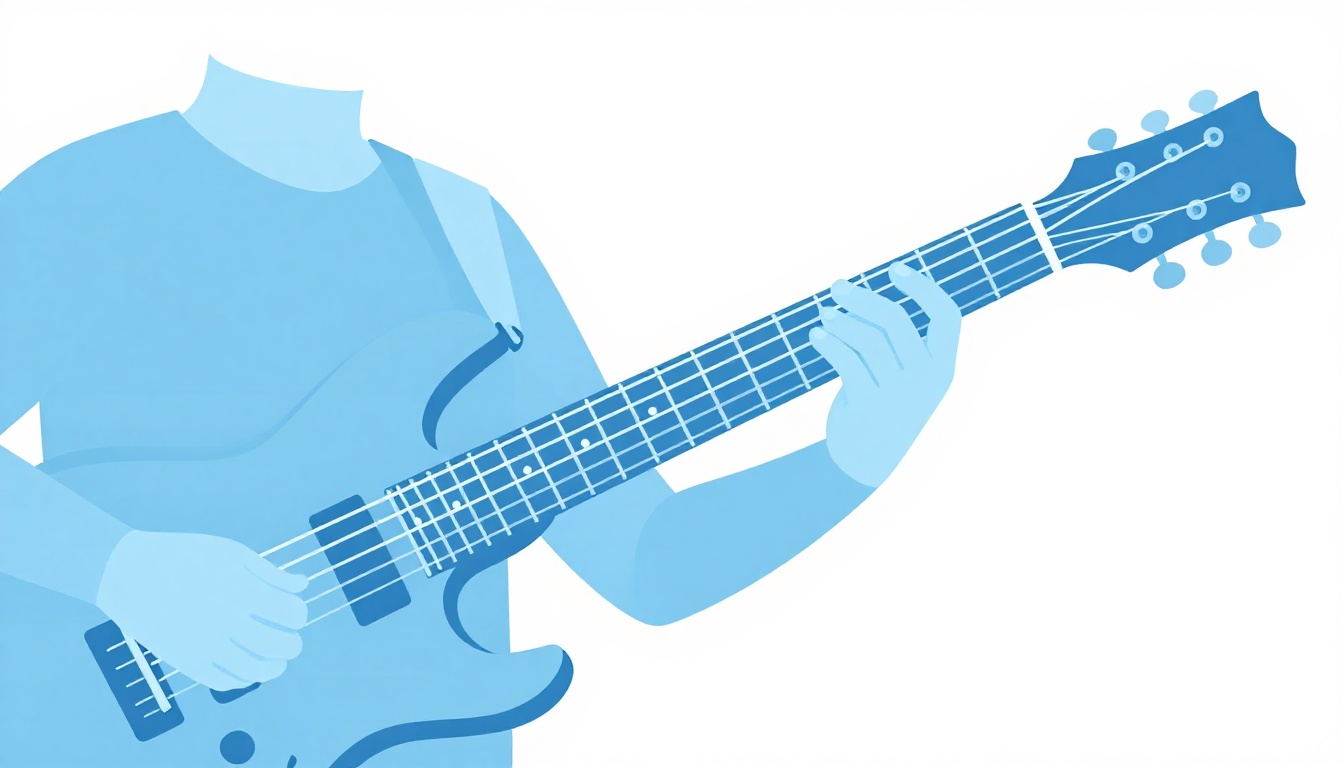
Play this slowly ascending, then reverse it descending, before trying to solo with it. The value of a pattern like this is not speed, it is being able to find the root, the b3 and the 6th anywhere in the shape without having to think your way there one fret at a time.
Dorian Arpeggios: Outlining the Chord Tones
A scale tells you every note that is available. An arpeggio, the notes of the chord itself, tells you which of those notes will sound correct no matter what else is happening underneath you. For Dorian, the arpeggio to know is the minor 7th arpeggio: root, b3, 5, b7.
| String | Fret | Note | Degree |
|---|---|---|---|
| 6 (low E) | 5 | A | Root |
| 5 (A) | 5 | D | 4* |
| 5 (A) | 7 | E | 5 |
| 4 (D) | 5 | G | b7 |
| 4 (D) | 7 | A | Root |
| 3 (G) | 5 | C | b3 |
| 2 (B) | 5 | E | 5 |
| 1 (high E) | 5 | A | Root |
*The 4th degree is included here as a connecting tone between the root and 5th on the A string, not as a chord tone. The arpeggio proper is built only from the root, b3, 5 and b7.
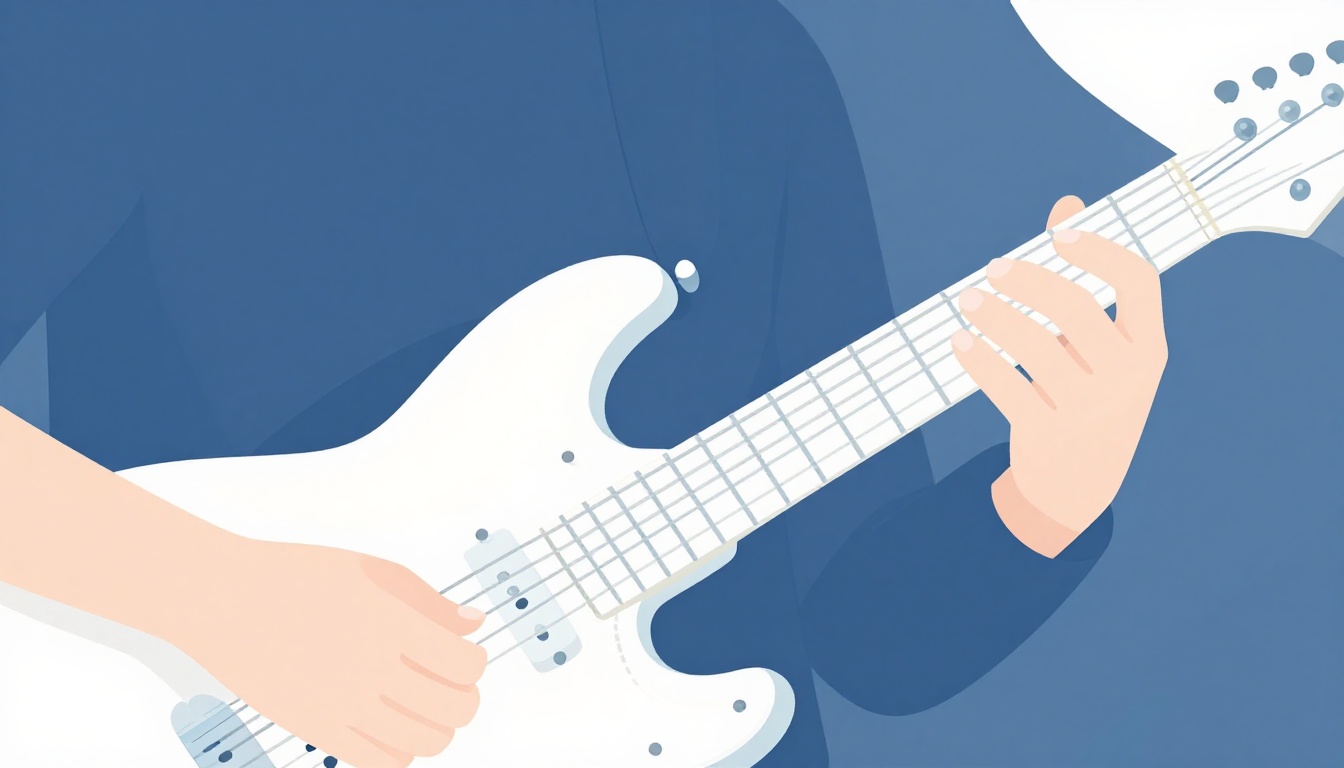
Practicing the arpeggio alongside the full scale is what actually makes a solo sound like it is following the chords rather than just running a scale over them. A common approach: play the m7 arpeggio on beat one of every chord change to land squarely on a chord tone, then fill the rest of the bar with scale notes from the box shape.
Open Position: Playing A Dorian Without a Barre
A Dorian happens to sit nicely in open position, since it only needs one sharped note (F#) against an otherwise all-natural set of pitches. This is a good first place to practice the scale if barre chords and higher-fret positions still feel unfamiliar.
| String | Open | 1st fret | 2nd fret | 3rd fret | 4th fret |
|---|---|---|---|---|---|
| 6 (low E) | E (5) | - | F# (6) | G (b7) | - |
| 5 (A) | A (root) | - | B (2) | C (b3) | - |
| 4 (D) | D (4) | - | E (5) | - | F# (6) |
| 3 (G) | G (b7) | - | A (root) | - | B (2) |
| 2 (B) | B (2) | C (b3) | - | D (4) | - |
| 1 (high E) | E (5) | - | F# (6) | G (b7) | - |
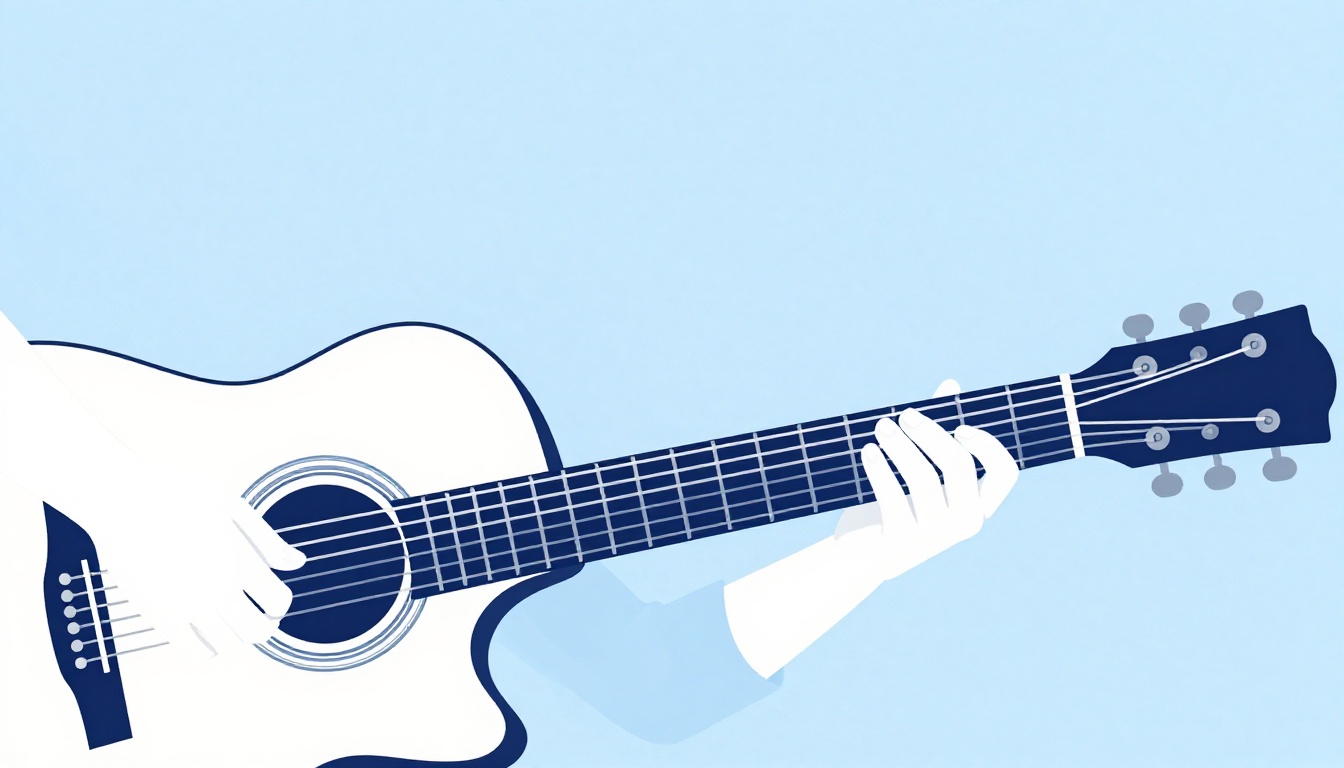
Play it ascending from the open low E string up through each string to the high E, using only the fretted or open notes listed. Because so many notes fall on open strings, this position is also a good place to get your fretting hand used to only pressing down when a note actually needs it, rather than clamping every finger down out of habit.
Which Chords and Progressions Dorian Fits
Dorian sits under minor and minor 7th chords, and it is the mode you reach for specifically when the harmony around that minor chord includes a major chord built off the raised 6th degree. That is the detail that separates Dorian playing from plain natural-minor playing.
| Chord in the progression | Why Dorian fits |
|---|---|
| m, m7, m9, m11, m13 | The core minor chord tones (root, b3, 5, b7) all live inside Dorian |
| m6, m13 | These voicings spell out Dorian's raised 6th directly in the chord itself |
| IV (major, built on the 6th scale degree of the relative major) | This is the signature Dorian chord move, and it will clash with natural minor |
| sus2, sus4 | Common connecting chords in Dorian-flavored vamps |
The clearest, most common way to hear Dorian in action is a two-chord vamp: a minor chord moving to a major chord built a whole step below the octave, for example Dm to G in D Dorian, or Am to D in A Dorian. That move only works because Dorian's 6th degree is natural, not flat. Try that same vamp using natural minor's notes and the G chord (built on a flattened 6th) comes out minor instead of major, and the whole vamp loses its lift.
In jazz, Dorian is also the default scale for the ii chord in a ii-V-I progression. If you already work through jazz chords on guitar, the minor 7th chord that opens most ii-V-I turnarounds is built from, and usually soloed over with, Dorian.
Diatonic Chords Built From the Dorian Scale
Stacking every other note of the Dorian scale on top of itself, the same way you would build chords from a major scale, gives you the full set of chords that naturally belong to that key's Dorian sound. Here they are for A Dorian.
| Degree | Chord | Quality |
|---|---|---|
| i | Am | Minor |
| ii | Bm | Minor |
| III | C major | Major |
| IV | D major | Major |
| v | Em | Minor |
| vi (dim) | F#m7b5 | Half-diminished |
| VII | G major | Major |
Two of these are worth pointing at directly. The IV chord is major, D major, and it is major specifically because it is built on Dorian's raised 6th degree. In natural minor, that same chord position comes out minor. The vi chord is half-diminished, built on the 6th degree stacked with its own thirds, and it is the reason Dorian's 6th degree also shows up as a chord tone, not just a passing note in the scale.
A progression that stays entirely inside this chord set, i to IV to v to i, or i to VII to IV to i, will sound unmistakably Dorian even without a single solo note played over it, because the chords themselves carry the mode's character.
Why Dorian Sounds the Way It Does
Two intervals are doing the real work in Dorian, and understanding what each one contributes explains why the scale has the reputation it does.
The flat 3rd keeps it minor
Like every other minor-family scale, Dorian's b3 is what tells your ear "minor" the instant it is played against the root. Nothing distinctive here yet, this is shared with natural minor, harmonic minor and the minor pentatonic scale alike.
The natural 6th is what makes it Dorian specifically
This is the whole story. A flat 6th, as in natural minor, pulls down toward the 5th and adds a heavier, more resigned quality to the scale. A natural 6th does the opposite: it sits a whole step above the 5th rather than a half step, which keeps the scale feeling like it has somewhere to go rather than somewhere to sink. That single interval is the reason Dorian gets used for grooves that need to feel driving or soulful rather than mournful, in funk, soul, jazz and a large amount of classic rock.
It shares its notes with the minor pentatonic
Every note of A minor pentatonic (A C D E G) is also in A Dorian. This is part of why Dorian feels so approachable to players coming from blues and rock backgrounds: you are not learning an unrelated sound, you are learning what happens when you fill in the two gaps in a scale you already play by ear.
Dorian Compared to Mixolydian
Dorian and Mixolydian are close cousins. Both flatten the 7th degree relative to the major scale, which is why the two get confused, but they differ on the 3rd: Dorian's is flat, making it minor, while Mixolydian's is natural, making it major.
| Scale | Formula | 3rd degree | Character |
|---|---|---|---|
| A Dorian | 1 2 b3 4 5 6 b7 | Minor (C) | Minor with a lift |
| A Mixolydian | 1 2 3 4 5 6 b7 | Major (C#) | Major with grit, bluesy |
Because they share five of seven notes, including the same flattened 7th, switching between them over a chord change often comes down to a single note, exactly like the Dorian-to-natural-minor switch covered earlier. If a progression moves from a minor 7th chord to a dominant 7th chord built on the same root, for example Am7 to A7, the scale underneath needs to shift from Dorian to Mixolydian, and the only note that actually changes is the 3rd, from C to C#. Everything else in the shape stays exactly where it already is.
Dorian Compared to the Blues Scale
Rock and blues players often reach for the minor pentatonic scale with an added flat 5th, commonly called the blues scale, before they ever try Dorian. The two serve different purposes rather than competing directly.
| Scale | Notes (A root) | Best suited for |
|---|---|---|
| A blues scale | A C D D# E G | Bent notes, grit, blues and rock phrasing |
| A Dorian | A B C D E F# G | Smoother, more melodic lines over minor 7th vamps and jazzier progressions |
The blues scale's added note, the flat 5th, is a passing tone meant to be bent or slid through, not held. Dorian's extra notes, the 2nd and the 6th, are meant to be landed on and sustained. Players often blend the two: run blues-scale phrasing for grit during faster passages, then resolve onto Dorian's 6th degree to end a phrase with a more melodic, less bent finish. Neither replaces the other. They solve different problems in the same solo.
Famous Uses of the Dorian Scale
Hearing Dorian in a real song does more for your ear than any amount of scale-running in isolation. A few well-documented examples:
- "So What" by Miles Davis is one of the most cited modal jazz pieces built on Dorian, moving between D Dorian and Eb Dorian across its two main sections.
- "Evil Ways," a Carlos Santana staple, and much of Santana's soloing generally, leans on Dorian's minor-with-a-lift quality over static minor vamps.
- "Oye Como Va" moves between a minor chord and the major chord built on its raised 6th, the exact i-IV Dorian vamp described above.
- "Scarborough Fair," in its familiar arrangement, moves through a minor, major and major chord progression that outlines a Dorian sound rather than plain natural minor.
- David Gilmour's soloing with Pink Floyd, including passages on "Breathe," draws on Dorian for its blend of minor tonality with a less heavy, more open color than natural minor would give.
None of these songs require you to consciously think "I am now in Dorian" to enjoy or even play them. They are useful because once you know what to listen for, that raised 6th, you start hearing it everywhere, and hearing it is what makes the scale usable in your own playing rather than a formula on paper.
Dorian in Traditional and Folk Music
Dorian shows up constantly in traditional folk and sea shanty repertoire, well before rock or jazz musicians started naming it as a mode. The sea shanty "What Shall We Do With a Drunken Sailor" is a well-documented example, built in E Dorian with a chord movement of Em to D to Em to G to D to Em, or i-VII-i-III-VII-i, across its verses and chorus. The same i-VII movement that gives the shanty its marching, call-and-response drive is one of Dorian's most common folk-music fingerprints.
"Scarborough Fair," covered earlier, is another traditional tune built the same way, and the two songs share a family resemblance: a minor melody that leans on chords built from the raised 6th and flattened 7th degrees rather than resolving the way a plain minor-key song would. If you play folk, Celtic or traditional acoustic material, Dorian is worth learning specifically because it is the mode a large share of that repertoire is already written in, whether or not the person who wrote it down centuries ago ever used the word.
Common Mistakes When Learning Dorian
Playing the scale over the wrong chord
Dorian only sounds like Dorian when the chord or bass note underneath actually establishes the Dorian root as home. Play A Dorian's notes over a G major chord and your ear reorganizes everything around G, because that is what the harmony is telling it to do. The scale is only half the story. What is happening underneath it is the other half.
Never landing on the 6th degree
If every phrase you play only touches the root, b3, 4, 5 and b7, and skips the 2nd and 6th, you are playing minor pentatonic, not Dorian, no matter which scale you think you are running. The 6th in particular needs to show up, and ideally get resolved onto, for a listener's ear to register Dorian specifically.
Treating it as a completely new scale to memorize
Dorian is not a separate scale from everything else you know. It is a major scale starting on its 2nd degree, and it is a minor pentatonic scale with two notes filled in. Approaching it as an unrelated seventh scale to memorize from zero is the slow way in. Approaching it as "the pentatonic shape I already know, plus two notes" is the fast way.
Confusing it with natural minor because they sound similar in isolation
Play the root, b3 and 5 of Dorian and natural minor back to back and they sound identical, because those three notes are shared. The confusion usually clears up the moment you compare full ascending and descending runs of both scales side by side and specifically listen for the 6th degree.
Practicing with no chord or drone underneath
A scale played completely alone, with nothing establishing its root, does not sound like Dorian. It just sounds like a scale. Dorian's character only shows up in contrast to a backing chord, bass note or drone that anchors the root, which is why every practice method below starts with something sounding underneath you.
Dorian in Different Keys
Because the formula is what matters, not any single spelling, here is Dorian built from a handful of common roots so you can see the pattern hold across keys.
| Root | Dorian scale |
|---|---|
| A | A B C D E F# G |
| D | D E F G A B C |
| E | E F# G A B C# D |
| G | G A Bb C D E F |
| B | B C# D E F# G# A |
Notice D Dorian uses no sharps or flats at all, the same key signature as C major, because D Dorian's notes are exactly C major's notes starting on D. That relationship holds for every Dorian scale: it always shares a key signature with the major scale sitting a whole step below its root.
Dorian and the CAGED System
If you already use the CAGED system for major scales or chords, Dorian slots into the same logic. Any Dorian scale is the relative major scale played from its 2nd degree, which means the fretboard shapes you already associate with a major scale's CAGED positions contain every Dorian shape you need, just with a different note treated as the resolving tone.
Practically, this means the fastest way to find Dorian in a new position is not learning a brand-new shape, it is figuring out which major scale shape you are already standing inside, then shifting your sense of "home" to its 2nd degree without moving a single finger. If you know an E major scale shape, the note a whole step above E within that same shape, F#, is the root of F# Dorian, played with the exact fingerings you already have in place.
This relabeling trick works in the other direction too. If you already know where a Dorian box sits and need the relative major scale that contains it, drop down a whole step from the Dorian root and treat that note as the new "1." The moveable box from earlier in this guide, rooted on the 6th string, doubles as a major scale shape the moment you shift which note inside it you resolve to, without changing a single fret.
How to Practice the Dorian Scale
Drone practice. Loop a single sustained root note or a simple minor power chord, then play through the scale slowly over it, paying close attention to how the 6th degree feels against that drone compared to how a flattened 6th would feel. Let that note ring longer than the others while you get used to its color.
Two-chord vamp practice. Loop a i-IV vamp (Am to D in A Dorian, or Dm to G in D Dorian) and improvise over it using only the notes in the box shape above. This progression exists specifically because it highlights the note that makes Dorian what it is, so soloing over it teaches your ear faster than scale-running alone.
A/B comparison against natural minor. Play A Dorian and A natural minor back to back, changing nothing but the 6th degree each time. Hearing two scales that differ by exactly one note, side by side, teaches you more about what that note contributes than either scale played in isolation ever will.
Pentatonic-to-Dorian practice. Start a phrase using only the minor pentatonic notes you already know, then deliberately add the 2nd or 6th degree partway through. This is close to how the scale actually gets used in real solos, where pentatonic material and the two "extra" Dorian notes are woven together rather than kept in separate boxes.
Fifteen minutes is enough. Five minutes of drone practice, five minutes on the two-chord vamp, five minutes of A/B comparison against natural minor, done daily, builds the sound into your ear faster than one long session done occasionally.
Connecting Dorian Back to Chord Changes
Knowing the scale in isolation is not the same as being able to move in and out of it the instant the underlying chord changes, which is what happens in real playing. The chords in a song shift, and a solo that stays convincing has to shift with them without a visible seam.
The habit that closes this gap is tracking the one note that changes rather than recalculating the whole scale. Moving from D Dorian to D natural minor midway through a solo, because the chord under you just moved from a IV built on a natural 6th to one built on a flat 6th, is not a wholesale scale swap. It is remembering that the 6th degree needs to drop a half step and leaving everything else exactly where it already sits.
Practice this directly: pick a i-IV Dorian vamp and a i-bVI natural minor vamp that share the same root, set a metronome, and switch between the two every four bars, changing only the 6th degree each time. It feels mechanical for the first few passes, then starts to feel like a single continuous idea, which is exactly how it should sound once it shows up inside an actual song.
A worked example makes this concrete. Take a common jazz-influenced progression: Am7 to D7 to Gmaj7 to Cmaj7, four bars each. Over the Am7, you are in A Dorian, since it is a plain minor 7th chord. Over the D7, the chord's own major 3rd and dominant quality call for D Mixolydian, built from the same parent scale as A Dorian (both come from G major), so most of the notes under your fingers do not move, only the note you are resolving toward shifts from A to D. Over the Gmaj7 and Cmaj7, you are simply back in G major itself, since both chords are diatonic to that same parent scale. Four chords, four labels, but one underlying set of notes the entire time. What changes bar to bar is where you choose to resolve, not the raw material you are drawing from.
Two-Week Practice Plan for the Dorian Scale
Reading through shapes and theory is not the same as owning the sound. Here is a concrete two-week plan that moves from shapes to ear to real playing, roughly fifteen minutes a day.
Days 1 to 3: the shape. Spend the full session on the one-octave pattern and the moveable box, ascending and descending slowly, naming each scale degree out loud. Do not try to play fast or musically yet. The goal is only that your fingers stop hesitating over where the notes are.
Days 4 to 6: the sound. Add drone practice and the A/B comparison against natural minor. Spend real time simply listening to the 6th degree ring out against the root, since this is the note the rest of the plan depends on you recognizing instantly.
Days 7 to 9: the vamp. Loop the i-IV Dorian vamp and improvise using only notes from the box shape, focusing on resolving phrases onto the root and the 6th rather than running the scale in strict order.
Days 10 to 12: the arpeggio. Bring in the minor 7th arpeggio, alternating between arpeggio-only phrases and scale-based phrases over the same vamp, so the two start to blend instead of feeling like separate exercises.
Days 13 to 14: a real song or backing track. Find a backing track or a song section that sits in Dorian, such as a i-IV vamp in any key, and play through it using everything from the previous twelve days. This is where the scale stops being an exercise and starts being something you can actually use.

Dorian on the Low Strings for Bass-Style Riffs
Dorian is not only a lead-guitar scale. Its i-IV vamp is a common backbone for riffs played low on the neck, especially on the 6th and 5th strings, because a minor riff that resolves upward to a major chord a whole step from the octave has a driving, forward-leaning quality that a plain minor riff does not. If you play bass guitar scales as well, the exact same Dorian shapes and vamps translate directly, since Dorian's formula does not change between instruments, only the range you are playing it in.

Building Melodies Around the Characteristic 6th
Once the shapes and the theory both feel familiar, the real skill is writing or improvising phrases that use the 6th degree on purpose rather than stumbling into it. A few concrete ways to practice this:
Resolve a phrase onto the 6th instead of the root. Most beginner phrases end back on the root because it feels the most "finished." Deliberately ending a line on the 6th degree instead, then letting the backing chord resolve underneath it, is one of the clearest ways to make a phrase sound distinctly Dorian rather than generically minor.
Approach the 6th from a half step below or above. A short chromatic approach note leading into the 6th, from the b6 or from the b7, draws extra attention to it and is a common phrasing trick borrowed from jazz and blues soloing alike.
Pair the 6th with the b3. Playing the minor 3rd and the natural 6th close together in a short phrase packs both of Dorian's defining qualities, minor and lifted, into a single musical idea, which is a faster way to establish the sound than playing the scale in strict order.
Leave space around it. A held or sustained 6th degree, with silence or a simple rhythmic figure around it, gives a listener's ear time to register the note as distinct from a routine passing tone. Speed works against you here. The note needs room to be heard.
How to Tell If a Song You're Playing Is in Dorian
Working this out by ear gets easier once you know exactly what to listen for, in order.
Find the chord the song keeps returning to. That chord, the one that feels like home even mid-verse, is your candidate root. If it is minor, you are looking at one of the minor modes, which narrows things down immediately.
Check the quality of the IV chord. This is the fastest single test for Dorian specifically. Play or listen for the chord built a perfect 4th above the root. If it comes out major, you are almost certainly in Dorian, since that major IV only exists because of Dorian's raised 6th degree. If that same chord comes out minor, you are more likely in natural minor.
Listen for a bVII chord resolving back to the root. A major chord built a whole step below the root, moving back to the minor root chord, is one of Dorian's most common signature moves and shows up constantly in both rock and folk material built on the mode.
Hum the melody's highest recurring note against the root. If that note is a whole step above the 5th, rather than a half step, your ear is picking up Dorian's natural 6th, even if you have not consciously identified the chords yet.
Rule out Aeolian and Mixolydian specifically, since both share notes with Dorian. Aeolian shares everything except the 6th, which will sound flat rather than natural. Mixolydian shares the flattened 7th but has a major, not minor, 3rd. Once you have checked the 3rd and the 6th against the root, you have enough information to tell all three apart.
Frequently Asked Questions
Is Dorian a major scale or a minor scale? Minor. Its 3rd degree is flat, which is what determines major or minor character. What makes Dorian distinct from other minor scales is its 6th degree, which is natural rather than flat.
What is the easiest way to remember the Dorian formula? Think of it as natural minor with the 6th degree raised a half step. If you already know 1 2 b3 4 5 b6 b7 for natural minor, changing just the sixth number to a natural 6 gives you Dorian.
Can I use the Dorian scale over any minor chord? It fits any plain minor or minor 7th chord, since Dorian contains all four of those chord tones. It becomes the clearly correct choice, rather than just one option among several minor scales, when the progression includes a major chord built on the scale's raised 6th degree.
Why does Dorian sound jazzy to a lot of players? Because it is the default scale for the ii chord in the extremely common ii-V-i jazz progression, and because its natural 6th allows for the extended chord voicings, like m6 and m13, that show up constantly in jazz comping.
Is Dorian the same as the minor pentatonic scale? No, but it is closely related. Dorian contains every note of the matching minor pentatonic scale plus two more, the 2nd and the 6th degrees. Minor pentatonic is Dorian with those two color notes removed.
Do I need to learn a new set of shapes for every key? No. Every shape shown in this guide is moveable. Learn the finger pattern once, and you can play Dorian in any key by starting that same pattern on a different fret.
What is the fastest way to actually hear the difference between Dorian and natural minor? Play both scales rooted on the same note, back to back, changing only the 6th degree each time, ideally over a drone or a sustained chord so your ear has a fixed point of reference. That direct A/B comparison teaches the difference faster than reading about it ever will.
Which other modes are worth learning alongside Dorian? Mixolydian is a natural next step, since it shares Dorian's flattened 7th but pairs it with a major rather than minor 3rd, and it is used just as widely in blues and rock. The full picture of how all seven modes relate is covered in Guitar Modes Explained.
Does Dorian work for songwriting, or is it only a soloing scale? It works for both. The diatonic chords built from Dorian, particularly the i-IV movement built on the raised 6th, are enough on their own to write a riff or a chord progression that sounds Dorian before a single lead note is played over it.
How is Dorian different from harmonic minor or melodic minor? Harmonic and melodic minor are built by altering the natural minor scale directly, not by starting a major scale on a different degree, and both raise the 7th degree to create a stronger pull back to the root, something Dorian does not do. Dorian keeps the flattened 7th and only raises the 6th, which is why it sounds smoother and less classically "resolved" than either harmonic or melodic minor.
GuitarLowKey
Ready for fifteen focused minutes?
Open the web app and train the change that is blocking your song.