
The Easiest Songs for Beginners on Guitar (By Chords You Know)
The easiest beginner guitar songs sorted by chord count, from two-chord songs you can play today to four-chord songs, with tables and a strumming pattern.

The easiest songs for beginners use two or three open chords, repeat the same short pattern the whole way through, and do not ask you to change chords faster than once per bar. "A Horse With No Name" (Em and D), "Achy Breaky Heart" (E and A), and "Knockin' on Heaven's Door" (G, D, Am, C) are three you can start today. Which one is actually easiest for you depends less on the song and more on which chords you already know, so the fastest route in is to match a song to your current chord vocabulary instead of picking the most famous title on a list.
That is the gap in most "easy songs" roundups: they hand you forty titles with no way to tell which one fits where you actually are. Below, songs are sorted by chord count and by which specific chords they use, every shape you need is in its own table, and there is a real strumming pattern and a troubleshooting section for the two things that actually stop beginners, choppy switches and a strum that does not match the recording.
None of that troubleshooting shows up in most song lists, which is exactly why a beginner can follow one, land on a song with the "right" chords, and still feel like something is off. The chords were never the hard part. Everything from here treats them that way.
Start Here: Match The Song To The Chords You Already Know
Before picking a song, answer one question: which chords can your left hand already find without looking? That answer sorts every song on this page.
- You know zero chords. Start with a two-chord song built on Em and D, or E and A. These are the two easiest chord pairs to learn from scratch because neither one asks for a stretch past the second fret.
- You know G, C, and D. You can already play dozens of songs. Skip to the three-chord section below.
- You know G, C, D, and Em (or Am). You have the single most common chord progression in popular music. Skip to the four-chord section.
- You already play barre chords. Almost nothing on this page will challenge you, but the troubleshooting and strumming sections still apply, because timing problems do not go away once the shapes get easier.
If you are not sure which chords you know, the fix is not to guess, it is to spend ten minutes on one chord before you touch a song at all. Learning to hold one shape cleanly, and knowing exactly why it buzzes when it does, is worth more before you start a song than after.
Check Your Guitar Is Actually In Tune First
Before you decide a song is too hard, rule out the one problem that has nothing to do with your hands: a guitar that is out of tune sounds wrong no matter how clean your fingers are, and it is the single most common reason a beginner thinks they are playing a chord incorrectly when they are not. Use a clip-on tuner or a phone tuning app, check each string from the low E down to the high E, and re-check after the first few minutes of playing, since new strings and guitars that have not been played in a while drift out of tune quickly. If a chord you are confident about still sounds sour, tune before you touch your fingering again.
Does Your Guitar Itself Make These Chords Harder
Some of what feels like a finger problem is actually a setup problem. Steel-string acoustic guitars, the most common first guitar, need noticeably more finger pressure than a classical nylon-string guitar or an electric, simply because the strings are under more tension and often sit slightly higher off the fretboard. If every chord on this page feels like a fight no matter how you position your fingers, and a friend's guitar feels easier to fret with the same shapes, the difference is very likely the instrument's setup rather than your technique. A guitar tech can lower the string height (called the action) on almost any guitar in a single visit, and it is one of the few changes that makes every chord on this page easier overnight rather than after weeks of practice.
The Two Easiest Chords To Learn From Nothing: Em and D
If you have never played a chord, Em and D are the best possible starting pair. Em uses two fingers and no stretch. D uses three fingers in a small triangle shape that beginners pick up faster than almost any other chord.
Em (E minor):
| String | Fret | Finger |
|---|---|---|
| 6 (low E) | Open | - |
| 5 (A) | 2 | 2 |
| 4 (D) | 2 | 3 |
| 3 (G) | Open | - |
| 2 (B) | Open | - |
| 1 (high E) | Open | - |
D (D major):
| String | Fret | Finger |
|---|---|---|
| 6 (low E) | Muted | - |
| 5 (A) | Muted | - |
| 4 (D) | Open | - |
| 3 (G) | 2 | 1 |
| 2 (B) | 3 | 3 |
| 1 (high E) | 2 | 2 |
Strum Em with all six strings ringing. For D, only strum the bottom four strings, from the open D string down through the high E string, and leave the low E and A strings out of the strum entirely. Muting them is as much a part of the D shape as where your fingers land.
The E and A Pair: The Other Easy Two-Chord Start
If Em and D do not appeal, E and A make an equally good starting pair, and several classic two-chord songs are built on exactly these two shapes.
E (E major):
| String | Fret | Finger |
|---|---|---|
| 6 (low E) | Open | - |
| 5 (A) | 2 | 2 |
| 4 (D) | 2 | 3 |
| 3 (G) | 1 | 1 |
| 2 (B) | Open | - |
| 1 (high E) | Open | - |
A (A major):
| String | Fret | Finger |
|---|---|---|
| 6 (low E) | Muted | - |
| 5 (A) | Open | - |
| 4 (D) | 2 | 1 |
| 3 (G) | 2 | 2 |
| 2 (B) | 2 | 3 |
| 1 (high E) | Open | - |
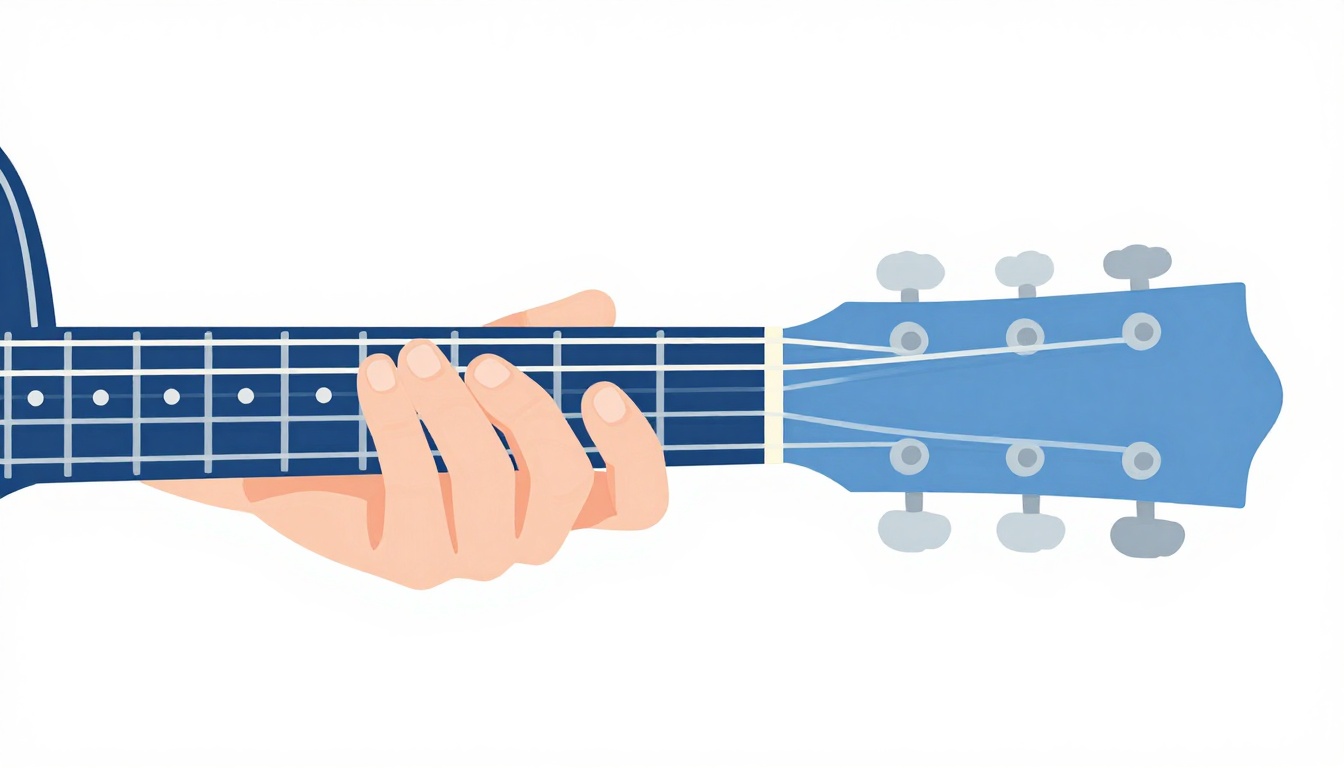
Both are full six or five-string strums, unlike D, so there is no muting to think about beyond keeping the low E string quiet on the A chord. Our E major chord guide covers the buzzing this shape commonly produces on the G string and three easier versions if the three-finger stretch feels tight at first. Once E and A both ring clean, the change between them is mostly a matter of sliding your whole hand up one string, which makes it one of the fastest two-chord switches to learn.
Two-Chord Songs You Can Play In An Afternoon
Once Em and D (or E and A) sit under your fingers without looking, these songs use nothing else.
| Song | Artist | Chords |
|---|---|---|
| A Horse With No Name | America | Em, D |
| Achy Breaky Heart | Billy Ray Cyrus | E, A |
| Row, Row, Row Your Boat | Traditional | E, A |
| Drunken Sailor | Traditional | Em, D |
| Give Peace a Chance | John Lennon | C, G |
| Eleanor Rigby | The Beatles | C, Em |
| Three Little Birds | Bob Marley | A, D, E |
Two-chord songs are not a warm-up you graduate out of, they are where the actual skill lives. Every one of these repeats the same change dozens of times in a row, which is exactly the repetition your hand needs to memorize a chord shape without your eyes checking it first. A three-minute song at 100 beats per minute with a chord change every two beats gives you well over a hundred repetitions of that single switch. No isolated chord drill matches that.
The Three Chords Worth Learning Next: G, C, and D
Once you can hold Em and D cleanly, G, C, and D open up the largest pool of beginner songs on this page. All three are open chords, none require a barre, and once you can move between them, you can play a genuine three-chord folk, country, or pop-punk song.
G (G major, three-finger version):
| String | Fret | Finger |
|---|---|---|
| 6 (low E) | 3 | 2 |
| 5 (A) | 2 | 1 |
| 4 (D) | Open | - |
| 3 (G) | Open | - |
| 2 (B) | Open | - |
| 1 (high E) | 3 | 3 |
C (C major):
| String | Fret | Finger |
|---|---|---|
| 6 (low E) | Muted | - |
| 5 (A) | 3 | 3 |
| 4 (D) | 2 | 2 |
| 3 (G) | Open | - |
| 2 (B) | 1 | 1 |
| 1 (high E) | Open | - |
D is the same shape shown above. If C is buzzing or the change from G to C is slow, the full breakdown, including a beginner-friendly two-finger version, is in our C chord guide.
Three-Chord Songs To Play Once You Know G, C, and D
| Song | Artist | Chords |
|---|---|---|
| Knockin' on Heaven's Door | Bob Dylan | G, D, Am, C |
| Ring of Fire | Johnny Cash | G, C, D |
| Twist and Shout | The Beatles | D, G, A |
| This Land Is Your Land | Woody Guthrie | D, G, A |
| Blowin' in the Wind | Bob Dylan | G, C, D |
| Leaving on a Jet Plane | John Denver | G, C, D |
| Sweet Home Alabama (verse) | Lynyrd Skynyrd | D, C, G |
"Knockin' on Heaven's Door" technically uses four chords, G, D, Am, and C, but it earns its place here because the pattern is slow and the same four bars repeat for the entire song, which makes it one of the gentlest four-chord songs to learn rather than a true three-chord one. Am is a small addition once you already know Em: it uses the same shape one string over, on the A, D, and G strings instead of the D and G strings.
"Ring of Fire" is a good test of steady strumming once the three chords feel comfortable, since the recording keeps a brisk, even tempo the whole way through rather than easing you in slowly, and it rewards a consistent down-up strumming arm more than fast fingers.
Adding Em And Am: The Four-Chord Progression Behind Hundreds Of Songs
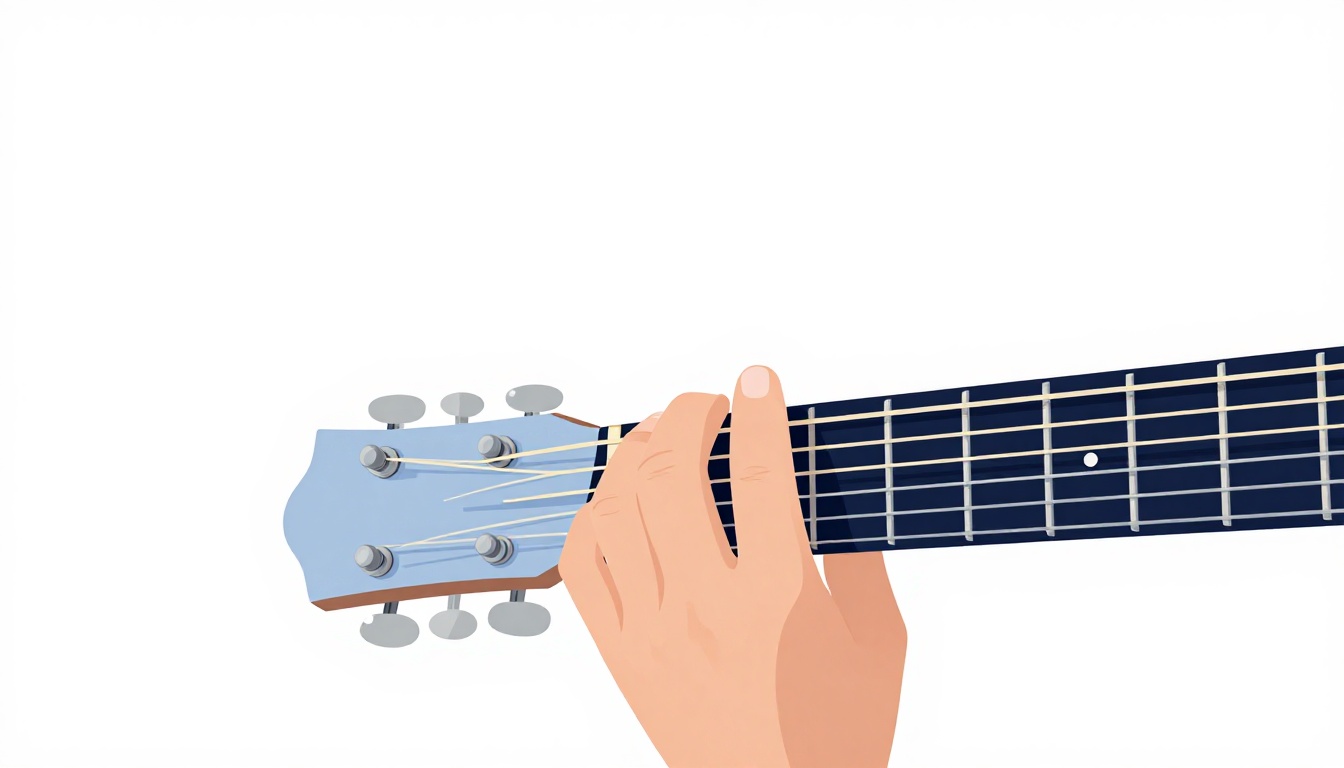
G, C, D, and Em together form what musicians sometimes call the "four chords of pop," because so many songs across five decades are built on some rotation of them. Swap Em for Am and you get an equally common second progression. Learning both minor chords alongside G, C, and D roughly doubles how many songs you can play with no new shapes at all.
Am (A minor):
| String | Fret | Finger |
|---|---|---|
| 6 (low E) | Muted | - |
| 5 (A) | Open | - |
| 4 (D) | 2 | 2 |
| 3 (G) | 2 | 3 |
| 2 (B) | 1 | 1 |
| 1 (high E) | Open | - |
Notice Am and Em share the same finger shape, just shifted over by one string, with Am adding a mute on the low E string. Once one of them feels natural, the other usually takes only a few minutes.
Songs Built On G, C, D, and Em (Or Am)
| Song | Artist | Chords |
|---|---|---|
| Wonderwall | Oasis | Em, G, D, A7sus4 (capo 2nd fret to match the record) |
| Wagon Wheel | Old Crow Medicine Show | G, D, Em, C (capo 2nd fret to match the record) |
| I'm Yours | Jason Mraz | G, D, Em, C |
| Let It Be | The Beatles | C, G, Am, F (many easy charts swap F for a simpler no-barre voicing) |
| With or Without You | U2 | G, D, Em, C |
| Stand by Me | Ben E. King | G, Em, C, D |
| Country Roads | John Denver | G, D, Em, C |
Both "Wonderwall" and "Wagon Wheel" are commonly taught with a capo on the second fret, which lets you play the exact G, D, Em, and C or A7sus4 shapes from this page while still matching the singer's key on the recording. This is a good pair to keep in mind for the capo section further down, since it is the clearest real-world example of a capo doing the transposing instead of a new chord shape.
"The Heart of Worship" by Matt Redman is another good one to add here, since its easy version runs on D, A, Em, and G with no barre chord anywhere in it, and neither the verse nor the chorus asks for anything past the third fret.
Johnny Cash's "Hurt" belongs in this tier too. The verse sits on Am, C, and D, and the chorus adds G and F, all open chords, all shapes you already have from this page. Our Hurt chord guide covers both the easy version and the fuller, closer-to-record voicing.
Unlike "Ring of Fire," "Hurt" is slow and quiet, and the biggest challenge is not speed but restraint, playing the same simple chords softly enough that they build rather than staying flat for four minutes. It is a good song to try once you want a slower, more expressive alternative to the up-tempo songs earlier on this page.
Why The Same Four Chords Keep Showing Up
If G, C, D, and Em or Am feel like they are behind an unusually large share of the songs on this page, that is not a coincidence and not a limitation of this particular list. In music theory terms, G, D, Em, and C are the first, fifth, sixth, and fourth chords built on the notes of the G major scale, a sequence often written as I-V-vi-IV, and it happens to sound satisfying to a huge range of listeners across pop, rock, folk, and country. The same four chords show up in a different order in different songs, sometimes starting on the C, sometimes on the Em, which is why learning all four well pays off across so many songs rather than locking you into one specific progression.
What Strumming Pattern To Use
Chord shapes get most of the attention, but the strumming hand decides whether a song sounds like the recording or like someone reading chord names out loud. Start with the single most common beginner pattern, written as down (D) and up (U) strokes over four beats:
| Beat | 1 | + | 2 | + | 3 | + | 4 | + |
|---|---|---|---|---|---|---|---|---|
| Strum | D | - | D | U | - | U | D | U |
Say "down, down-up, up-down-up" out loud while you strum it on a muted guitar (rest your fretting hand flat across the strings so nothing rings) until the rhythm feels automatic before you add chord shapes back in. Every song in the two-chord and three-chord tables above works with this pattern at a slow, steady tempo. Once it feels natural, two adjustments cover almost every other beginner song you will meet:
- Slower ballads (Wonderwall's verse, Stand by Me) often drop to just "down, down-up, down, down-up" with more space between strums.
- Faster or punchier songs (Sweet Home Alabama, Twist and Shout) add a slight accent, a harder strum, on beats 2 and 4.
The strumming hand should keep moving in a steady up-and-down motion even on the beats you are not supposed to hit, just missing the strings on those beats. Stopping the arm between strums is the single most common reason a beginner's strumming sounds stiff compared to the recording.
Why Your Chord Changes Sound Choppy
This is the part every "easy songs" list skips, and it is the actual reason beginners quit a song that is objectively easy on paper.
You Are Rebuilding The Shape From Scratch Every Time
In the first week or two, your hand does not "remember" a chord shape, it re-solves it like a small puzzle every single time you land on it, which is why there is a pause before each chord. The fix is not to strum faster, it is to practice the switch in isolation: hold chord A, count to two, switch to chord B, count to two, and repeat for two full minutes without ever adding a strumming pattern on top. Speed comes after the switch is silent and automatic, not before.
Your Fingers Are Traveling Too Far Between Shapes
Look at where each finger sits in chord A and where that same finger needs to land in chord B. Many beginners lift every finger fully off the fretboard and place it back down, when the fastest players slide or pivot a finger that is already close to its next position. Between G and Em, for example, your ring finger barely has to move. Learning to spot these shared or nearby positions, rather than resetting your whole hand, is what actually speeds up a switch.
You Are Watching Your Hand Instead Of Feeling The Shape
Glancing down to check your fingers costs a full beat of silence, sometimes more, and that gap is what makes a change sound choppy even when the shape itself is fine once you get there. Practice each chord shape with your eyes closed for thirty seconds at a time until your hand can find it by feel.
You Are Strumming Through The Switch Instead Of Around It
Some beginners keep strumming while their fretting hand is mid-change, which produces a muted, clanking strum on the beat where the new chord has not landed yet. It is better to leave a very short gap, even a barely audible one, than to strum a chord shape that is not fully formed yet. As your switching speed improves, that gap shrinks on its own.
Why A Chord Buzzes Or Goes Silent Even When You Are Holding Still
A different problem from choppy switching is a chord that buzzes or mutes a string even while your hand is not moving at all. This is almost always one of three things.
Your Thumb Is Creeping Over The Top Of The Neck
A thumb that wraps too far around the neck pulls your fingers flat instead of curled, and flat fingers brush against the strings next to the one they are supposed to press, killing the ring on that string. Keep your thumb roughly behind your first or second finger, low on the back of the neck, and let your fingers arch up and over the strings like you are holding a small ball.
You Are Pressing Too Far From The Fret Wire
Every fret has a metal wire at its far edge, and pressing close to that wire takes far less pressure to get a clean note than pressing in the middle of the fret space. Beginners often press right in the middle or even behind the fret, which is exactly what produces the low, muted buzz that will not go away no matter how hard you press.
A Neighboring Finger Is Leaning Into An Open String
In shapes like G, C, and D, at least one string has to ring open while a finger sits one string over. If that finger leans even slightly onto the open string, it goes dead. Check each open string in a new chord shape by picking it on its own before you strum the whole thing, and adjust the angle of the nearest finger until it rings clean.
Why The Song Does Not Sound Like The Recording
Even with clean chords, three separate issues usually explain the gap between what you are playing and what you are hearing.
The Recording Uses A Capo Or A Different Key
Many recordings are not actually played in the "easy" key the chord chart shows, they are played higher up the neck with a capo, or the song was written in a key that would require barre chords, and the chart you found already transposed it down to open-chord shapes for you. That is intentional and does not make it a "wrong" version, it means the singer's key and your guitar's key will not match exactly unless you also use a capo. If a song still sounds a half-step or more off from the recording after your chords sound clean, check whether the chart mentions a capo position.
The Chart You Found Simplifies Real Chords
"Easy version" charts commonly swap a barre chord or an extended chord (like A7sus4 or Fadd9) for the closest open chord, which is why two different websites can show different chords for the same song. Both can be correct: one is closer to the record, one is easier to play. Start with the easy version and move to the fuller chart only once the song is comfortable.
You Are Missing The Song's Actual Rhythm Feel
A chord chart tells you what to play, not how the beat sits. Reggae-influenced songs like "Three Little Birds" emphasize the off-beat, country songs often add a bass note pluck before the strum, and slow ballads breathe with more space than the chart implies. Listening to the recording twice while following the chord chart with your finger, before you ever pick up the guitar, fixes more of this than any amount of extra practice on the shapes themselves.
Using A Capo Without Learning New Shapes
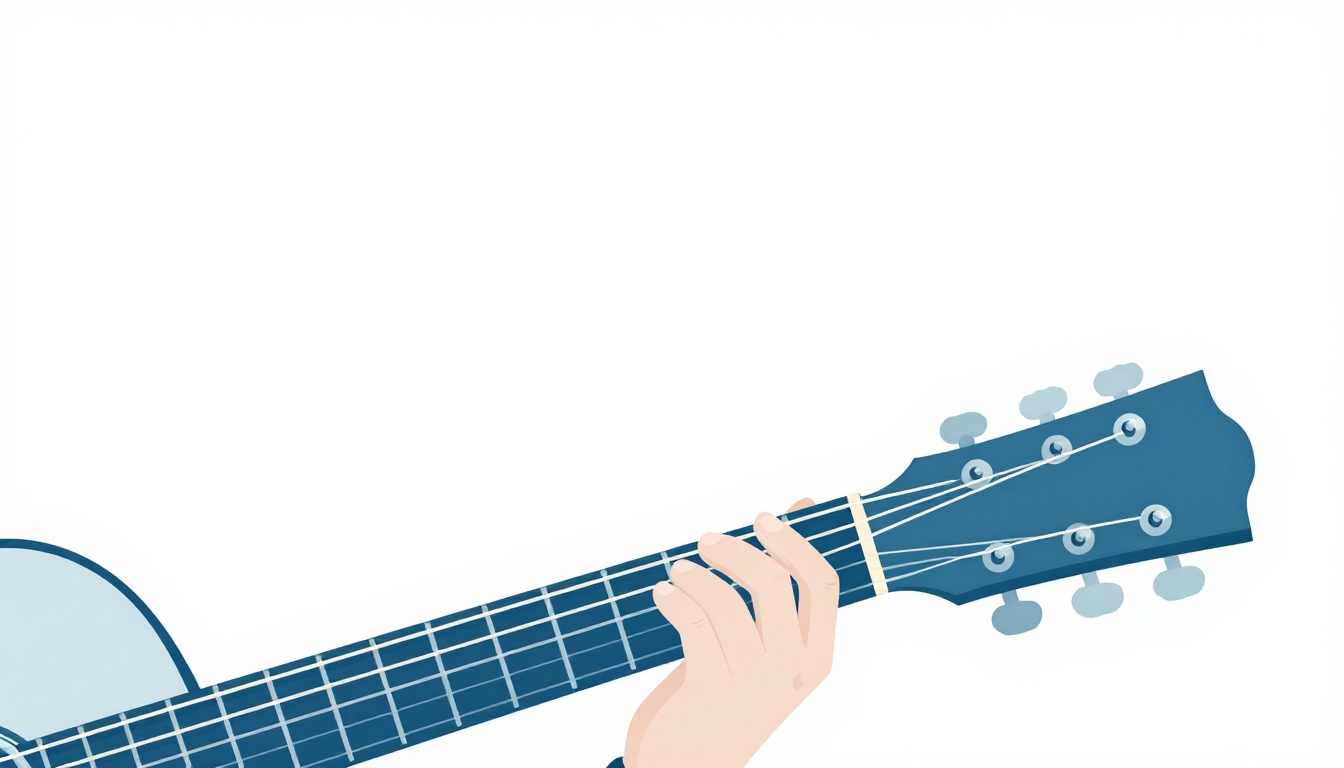
A capo clamps across the neck and shortens every string by the same amount, which raises the pitch of every open chord you already know without changing a single finger position. This matters for beginners because it means you never have to learn a barre chord just to match a recording's key.
If a chord chart says "capo 2," you play the exact G, C, D, Em, and Am shapes from this page, and the capo does the transposing for you. This is how many "easy version" charts get an entire song into open chords in the first place: rather than asking you to play the real key with barre chords, they move the capo and hand you the easiest possible open shapes underneath it.
If a chart does not list a capo position at all, or you are not sure it is right, you can find it by ear. Play the chord chart's first chord with no capo and compare it to the recording. If your guitar sounds lower than the singer, move the capo up one fret at a time, replaying that same open shape after each move, until the pitch matches. This takes a minute at most and means you never have to guess whether a chart's capo instruction, or its absence, is accurate.
You do not need a capo to start. Every song and chord table on this page works fine with no capo at all, just in a different pitch than the original recording, which matters only if you are trying to sing along in the same key as the singer. A capo is worth picking up once you are chasing a specific recording's exact sound, not before.
Fingerpicking Songs: Are They Harder For Beginners?
Most of the songs above are meant to be strummed, and strumming is genuinely the faster starting point, because your fretting hand only has to solve one problem (the chord shape) while your strumming hand does something repetitive and steady. Fingerpicked songs, like "Blackbird" or the verse of "Fast Car," ask both hands to do something new at once: your picking hand has to hit a specific string pattern with individual fingers while your fretting hand holds a shape, sometimes one that shifts mid-pattern.
That does not mean fingerpicking is off-limits early on, only that it is a second skill to build after strumming feels steady, not a shortcut around it. If you want to try it, pick a fingerpicked song built on chords you already know rather than learning a new chord and a new picking pattern in the same week.
A Simple Pattern To Start With
A beginner-friendly starting pattern uses your thumb for the lowest string in the chord and three fingers for the top three strings. Over a G chord, for example: thumb plays the low E string, then your index, middle, and ring fingers pick the G, B, and high E strings one at a time. Repeat that same thumb-then-three-fingers motion on every chord in a song and you already have a working fingerpicking pattern, even before you learn any of the more intricate patterns built around it.
Barre Chord Songs To Save For Later
A barre chord uses one finger, usually the index, pressed flat across multiple strings to act like a capo built into your hand, and it is the single biggest jump in difficulty a beginner song can ask for. Songs that lean on F, B, Bm, or F#m as a main chord (rather than a passing one) are worth setting aside until your two-chord and three-chord switches feel automatic.
"Oceans (Where Feet May Fail)" is a good example: its main chords are Bm, A, D, and G, and Bm is a barre shape, though a simplified no-barre version of Bm exists and makes the song playable earlier. It is a reasonable "next song" once open chords feel comfortable, rather than a first song.
What To Do When One Chord In The Song Is Much Harder Than The Rest
It is common for an otherwise easy song to have exactly one chord that is harder than everything around it, a stretch to a higher fret, or a shape you have not learned yet. Rather than abandoning the song, isolate that one chord the same way you would practice a switch: play it on its own, slowly, for a minute or two before you try it inside the song. If it still is not ready after a few days, look for a simplified version of that chord specifically, most commonly requested chords have a widely taught easier substitute, the way Fmaj7 stands in for F, or a two-finger Bm stands in for the full barre. Swapping one chord for an easier version of the same chord is not cheating, it is exactly how the "easy version" charts you have been using were built in the first place.
Small Hands Or Short Fingers: What Actually Changes
None of the chords on this page require large hands, but some are noticeably easier with small hands than others. G, in the three-finger version shown above, and C both ask your ring finger to stretch to the third fret while your other fingers hold closer positions, which can feel cramped for smaller hands at first. If that stretch is the sticking point, two adjustments help more than brute-forcing the reach: bring your thumb slightly lower on the back of the neck so your fingers have more room to spread, and angle your wrist so it bows slightly outward rather than staying flat against the neck. Em, D, and Am, by contrast, keep every finger within two frets of each other and are a more comfortable starting point if a stretch-heavy chord like G or C feels genuinely uncomfortable rather than just unfamiliar. Discomfort that fades in a week is normal adjustment. Sharp pain that does not fade is a sign to rest and revisit the hand position rather than push through it.
How Long Should You Actually Practice Each Day
More time is not automatically better. A distracted thirty-minute session teaches your hand less than a focused ten-minute one, because the actual skill being built, quick and accurate finger placement, comes from clean, attentive repetitions, not from total minutes logged. Fifteen focused minutes a day, split roughly into five minutes of isolated chord switching and ten minutes applying it to a song, is enough for most beginners to feel real progress within a week and to play a full song within a month. Two or three short sessions spread across a day, morning and evening for example, often beat one long session, since a tired hand late in a long session tends to reinforce sloppy habits rather than clean ones.
Checking Whether A Song You Already Love Is Beginner Friendly
None of the songs on this page have to be the one you learn. If there is a song you actually want to play that is not listed above, search for its chord chart and check three things before you commit a week to it: how many different chords appear in the whole song, whether any of them are barre chords (a single finger pressing more than two strings at once, or two chord letters like "F" or "Bm" with no extra symbol are the most common culprits), and whether the chords repeat in a short, predictable cycle or change on almost every word. A song with four or fewer open chords in a repeating pattern is playable using everything on this page, even if it is not one of the specific titles listed. Wanting to play a specific song is one of the strongest reasons to stick with practice, so it is worth checking rather than assuming it is out of reach.
How To Read A Chord Chart You Find Online
Most chord charts online use the same shorthand. A plain letter (G, D, Am) means the standard open shape shown above. A number after the letter (D7, C7) adds one note to the basic triad and usually only changes one finger from the plain version. "Sus2" or "sus4" means one note is swapped for the note two or four steps up the scale, which is why Dsus4 and D sound so close, only one finger differs between them. A slash chord like D/F# means play a D chord but let the bass note be F# instead of D, which matters far more to a bass player than to a solo guitarist strumming through a song.
When a line of lyrics has a chord letter sitting above a word, that is the beat where you change to that chord, not necessarily the start of a new line or sentence. Following the words while tapping your foot on the beat is the fastest way to find where a change actually falls before you try it at full speed.
Reading Tab For An Intro Riff Instead Of A Chord Chart
Some of the songs above, and plenty you will find later, open with a short single-note riff before the chords come in. That riff is usually written as tab rather than a chord chart, and tab looks intimidating mostly because it is unfamiliar, not because it is complicated. Six horizontal lines represent the six strings, top line is the high E string, bottom line is the low E string, and a number on a line tells you which fret to play on that string, read left to right in the order you play them. A short example, playing three single notes on the low E string:
e|---------------
B|---------------
G|---------------
D|---------------
A|---------------
E|--0-----3-----5-
That reads: pick the low E string open, then the 3rd fret, then the 5th fret. Numbers stacked directly on top of each other mean strike those strings together, like a chord. Nothing about tab requires reading music, it is just a map of which string and which fret, in order.
Singing While You Play
Adding your voice on top of a chord progression is its own skill, separate from playing the chords cleanly, and most beginners underestimate how much it takes away from their fretting hand at first. The fix is sequencing, not talent: get the chord changes fully automatic on their own, with no singing, before you add words. Then hum the melody while strumming, without full lyrics, to separate the rhythm of the strum from the rhythm of the words. Only after both of those feel steady on their own should you put full lyrics on top. Trying to learn the chords and the vocal at the same time is why "I can play it but I can't sing it" is such a common beginner complaint, it is not a sign you lack a musical ear.
Slowing A Song Down Without Losing The Feel
Trying to learn a song at full speed from the first attempt is one of the quietest ways beginners stall out, because full speed hides exactly where the switch is falling apart. Most music apps and video players let you slow playback down to 75 or 50 percent without changing the pitch, and a free looping app or browser extension lets you repeat just the eight bars you are stuck on instead of restarting the whole song each time. Practice the hard section at half speed until it is clean, then nudge the speed up in small steps rather than jumping straight back to full tempo. A metronome app set a little slower than the recording works just as well if you would rather practice against a plain click than a slowed-down track.
If you would rather build up from a metronome than from the recording itself, start around 60 to 70 beats per minute for any of the songs on this page, well under most of their actual tempos, and only raise it by five or ten beats per minute once a full pass at the current speed has no hesitation in it. Chasing the recording's actual tempo before your switches are automatic just reintroduces the choppy changes you already fixed at a slower speed.
A Simple Path Through These Songs, Week By Week
- Week 1: Learn Em and D in isolation using the switching drill from earlier, chord, count two, chord, count two, with no strumming pattern yet. Once that switch is silent, add the basic strumming pattern and play "A Horse With No Name" or "Drunken Sailor" until it feels boring rather than difficult, boredom is the sign the switch has become automatic.
- Week 2: Add G and C. These two are the stretch-heavy chords from the small-hands section above, so give them their own isolated practice before adding a third chord. Practice the G to C to D triangle on its own for five minutes a day, then apply it to "Knockin' on Heaven's Door" or "Ring of Fire."
- Week 3: Add Am, which shares its shape with Em, so it should take less time than G or C did. Play "Wagon Wheel" or "I'm Yours," both of which use the full G, C, D, Em/Am set, and start applying the slow-down technique from earlier to whichever section of the song still trips you up.
- Week 4: Pick one song from the four-chord table that you actually like, even if it is harder than the others, and spend the whole week on nothing else. Motivation from a song you chose yourself beats an easier song you do not care about, and by week four the underlying chord shapes are no longer new, only the order they come in is.
Fifteen minutes a day of this, most days, gets a genuine beginner through a full song by the end of the first month, well before most people expect it to happen.
Common Mistakes When Choosing A First Song
- Picking a song for the guitar solo, not the rhythm part. The lead riff in "Sweet Home Alabama" is not what makes the song beginner friendly, the strummed chord version underneath it is. Make sure the version of a song you are learning is actually the easy rhythm chart, not a note-for-note lead transcription.
- Switching songs every time one gets slightly hard. A short plateau after the first few days is normal for almost every new song. Give a song at least a week of daily fifteen-minute sessions before deciding it is the wrong choice.
- Learning the chords out of order from how the song actually uses them. Practicing G, C, D, Em in alphabetical order is less useful than practicing them in the exact sequence the song plays them, because that is the muscle memory you actually need.
- Ignoring the capo note on a chart. Skipping a listed capo position is the most common reason a beginner's version sounds "close but off" compared to the recording.
- Starting with a fingerpicked song before strumming feels steady. Fingerpicking adds a second new skill on top of chord shapes; save it for after your strumming hand is confident.
- Judging a song's difficulty by how it sounds rather than by its chord chart. A song can sound complex because of the vocal melody or production while the actual guitar part underneath is just three open chords, and the reverse is also true. Check the chord chart itself, not your first impression of the recording, before ruling a song in or out.
What Comes Next Once These Songs Feel Easy
Once the four-chord songs on this page feel comfortable rather than challenging, three directions are worth exploring, and none of them require abandoning what you have built so far. The first is barre chords, which unlock keys and songs that open chords cannot reach, starting with a simplified version like the no-barre Bm mentioned earlier before the full shape. The second is a first scale, most commonly the minor pentatonic scale, which is what most guitar solos and riffs are built from rather than chords. The third is simply a bigger pool of songs in the same G, C, D, Em, and Am vocabulary, since there are far more of them than any one list can cover, and by this point you already know how to check whether a new one is within reach using the chord-count method described above.
Practice Today
Pick one two-chord song from the table above that you actually like, not just the easiest one on paper. Spend your first five minutes today on nothing but the switch between its two chords, no strumming pattern, just chord, count two, chord, count two. Then add the strumming pattern from this page underneath it for the last ten minutes. That fifteen-minute session, repeated daily, is enough to have the full song sounding clean within a week for almost every beginner.
FAQ
What is the single easiest song to learn on guitar? "A Horse With No Name" by America is one of the most commonly recommended first songs because it uses only two chords, Em and D, played in a repeating pattern for the entire song, and neither chord requires a difficult stretch.
Can I learn a full song before I know all my chords? Yes, and it is usually the better order. Learning one or two chords well enough to play a real song keeps you motivated in a way that drilling isolated chords for weeks does not. Add new chords as new songs call for them.
How long does it take a beginner to learn an easy guitar song? Most beginners can play a two-chord song cleanly within a few days of short daily practice, and a three or four-chord song within one to two weeks, assuming around fifteen minutes of focused practice most days.
Do I need a pick, or can I strum with my fingers? Either works for the songs on this page. A pick gives a slightly brighter, more even strum and is easier to control at first for most beginners, while fingers give a softer tone. Try both on the same song and use whichever lets your strumming arm stay relaxed.
Why do some chord charts for the same song show different chords? Because there is usually an "easy" open-chord version and a fuller version closer to the record, and different sites default to different ones. Both can be correct for their purpose.
Should I learn barre chords before trying these songs? No. Every song in the two-chord, three-chord, and four-chord tables above uses only open chords. Barre chords are worth learning once those feel comfortable, not before.
What if my fingers hurt while practicing these songs? Some tenderness on your fingertips in the first few weeks is normal as calluses form. Sharp pain in a joint is not, and is a sign to stop and rest. Short, frequent sessions build calluses faster and more comfortably than one long session.
Is it better to learn songs or practice scales as a total beginner? For motivation, songs usually win, since a scale does not sound like music on its own. A short daily routine that mixes a couple of minutes of chord switching with playing through a song you like covers both the technique and the motivation.
GuitarLowKey
Ready for fifteen focused minutes?
Open the web app and train the change that is blocking your song.