
How to Transpose Guitar Chords to Piano (No App Needed)
Turn any guitar chord chart into piano chords by hand: match the root notes, handle a capo correctly, and build the right triad on the keys.

A guitar chord and a piano chord with the same name are the same notes. To transpose a chord chart from guitar to piano, ignore the guitar shape entirely, read the chord's letter name, check whether a capo is changing that name, then build the matching notes on the keys using the root, third and fifth. The shape never carries over. The name does.
That single fact confuses more players than anything else about moving between the two instruments, because a guitarist's instinct is to picture a shape, and a G chord shape on guitar looks nothing like a G chord shape on piano. They still sound identical, played correctly, because both are built from the same three notes: G, B and D. Everything below walks through exactly how to get from a guitar chart to correct piano notes, in order, with no guesswork.
Why Guitar and Piano Use Exactly the Same Notes
Both instruments draw from the same twelve pitches: C, C#, D, D#, E, F, F#, G, G#, A, A#, B, then the cycle repeats an octave higher. A guitar's six open strings, tuned E-A-D-G-B-E from low to high, are just six specific pitches out of that same set. A piano's white and black keys are the identical twelve pitches laid out in a straight line instead of across six strings and a fretboard.
A C major chord is C, E and G no matter which instrument plays it. What changes is how you physically produce those three notes. On guitar you press specific frets on specific strings and let open strings ring where the shape allows. On piano you press three keys with one hand. The chord's identity, its letter name and the notes inside it, is the only thing that needs to move from one instrument to the other. The fingering is a separate problem, unique to each instrument, and you solve it after you know the notes, not before.
This is also why chord charts, lead sheets and lyric sheets with chords over the words work for any instrument. "G" printed above a lyric line is an instruction about pitch, not about a guitar shape. A pianist reading the same sheet builds their own G chord on the keys, unrelated to how a guitarist's fingers are arranged.
Step 1: Read the Chord Names Off Your Guitar Chart, Not the Shapes
Before touching a piano, separate the chord names from any guitar-specific notation on your source material. A typical guitar chart mixes three kinds of information: the chord names themselves (Em, C, G, D), fingering diagrams or shapes, and sometimes strumming patterns or capo instructions written in the margin.
Only the chord names matter for a piano transposition. Cross out or ignore diagrams that show which fret and string to press. If the chart shows tablature (numbers on six lines representing strings and frets) instead of chord names, you will need to work out the note names first, which is covered later in this post. If it shows plain chord symbols like Am, F, C, G, you already have everything you need for this step.
Write the chord names out in order, exactly as printed, including any suffixes: m for minor, 7 for dominant seventh, maj7, sus2, sus4, add9, dim, aug, and slash chords like D/F#. Do not simplify a chord to its plain major or minor version yet. A Cmaj7 and a plain C are different chords, and simplifying now means fixing it twice.
Step 2: Check for a Capo Before You Transpose Anything
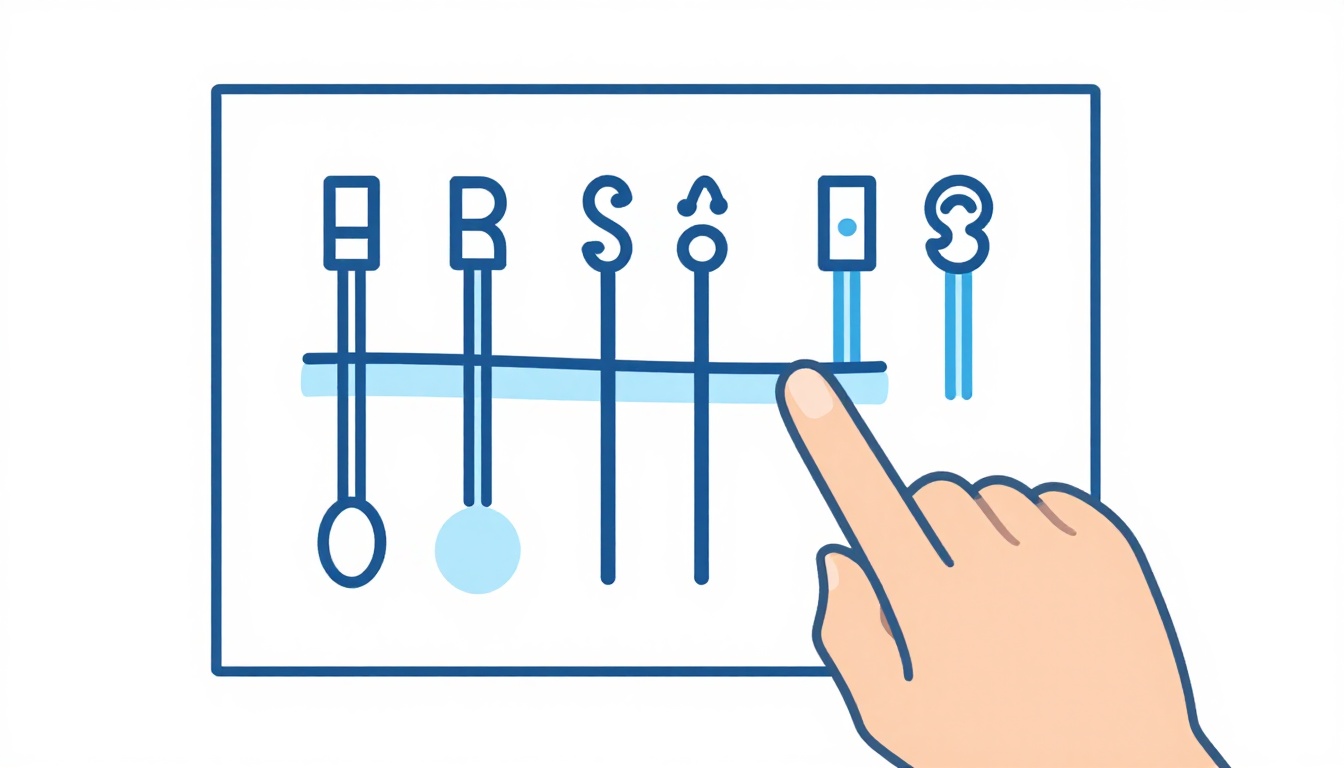
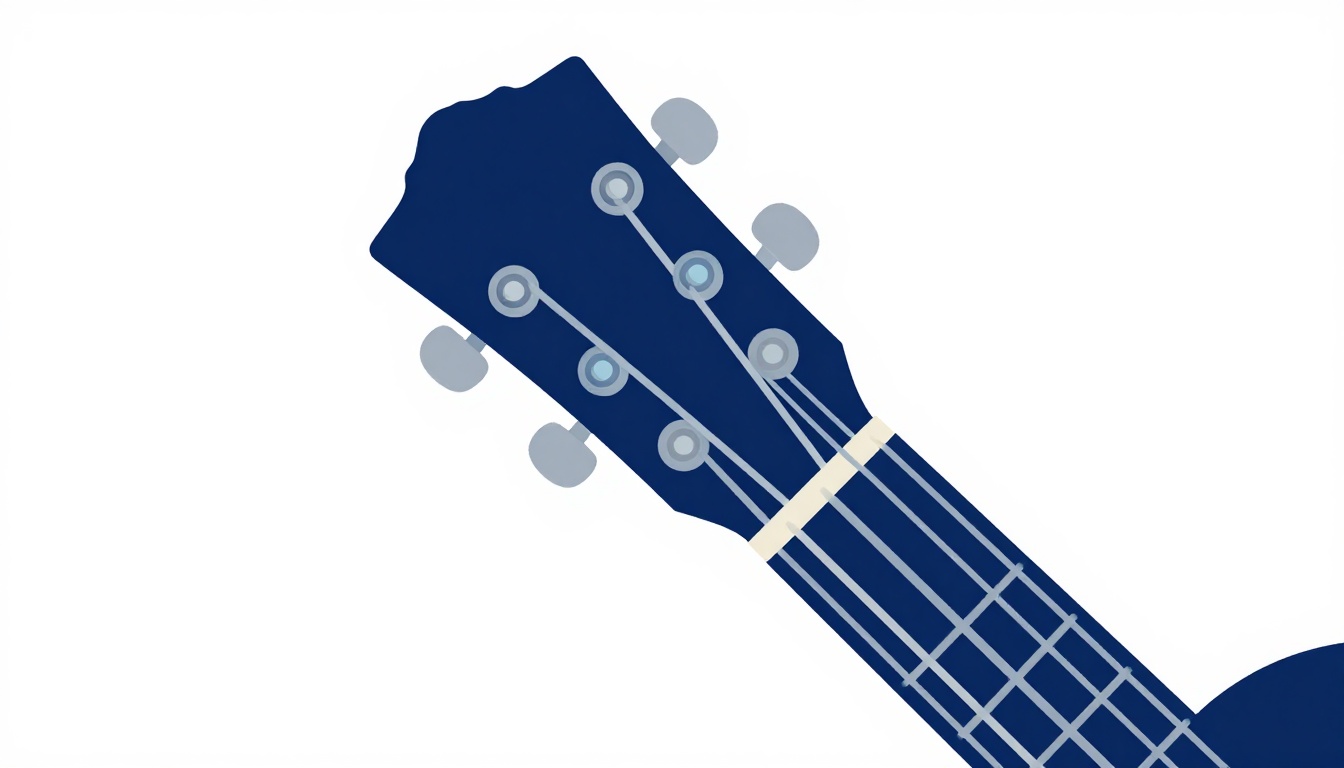
This is the step almost every guide skips, and it is the one that produces piano chords that sound wrong even though every other step was done correctly. A capo clamps across the guitar neck and raises the pitch of every open string by one semitone per fret. If the guitarist plays a G shape with a capo on the second fret, the chord that actually sounds is not G. It is A, two semitones higher.
Chord charts written for capoed guitar almost always show the shapes the guitarist's fingers make, not the pitch that comes out. That is convenient for a second guitarist following along with a capo on the same fret, and it is exactly wrong for a pianist, who has no capo and needs the real sounding pitch.
Look for a line near the top of the chart that says something like "Capo 2" or "Capo on 2nd fret." If you see it, every chord symbol on that chart needs to be shifted up by that many semitones before you build it on piano. A chart with no capo note and chord shapes that already look unusual for the key (lots of barre chords, awkward changes) may still be written for a capo the source forgot to label. If the chords sound higher than the shapes suggest when you listen to a recording, suspect an unlabeled capo.
The Capo-to-Real-Chord Table You Need First
Once you know the capo fret, shift every chord name up by that many semitones. Each fret is one semitone. This table covers the shapes guitarists use most with a capo; for the complete chart through fret 7 with minor shapes and 7th chords included, see the full guitar capo chart.
| Shape played | Capo 1 | Capo 2 | Capo 3 | Capo 4 | Capo 5 |
|---|---|---|---|---|---|
| C | C#/Db | D | D#/Eb | E | F |
| D | D#/Eb | E | F | F#/Gb | G |
| E | F | F#/Gb | G | G#/Ab | A |
| G | G#/Ab | A | A#/Bb | B | C |
| A | A#/Bb | B | C | C#/Db | D |
| Em | Fm | F#m/Gbm | Gm | G#m/Abm | Am |
| Am | A#m/Bbm | Bm | Cm | C#m/Dbm | Dm |
Read the row for the shape the guitarist's fingers make, find the column for the capo fret, and that intersection is the chord you build on piano. A capoed E shape at fret 3 is a real G chord. Build G, B, D on the keys, not E, G#, B.
Step 3: Build the Piano Triad From the Chord Name
With correct, capo-adjusted chord names in hand, building each one on piano comes down to a fixed formula. Every major chord is the root note, the note four semitones above it, and the note seven semitones above it. Musicians call these the root, the third and the fifth. Every minor chord uses the same root and fifth, with the third lowered by one semitone, three semitones above the root instead of four.
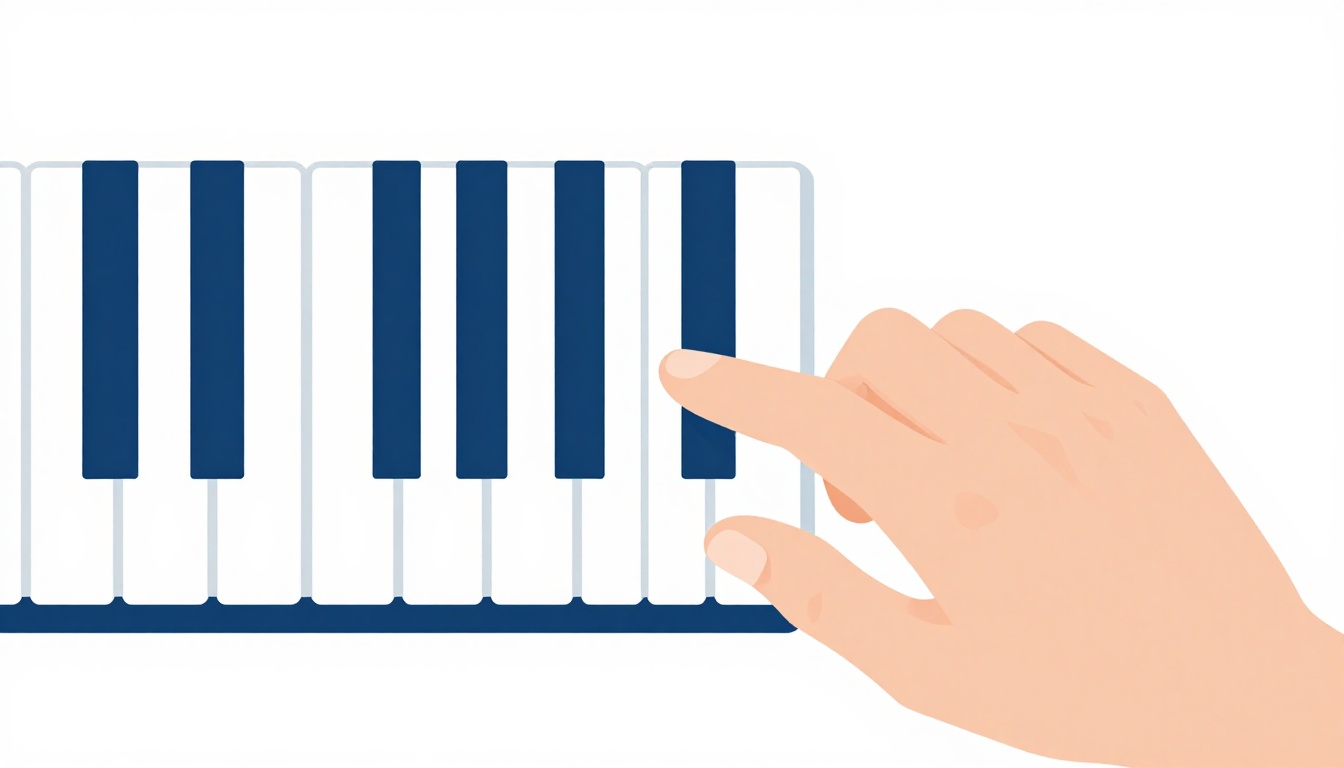
Take a C major chord as the reference point. C is the root. Four semitones up from C is E. Seven semitones up from C is G. Press C, E and G together with your right hand, thumb on C, middle finger on E, pinky on G, and that is a correct C major chord. For C minor, lower the E to Eb (also written D#), three semitones above C instead of four, and keep C and G the same.
That is the entire method. It does not change based on key, and it does not require memorizing twelve separate shapes the way guitar does. Learn the formula once, root plus a third plus a fifth, and apply it to any letter name a chart gives you.
Major and Minor Triads for Every Root, Ready to Play
Rather than calculating each chord by hand every time, use this as a lookup table while you build fluency. Notes are spelled with sharps for consistency; the section on sharps and flats below explains when to switch to flat spelling instead.
| Root | Major triad | Minor triad |
|---|---|---|
| C | C - E - G | C - D# - G |
| C# / Db | C# - F - G# | C# - E - G# |
| D | D - F# - A | D - F - A |
| D# / Eb | D# - G - A# | D# - F# - A# |
| E | E - G# - B | E - G - B |
| F | F - A - C | F - G# - C |
| F# / Gb | F# - A# - C# | F# - A - C# |
| G | G - B - D | G - A# - D |
| G# / Ab | G# - C - D# | G# - B - D# |
| A | A - C# - E | A - C - E |
| A# / Bb | A# - D - F | A# - C# - F |
| B | B - D# - F# | B - D - F# |
Every plain chord name on a guitar chart (no 7, sus, add, dim or aug attached) maps directly to one row here. Find the letter, pick the major or minor column, and those three notes are your chord.
Turning 7th, Sus, and Add9 Chords Into Piano Voicings
Guitar charts lean heavily on extended chords, especially in folk, pop and worship music, and each suffix has a fixed formula that works the same way on piano as the plain triad formula does.
A dominant 7 chord (written just as a number, like G7) is the major triad plus a note ten semitones above the root, sometimes described as a flattened seventh. G7 is G, B, D and F.
A major 7 chord (Cmaj7 or CM7) is the major triad plus a note eleven semitones above the root. Cmaj7 is C, E, G and B.
A minor 7 chord (Dm7) is the minor triad plus a note ten semitones above the root. Dm7 is D, F, A and C.
A sus4 chord (Asus4) replaces the third with the fourth, five semitones above the root, leaving out the third entirely. Asus4 is A, D, E, with no C or C# at all, which is why sus chords sound neither major nor minor.
A sus2 chord (Csus2) replaces the third with the second, two semitones above the root. Csus2 is C, D, G.
An add9 chord (Cadd9) keeps the full major or minor triad and adds the note two semitones above the root, an octave up from where a sus2 would put it. Cadd9 is C, E, G, D, all four notes together, not a replacement for the third.
| Suffix | Formula from root | Example | Notes |
|---|---|---|---|
| 7 | 1 - 3 - 5 - b7 | G7 | G - B - D - F |
| maj7 | 1 - 3 - 5 - 7 | Cmaj7 | C - E - G - B |
| m7 | 1 - b3 - 5 - b7 | Dm7 | D - F - A - C |
| sus4 | 1 - 4 - 5 | Asus4 | A - D - E |
| sus2 | 1 - 2 - 5 | Csus2 | C - D - G |
| add9 | 1 - 3 - 5 - 9 | Cadd9 | C - E - G - D |
Slash Chords: What the Note After the Slash Means on Piano
A slash chord like D/F# or G/B tells you to play a specific chord over a specific bass note that is not the chord's normal root. The letter before the slash is the full chord, built exactly as covered above. The letter after the slash is a single note that replaces or reinforces the lowest note being played.
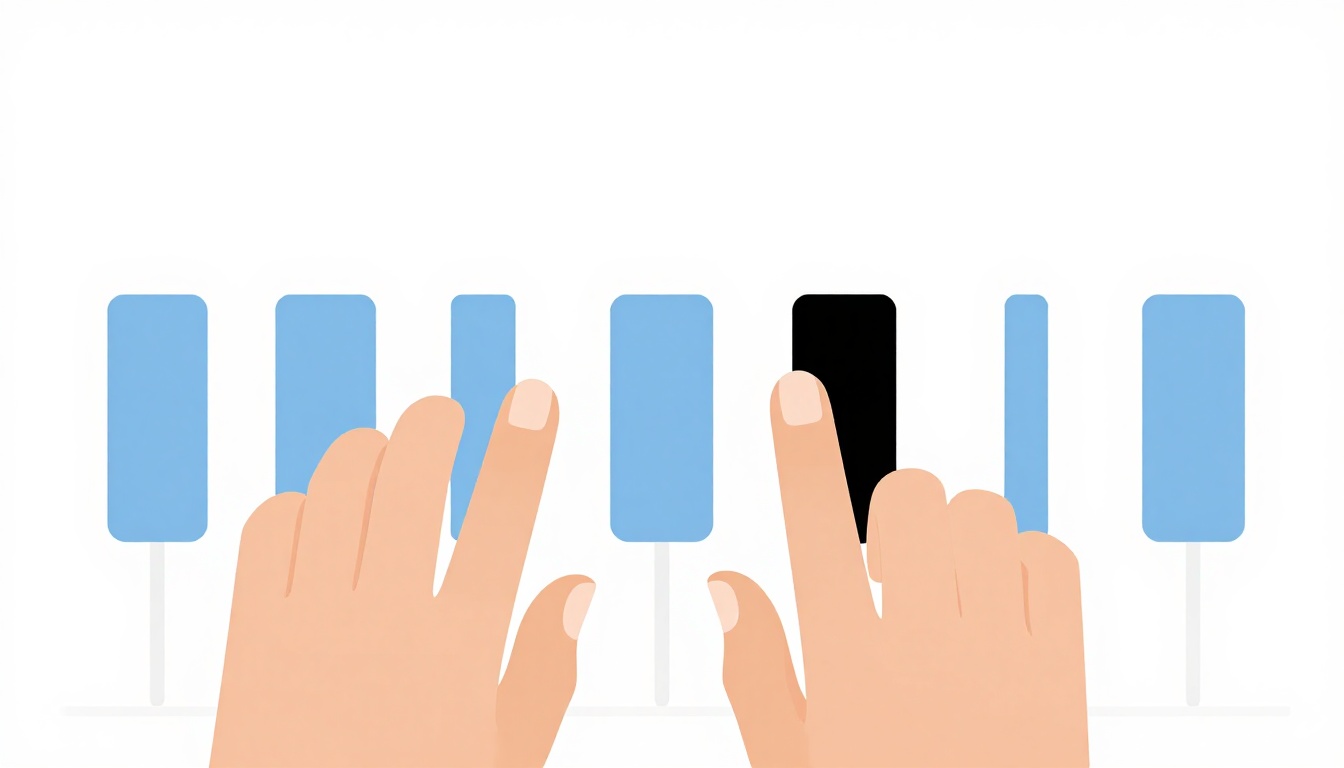
On piano this splits naturally between your two hands. Play the note after the slash with your left hand, low on the keyboard, and play the full chord named before the slash with your right hand, higher up. D/F# means your left hand plays F# and your right hand plays a full D major chord, D, F#, A.
Guitarists reach for slash chords because a specific bass note under a chord makes a smooth, stepwise bass line possible, often moving one chord's bass note into the next chord's root. G, G/B, C is a common progression built exactly for that reason, walking the bass line up from G to B to C while the chord above stays simple.
| Slash chord | Left hand | Right hand |
|---|---|---|
| D/F# | F# | D - F# - A |
| G/B | B | G - B - D |
| C/G | G | C - E - G |
| Am/G | G | A - C - E |
If you only have one hand available, or you are transposing for a simple keyboard part rather than a full piano arrangement, it is acceptable to fold the bass note into the right hand as the lowest note of the chord instead of splitting hands. It will sound slightly less full than the two-hand version, but the chord identity stays correct.
Why a Guitar Chord Shape Never Transfers to a Piano Fingering
It is worth explaining directly why the shape a guitarist's hand makes has nothing to do with how a pianist's hand should look, because the instinct to look for an equivalent shape is strong and it will slow you down until you let it go.
A guitar shape is a pattern across six strings and four or five frets, where some strings are muted, some ring open and some are fretted at different positions along the neck. The physical geometry that produces a G major chord on guitar (three fretted notes and three open strings, spread across a neck) has no piano equivalent, because a piano has no open strings, no frets and no need to mute anything. Every key you do not press stays silent on its own.
A piano chord is instead just the correct notes played together, in whatever hand position is comfortable and reachable. There is no "correct shape" beyond landing on the right keys. Two different pianists might finger the same G major chord slightly differently depending on hand size or what comes next in the song, and both are right as long as G, B and D sound.
This also means a barre chord, a chord that requires a guitarist's index finger to press down multiple strings at once specifically because the guitar's mechanics demand it, is not harder to transpose than an open chord. Once you are building notes on piano, an F major barre chord and a C major open chord take exactly the same amount of effort: three or four keys, pressed together.
What Power Chords and Barre Chords Become on Piano
Two guitar-specific chord types deserve their own explanation because they look unusual once translated.
Power Chords
A power chord, written G5 or just G with the numbers written informally as "power chord," is only the root and the fifth, with no third at all. On guitar this is a two or three note shape used constantly in rock and metal because it stays clean and heavy at high volume, without needing to decide whether the underlying part is major or minor.
On piano, build it exactly as the name suggests: root plus fifth, nothing else. G5 is G and D, seven semitones apart, no B. Played with two hands an octave or two apart, this reproduces the same open, ambiguous sound guitarists use it for, and it is genuinely easier on piano than the equivalent triad, since you are pressing fewer notes.
Barre Chords
A barre chord is a guitar technique, not a different chord. An F major barre chord and an open C major chord both resolve to the same major triad formula once you are on piano. If your chart shows F, build F, A, C. The fact that it required a barre on guitar has no bearing on piano at all; it was only ever a guitar-specific way of reaching that shape on a fretted instrument.
Piano Finger Numbers vs Guitar Finger Numbers
Guitar and piano number their fingers differently, and mixing the two systems up is a fast way to misread a diagram from either instrument.
| Finger | Guitar fretting hand | Piano |
|---|---|---|
| Thumb | T (wraps over the top for bass notes, used less often) | 1 |
| Index | 1 | 2 |
| Middle | 2 | 3 |
| Ring | 3 | 4 |
| Pinky | 4 | 5 |
On guitar, the thumb is rarely used to fret notes and gets a letter instead of a number precisely because it is the exception. On piano, the thumb is finger 1 and is used constantly, including as the pivot point for scales and as the lowest note in most right hand chords. When a piano method book says "play with 1-3-5," it means thumb, middle finger, pinky, which is exactly the triad shape covered earlier in this post.
Which Octave Should You Play These Chords In
Chord names alone do not specify an octave, and a guitar chart never tells you either, because a guitar's entire pitch range is narrow enough that the question rarely comes up. A piano spans more than seven octaves, so picking where on the keyboard to actually place a transposed chord is a real decision, not a formality.
A standard guitar in standard tuning covers roughly the E below middle C up to the D two octaves above it, once you include notes fretted high on the neck. That means the guitar chords you are transposing were, in practice, almost always sounding somewhere close to middle C or just below it. A reasonable default on piano is to build triads with the root somewhere between the octave below middle C and the octave above it, which keeps the sound in the same general register a guitar would have used and avoids a chord that sounds unnaturally boomy in the bass or thin and tinkly at the very top of the keyboard.
For a simple accompaniment part, a common approach is to place the root of each chord with your left hand roughly an octave below middle C, and the rest of the triad with your right hand starting at or just above middle C. This mirrors how a guitarist's bass strings and treble strings naturally split a chord across a low root and higher harmony notes, and it gives a full sound without either hand crowding the other.
There is no wrong octave in an absolute sense, since C is C no matter where you play it, and moving a whole chord up or down an octave does not change its name or its harmonic function. Octave choice is a voicing decision, not a transposition decision, and it is fine to experiment with it once the correct notes are in place.
Sharps or Flats? Picking the Right Spelling for the Key You're In
Every black key on a piano has two valid names. The key between C and D is both C# and Db, the same physical key and the same pitch, spelled two different ways depending on the musical context. This trips up players moving between instruments because a guitar chart might show "Bb" while your instinct, or an online tool, gives you "A#." They are the same note.
The general rule: keys that use sharps in their key signature (G, D, A, E, B, F#) spell their chords with sharps. Keys that use flats (F, Bb, Eb, Ab, Db) spell their chords with flats. A song in the key of F will show chords like Bb and Eb, not A# and D#, even though the piano keys are identical either way.
| Key | Sharps or flats | Notes affected |
|---|---|---|
| C | none | no sharps or flats |
| G | 1 sharp | F# |
| D | 2 sharps | F#, C# |
| A | 3 sharps | F#, C#, G# |
| E | 4 sharps | F#, C#, G#, D# |
| B | 5 sharps | F#, C#, G#, D#, A# |
| F | 1 flat | Bb |
| Bb | 2 flats | Bb, Eb |
| Eb | 3 flats | Bb, Eb, Ab |
| Ab | 4 flats | Bb, Eb, Ab, Db |
| Db | 5 flats | Bb, Eb, Ab, Db, Gb |
For a practical transposing session, this distinction matters less than it seems. The piano key is in the same physical place regardless of which name you use, and pressing "the right key" is what makes the chord sound correct, not writing its name a particular way. Use whichever spelling matches your source chart so you are not second-guessing yourself, and do not worry about switching a chart's flats to sharps or back. Save strict spelling for when you are writing your own chord charts for other musicians to read.
Guitar-Friendly Keys vs Piano-Friendly Keys
Guitarists gravitate toward E, A, D, G and C because those keys let open strings ring and keep fingerings simple, using shapes every beginner learns first. Pianists gravitate toward C, G and F for a similar reason: fewer black keys means simpler fingering and easier reading. The two instruments' comfortable keys overlap at G and C, but a guitarist's favorite key of E, with four sharps, is genuinely more awkward on piano than it is on a fretboard.
This matters when you are arranging rather than just accompanying. If a guitarist hands you a chart in E and you are building a piano part from scratch rather than matching a specific recording, you are allowed to ask whether the song actually needs to stay in E. Shifting the whole song down to D or up to F, and having the guitarist capo or refinger to match, can put the piano part in a noticeably easier key without changing anything the audience hears, since a transposed song in a new key sounds identical in character, only higher or lower.
This is a different move from the note-by-note transposition covered everywhere else in this post. Matching a guitarist's exact sounding pitch is about accuracy. Choosing a shared key that is comfortable for both instruments is a separate, optional decision you make before a rehearsal, not something to reach for mid-song.
Using a Keyboard's Transpose Button Instead of a Capo
If you are working from a digital keyboard rather than an acoustic piano, most models include a transpose function, usually a button or menu labeled "Transpose" with a plus and minus setting measured in semitones. This is the direct keyboard equivalent of a guitar capo, with one major advantage: it works in both directions.
A guitar capo only raises pitch, because it can only move up the neck from the nut. A keyboard's transpose button can shift pitch up or down by any number of semitones, which means a keyboardist can match a capoed guitarist without changing a single finger position. If the guitarist capos up 2 frets and plays G shapes, transposing the keyboard down 2 semitones and playing the same G shapes on the keys produces the correct sounding pitch, matching the guitarist exactly, using familiar fingering the whole time.
This is a genuinely useful shortcut if you are learning to accompany a guitarist regularly and do not want to recalculate chord names every rehearsal. It is not a substitute for understanding the note-by-note method above, because sheet music, other musicians reading a chart, and any recording setup will still expect you to know what key you are actually sounding in. Use transpose as a performance convenience once you already understand why it works.
Left Hand Patterns Once You Know the Notes
Everything so far gets you correct chord notes. Turning those notes into something that sounds like an actual piano part, rather than a block of held-down keys, is a separate and much shorter step once the notes themselves are settled.
The simplest starting pattern is root-fifth in the left hand: play the chord's root note alone on beat one, then the fifth above or below it, alternating between the two on each beat while the right hand holds the full triad. For a G chord this means alternating G and D in the left hand, a pattern borrowed directly from how a bassist or a guitarist's low strings would outline the same chord.
A step up from that is a broken chord, sometimes called an Alberti bass, where instead of holding the full right hand triad you play its notes one at a time in a repeating order, root, fifth, third, fifth, for example. This gives a moving, folk or classical accompaniment feel and works especially well for slower, more reflective songs where a guitarist might be fingerpicking rather than strumming.
For a straightforward strummed guitar song, block chords, all three or four notes played together on the beat, are the closest piano equivalent to a strum and the easiest to keep in time with a guitarist next to you. Save broken chords and root-fifth patterns for songs where the guitar part is fingerpicked or more sparse, matching the texture rather than adding busyness the original arrangement does not have.
Reading Guitar Tab and Turning Fret Numbers Into Note Names
Some source material gives fret numbers on six lines (tablature) instead of chord names, especially for riffs, intros or fingerpicked patterns rather than strummed chords. To transpose tab to piano, you first need the actual note name at each fret and string, since tab alone carries no pitch information without knowing standard tuning.
Standard tuning, low to high, is E-A-D-G-B-E: the 6th string (low E) is the thickest and lowest, and the 1st string (high E) is the thinnest and highest, two octaves above. Each fret raises that open string's pitch by one semitone. A note on the 6th string at the 3rd fret is three semitones above E, which is G. A note on the 5th string (A) at the 2nd fret is two semitones above A, which is B.
| Open string | 1st fret | 2nd fret | 3rd fret | 5th fret |
|---|---|---|---|---|
| 6 (low E) | F | F# | G | A |
| 5 (A) | A# | B | C | D |
| 4 (D) | D# | E | F | G |
| 3 (G) | G# | A | A# | C |
| 2 (B) | C | C# | D | E |
| 1 (high E) | F | F# | G | A |
Work out each fretted note this way, then play the resulting notes on piano in the same order they appear in the tab. A single-note guitar riff becomes a single-note piano line played the same way, one key at a time, with no chord-building required since there is no chord, just a melody spelled out in frets.
Alternate Tunings and What They Do to Your Transposition
Everything in this post assumes standard tuning, E-A-D-G-B-E, because that is what the overwhelming majority of guitar charts are written for. If a song uses an alternate tuning, the open string names change, and every fret number now points at a different actual pitch than the tables above would suggest.
Drop D tuning, the most common alternate tuning, lowers only the 6th string from E down to D, leaving the other five strings standard. A chart written for drop D often shows simplified chord shapes that rely on that lowered string, and the chord names on the chart already account for the retuning, so the transposition steps in this post still apply exactly as written. You do not need to do any extra math for the chord names themselves, since "D" still means D whether the low string got there by fretting or by retuning.
Where alternate tunings matter more is with tab, not chord names. A fret number in a drop D tab refers to a different note than the same fret number would in standard tuning, because the open string underneath it is a different pitch. If you are transposing tab rather than named chords, confirm the tuning first, work out what each open string actually is, and then apply the same fret-to-semitone counting method shown above, starting from the retuned open note instead of standard E-A-D-G-B-E.
Fully alternate systems like DADGAD or open tunings used for slide guitar go further, retuning multiple strings at once specifically to make certain chords ring as open strings. These are far less common on typical chord charts and mostly show up in fingerstyle or slide guitar pieces. If you encounter one, treat it the same way: identify the actual tuning, work out each open string's real pitch, then apply fret-to-note counting from there rather than assuming standard tuning.
A Worked Example: Transposing a Capoed Progression to Piano
Here is the full process applied to a real progression, the kind of thing you would actually receive as a chart. Suppose a chart reads "Capo 2" at the top, and the chords underneath are G, D, Em, C.
First, confirm the capo. Capo 2 means every shape sounds two semitones higher than its name.
Second, shift each chord up two semitones using the capo table. G shifted up 2 becomes A. D shifted up 2 becomes E. Em shifted up 2 becomes F#m. C shifted up 2 becomes D.
Third, build each real chord on piano using the triad table. A major is A, C#, E. E major is E, G#, B. F#m is F#, A, C#. D major is D, F#, A.
The piano part for this song is A, E, F#m, D, in that order, played as full triads with your right hand or split across two hands if a bass note is wanted underneath each chord. Note that none of the piano chords share a name with a single chord shape the guitarist's fingers are making. That is expected and correct. The guitarist is fingering G, D, Em, C the entire time, and the capo is doing the transposing for them. You did the same transposing by hand, on paper, before touching a key.
Common Chord Progressions, Already Transposed
The same handful of progressions account for a huge share of the songs guitarists play, and having their piano notes ready without recalculating each time saves real practice time. These are shown in the three keys guitarists reach for most, with no capo involved, so you can compare directly against a capoed version using the steps above whenever one shows up.
| Progression | Key of G | Key of C | Key of D |
|---|---|---|---|
| I | G (G-B-D) | C (C-E-G) | D (D-F#-A) |
| IV | C (C-E-G) | F (F-A-C) | G (G-B-D) |
| V | D (D-F#-A) | G (G-B-D) | A (A-C#-E) |
| vi | Em (E-G-B) | Am (A-C-E) | Bm (B-D-F#) |
The I-V-vi-IV order, one of the most common progressions in popular music, reads as G, D, Em, C in the key of G, as C, G, Am, F in the key of C, and as D, A, Bm, G in the key of D. Swap the order to I-IV-V for a more folk or blues-leaning feel, or to vi-IV-I-V for a different pop-leaning sequence, using the same four chords from whichever key column matches your song. Once these four shapes per key are familiar under your fingers, you can recognize and play a large share of chord charts on sight, without stopping to rebuild each triad from scratch.
Common Mistakes When Moving Guitar Chords to Piano
Most wrong-sounding piano transpositions trace back to one of these errors, each easy to check once you know to look for it.
Ignoring an Unlabeled Capo
Covered above, and worth repeating because it is the single most common cause of a transposition that sounds "close but off." If chords sound a semitone or two higher than the names suggest when you compare to a recording, suspect a capo the chart did not label clearly.
Transposing the Simplified Chord Instead of the Full One
A chart that shows "C" when the recording actually uses Cmaj7 or Cadd9 has been simplified for easier guitar strumming, which is common and reasonable for guitar, but it throws away information a piano arrangement often wants back. Listen to a recording where possible and compare it against the plain chord chart before committing to the simplest version.
Mixing Up Sharp and Flat Spelling Mid-Chart
Writing the same physical key as G# in one measure and Ab in the next will not change how it sounds, but it will make your own notes harder to read back later. Pick one spelling convention per song and hold it, matching whatever your source material already uses.
Forcing a Guitar Shape Onto the Keys
Trying to physically mimic a guitar chord's finger spread on piano, spreading fingers unusually wide because "that's how many strings are involved," produces an awkward and unnecessary hand position. Piano chords want compact, comfortable spacing regardless of how spread out the same notes were on a fretboard.
Skipping the Third on a Sus or Power Chord
Adding a third back into a sus4 or a power chord because it "sounds more finished" changes the chord into something the guitarist is not actually playing. Sus and power chords are intentionally ambiguous; leave the third out if the chord name leaves it out.
Treating the Slash Chord's Bass Note as Optional
Dropping the note after the slash and playing a plain triad instead is a common shortcut under pressure, and it removes the exact detail the songwriter wrote the slash chord to create, usually a stepwise bass line moving smoothly between chords. If time only allows a plain triad, that is a reasonable simplification to make on purpose, but make it knowingly rather than by skipping the slash without noticing it was there.
Manual Transposing vs Online Chord Transposer Tools
Everything above works with nothing but the chord names and basic arithmetic, and that manual fluency is worth building even if you plan to use a tool day to day, because it lets you catch a tool's mistake or an unusual chord it does not recognize.
Online chord transposer tools take a block of chord names or a capo fret and shift everything automatically, which is faster for a full song than working through this article's method line by line. They are useful for a long chart with dozens of chord changes, or for quickly checking your own by-hand work. Their limitation is that they transpose names, not full context: a tool cannot tell you a chart's capo instruction was left off, cannot tell you a chord was oversimplified for guitar, and cannot decide how to voice a slash chord across two hands. Those judgment calls stay with you regardless of which tool you use.
A reasonable workflow is to do the first verse of a new song by hand, confirming you understand the key and any capo, then use a transposer tool for the remaining verses and chorus once you trust the pattern, cross-checking a chord or two against your own calculation if anything looks unusual.
Getting Faster at This: A Short Practice Routine
Speed at this comes from repetition of the same small steps, not from a shortcut. Five minutes a day against a real chart will get you fluent faster than reading about the method again.
Pick one song you already know on guitar. Write out its chord chart from memory, including any capo. Set a timer for five minutes and transpose the full chart to piano note names on paper, using the tables in this post as a reference until you do not need them. Then sit at a keyboard and play through the chords slowly, checking each one against the chart you wrote. Notice which chord types slow you down (usually slash chords and anything with a capo involved) and repeat only those the next day.
After a week of this with a new song each day, most players stop needing the tables for plain major and minor chords and only reach for a reference on 7ths, sus chords or an unfamiliar capo fret. If you are still building your guitar chord vocabulary as well, working through the easiest beginner guitar songs gives you a steady supply of short, real charts to practice transposing from.
Playing Guitar Chords to Piano Together in the Same Song
The actual reason most people learn this is to play alongside a guitarist, not in isolation, and a few practical notes make that go smoother. Confirm the key out loud before you start; "we're in G, capo 2, so I'm playing A" avoids the guitarist assuming you are also thinking in G. Agree on who plays the bass note on beat one of each chord, since a guitarist's low E or A string and a pianist's left hand can easily double up and muddy the sound if nobody claims that role. And if the guitarist changes capo position mid-rehearsal to suit a singer's range, that is a new transposition, not an adjustment, so run through the chord math again rather than assuming the shift matches your memory of last time.
FAQ
Do I need to know piano to transpose guitar chords to it?
No. You need to know the chord names from the guitar chart, the major and minor triad formula, and where notes sit on a keyboard. None of that requires prior piano skill, though building actual fluency playing the chords will come faster with some keyboard practice time.
Does a capo change what key a song is actually in?
Yes. The song's real key is whatever pitch the chords actually sound at, not the shape a guitarist's fingers are making. A song played with G shapes and a capo on the 2nd fret is genuinely in the key of A, and any other instrument joining in, piano included, needs to play in A.
Can I just use an online transposer and skip learning the manual method?
You can for speed, but understanding the manual method lets you catch capo notes a chart forgot to mention, oversimplified chords, and slash chords a tool voices in a way you would not choose yourself. Most experienced players use both.
Why does the same chord look so different on guitar and piano?
Because the two instruments produce pitch through completely different mechanisms, frets and strings versus a straight line of keys, so there is no shared "shape" to speak of. Only the resulting notes are shared, which is exactly what makes transposing between them possible at all.
What about chords with a 9, 11 or 13 in the name?
The same extension logic applies: each number tells you how many scale steps above the root to stack another note, continuing the same pattern as the 7th chords covered in this post. A 9 chord is a 7 chord plus the note a whole step above the octave, an 11 adds another third on top of that, and so on. These show up rarely in typical guitar charts, mostly in jazz, where the shell voicings covered in this jazz chords guide are worth reading alongside this post.
Should I play guitar chords on piano with one hand or two?
Either works for a basic triad. Two hands become useful once slash chords or a steady bass line are involved, with the left hand holding the bass note and the right hand playing the chord above it. Start with one hand until the chord names feel automatic, then add the second hand for bass notes.
Is it harder to transpose a minor key song than a major key one?
No, the process is identical either way. Minor chords use the same root-plus-fifth structure as major chords, only with the third lowered by one semitone, so the same tables and steps in this post apply without any extra complication.
My keyboard's transpose button and my by-hand calculation do not match. What went wrong?
Check the direction first; transpose buttons on some keyboards are labeled with the interval you are shifting by, and it is easy to press plus when you meant minus. If the direction is correct, recheck whether the guitarist's capo fret was reported accurately, since a single fret of difference will move every chord by one semitone and throw off the whole comparison.
GuitarLowKey
Ready for fifteen focused minutes?
Open the web app and train the change that is blocking your song.